
Can Dogs Eat Chayote Squash? Everything You Need to Know
Chayote showed up in my kitchen after a neighbor gave me a bag from her garden. Pale green, pear-shaped, with a mild flavor somewhere between cucumber and zucchini. I had never cooked with it before.
My dog, predictably, appeared within thirty seconds of me bringing it inside and stationed himself at my feet with his best hopeful expression.
I had no idea if it was safe.
After researching it properly — I wish I had discovered chayote earlier. It is one of the more useful dog-friendly vegetables I have come across.
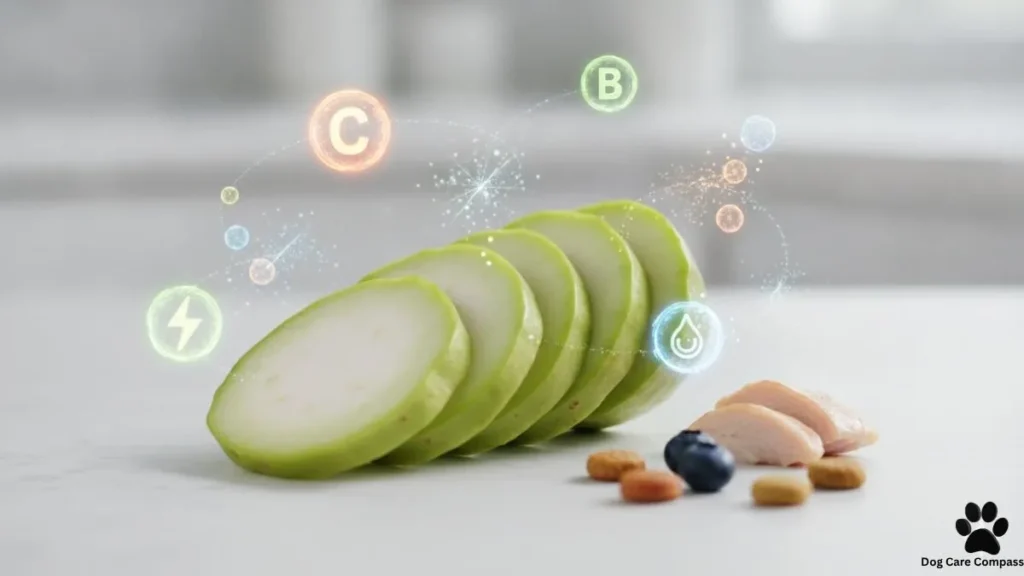
Can dogs eat chayote squash? Yes — chayote is safe for dogs. It is low in calories, high in water content, and provides fiber, vitamin C, and folate without any toxic compounds. Both raw and cooked chayote are appropriate for dogs when served plain.
Quick Answer
| Question | Answer |
|---|---|
| Is chayote safe for dogs? | Yes — completely safe |
| Can dogs eat it raw? | Yes — washed and sliced |
| Can dogs eat chayote seeds? | Yes — soft and safe |
| Can dogs eat chayote skin? | Yes — wash thoroughly |
| Safe for puppies? | Yes — from weaning |
What Is Chayote Squash?
Chayote (Sechium edule) is a member of the gourd family — related to cucumber, zucchini, and melon. Originally from Central America, it is now widely grown across Latin America, Asia, and parts of Africa and Europe.
The flesh is pale green to white, firm, and mildly flavored. The single seed in the center is soft and edible — unlike the hard, potentially harmful seeds in many fruits.
It is eaten raw in salads, cooked in stews, and prepared in many ways across the cuisines where it is common. The nutritional profile is unassuming — this is not a superfood — but for dogs, unassuming and safe is often exactly what you want.
Nutritional Profile of Chayote (Per 100g)
| Nutrient | Amount |
|---|---|
| Calories | 19 kcal |
| Carbohydrates | 4.5g |
| Natural Sugar | 1.7g |
| Dietary Fiber | 1.7g |
| Protein | 0.8g |
| Fat | 0.1g |
| Vitamin C | 7.7mg |
| Folate | 93mcg |
| Potassium | 125mg |
| Vitamin K | 4.1mcg |
At 19 kcal per 100g — chayote is one of the lowest-calorie vegetables available. Only cucumber and zucchini compete at this caloric level.
The folate content at 93mcg per 100g is the standout nutritional feature — significantly higher than most vegetables in this calorie range. Folate supports DNA synthesis, red blood cell production, and cellular energy metabolism.
Why Chayote Is Useful for Dogs
Almost Zero Calories — Best For Weight Management
19 kcal per 100g is exceptional. A medium-sized chayote weighing around 200g contains approximately 38 calories — less than most single commercial dog treats.
For overweight dogs — chayote provides genuine volume and satiety contribution without meaningful caloric impact. Adding chayote to meals increases the physical bulk of food without adding the calories that drive weight problems.
This is the vegetable I would recommend to owners following the weight loss protocol in our weight loss guide who are struggling with a dog that seems perpetually hungry despite caloric reduction.
Safe for Almost Every Health Condition
The nutritional profile of chayote makes it appropriate for conditions where most other foods require restriction.
Kidney disease: Very low phosphorus and potassium. Appropriate even in advanced kidney disease where most vegetables require careful monitoring.
Pancreatitis: Almost zero fat. Completely appropriate.
Diabetes: 1.7g of sugar per 100g — negligible glycemic impact.
Weight management: Already covered — essentially free calories.
The only meaningful consideration is the mild potassium content for severe kidney disease — but at 125mg per 100g, it remains lower than most vegetables.
High Water Content — Natural Hydration
Chayote is approximately 94% water — comparable to cucumber and zucchini.
For dogs that do not drink enough water, adding chayote to meals increases fluid intake meaningfully. For dogs in hot weather or after exercise, the hydration contribution is a genuine practical benefit.
Folate Supports Cellular Health
93mcg of folate per 100g from a vegetable at 19 kcal is an excellent nutritional ratio.
Folate supports DNA synthesis and red blood cell production in dogs. For pregnant dogs, growing puppies, and dogs recovering from illness — the folate content in chayote is a real benefit.
How to Prepare Chayote for Dogs
The preparation simplicity is one of chayote’s practical advantages.
Raw:
- Wash thoroughly under running water
- Remove the stem end
- Slice into pieces appropriate for your dog’s size
- Serve — skin, flesh, and seed all included
Some dogs find raw chayote slightly slippery — dice it rather than slice if the dog seems uncertain about texture.
Cooked:
- Wash and slice
- Steam or boil in plain water for 5 to 8 minutes
- Cool completely
- Serve plain — no seasoning, no oil, no butter
Raw is simpler and preserves more nutrients. Cooked is easier to digest for sensitive dogs and produces a softer texture some dogs prefer.
What to avoid: Chayote prepared for humans — often sautéed in oil with garlic, onion, or spices. None of these additions are appropriate for dogs. Plain only.
How Much Chayote Can Dogs Eat?
The low caloric density means portion flexibility is greater than with most vegetables.
| Dog Size | Daily Amount |
|---|---|
| Small — under 10 lbs | ¼ to ½ cup sliced |
| Medium — 10–50 lbs | ½ to 1 cup sliced |
| Large — 50+ lbs | 1 to 2 cups sliced |
These are significantly more generous than most vegetable recommendations — because at 19 kcal per 100g, the caloric impact of even generous portions is minimal.
For weight management dogs — chayote can replace a meaningful portion of higher-calorie ingredients in meals without sacrificing satiety.
Chayote vs Other Dog-Safe Vegetables
| Vegetable | Calories per 100g | Sugar per 100g | Suitable For Kidney? |
|---|---|---|---|
| Chayote | 19 | 1.7g | Yes |
| Cucumber | 16 | 1.7g | Yes |
| Zucchini | 17 | 2.5g | Yes |
| Green beans | 31 | 3.3g | Yes |
| Carrot | 41 | 4.7g | Moderate |
| Sweet potato | 86 | 4.2g | Caution |
Chayote sits alongside cucumber and zucchini as the lowest-calorie, lowest-sugar vegetable trio — all appropriate even for restricted diets. Our vegetables guide covers the full list of safe daily vegetables with preparation details.
Frequently Asked Questions
Can dogs eat chayote leaves and roots?
The leaves of chayote are edible and non-toxic — used in cooking in many cultures. For dogs, stick to the fruit itself unless you have specific knowledge of the plant’s cultivation.
Is chayote the same as mirliton or vegetable pear?
Yes — chayote is known by many regional names including mirliton, christophine, vegetable pear, and cho cho. All refer to the same vegetable. The same safety guidance applies regardless of the local name.
Can diabetic dogs eat chayote daily?
Yes — 1.7g of sugar per 100g produces negligible glycemic impact. Chayote is one of the few vegetables appropriate for diabetic dogs in generous amounts without blood sugar concerns.
My dog does not seem interested in chayote — how do I encourage them to try it?
Grate raw chayote finely and mix into regular food — most dogs eat it without noticing. Alternatively, lightly cook and mix with a small amount of bone broth to add aroma and flavor that raw chayote lacks.
Is there any dog that should not eat chayote?
No meaningful contraindications exist for healthy dogs. Even dogs with most common health conditions — kidney disease, pancreatitis, diabetes, weight management — can eat chayote safely.
Final Summary
- Chayote is completely safe for dogs — no toxic components in any part
- One of the lowest-calorie vegetables available — 19 kcal per 100g
- Raw or cooked — both appropriate, both easy to prepare
- Skin and seed are safe — no removal needed
- Ideal for weight management, kidney disease, diabetes, and pancreatitis
- High folate content is a genuine nutritional bonus at this calorie level
- Plain only — no oil, no garlic, no seasoning
Try this today: Slice a quarter of a raw chayote into small pieces and mix into your dog’s regular meal. That is the entire preparation. Most dogs accept it without hesitation — and at 19 calories per 100g, there is no reason not to make it a regular addition.
For more guides on safe vegetables and foods for dogs, explore the complete library at dogcarecompass.com.