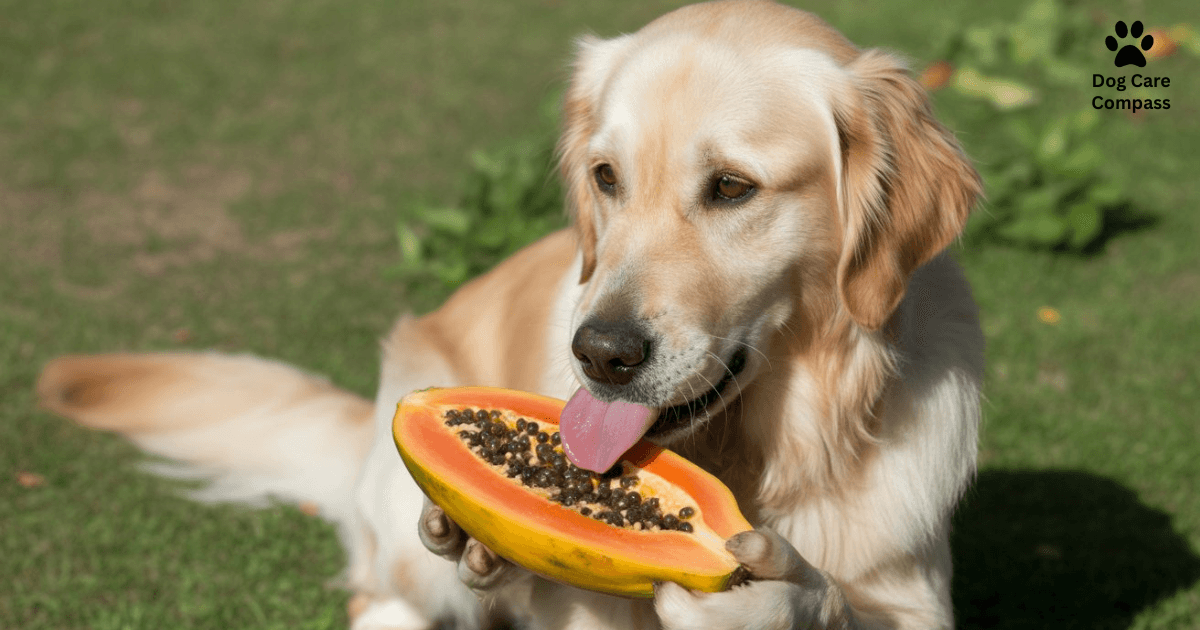
Can Dogs Eat Passion Fruit? Everything You Need to Know Before Sharing
I dropped a passion fruit on the kitchen floor — and before I could pick it up, my dog had already grabbed it and was chewing through the rind with genuine enthusiasm.
That moment sent me straight into research mode. What I found was more serious than I expected.
Can dogs eat passion fruit? The flesh of ripe passion fruit is not classified as toxic — but passion fruit is one of the most seed-dense fruits in existence, and those seeds contain cyanogenic glycosides that can release cyanide when digested. The rind is also toxic. Separating safe flesh from dangerous components is extremely difficult in practice — which is why most veterinarians recommend avoiding passion fruit entirely.
Also searching for: Is passion fruit poisonous to dogs? Can dogs eat passion fruit seeds? What happens if my dog eats passion fruit? — All answered in full below.
Can Dogs Eat Passion Fruit? (Quick Answer)
- Safe? → ⚠️ Caution — flesh only, seeds and rind are dangerous
- Toxic? → Seeds and rind — yes. Ripe flesh — not classified as toxic
- Seeds? → ❌ Never — contain cyanogenic compounds
- Rind? → ❌ Never — toxic and choking hazard
- Unripe passion fruit? → ❌ Entirely toxic — avoid completely
- Diabetic dogs? → ❌ Not safe — high sugar content
- Puppies? → ❌ Not recommended
⚠️ Veterinary Warning: If your dog ate passion fruit seeds or rind — do not wait for symptoms. Cyanide poisoning symptoms can appear within 15 to 20 minutes. Contact your veterinarian immediately.
What Is Passion Fruit?
Passion fruit (Passiflora edulis) is a tropical vine fruit native to South America and now grown widely across Australia, South Africa, Southeast Asia, and the Caribbean. It comes in two main varieties — purple passion fruit and yellow passion fruit — with the purple variety being more commonly available in supermarkets.
The outer shell is smooth, thick, and hard — turning wrinkled when fully ripe. Inside is a cavity densely packed with small black seeds completely surrounded by orange-yellow pulp. The ratio of seeds to flesh is very high — unlike most fruits, there is no clean flesh section free of seeds. The pulp clings directly to the seeds throughout.
The flavor is intensely aromatic — sharp, tropical, and sweet-tart. It is widely used in juices, desserts, cocktails, and yogurts across the world.
Nutritionally, passion fruit is rich in vitamin C, vitamin A, fiber, iron, potassium, and antioxidants. It also contains significant natural sugar and is notably high in dietary fiber — 10.4g per 100g, which is exceptionally high for a fruit.
This article is written using veterinary safety guidelines and toxicology references commonly used in pet care.
Nutritional Profile of Passion Fruit (Per 100g)
| Nutrient | Amount |
|---|---|
| Calories | 97 kcal |
| Carbohydrates | 23.4g |
| Natural Sugar | 11.2g |
| Dietary Fiber | 10.4g |
| Protein | 2.2g |
| Fat | 0.7g |
| Vitamin C | 30mg |
| Vitamin A | 1274 IU |
| Iron | 1.6mg |
| Potassium | 348mg |
| Magnesium | 29mg |
The fiber content at 10.4g per 100g is exceptionally high — one of the highest of any commonly available fruit. This level of fiber can cause significant digestive upset in dogs even without the cyanide concern.
The vitamin A content at 1274 IU per 100g is very high — genuinely beneficial for skin, coat, and vision health. The iron at 1.6mg is also notable. The nutritional value of passion fruit is real — but it becomes irrelevant when the delivery method involves unavoidable seed exposure.
Is Passion Fruit Safe for Dogs?
This is where passion fruit becomes more complicated than most fruits.
The ripe flesh itself is not listed as toxic to dogs. In theory, pure flesh with absolutely no seeds and no rind attached would be a high-fiber, high-sugar treat that could be offered in small amounts.
The practical problem is the structure of the fruit itself. Passion fruit is not like a mango or papaya where flesh and seeds separate cleanly. Inside a passion fruit, every seed is coated in pulp — the seeds and flesh are essentially one inseparable mass. Removing seeds completely before serving is nearly impossible.
The seeds contain cyanogenic glycosides — compounds that release cyanide during digestion. The rind contains the same compounds at even higher concentrations. Unripe passion fruit is significantly more dangerous — cyanogenic glycoside levels are much higher throughout the entire unripe fruit, including the pulp.
Is passion fruit poisonous to dogs? The seeds and rind — yes, they contain cyanide-releasing compounds. The ripe flesh alone — not classified as poisonous. But because completely seed-free flesh is practically impossible to guarantee, most veterinarians recommend avoiding passion fruit entirely.
The Cyanide Risk — What Dog Owners Must Understand
Cyanogenic glycosides are not cyanide themselves — they are precursor compounds that convert to hydrogen cyanide during the digestive process.
In the body, cyanide blocks the cells from using oxygen. This affects every organ simultaneously — with the heart and brain being the most immediately impacted. The process happens fast.
Symptoms of cyanide poisoning in dogs can appear within 15 to 20 minutes of ingestion. In severe cases involving a large seed intake — convulsions and death can occur within 40 to 45 minutes.
The amount of cyanide released depends on how many seeds were consumed and whether the seeds were chewed or swallowed whole. Chewing seeds releases significantly more cyanogenic compounds than swallowing them intact. Dogs that chew thoroughly are at higher risk than those that swallow seeds whole.
This speed of onset is the reason veterinarians consistently advise: do not wait for symptoms if your dog ate passion fruit seeds. Call immediately.
Potential Benefits of Passion Fruit for Dogs
These benefits are acknowledged here for completeness — but they are largely theoretical given the practical difficulty of safe preparation.
Very High Vitamin A
1274 IU of vitamin A per 100g is an exceptionally high amount.
Vitamin A supports healthy skin, coat quality, eye function, and immune response in dogs. For dogs with skin or coat issues, the vitamin A content of passion fruit is genuinely impressive — though safer sources like plain cooked sweet potato or pumpkin deliver comparable vitamin A without any of the risks.
Vitamin C and Antioxidants
30mg of vitamin C per 100g supports immune function and reduces oxidative stress.
Passion fruit also contains flavonoids, carotenoids, and piceatannol — antioxidant compounds with documented anti-inflammatory properties. These are real nutritional benefits — but again, accessible through safer fruits without cyanide risk.
Exceptionally High Fiber
10.4g of fiber per 100g is very high — useful for digestive regularity in healthy dogs.
However, this level of fiber from a novel, acidic, high-sugar fruit is more likely to cause digestive upset than benefit in dogs — particularly at any amount large enough to deliver meaningful fiber.
Iron Content
1.6mg of iron per 100g is a meaningful contribution to this essential mineral.
Iron supports red blood cell production and oxygen transport. Again — the nutritional value is real, but the delivery risk makes it impractical for dogs.
Real Risks of Feeding Passion Fruit to Dogs
Seeds Contain Cyanogenic Glycosides — The Most Critical Risk
This is the defining danger of passion fruit for dogs — and it has no workaround in practice.
The seeds of passion fruit contain cyanogenic glycosides that convert to hydrogen cyanide during digestion. Cyanide prevents cells from processing oxygen, causing rapid multi-organ impact. Symptoms appear within 15 to 20 minutes and can escalate to seizures and death within 40 to 45 minutes of large seed ingestion.
The structure of passion fruit makes seed removal nearly impossible. The seeds are embedded throughout the pulp — not clustered in a central pit like a mango. Every scoop of passion fruit contains seeds mixed through it. There is no clean, seed-free flesh section.
If your dog ate passion fruit and seeds were present — contact your vet immediately. Do not wait for symptoms.
The Rind Is Toxic
The outer rind of passion fruit contains cyanogenic glycosides at even higher concentrations than the seeds.
The rind is also physically tough and indigestible — presenting choking risk and potential intestinal blockage if swallowed in pieces. A dog chewing through the whole fruit — as many do when they find one — is exposed to both the toxic compounds and the physical dangers simultaneously.
Unripe Passion Fruit Is Entirely Toxic
Unripe passion fruit is in a different danger category from ripe fruit.
In unripe passion fruit, cyanogenic glycoside concentrations are significantly higher throughout the entire fruit — including the pulp. There is no safe part of an unripe passion fruit for dogs. If your dog accessed a passion fruit vine or found fallen unripe fruit — this is a more urgent situation than consuming ripe fruit.
Very High Sugar Content
At 11.2g of natural sugar per 100g, passion fruit has meaningfully high sugar content.
For dogs, excess sugar causes digestive upset, blood sugar spikes, weight gain, and dental problems with regular consumption. For diabetic dogs, even a small amount of passion fruit pulp is an inappropriate choice.
Extremely High Fiber — Digestive Upset Risk
10.4g of fiber per 100g combined with high acidity makes passion fruit one of the most likely fruits to cause significant digestive upset in dogs.
Even without the cyanide concern, a dog that ate a meaningful amount of passion fruit pulp would very likely experience vomiting, diarrhea, and abdominal discomfort from the fiber and acid content alone.
Allergic Reactions Are Possible
Some dogs develop allergic reactions to passion fruit — particularly those with existing food sensitivities.
Signs include excessive itching, facial swelling, hives, vomiting, or difficulty breathing. Any allergic reaction combined with the cyanide risk of seeds makes passion fruit a doubly complicated situation requiring immediate veterinary contact.
Which Dogs Should Avoid Passion Fruit Completely
- All dogs — the seed separation problem makes safe preparation practically impossible
- Diabetic dogs — high sugar content
- Dogs with digestive issues — very high fiber and high acidity
- Puppies — no tolerance for cyanogenic compounds
- Small breeds — even a small seed intake is proportionally more dangerous per body weight
- Dogs with known food allergies — elevated reaction risk
How to Prepare Passion Fruit If You Choose to Try It
Given the seed separation difficulty, the official recommendation from most veterinarians is to avoid passion fruit entirely. If you choose to try offering a very small amount of pulp:
- Choose only fully ripe passion fruit — the shell should be wrinkled and yield to light pressure
- Cut in half carefully — do not let the dog access the whole fruit at any point
- Scoop out the pulp into a fine mesh strainer
- Press through the strainer to separate pulp from seeds — this removes most but not all seeds
- Inspect the strained pulp carefully for any remaining seed fragments
- Offer only a tiny amount — half a teaspoon maximum for any size dog
- Monitor closely for 30 minutes and then for 24 hours after
Understand that even careful straining does not guarantee complete seed removal. This preparation process is the reason most veterinarians simply advise avoidance — the effort involved does not match the nutritional return when safer fruits exist.
How Much Passion Fruit Can Dogs Eat?
Given the seed separation difficulty and cyanide risk — the safest recommendation is none.
If offering carefully strained pulp with no detectable seeds:
| Dog Size | Weight | Maximum Amount | Frequency |
|---|---|---|---|
| Small | Under 10 lbs | ❌ Not recommended | Never |
| Medium | 10–50 lbs | ½ teaspoon strained pulp | Rarely — once a month at most |
| Large | 50+ lbs | 1 teaspoon strained pulp | Rarely — once a month at most |
These amounts assume perfectly seed-free strained pulp from ripe fruit only — which cannot be fully guaranteed.
Safer Alternatives to Passion Fruit for Dogs
If the goal is a tropical, antioxidant-rich treat — these three options deliver comparable nutritional value with none of the cyanide risk.
Mango is the closest substitute for the tropical, sweet-aromatic experience passion fruit offers. The flesh separates cleanly from a large central pit that is easy to remove entirely. Mango is rich in vitamin A, vitamin C, and antioxidants — genuinely comparable to passion fruit nutritionally. Remove the pit and skin, serve in small pieces, and mango becomes a safe and enthusiastically received treat for most dogs.
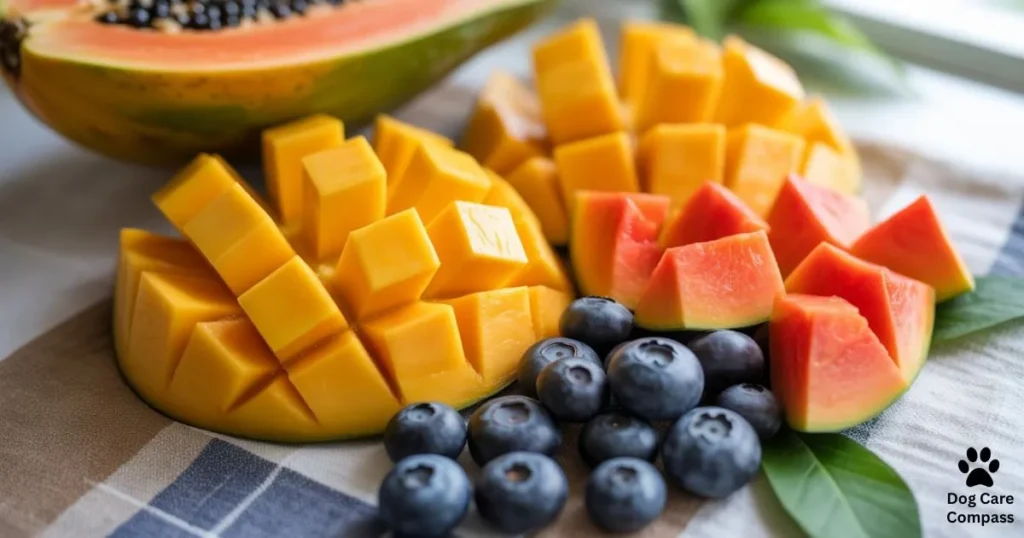
Papaya delivers a similarly tropical flavor profile with one of the gentlest digestive impacts of any fruit. The seeds cluster in a central cavity and are easy to remove completely. Papaya contains papain — a natural enzyme that actively supports digestion rather than disrupting it. Low fat, moderate sugar, high in vitamins A and C — papaya is one of the most well-rounded tropical fruit options for dogs.
Blueberries are the nutritional powerhouse alternative for the antioxidant benefit specifically. Small, seedless, low in sugar, and high in anthocyanins and vitamin C — blueberries deliver antioxidant protection without any preparation requirement. They are among the most universally recommended fruits in the dog care community for good reason.
Passion Fruit vs Other Safe Fruits for Dogs
| Fruit | Safe? | Sugar | Fiber | Main Risk | Verdict |
|---|---|---|---|---|---|
| Passion fruit | ❌ Avoid | 11.2g | 10.4g | Cyanogenic seeds, toxic rind | Avoid entirely |
| Mango | ✔ Yes | 13.7g | 1.6g | Pit (remove) | Good option |
| Papaya | ✔ Yes | 7.8g | 1.8g | Seeds (remove) | Excellent option |
| Blueberries | ✔ Yes | 9.7g | 2.4g | None significant | Excellent option |
| Watermelon | ✔ Yes | 6.2g | 0.4g | Seeds, rind (remove) | Good option |
| Banana | ✔ Yes | 12.2g | 2.6g | High sugar | Good in moderation |
| Pineapple | ✔ Yes | 9.9g | 1.4g | Core (remove) | Good option |
| Grapes | ❌ Toxic | — | — | Kidney failure | Never |
Passion fruit is the only fruit on this list where the danger is not avoidable through simple preparation. With grapes, avoidance is total. With mango and papaya, simple pit and seed removal makes them safe. With passion fruit — the seed-in-pulp structure means danger cannot be reliably removed.
What to Do If Your Dog Ate Passion Fruit (Step-by-Step)

What happens if my dog eats passion fruit? The answer depends entirely on what part was eaten and how much.
If your dog licked a small amount of ripe pulp — no rind, minimal seeds: Monitor closely for the next 30 minutes, then for 24 hours. Watch for vomiting, diarrhea, excessive drooling, or lethargy. Mild digestive upset from sugar and fiber is the most likely outcome. Contact your vet if any symptoms appear.
If your dog ate passion fruit including seeds: Do not wait for symptoms. Contact your veterinarian or a pet poison helpline immediately. Cyanide poisoning symptoms — difficulty breathing, rapid panting, trembling, dilated pupils, seizures — can appear within 15 to 20 minutes. Speed of response matters significantly here.
If your dog chewed or ate the rind: Contact your vet immediately. The rind contains higher cyanogenic glycoside concentrations than the seeds. This is an urgent situation regardless of the amount consumed.
If your dog ate unripe passion fruit: This is the most serious scenario. Contact your veterinarian immediately — do not wait. All parts of unripe passion fruit carry elevated toxicity. Bring a sample of the fruit to the vet if possible.
Frequently Asked Questions
Can dogs eat passion fruit pulp if seeds are removed?
In theory, perfectly seed-free ripe pulp is not toxic. In practice, the density of seeds throughout the pulp makes complete removal nearly impossible. Most veterinarians advise avoiding passion fruit entirely for this reason — the risk of missing even a few seeds is too high to justify the nutritional return when safer alternatives exist.
Is passion fruit juice safe for dogs?
No. Commercial passion fruit juice contains concentrated sugar, often added sweeteners, and may still contain trace seed compounds. Homemade strained passion fruit juice carries the same risks as the pulp — and concentrates the sugar further. Not a recommended option for dogs.
Can dogs eat dried passion fruit?
No. Dried passion fruit concentrates both the sugar and any remaining seed material. Commercial dried passion fruit almost always contains added sugar and preservatives. Do not feed dried passion fruit to dogs.
What is the difference between passion fruit and passion flower for dogs?
Passionflower (Passiflora incarnata) is sometimes used in calming supplements. The fruit of the passion fruit vine (Passiflora edulis) is what this article covers. Do not confuse the two — the safety profiles are different and species-specific.
My dog ate passion fruit 30 minutes ago and seems fine — should I still call the vet?
Yes. Contact your vet regardless of current symptoms. The amount of cyanide released depends on how many seeds were chewed and how digestion progresses. Symptoms can be delayed. A brief call to your vet or a pet poison helpline costs nothing and provides important peace of mind — or critical early intervention.
Can dogs eat passion fruit leaves or vines?
No. The leaves, stems, and vines of the passion fruit plant (Passiflora) contain cyanogenic glycosides. Keep dogs away from passion fruit plants entirely — not just the fruit.
Final Summary
- Passion fruit ripe flesh is not classified as toxic — but the seeds and rind contain cyanogenic glycosides that release cyanide during digestion
- Cyanide poisoning symptoms appear within 15 to 20 minutes — do not wait to call your vet if seeds were consumed
- The seed-in-pulp structure makes complete seed removal practically impossible — this is why most vets recommend avoiding passion fruit entirely
- Unripe passion fruit is entirely toxic — no safe part exists
- The rind is toxic and physically dangerous — never allow a dog access to a whole passion fruit
- Very high fiber at 10.4g per 100g causes significant digestive upset even without the cyanide risk
- Diabetic dogs must avoid passion fruit — high sugar content
- Mango, papaya, and blueberries are safe, practical alternatives with comparable nutritional benefits and no cyanide risk
- If seeds or rind were consumed — contact your vet immediately, do not wait for symptoms
This article is written for informational purposes using veterinary safety guidelines and toxicology references commonly used in pet care. Always consult a licensed veterinarian for medical advice specific to your dog.

- How to Stop a Dog From Eating Poop: 9 Home Remedies That Work - July 21, 2026
- Is Blue Buffalo Good Dog Food? Honest Review After Testing - July 12, 2026
- Can Dogs Eat Wood Apple, Lotus Root & Chayote Squash? (Exotic Fruits Guide) - July 4, 2026