I Used to Think My Dog Was Just Stubborn. He Wasn’t.
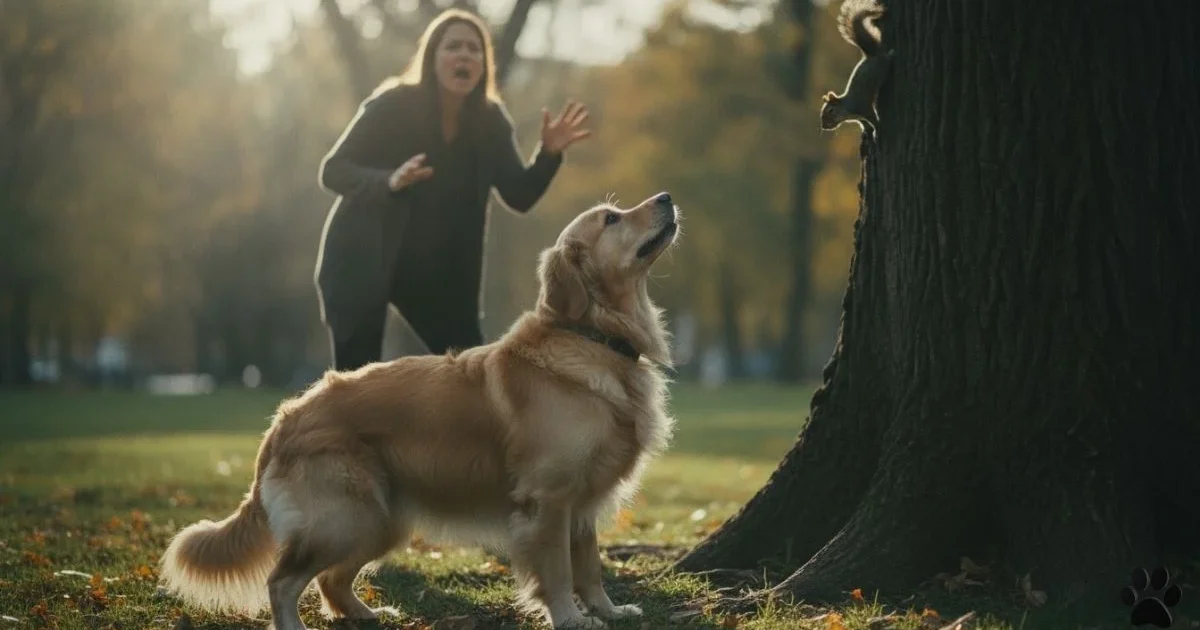
There is a specific kind of embarrassment that comes from standing in a park, calling your own dog’s name for the fifth time, while he stares directly at a squirrel and does not even flick an ear in your direction.
My Beagle, Tucker, did this to me for almost a year. I called. He looked up. He went right back to whatever smell had captured his attention. People walking past genuinely felt bad for me — I could see it on their faces.
I spent a long time assuming Tucker was just being difficult. Beagles have a reputation for it. Everyone told me that’s just how the breed is.
That explanation turned out to be mostly wrong. What was actually happening had a name, and once a trainer explained it to me, the fix made complete sense — even though it took real consistency to undo.
Why does your dog ignore you when you call him? In almost every case, it comes down to one of a small number of things: the cue has been accidentally “poisoned” by negative associations, the training was never generalized beyond one quiet room, the environment is simply more interesting than you are right now, or — less commonly but worth ruling out — there’s a hearing or health issue involved.
This guide walks through every real reason, in plain language, and exactly what worked to get Tucker actually running toward me again.
Quick Answer — The Most Common Reasons
- Poisoned cue — calling your dog has, at some point, led to something unpleasant (bath, crate, end of playtime)
- Incomplete training — your dog learned “come” in your living room, not at the park, not near other dogs
- Distraction wins — a squirrel, another dog, or an interesting smell is simply more rewarding right now
- Selective reinforcement — coming to you has stopped reliably leading to anything good
- Adolescence — dogs between 6 and 18 months go through a real independence phase
- Hearing loss — more common in senior dogs and certain breeds than owners expect
- Anxiety or fear — a dog who is stressed may shut down rather than approach
- You’ve become “background noise” — repeated commands with no follow-through teach a dog to tune you out
The Conversation That Changed How I Saw This
I finally hired a trainer after a particularly bad afternoon where Tucker bolted toward a road and I genuinely thought something terrible was about to happen. He stopped on his own — not because of me.
The trainer, a calm woman who had clearly heard this story a hundred times, asked me one question before anything else: “When you call him, what usually happens right after he comes?”
I had to think about it. Mostly — nothing good. I called him in from the yard to end playtime. I called him over to put his leash on and leave the park. I called him to give him a bath. I called him, and when he didn’t come immediately, I’d get frustrated and my voice would change.
She told me something I have not forgotten since: dogs do not generalize the way we assume they do, and they remember consequences far more precisely than they remember rules.
That single conversation reframed the entire problem for me.
1. You’ve Accidentally Poisoned the Cue
This is, by far, the most common reason a previously reliable dog stops responding — and almost nobody realizes they’re doing it.
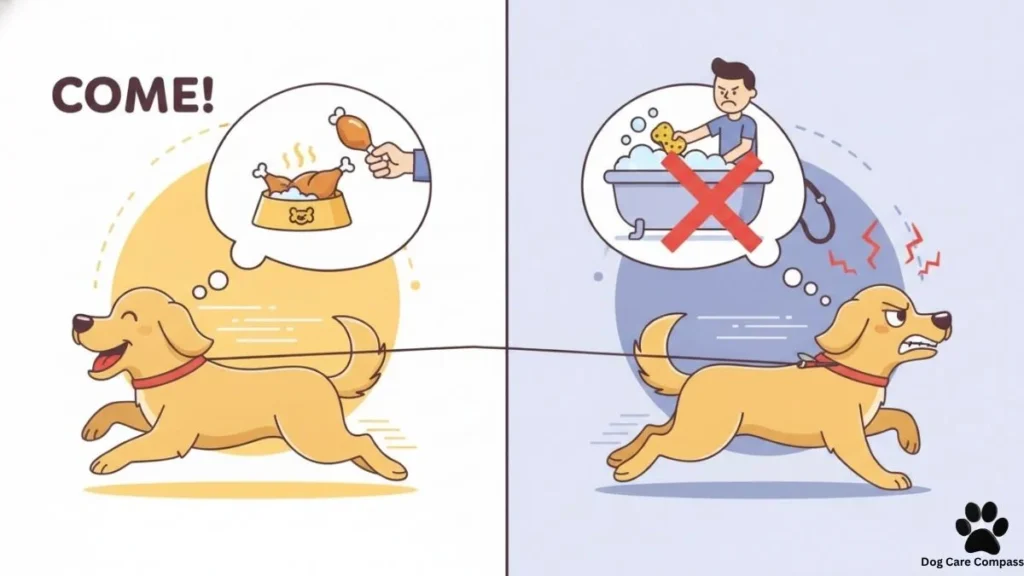
A “poisoned cue” happens when a command that used to predict something good starts predicting something the dog dislikes. Call your dog inside from the yard enough times right before something unpleasant happens — bath, nail trim, crate, end of fun — and the dog starts associating the word with the bad outcome, not with you.
Your dog may have learned to associate the cue “come” with losing something they love — like being outside — and you have unintentionally “punished” their response to the cue. Over time, instead of just being slow to respond, some dogs start actively moving away when they hear the word. Dialavet
This was Tucker’s exact problem. “Come” had become shorthand for “the good part of your day is ending.”
The fix that actually worked: call your dog for something rewarding, let them enjoy it, and then send them back to what they were doing in the first place — most of the time. Reserve the “this is final” calls for only the moments that truly require it. We did this with roughly 80% of our recalls being a treat-and-release, and 20% being the genuine “time to go” calls. Within three weeks, the hesitation I used to see in his body language before he’d approach was gone. Dialavet
2. The Training Never Left the Living Room
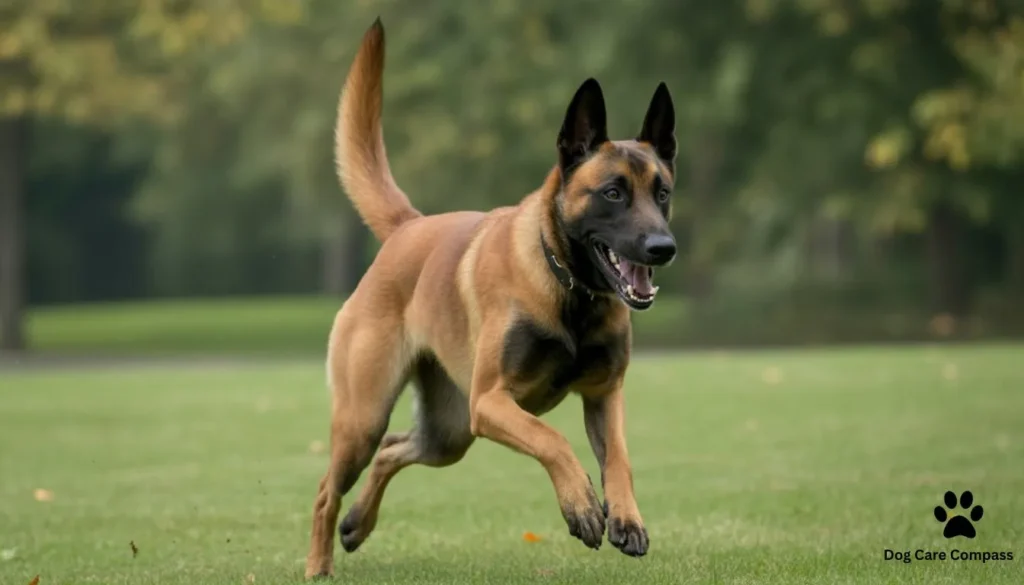
I had taught Tucker to come reliably indoors. I assumed that skill would just transfer outside, at the park, near other dogs.
It did not.
Dogs are quick to pick up new skills but slow to transfer them to new scenarios — they don’t always generalize their lessons well. A dog that responds perfectly in your quiet kitchen has, frankly, learned almost nothing about responding at a noisy dog park with three other dogs, a frisbee, and someone’s barbecue going. It’s not always that your dog is ignoring the cue — it’s often that he hasn’t had the chance to practice the skill in that specific, more distracting environment yet. A-Z AnimalsA-Z Animals
This explains something that confuses a lot of owners: a dog that’s “perfect at home” but “deaf” everywhere else isn’t being deliberately difficult. A dog who listens immediately at home but seems to develop selective hearing at the dog park isn’t engaging in stubbornness — the skill simply hasn’t been built to that level of distraction yet. Hepper Pet Resources
What helped: we restarted recall training from scratch in every new environment we visited, starting with low distraction and working up — driveway, then quiet street, then a calm part of the park, then the busy section. It felt like overkill at the time. It was not overkill. It was the missing piece.
3. The Environment Is Simply More Interesting Than You Are
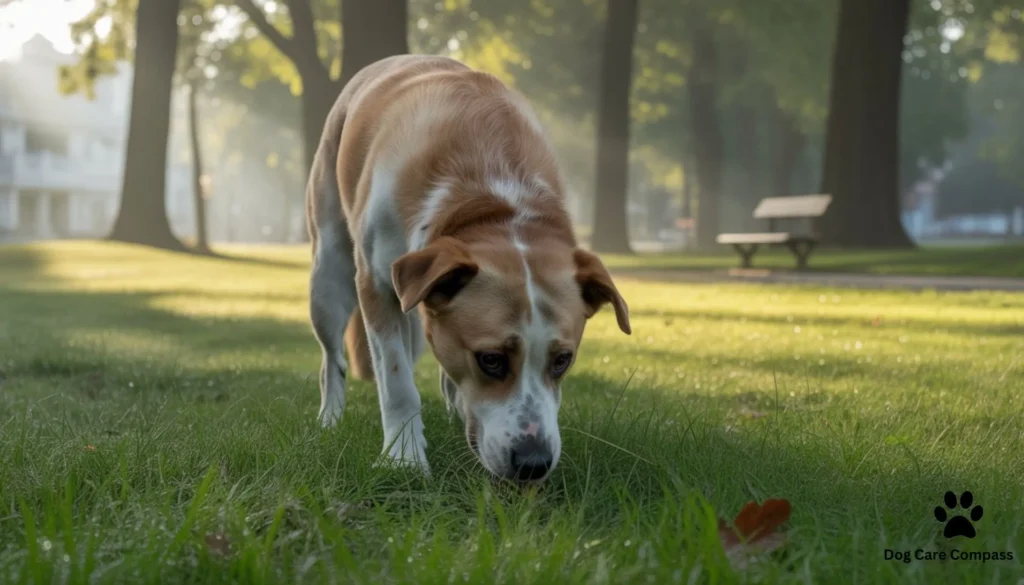
This one stings a little to admit, but it’s honest: sometimes you are competing against a genuinely fascinating smell, a squirrel, or another dog — and you are losing that competition.
If your dog finds the surroundings more interesting than you, they will tune out commands. High-stimulus environments full of sights, smells, and other animals can override your call entirely. MasterClass
This isn’t defiance. It’s a dog doing exactly what dogs are built to do — following the most compelling stimulus available. The fix isn’t to get angry about the squirrel. It’s to make yourself the more compelling option.
For Tucker, that meant carrying genuinely high-value treats — not his regular kibble, but small pieces of chicken or cheese he didn’t get any other time — specifically reserved for recall practice in distracting places.
4. Adolescence Is a Real Phase, Not an Excuse
Tucker’s worst stretch happened to land almost exactly between 7 and 14 months old. That timing was not a coincidence.
Between roughly 6 and 18 months, dogs go through a genuine exploration of independence and can start ignoring previously well-learned cues, driven largely by curiosity rather than disobedience. It’s developmentally similar to a human teenager testing boundaries — uncomfortable to live through, but temporary if you stay consistent. MasterClass
The mistake most owners make here — and one I made too — is giving up on training during this phase because “he’s just being a teenager anyway.” That’s backwards. Adolescence is exactly when consistent reinforcement matters most, because it’s when the foundation either solidifies or erodes.
5. Coming to You Has Stopped Paying Off
If good things tend to follow a behavior, a dog will do more of that behavior — and the consequences of a dog’s actions determine how much of that action you’ll see in the future. This is just basic learning theory, and it applies whether or not we like the implication. Bailey’s CBD
If coming when called used to earn treats, praise, and play — and gradually stopped earning anything because you assumed the behavior was “already learned” — the behavior fades. Not because the dog forgot. Because the payoff disappeared.
I’ll admit this happened with Tucker too. Once he was reliably coming for a few months, I stopped rewarding it nearly as often. The decline in his responsiveness tracked almost exactly with the decline in reinforcement. That correlation was not subtle once I looked back at it honestly.
6. You’ve Become Background Noise
This was the hardest thing the trainer said to me, and the most useful.
If you tell your dog to do something five times and he only does it once, the lesson he’s actually learning is that he doesn’t need to respond until roughly the fifth repetition — or not at all. Our constant talking, when it isn’t tied to consistent follow-through, just becomes noise to a dog — they have their own natural communication style, and it isn’t built around words the way ours is. Bailey’s CBDBailey’s CBD
I had been calling Tucker’s name constantly throughout the day — not as a real command, just narrating, the way you might say a person’s name without expecting a response. He had, completely reasonably, learned that hearing his name carried no particular meaning most of the time.
What changed: I stopped using his actual recall word casually. “Tucker” became something I said when I genuinely wanted his attention, every single time, followed through every single time. The word regained meaning within about two weeks.
7. Hearing Loss — More Common Than Owners Realize
This is the one people jump to least often, and it deserves more attention than it usually gets, particularly with senior dogs.
Age-related hearing loss in dogs is gradual and easy to miss because dogs compensate well using sight and vibration. A dog that seems to “ignore” recall but responds instantly to a hand signal, a stomp on the floor, or your return into their field of vision may not be ignoring you at all.
Certain breeds — Dalmatians, and many white-coated breeds in particular — also carry a higher genetic risk of congenital deafness, partial or complete, from birth.
A simple way to check: call your dog’s name from behind them, out of their sight line, in a quiet room, without any visual or vibration cue. If there’s no reaction at all in a context where there used to be one, that’s worth raising with your vet rather than continuing to assume it’s a behavior problem.
8. Anxiety or Fear Can Look Exactly Like Ignoring You
A dog that is genuinely afraid or anxious in a given moment may freeze, avoid eye contact, or move away rather than toward you — and from a distance, that can look identical to plain disobedience.
This matters because the response to fear-based non-compliance is the opposite of the response to a poisoned cue or a distraction problem. Punishing a frightened dog for not coming when called tends to make the underlying fear worse, and can compound into the exact poisoned-cue problem described earlier.
If the “ignoring” only happens around specific triggers — loud noises, certain people, other dogs, a particular location — fear is worth considering as the actual driver, not stubbornness.
9. Trust, Not Just Training
If your dog is wary of you because of past punishment, or because you’ve inadvertently startled or frightened him in some context, he may not come to you simply because he doesn’t fully trust you in that moment — even if he loves you and is generally affectionate the rest of the time. Hepper Pet Resources
This is uncomfortable to consider, but it’s an honest part of the picture for some dogs, particularly rescues with an unknown history, or dogs that have been scolded harshly after coming to their owner in the past — even unintentionally creating exactly the poisoned-cue problem from a different angle.
What I Actually Did to Fix It — Step by Step
This took about six weeks of genuine consistency before I felt confident in his recall again. Here’s the sequence that worked, roughly in order.
Week 1 — Reset the word. Stopped using “Tucker, come” casually. Every single use was followed through with something good.
Week 1 to 2 — Indoor refresher. Practiced short recalls in the living room with high-value treats, multiple times daily, very low distraction, very high success rate.
Week 2 to 3 — Backyard, low distraction. Same drill, slightly more distracting environment, same high-value reward, same consistency.
Week 3 to 4 — Quiet outdoor spaces. Empty section of the park, early morning, leash on with plenty of slack as a safety net, not a correction tool.
Week 4 to 5 — The 80/20 release rule. Started calling him from play, rewarding generously, and sending him back to play 80% of the time, reserving the final “we’re leaving” calls for the remaining 20%.
Week 5 to 6 — Genuinely distracting environments. Busy park sections, other dogs present, still with high-value rewards and patience for setbacks.
The general principle that worked throughout was returning to basics — re-training the command under low distraction with treats and play as the consistent payoff, and identifying exactly what reward actually motivated him, rather than assuming any treat would do. MasterClass
What I Stopped Doing — Just as Important
Repeating the command over and over. Every unanswered repetition was teaching him the command was optional.
Calling him only to end something fun. Every “come inside” stopped meaning “fun is over, forever.”
Getting frustrated in my tone. Dogs as perceptive as this notice changes in tone and body language, remember them, and tend to dislike them — frustration in your voice when calling becomes one more reason not to approach. Bailey’s CBD
Chasing him when he didn’t come. This accidentally turns recall into a fun game of being chased — which is the opposite of what you want to reinforce.
When This Is Genuinely a Safety Issue
A dog that doesn’t reliably come when called is, bluntly, at risk near roads, around aggressive dogs, or in any situation requiring an immediate recall. This isn’t a minor inconvenience — it’s worth treating with real urgency.
If you’re in active rebuilding mode, keep your dog on a long lead in any environment where an unreliable recall could be dangerous. A 15 to 30 foot training lead lets you practice realistic distance recalls while keeping a physical safety net in place until the behavior is solid again.
Frequently Asked Questions
Is my dog being stubborn or is this a real problem?
Almost never pure stubbornness in the way people mean it. What looks like stubbornness is nearly always one of the specific mechanisms above — a poisoned cue, incomplete generalization of training, competing distraction, or reduced reinforcement. Dogs don’t withhold compliance out of spite the way the word “stubborn” implies for humans.
Should I punish my dog for not coming when called?
No. Punishing a delayed or absent recall response — even mild frustration in your voice — risks creating or worsening exactly the poisoned-cue problem described above. The dog learns that responding, or even the word itself, predicts something unpleasant, which makes future recall worse, not better.
My puppy ignores me even when he’s not misbehaving — why?
Young puppies simply have not yet learned a reliable recall — this is a training gap, not defiance. Coming when called and staying are skills that need to be deliberately taught and repeated across many contexts, starting as early as possible and continuing well past the point where it feels like the dog “already knows it.”
How long does it take to fix a poisoned recall cue?
In our case, meaningful improvement appeared within two to three weeks of strict consistency, with continued solidifying over six weeks. Severity and history matter — a dog with years of poisoned associations will take longer than one with a few months of inconsistency.
Could my dog’s hearing actually be the problem?
It’s worth ruling out, particularly in senior dogs or breeds prone to congenital deafness. Test by calling from behind, out of sight, with no other cues like a stomp or hand signal. A dog that responds normally to visual cues but never to sound alone warrants a vet conversation rather than continued training as the only approach.
Is it too late to fix recall in an older dog?
No — older dogs are entirely capable of relearning a recall, and in some ways adult dogs focus better than adolescents going through the independence phase described above. The process is the same: identify what’s actually driving the non-response, then rebuild consistently.
Final Summary
- A dog that ignores recall is almost never being deliberately stubborn — there is nearly always an identifiable mechanism behind it
- A poisoned cue — where the command has come to predict something unpleasant — is one of the single most common and most overlooked causes
- Training that only happened in one quiet environment does not automatically transfer to noisy, distracting, real-world settings
- Adolescence between roughly 6 and 18 months is a genuine developmental phase, not an excuse to abandon training
- If coming to you has stopped reliably earning something good, the behavior naturally fades — reinforcement needs to continue long after initial training
- Repeating commands without follow-through teaches a dog that the command is optional noise
- Hearing loss and anxiety can both look exactly like ignoring — both deserve to be ruled out rather than assumed away
- A structured, patient retraining process — starting low-distraction and building up, with genuinely high-value rewards — reliably rebuilds a broken recall
- A dog with an unreliable recall is a real safety concern near roads or other animals — use a long training lead while rebuilding the behavior
Written using veterinary and certified dog trainer guidance on canine recall behavior and learning theory. Always consult a certified trainer or veterinarian for persistent behavioral concerns, or if a sudden change in responsiveness coincides with other symptoms.

researching veterinary sources, scientific studies, and expert
guides to bring dog owners accurate, practical information. Every
article is written with care and reviewed against credible
veterinary references including ASPCA, AKC, and peer-reviewed
literature.
- Why Does My Dog Sleep So Much All of a Sudden? 8 Real Reasons - August 10, 2026
- How to Train a Dog to Stop Pulling Without Treats: This Method Works - August 5, 2026
- How to Train an Older Dog New Tricks (Even If They’ve Never Been Trained) - August 1, 2026