Homemade Dog Food for Weight Loss: Low-Calorie Recipes and Feeding Guide
My neighbor’s Labrador was so overweight that the vet used the word “obese” during the checkup. The owner was mortified — she had no idea how much weight her dog had gained until a professional pointed it out directly.
That conversation started a six-month journey of homemade weight loss meals that produced remarkable results — and taught me a great deal about what actually works for canine weight management versus what owners assume should work.
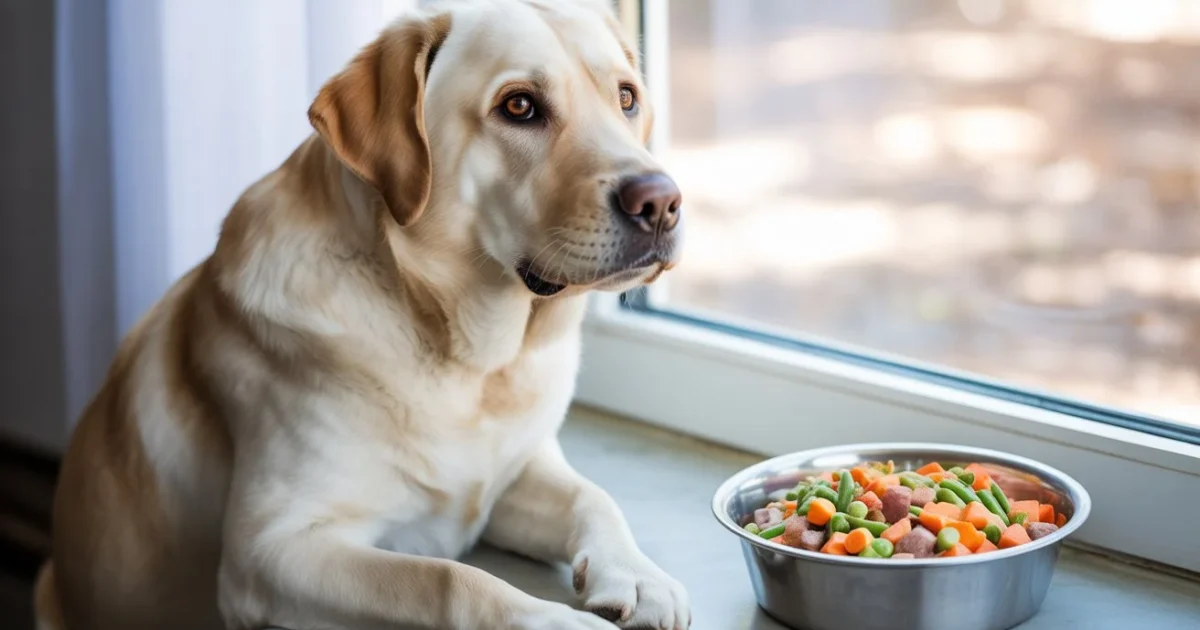
Homemade dog food for weight loss works when it is genuinely low in calories, high in fiber and protein, and served in appropriate controlled portions. The combination of whole food ingredients, reduced caloric density, and increased satiety produces sustainable weight loss without the hunger and behavioral frustration that crash dieting causes in dogs.
Quick Answer
| Question | Answer |
|---|---|
| Best approach? | High protein, high fiber, low fat and carbs |
| How much to reduce? | 20–30% below maintenance calories |
| How fast should weight loss be? | 1–2% of body weight per month |
| Best vegetables for weight loss? | Green beans, zucchini, cucumber |
| Best proteins? | Chicken breast, turkey, white fish |
Why Dogs Become Overweight
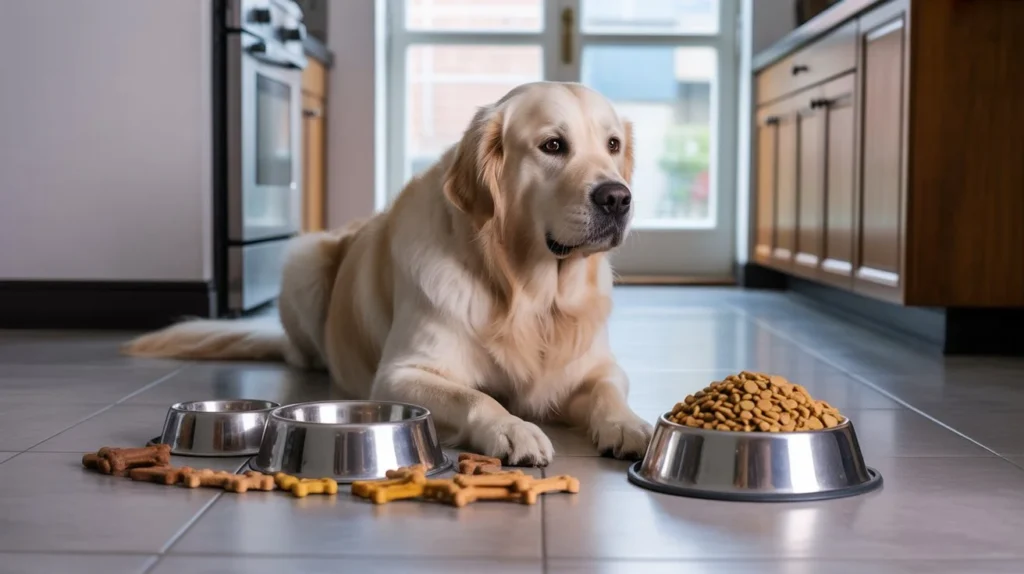
Understanding the cause shapes the solution.
Overfeeding: The most common cause. Owners underestimate portion sizes, add human food regularly, and do not account for treats in total daily caloric intake.
Insufficient exercise: Dogs burning fewer calories than they consume gain weight consistently over time — particularly after neutering when metabolic rate decreases.
Post-neutering metabolism change: Neutered dogs typically require 20 to 30% fewer calories than intact dogs of the same size and activity level. Owners who do not reduce food intake after neutering see gradual weight gain over months.
Wrong food: High-calorie commercial foods fed in generous portions produce weight gain regardless of exercise level.
Medical causes: Hypothyroidism, Cushing’s disease, and certain medications cause weight gain independent of diet and exercise. Always rule out medical causes before beginning a weight loss program — particularly if the weight gain was sudden.
How Much Weight Loss Is Safe for Dogs?
This is the question most owners get wrong.
Rapid weight loss in dogs — more than 3% of body weight per month — causes muscle loss alongside fat loss. The goal is fat loss while preserving lean muscle mass.
Safe weight loss rate: 1 to 2% of current body weight per month.
| Current Weight | Safe Monthly Loss |
|---|---|
| 20 lbs | 0.2–0.4 lbs per month |
| 40 lbs | 0.4–0.8 lbs per month |
| 60 lbs | 0.6–1.2 lbs per month |
| 80 lbs | 0.8–1.6 lbs per month |
This feels slow. It produces lasting results without metabolic damage.
Caloric Targets for Weight Loss
Calculate maintenance calories first — then reduce by 20 to 30%.
Rough maintenance calorie formula: Daily calories = Body weight in kg × 70 × (weight in kg)^0.75
For a simpler starting point:
| Dog Weight | Maintenance Calories | Weight Loss Target |
|---|---|---|
| 20 lbs | 400–500 kcal | 300–380 kcal |
| 40 lbs | 700–850 kcal | 530–650 kcal |
| 60 lbs | 950–1100 kcal | 720–840 kcal |
| 80 lbs | 1150–1350 kcal | 870–1020 kcal |
These are starting points. Adjust based on actual weight change over the first month.
The Weight Loss Diet Formula
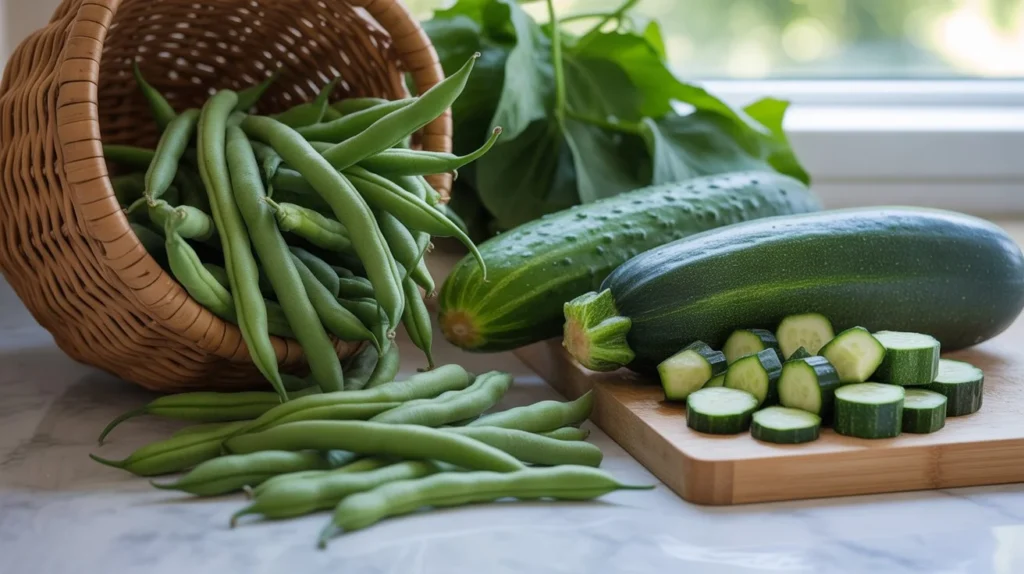
High Protein — Preserves Muscle During Weight Loss
Protein is the most important macronutrient during weight loss.
Adequate protein during caloric restriction prevents muscle loss — ensuring the weight lost is fat rather than lean tissue. A dog losing weight on a low-protein diet loses muscle alongside fat and ends up weaker and with a lower metabolism.
Target 40 to 50% of calories from protein during weight loss.
Best protein sources:
- Chicken breast — skinless, boiled
- Turkey breast — skinless, boiled
- White fish — cod, tilapia
- Egg whites — cooked
- Very lean ground beef — well drained
High Fiber — Creates Satiety Without Calories
Fiber is the second pillar of effective weight loss feeding.
High-fiber vegetables add volume and bulk to meals without meaningful caloric contribution. A dog eating a bowl with significant vegetable content feels fuller than one eating the same calories in dense kibble.
This reduces the hunger-driven behavioral distress — whining, begging, food-seeking — that makes weight loss difficult for owners to maintain.
Best fiber vegetables for weight loss:
- Green beans — 31 kcal per 100g
- Zucchini — 17 kcal per 100g
- Cucumber — 16 kcal per 100g
- Broccoli — 34 kcal per 100g
- Spinach — 23 kcal per 100g
The vegetable content in weight loss meals can be substantial — up to 40 to 50% of meal volume — without significantly impacting caloric targets. Our vegetables guide covers preparation and daily amounts for each option.
Low Fat — Reduces Caloric Density
Fat contains more than twice the calories per gram compared to protein or carbohydrates.
Reducing fat intake is the most efficient way to reduce caloric density without dramatically reducing meal volume. Lean proteins, low-fat vegetables, and minimal added oil or fat produce the caloric reduction needed for weight loss.
3 Complete Weight Loss Recipes
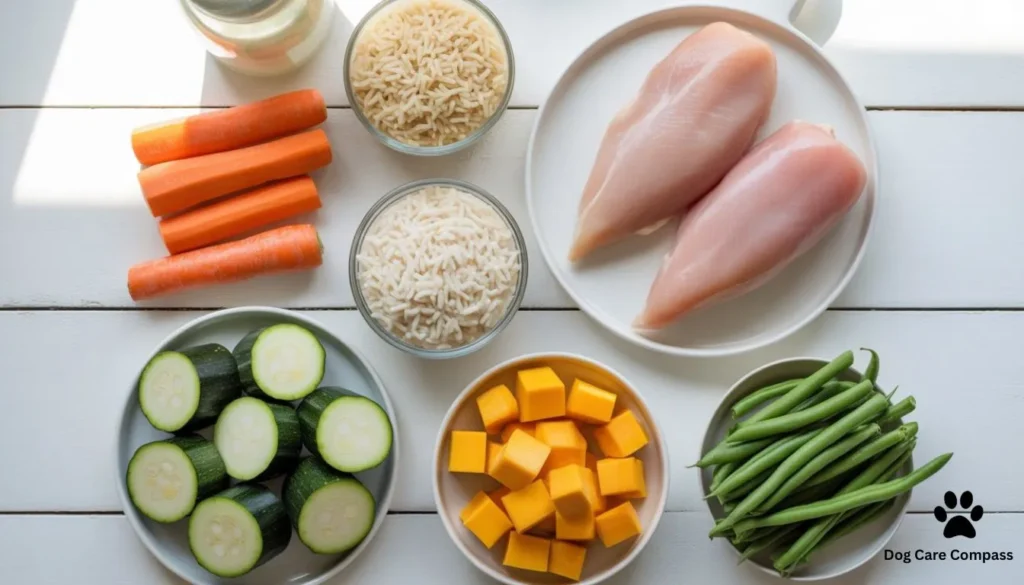
Recipe 1 — Chicken and Green Bean Bowl
For a 40 lb dog targeting 600 kcal daily — one day:
- 150g chicken breast — skinless, boiled — 165 kcal
- 200g green beans — steamed — 62 kcal
- 100g zucchini — steamed — 17 kcal
- 50g white rice — cooked — 65 kcal
- 1 tsp fish oil — 40 kcal
- Total: approximately 349 kcal per meal × 2 meals = 698 kcal
Instructions:
- Boil chicken completely — no skin, no seasoning
- Shred into small pieces
- Steam green beans and zucchini until soft
- Cook white rice in plain water
- Combine everything
- Add fish oil on top
- Cool completely before serving
- Divide into 2 equal meals daily
Recipe 2 — Turkey and Vegetable Stew
For a 40 lb dog — one day:
- 140g turkey breast — skinless, boiled — 147 kcal
- 200g mixed vegetables — green beans, broccoli, zucchini — 65 kcal
- 50g pumpkin — plain — 21 kcal
- Low-sodium broth — minimal
- 1 tsp fish oil — 40 kcal
- Total: approximately 273 kcal per meal × 2 = 546 kcal
Instructions:
- Boil turkey breast — remove all skin
- Shred finely
- Steam all vegetables until soft
- Combine with minimal broth for stew consistency
- Add pumpkin — supports satiety through fiber
- Add fish oil
- Cool and divide into 2 meals
Recipe 3 — White Fish and Vegetable Bowl
For a 40 lb dog — one day:
- 150g white fish — cod, boiled — 138 kcal
- 200g cucumber and zucchini — raw or steamed — 35 kcal
- 100g green beans — steamed — 31 kcal
- 40g sweet potato — boiled — 43 kcal
- 1 tsp fish oil — 40 kcal
- Total: approximately 287 kcal per meal × 2 = 574 kcal
Instructions:
- Boil fish in plain water — check for bones
- Flake into small pieces
- Prepare vegetables
- Combine with sweet potato — small amount for energy
- Add fish oil
- Cool completely and divide
Feeding Schedule for Weight Loss
How you feed matters as much as what you feed.
Two meals daily — not one large meal. Splitting daily calories into two equal meals reduces hunger between meals and prevents the gorging behavior that one large daily meal encourages.
Feed at consistent times — same time every day. Consistent feeding times regulate the hormonal hunger signals that drive food-seeking behavior.
Measure every meal — do not eyeball portions. Small variations in portion size accumulate significantly over weeks.
Separate from other pets — competitive eating causes dogs to eat faster and more than intended.
What to Do About Treats During Weight Loss
Treats are where most weight loss plans fail.
A dog receiving adequate treats alongside a reduced-meal diet is not in caloric deficit — the treats close the gap.
Rules for treats during weight loss:
- Count treat calories as part of daily caloric target — not additional to it
- Use low-calorie options — raw carrot pieces, cucumber slices, green bean pieces
- Reduce meal portions by the number of treat calories given
- Use praise, play, and affection as reward alternatives where possible
Our vegetables guide covers the lowest-calorie treat options that satisfy dogs without impacting weight loss progress.
Exercise Alongside Diet
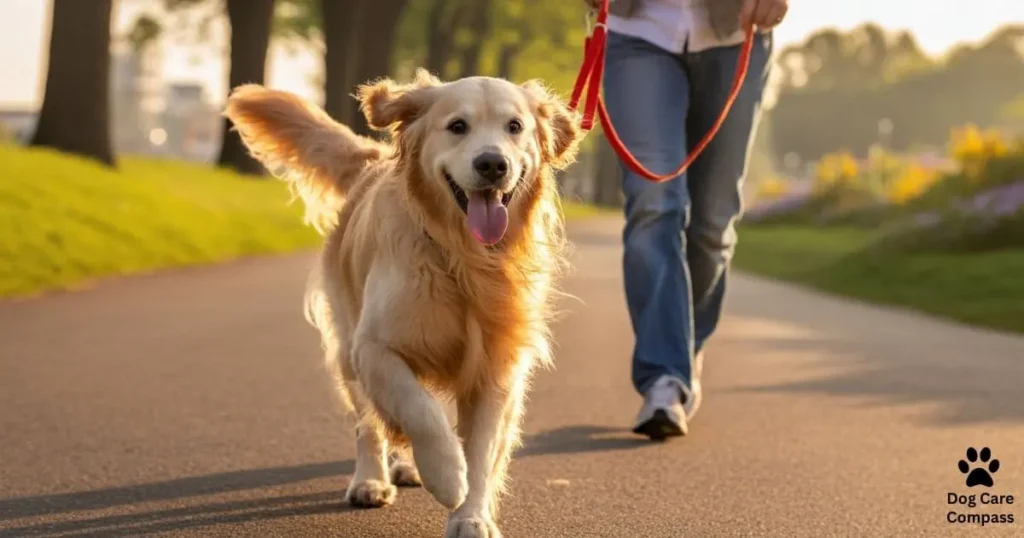
Diet produces the caloric deficit. Exercise preserves muscle and supports metabolic rate.
For overweight dogs — start gently. A dog carrying significant excess weight has joint stress that makes vigorous exercise painful and counterproductive.
Starting exercise protocol for overweight dogs:
- Week 1 to 2: 15 to 20 minute gentle walks twice daily
- Week 3 to 4: 25 to 30 minute walks twice daily
- Month 2: Add short swimming sessions if available — low joint impact
- Month 3 onward: Gradually increase duration and mild intensity
Swimming is the single best exercise for significantly overweight dogs — full body workout with zero joint impact.
Monitoring Progress
Weigh the dog monthly — not weekly. Weekly fluctuations are normal and misleading.
Assess body condition score monthly alongside weight. The goal is visible waist improvement and reduced rib fat coverage alongside weight reduction.
Adjust calories if weight loss is faster than 2% per month — increase slightly. If no loss after 6 weeks — reduce by another 10%.
Breed Specific Notes
German Shepherds — GSDs that are overweight are at significantly higher joint risk given their genetic predisposition to hip dysplasia. Weight loss in overweight GSDs is a meaningful health intervention, not just cosmetic. Our GSD complete guide covers the breed’s joint health considerations.
Belgian Malinois — Obesity is uncommon in well-exercised Malinois but does occur post-neutering in under-exercised dogs. For this breed — exercise increase is typically as impactful as dietary change for weight management.
Frequently Asked Questions
How long will it take for my dog to reach a healthy weight?
At 1 to 2% of body weight monthly — a dog that is 20% overweight takes approximately 10 to 12 months to reach ideal weight. This is appropriate — rapid loss causes muscle loss and metabolic adaptation.
Can I just feed less of my dog’s regular food?
You can — but homemade weight loss food produces better satiety at the same caloric target because of higher fiber and volume. A dog fed reduced kibble feels hungrier than one fed the same calories in high-fiber whole food.
My dog acts starving all the time on the diet — what do I do?
Increase the green bean and cucumber content — these add volume and satiety with almost no calories. A larger bowl with more vegetables and slightly less protein produces the same caloric total with more satisfied behavior.
Should I tell my vet before starting a homemade weight loss diet?
Yes — particularly to rule out medical causes of weight gain and to establish a baseline weight for monitoring. Veterinary input on target weight and caloric targets specific to your dog improves outcomes.
Can senior dogs safely lose weight on homemade food?
Yes — with extra attention to protein adequacy. Senior dogs have higher protein requirements than younger adults. Ensure the protein content is generous even as total calories are reduced.
Final Summary
- Target 1 to 2% of body weight lost per month — not faster
- High protein preserves muscle during caloric restriction
- High-fiber vegetables add volume and satiety without caloric impact
- Reduce daily calories by 20 to 30% below maintenance
- Split into two equal daily meals — consistent timing
- Count treat calories in the daily total — not additional to it
- Start exercise gently — increase gradually over months
- Weigh monthly and adjust based on actual results
Start today: Replace 30% of your dog’s current meal with steamed green beans. Same protein amount, same meal timing — just more green beans and slightly less of everything else. That single change reduces caloric density immediately while maintaining meal volume and satiety.
For more dog nutrition guides, explore the complete library at dogcarecompass.com.

researching veterinary sources, scientific studies, and expert
guides to bring dog owners accurate, practical information. Every
article is written with care and reviewed against credible
veterinary references including ASPCA, AKC, and peer-reviewed
literature.
- How to Stop Dog Barking at Night: 8 Proven Methods That Work - July 2, 2026
- Dog Pulls on Leash Every Walk? Fix It With This Simple Method - July 2, 2026
- How to Teach a Dog to Heel Without Treats: Step-by-Step Method - June 27, 2026