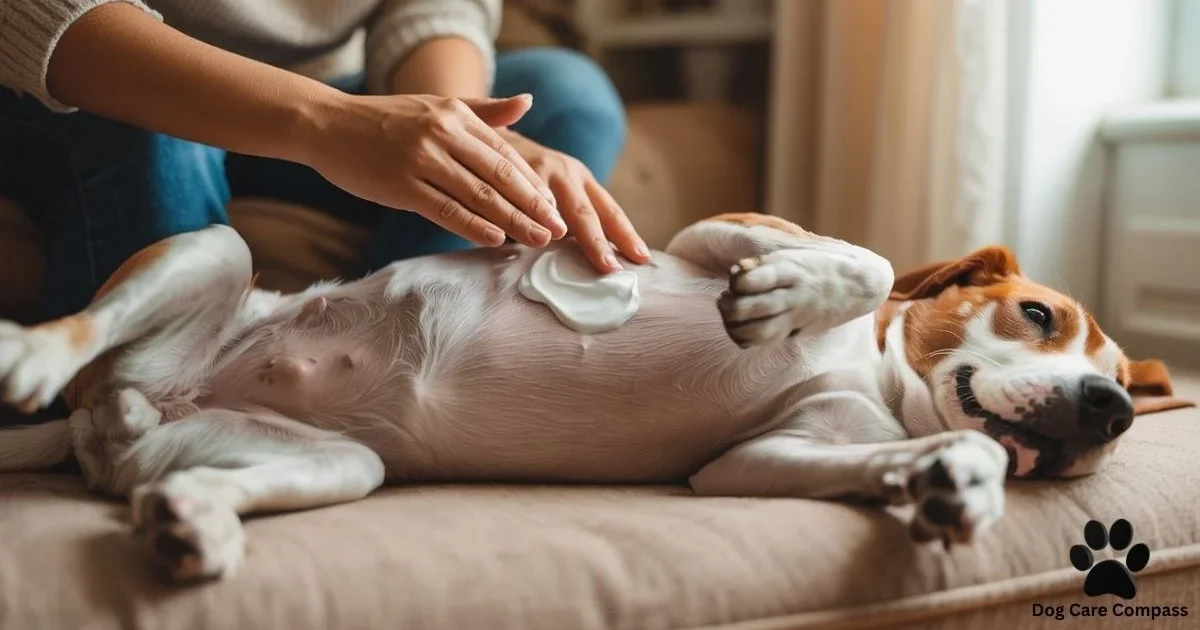
Can I Put Sudocrem on My Dog? What Every Owner Needs to Know
My dog developed a small irritated patch on his belly and my first instinct was to reach for the Sudocrem sitting in my bathroom cabinet. I had used it on everything from chapped skin to minor cuts my entire life. Surely it would help a dog too?
That instinct sent me into research — and what I found was more nuanced than a simple yes or no.
Can I put Sudocrem on my dog? Yes — Sudocrem can be applied to dogs in small amounts on minor skin irritations, rashes, and superficial wounds. However, it must be prevented from being licked off, should not be applied to deep wounds or near the eyes and mouth, and is not a substitute for veterinary treatment for persistent or worsening skin conditions.
Quick Answer
| Question | Answer |
|---|---|
| Is Sudocrem safe for dogs? | Yes — external use, small amounts |
| Can dogs lick Sudocrem? | No — prevent licking completely |
| What can it be used for? | Minor rashes, irritation, superficial wounds |
| What to avoid? | Deep wounds, eyes, mouth, large areas |
| When to see a vet? | Condition worsening, not improving in 48 hours |
What Is Sudocrem?
Sudocrem is a white antiseptic healing cream originally developed for nappy rash in babies.
Its active ingredients include:
- Zinc oxide — astringent, mild antiseptic, skin barrier
- Benzyl alcohol — mild local anaesthetic and antiseptic
- Benzyl benzoate — antiseptic
- Benzyl cinnamate — antiseptic
- Lanolin — moisturising agent
The zinc oxide is the primary active component — it forms a protective barrier over irritated skin, reduces inflammation, and has mild antimicrobial properties.
Is Sudocrem Safe for Dogs?
The external application of Sudocrem on dogs is generally considered safe in small amounts on intact skin.
Veterinary professionals commonly acknowledge that Sudocrem applied topically to minor skin issues does not cause harm in healthy dogs when used correctly.
The concern is ingestion. Zinc oxide — when consumed in significant amounts — is toxic to dogs. It causes vomiting, diarrhea, lethargy, and in larger amounts, hemolytic anemia — destruction of red blood cells.
The amount of zinc oxide in a small topical application is unlikely to cause toxicity if licked occasionally. The risk increases with:
- Large application areas
- Repeated licking over time
- Small dog body weight
- Any intentional or accidental ingestion of the product directly
What Can You Use Sudocrem For on Dogs?
Minor Skin Irritation and Rashes
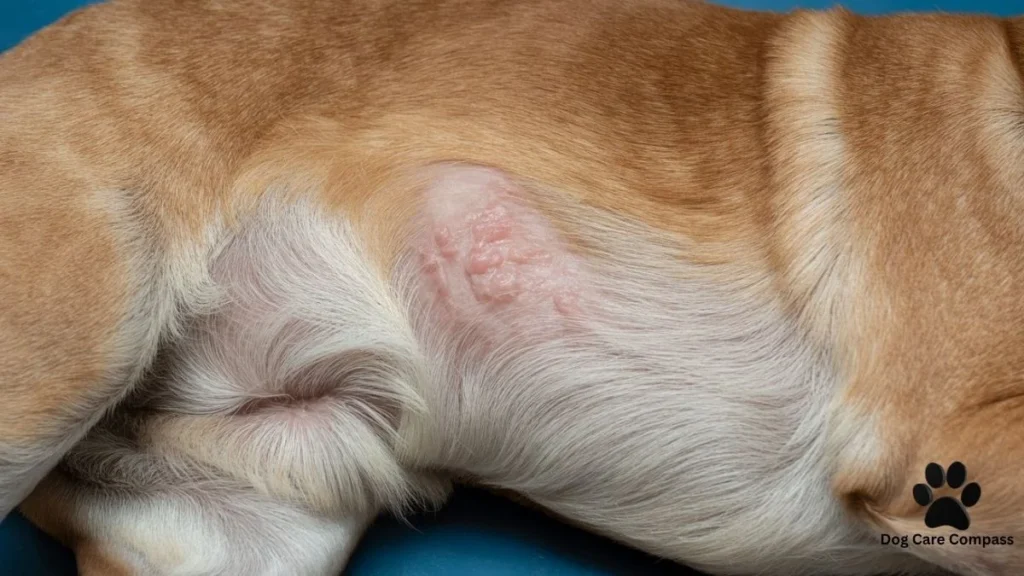
Small areas of redness, mild rash, or contact irritation respond well to a thin application of Sudocrem.
The zinc oxide creates a protective barrier that reduces further irritation while the antiseptic components address any surface bacterial load.
Apply a thin layer — enough to cover the area without excess. Thick applications are more likely to be licked and more likely to transfer to other surfaces.
Superficial Cuts and Grazes
Small surface cuts and grazes benefit from Sudocrem’s antiseptic and barrier properties.
Clean the wound first with sterile saline. Apply a thin layer of Sudocrem. Monitor for signs of infection — increasing redness, swelling, discharge, or heat.
Do not use on deep wounds, puncture wounds, or any wound that may need stitches. These require veterinary assessment.
Mild Hot Spots — Early Stage
Hot spots — areas of acute moist dermatitis — in their earliest stage sometimes respond to Sudocrem’s drying and antiseptic action.
However — established hot spots require veterinary treatment. Sudocrem applied to a developing hot spot may provide short-term comfort while veterinary appointment is arranged. It is not a standalone treatment for this condition.
Cracked or Dry Paw Pads
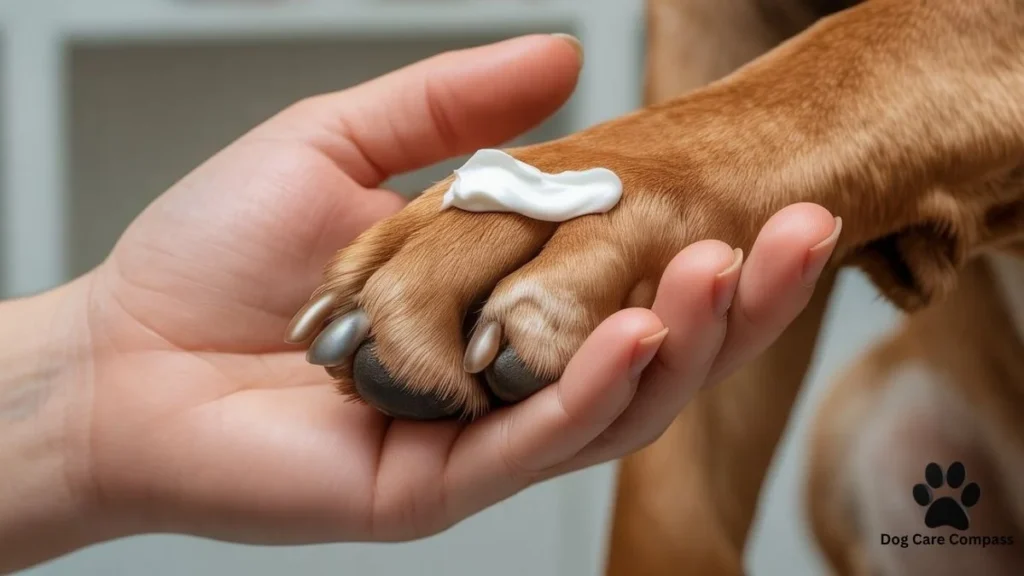
A thin application of Sudocrem to cracked, dry paw pads provides barrier protection and mild antiseptic coverage.
The lanolin component moisturises the skin surface. Apply at night when the dog is settled — preventing licking while the product is absorbed is easier during sleep.
Mild Interdigital Irritation
Mild redness and irritation between toes — in early stages — can be addressed with Sudocrem as a short-term measure.
The same considerations apply — prevent licking, apply thinly, monitor for improvement. Persistent interdigital issues require veterinary investigation for underlying allergy or infection.
How to Apply Sudocrem to a Dog Safely
- Clean the affected area gently with warm water — pat dry completely
- Apply a thin layer of Sudocrem — just enough to cover
- Prevent licking immediately — use an e-collar if needed
- Monitor the area twice daily
- Reapply once or twice daily for mild conditions
- If no improvement within 48 hours — see a vet
The e-collar is not optional for dogs that lick. A dog persistently licking Sudocrem from a large area accumulates zinc oxide ingestion that becomes a genuine toxicity concern.
What NOT to Use Sudocrem For on Dogs
- Deep or puncture wounds — requires veterinary cleaning and possibly antibiotics
- Near the eyes — any product near the eye surface requires veterinary guidance
- Near the mouth — too close to ingestion risk
- Large body surface areas — increases licking exposure and zinc absorption risk
- Infected wounds with significant discharge — requires antibiotic treatment
- Any condition not improving within 48 hours — veterinary assessment needed
If Your Dog Licks Sudocrem — What to Do
A brief lick of a small amount is unlikely to cause significant harm for most adult dogs.
Monitor for:
- Vomiting
- Diarrhea
- Lethargy
- Loss of appetite
If a dog has consumed a significant amount — particularly a small dog — contact your vet or ASPCA Poison Control at 888-426-4435.
For perspective — the zinc oxide content in a thin topical application is small. The risk rises with repeated licking of large areas over extended periods rather than a single brief lick.
Alternatives to Sudocrem for Dogs
| Condition | Alternative |
|---|---|
| Minor irritation | Coconut oil — safe if licked |
| Dry paw pads | Specific dog paw balm products |
| Hot spots | Veterinary chlorhexidine spray |
| Superficial wounds | Sterile saline flush + veterinary wound gel |
Breed Considerations
Dogs with known skin conditions — German Shepherds with environmental allergies, Belgian Malinois with sensitive skin — benefit from veterinary diagnosis before topical treatment.
Applying Sudocrem to a skin reaction that is actually a manifestation of systemic allergy addresses the symptom without the cause. Our paw licking guide covers how skin symptoms relate to underlying allergic conditions that topical treatment alone cannot resolve.
Frequently Asked Questions
Is Sudocrem toxic to dogs?
Topically applied in small amounts — no. Ingested in significant quantities — yes, due to zinc oxide content. Prevent licking and apply thinly.
Can I use Sudocrem on my dog’s itchy skin?
For mild localized itching — yes, as a short-term measure. For persistent or widespread itching — veterinary investigation of the underlying cause is needed.
How often can I apply Sudocrem to my dog?
Once or twice daily for minor conditions. If the condition has not improved within 48 hours of twice-daily application — see a vet rather than continuing.
Is there a dog-specific alternative to Sudocrem?
Yes — veterinary-formulated zinc oxide creams and wound care products exist that are specifically formulated for dogs and safe if small amounts are licked. Ask your vet for recommendations.
Can puppies have Sudocrem applied?
With extra caution — puppies are smaller and more vulnerable to zinc toxicity from licking. An e-collar is essential for puppies if Sudocrem is applied anywhere.
Final Summary
- Sudocrem is safe for external topical use on dogs in small amounts
- Prevent licking completely — zinc oxide toxicity from repeated ingestion is the primary risk
- Apply thinly to minor rashes, superficial wounds, dry paw pads, and mild hot spots
- Do not use near eyes, mouth, on deep wounds, or on large body surface areas
- No improvement within 48 hours — see a vet rather than continuing home treatment
- Puppies require extra caution due to smaller body weight and higher licking tendency
For more dog health guides, explore the complete library at dogcarecompass.com.

researching veterinary sources, scientific studies, and expert
guides to bring dog owners accurate, practical information. Every
article is written with care and reviewed against credible
veterinary references including ASPCA, AKC, and peer-reviewed
literature.
- How to Stop Dog Barking at Night: 8 Proven Methods That Work - July 2, 2026
- Dog Pulls on Leash Every Walk? Fix It With This Simple Method - July 2, 2026
- How to Teach a Dog to Heel Without Treats: Step-by-Step Method - June 27, 2026