Dog Eye Infection Home Remedy: What Works, What Doesn’t, and When to See a Vet
The morning I noticed my dog’s eye was red, swollen, and producing thick discharge, I did what most owners do — I went straight to the internet looking for a home remedy.
What I found was a mixture of genuinely useful advice and dangerously bad suggestions. The distinction between them matters — because the wrong home treatment applied to a dog eye infection can cause permanent vision damage.
This guide covers what home remedies are actually safe, which popular suggestions to avoid, and the signs that tell you this is beyond home treatment territory.
Dog eye infection home remedy — safe options include gentle saline eye wash, warm compress for discharge removal, and chamomile tea compress for mild conjunctivitis. These address symptoms and provide comfort while you arrange appropriate treatment. They do not replace veterinary care for genuine infections.
Quick Answer
| Question | Answer |
|---|---|
| Can eye infections be treated at home? | Mild cases — supportive care only |
| Safe home remedies? | Saline wash, warm compress |
| What to avoid? | Human eye drops, boric acid, hydrogen peroxide |
| When to see vet immediately? | Pain, vision changes, corneal cloudiness |
| Most common cause? | Conjunctivitis, foreign body, allergies |
Types of Dog Eye Problems — Not All Are Infections
Before treating anything — understanding what you are actually looking at matters.
Conjunctivitis: Inflammation of the conjunctiva — the pink tissue lining the eyelid. The most common cause of red, watery, or discharge-producing eyes. Can be bacterial, viral, or allergic.
Bacterial infection: Thick yellow or green discharge, significant redness, possible swelling. Requires antibiotic eye drops — not manageable with home treatment alone.
Viral infection: Often associated with upper respiratory infection. Watery discharge, red eyes, alongside sneezing or nasal discharge.
Allergic reaction: Clear or slightly white discharge, redness, itching. Often seasonal or triggered by environmental changes.
Foreign body: A piece of grass, dust, or other material lodged in the eye. Causes intense irritation, pawing at the eye, squinting.
Corneal ulcer: Scratch or damage to the corneal surface. Causes significant pain, squinting, and cloudiness of the eye surface. Medical emergency — not a home treatment situation.
Dry eye (KCS): Insufficient tear production produces thick, mucousy discharge and chronic redness. Requires veterinary-prescribed medication.
Signs Your Dog Has an Eye Problem
Mild — supportive home care appropriate:
- Clear or slightly white watery discharge
- Mild redness without swelling
- Occasional pawing at eye
- No pain response when eye area is touched
Moderate — vet appointment needed:
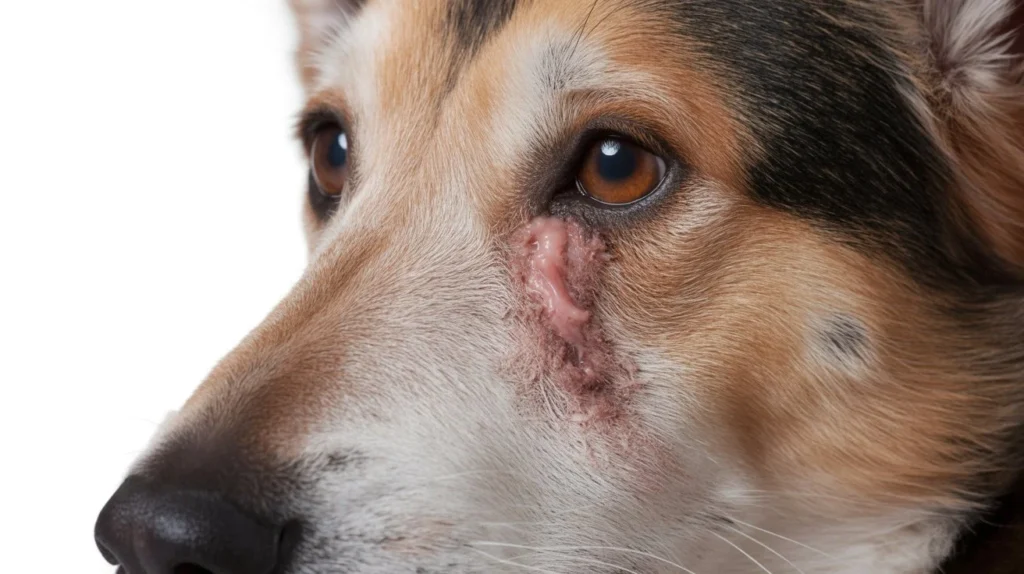
- Yellow or green thick discharge
- Significant redness and swelling
- Frequent pawing at the eye
- Keeping the eye partially closed
Severe — vet today:
- Eye kept completely closed
- Visible pain when eye area is touched
- Cloudiness or haziness of the eye surface
- Visible foreign body in the eye
- Significant swelling around the eye
- Any vision changes — bumping into objects, reluctance to move in low light
Safe Home Remedies for Dog Eye Problems
1. Saline Eye Wash — Most Useful
Plain sterile saline solution — the same as used for contact lenses — is safe to use for gently flushing dog eyes.
Saline removes discharge, flushes out mild irritants, and cleans the eye surface without causing further irritation.
How to use:
- Warm the saline solution to room temperature — cold liquid startles dogs
- Hold the eye open gently with one hand
- Let several drops fall onto the eye surface — do not touch the eye with the dropper
- Allow the dog to blink naturally
- Gently wipe away discharge with a clean, damp cloth
- Repeat twice daily for mild discharge
Sterile saline is available at any pharmacy. Do not make your own salt solution — incorrect concentration can damage the eye surface.
2. Warm Compress for Discharge Removal
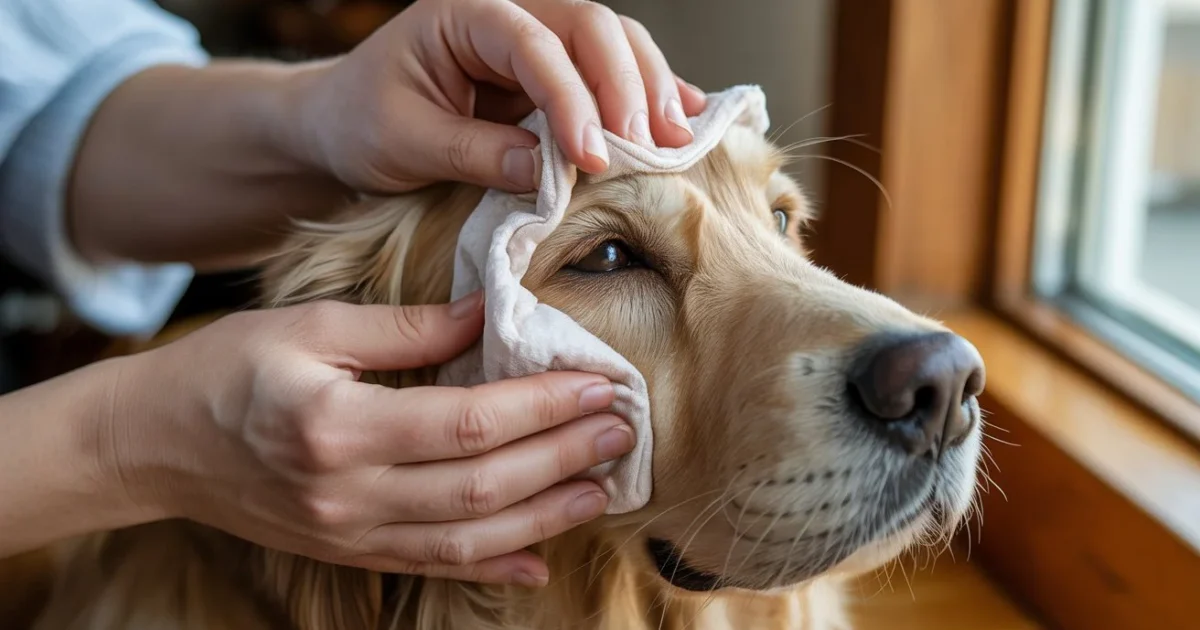
A warm, clean cloth held gently against a closed eye softens crusted discharge and provides comfort.
How to use:
- Soak a clean cloth in warm — not hot — water
- Wring out thoroughly
- Hold gently against the closed eye for one to two minutes
- Wipe discharge gently from the inner corner outward — never across the eye
- Use a fresh cloth for each eye if both are affected
- Never share cloths between eyes — cross-contamination spreads infection
This removes discharge effectively and reduces the discomfort of crusted material pulling at eyelid skin.
3. Chamomile Tea Compress — For Mild Irritation
Chamomile has mild anti-inflammatory and antimicrobial properties that make it a reasonable option for mild eye irritation.
How to use:
- Brew strong chamomile tea
- Allow to cool completely to room temperature
- Strain thoroughly — no plant material should remain
- Soak a clean cloth and apply as a warm compress
- Use fresh solution each time — do not reuse
This is appropriate for mild, allergy-type irritation with clear discharge. It is not appropriate for bacterial infections with yellow or green discharge.
4. Keep the Area Clean
Regardless of other treatment — keeping discharge cleaned from around the eye reduces secondary bacterial growth and prevents the discomfort of dried material pulling at sensitive tissue.
Gently clean the area around the eye — not the eye surface itself — with a damp cloth two to three times daily.
For long-haired breeds — trim fur that repeatedly contacts the eye surface. Fur touching the cornea causes ongoing irritation that home treatment cannot resolve. Our long hair GSD guide covers grooming considerations for dogs with coat-related eye irritation.
What NOT to Use on Dog Eyes
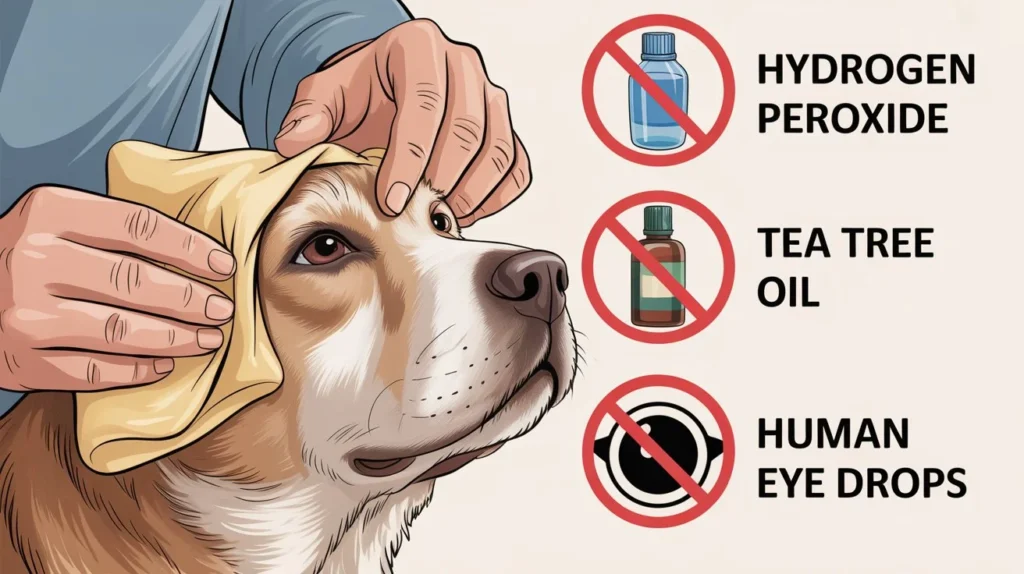
Human Eye Drops — Do Not Use
Over-the-counter human eye drops — Visine, artificial tears with preservatives, antihistamine drops — are formulated for human eye chemistry and pH.
Some contain ingredients that are safe for humans but cause significant irritation in dogs. Others contain vasoconstrictors that provide temporary cosmetic improvement while masking a worsening condition.
The only safe human product for dog eyes is preservative-free sterile saline — nothing else.
Boric Acid Solutions
Boric acid eye washes — sometimes suggested online for dog eyes — are not appropriate for dogs. The concentration safe for human eyes causes irritation in dogs.
Hydrogen Peroxide
Never use hydrogen peroxide near a dog’s eyes. Even diluted concentrations cause significant chemical irritation to eye tissue.
Tea Tree Oil
Tea tree oil is toxic to dogs even in very small amounts. It should never be used near or on a dog’s eyes regardless of dilution.
Honey
Raw honey is sometimes suggested as an antimicrobial eye treatment. This is not supported by veterinary evidence and introduces contamination risk. Do not use.
Preventing Eye Problems in Dogs
Regular eye cleaning: Gently clean discharge from around the eyes daily for dogs prone to eye problems — particularly flat-faced breeds and those with prominent eyes.
Trimming facial fur: Fur touching the eye surface causes ongoing irritation. Regular trimming prevents this mechanical irritation source.
Protecting eyes during car travel: Wind exposure during car rides introduces debris and dries the eye surface. Keep windows at a level that prevents direct wind exposure to the dog’s face.
Preventing face contact with irritants: Cleaning products, lawn chemicals, and dust are common triggers for eye irritation. Wipe the face after exposure to these environments.
Regular vet checks: Many eye conditions are asymptomatic in early stages. Annual veterinary eye assessment catches developing problems before they become significant.
Diet and Eye Health
Nutrients that support eye health in dogs include:
- Vitamin A — essential for retinal function and tear film production
- Omega-3 fatty acids — support tear quality and reduce ocular inflammation
- Lutein and zeaxanthin — antioxidants concentrated in retinal tissue
- Vitamin C and E — reduce oxidative damage to eye structures
Dogs eating varied, whole-food diets tend to maintain better ocular health than those eating monotonous processed diets. The same dietary foundations that support overall health support eye health — our sensitive stomach guide covers whole-food approaches to dog nutrition that benefit multiple body systems.
Breed Considerations
German Shepherds
GSDs are prone to pannus — a progressive inflammatory condition of the cornea driven by UV light exposure and immune response. Pannus produces a characteristic dark pigmentation spreading across the cornea.
This is not an infection and home treatment is not appropriate. Pannus requires veterinary-prescribed anti-inflammatory eye drops for management. A GSD showing gradual darkening of the eye surface needs veterinary assessment — not home treatment.
Belgian Malinois
Malinois share the GSD’s immune-mediated eye condition susceptibility. Regular eye assessment is appropriate for this breed given its working history in sun-exposed environments.
Long Hair German Shepherds
Facial fur that contacts the eye surface is a significant and common cause of eye irritation in long-haired breeds. Regular trimming of the fur around the eyes is a fundamental preventive measure.
When to See a Vet — Clear Criteria
Same day:
- Yellow or green thick discharge
- Eye kept completely closed
- Visible pain when the eye area is touched
- Any cloudiness or haziness of the eye surface
- Visible foreign body
- Sudden squinting that does not resolve
Within 48 hours:
- Persistent redness that has not improved with saline washing
- Mild discharge that is not clearing over two to three days
- Recurrent eye problems in the same eye
Annual check:
- Any breed with documented eye condition predisposition
- Senior dogs where vision changes may be subtle
Frequently Asked Questions
Can I use human antibiotic eye drops on my dog?
No. Human antibiotic eye drops contain formulations specific to human bacterial pathogens and pH. Some are safe for dogs — but only under veterinary guidance with appropriate dosing. Never use without specific veterinary instruction.
My dog keeps pawing at their eye — what does this mean?
Pawing at the eye indicates discomfort or irritation. Prevent the dog from rubbing the eye — pawing can scratch the corneal surface and worsen the condition. An e-collar prevents this while you arrange a vet appointment.
Can eye infections spread between dogs?
Bacterial and viral conjunctivitis can spread between dogs through direct contact or shared items. Keep affected dogs’ bedding, bowls, and toys separate during treatment.
How long does a mild eye infection take to clear?
Mild allergic conjunctivitis often resolves within two to four days with gentle saline washing and allergen removal. Bacterial infections require antibiotic eye drops — without them, they typically worsen rather than resolve.
My dog’s eye discharge is clear — is this an infection?
Clear discharge is more consistent with allergic or viral conjunctivitis than bacterial infection. Yellow or green discharge suggests bacterial involvement. Clear discharge with mild redness — saline washing and monitoring is appropriate for 48 hours.
Can I use coconut oil on my dog’s eye?
No. Oil-based products are not appropriate for eye surfaces — they disrupt the tear film and can introduce contamination. Stick to sterile saline only.
Final Summary
- Safe home remedies: sterile saline wash, warm compress, chamomile compress for mild irritation
- Never use: human eye drops with preservatives, boric acid, hydrogen peroxide, tea tree oil, honey
- Gentle cleaning of discharge around — not on — the eye twice daily reduces secondary infection risk
- Yellow or green discharge, pain, or cloudiness means vet today — not home treatment
- Diet rich in vitamin A and omega-3 fatty acids supports long-term eye health
- Long-haired breeds need regular fur trimming around the eyes to prevent mechanical irritation
- Most mild eye problems respond to supportive care within 48 hours — no improvement means vet visit
Do this now: If your dog has discharge around their eye — soak a clean cloth in warm water, gently clean from the inner corner outward, then apply a few drops of room-temperature sterile saline. That is the appropriate immediate response for most mild eye symptoms while you assess severity.
For more dog health guides, explore the complete library at dogcarecompass.com.

researching veterinary sources, scientific studies, and expert
guides to bring dog owners accurate, practical information. Every
article is written with care and reviewed against credible
veterinary references including ASPCA, AKC, and peer-reviewed
literature.
- How to Stop Dog Barking at Night: 8 Proven Methods That Work - July 2, 2026
- Dog Pulls on Leash Every Walk? Fix It With This Simple Method - July 2, 2026
- How to Teach a Dog to Heel Without Treats: Step-by-Step Method - June 27, 2026