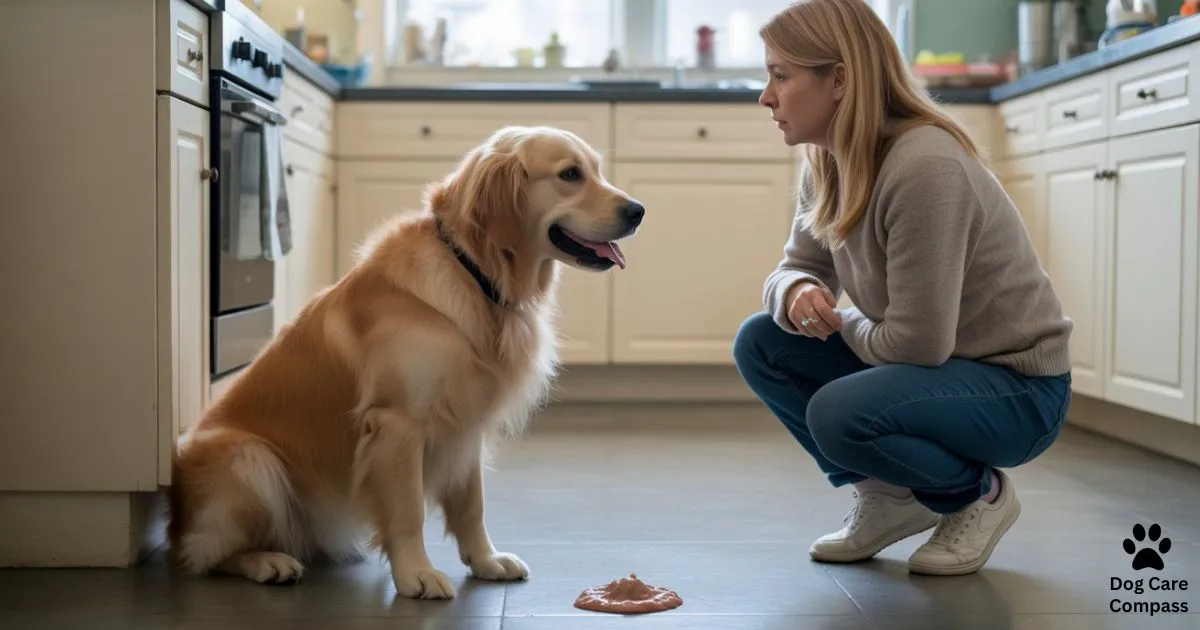
Why Is My Dog Throwing Up: Real Causes, Warning Signs, and What to Do
Quick Answer Box: Dogs throw up for many reasons — eating too fast, dietary indiscretion, infections, parasites, food allergies, or serious conditions like bloat or poisoning. A single vomiting episode with normal behavior after is usually not an emergency. But repeated vomiting, blood, lethargy, bloating, or pale gums needs immediate vet attention.
Featured Snippet Block:
Most Common Reasons Why Dogs Throw Up:
- Eating too fast or overeating
- Dietary indiscretion (garbage, grass, foreign objects)
- Food intolerance or allergies
- Intestinal parasites
- Viral or bacterial infections (including Parvovirus)
- Motion sickness
- Pancreatitis (often from fatty food)
- Kidney or liver disease
- Gastric Dilatation-Volvulus / Bloat — life-threatening emergency
- Toxin or poison ingestion
Why Is My Dog Throwing Up? What Every Dog Owner Should Know
Seeing your dog throw up can be alarming — especially when you don’t know if it’s something minor or a medical emergency. The good news is that occasional vomiting is common in dogs. But repeated vomiting, bloating, blood, or severe lethargy can signal a dangerous condition that needs immediate veterinary care.
Dogs vomit more easily than humans. Their anatomy is actually designed to expel stomach contents quickly — it’s a survival mechanism. But that doesn’t mean every vomiting episode should be ignored.
Before diving into causes, it’s important to understand the difference between vomiting and regurgitation. Vomiting is active — your dog heaves, uses abdominal muscles, and brings up digested or partially digested food, often with nausea signs beforehand like drooling or lip licking. Regurgitation is passive — food slides up shortly after eating, undigested, with no effort. Knowing which one your dog is doing helps your vet diagnose the problem faster.
Acute vs. Chronic Vomiting in Dogs
Not all vomiting is the same. Vets classify it in two ways:
Acute vomiting — Sudden onset, short duration. Usually caused by dietary indiscretion, infections, or toxins. Often resolves within 24-48 hours.
Chronic vomiting — Recurring vomiting over weeks or months. This signals an underlying condition like inflammatory bowel disease, kidney disease, liver disease, or food intolerance. Chronic vomiting always needs veterinary investigation.
If your dog has been throwing up on and off for more than a week, don’t dismiss it as a stomach bug. Get blood work done.
10 Real Reasons Why Dogs Throw Up
1. Eating Too Fast
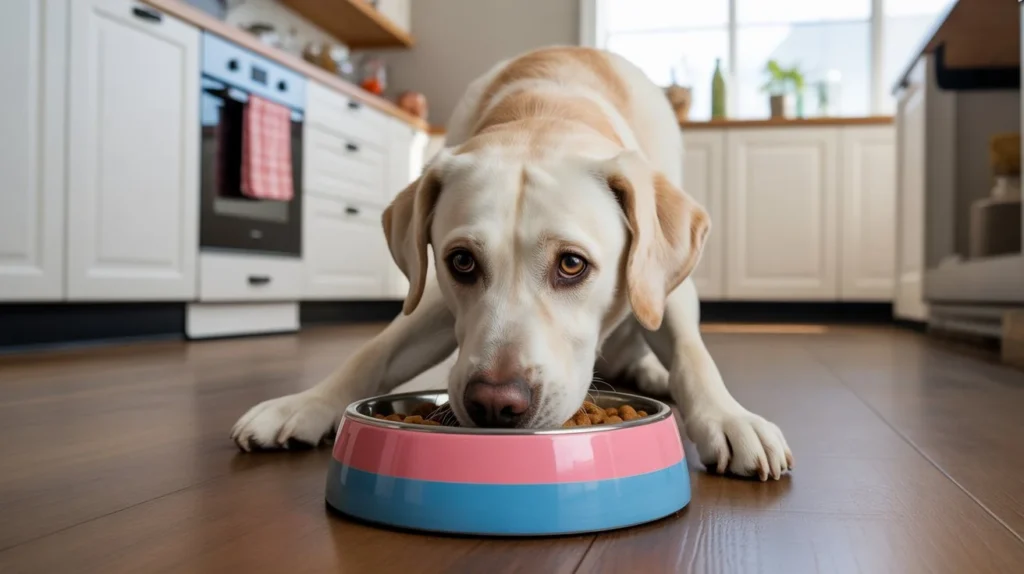
When dogs eat too quickly, they swallow large amounts of air with their food. This rapidly stretches the stomach and triggers the vomit reflex almost immediately after eating.
This is especially common in large breed dogs and in multi-dog households where dogs compete for food. The vomit usually happens within 5-10 minutes of eating and contains mostly undigested food.
Some dogs eat their entire bowl, vomit it all up, and immediately act like nothing happened five minutes later. It looks dramatic but is usually harmless if it’s occasional. A slow feeder bowl solves this problem for most dogs.
2. Dietary Indiscretion
Dogs are natural scavengers. They eat garbage, dead animals, grass, dirt, socks, and things that genuinely have no business being inside a stomach.
This is the single most common reason why dogs throw up. The stomach reacts by expelling whatever shouldn’t be there. Most cases of dietary indiscretion resolve on their own within 24 hours without any treatment.
Watch for blood in vomit, extreme lethargy, or continuous vomiting — these mean the situation is more serious than simple scavenging.
3. Food Intolerance or Allergies
Some dogs cannot properly digest certain proteins or ingredients. Common culprits include chicken, beef, dairy, eggs, wheat, and soy. Unlike food poisoning which is sudden, food intolerance causes consistent nausea in dogs after meals over time.
If your dog throws up regularly after eating the same food, a food allergy or intolerance is likely. Switching to a limited ingredient diet or novel protein often stops the vomiting entirely.
4. Intestinal Parasites
Roundworms, hookworms, whipworms, and giardia irritate the gut lining and cause nausea and vomiting — especially in puppies. A dog with a heavy parasite load may vomit frequently, lose weight, and show a pot-bellied appearance.
In some cases you can actually see worms in the vomit or stool. Regular deworming and annual fecal exams are the best prevention.
5. Viral or Bacterial Infections — Including Parvovirus
Parvovirus, distemper, and bacterial infections like Salmonella or Campylobacter cause severe vomiting combined with diarrhea, lethargy, and fever.
Parvovirus is particularly dangerous in unvaccinated puppies. It attacks the gut lining and can kill within days. If your puppy is vomiting repeatedly, has bloody diarrhea, and is completely lethargic — this is a life-threatening emergency. Get to a vet immediately.
Keeping core vaccinations current is your dog’s best protection against these infections.
6. Motion Sickness
Many dogs — especially puppies — experience nausea during car rides. The inner ear sends conflicting signals to the brain during movement, triggering acute vomiting or pre-vomiting signs like excessive drooling, yawning, and restlessness.
Most dogs improve as they mature and get used to travel. Your vet can also prescribe Cerenia (maropitant) which is safe and effective for travel-related nausea in dogs.
7. Pancreatitis
The pancreas produces digestive enzymes that help break down food. When it becomes inflamed — almost always after eating high-fat food — those enzymes begin attacking the pancreas itself.
This is extremely painful. Dogs with pancreatitis vomit repeatedly, hunch their back, refuse food, and show clear signs of abdominal pain. Holiday leftovers are one of the most common pancreatitis triggers emergency vets see — fatty turkey skin, gravy, and table scraps send dogs to the emergency clinic every single holiday season.
Pancreatitis requires veterinary treatment. Severe cases need hospitalization.
8. Kidney or Liver Disease
When kidneys or liver aren’t functioning correctly, toxins accumulate in the bloodstream. This causes chronic nausea and vomiting — often in the morning or on an empty stomach — along with increased thirst, weight loss, and changes in urination.
Yellowing of the eyes or gums (jaundice) points specifically toward liver disease. Blood work and urinalysis are needed to diagnose either condition. Senior dogs are significantly more at risk.
9. Bloat — Gastric Dilatation-Volvulus (GDV)
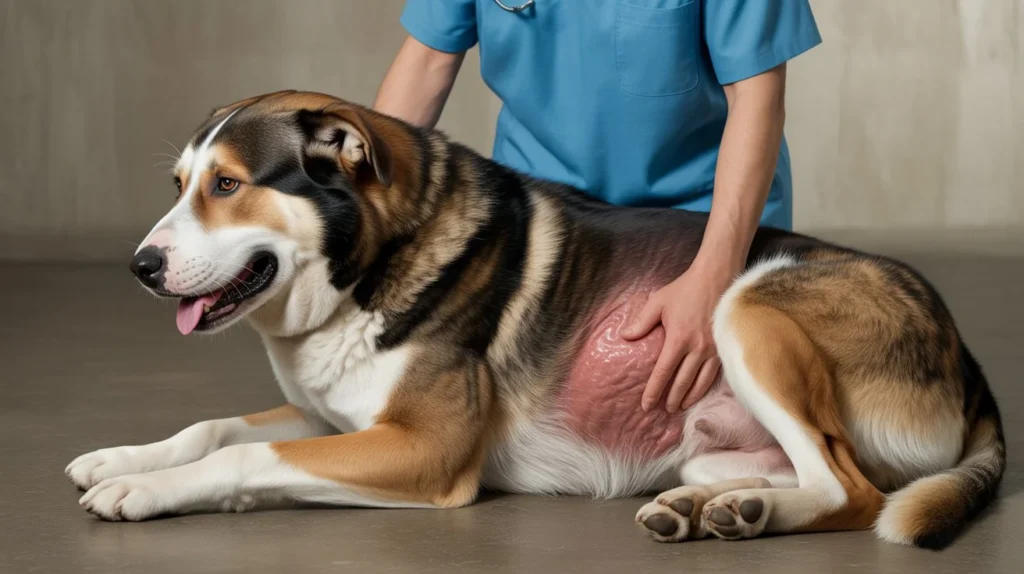
Bloat is one of the most dangerous emergencies in veterinary medicine. The stomach fills with gas and can twist on itself, cutting off blood supply to the stomach and spleen. Without emergency surgery, it is fatal.
Signs include unproductive retching (trying to vomit with nothing coming up), a visibly distended belly, excessive drooling, extreme restlessness, and rapid deterioration. If you see these signs — do not wait. Go to an emergency vet immediately.
10. Toxin or Poison Ingestion
Dogs can ingest household toxins without owners realizing until vomiting starts. Common toxins include grapes, raisins, xylitol (sugar-free gum and candy), chocolate, ibuprofen, certain mushrooms, and toxic plants like sago palm.
Vomiting after suspected toxin ingestion is a red flag. Call the ASPCA Animal Poison Control Center (888-426-4435) or your vet immediately. Do not try to induce vomiting at home without vet guidance — it can make certain poisonings significantly worse.
What Does the Color of Dog Vomit Mean?
| Vomit Appearance | Possible Meaning |
|---|---|
| Yellow or green foam | Empty stomach, bile vomiting syndrome |
| White foam | Acid reflux, kennel cough, early bloat |
| Undigested food | Eating too fast, regurgitation |
| Brown liquid | Intestinal obstruction, eaten feces |
| Red blood (fresh) | Ulcer, injury, hemorrhagic gastroenteritis |
| Dark coffee-ground color | Digested blood — serious emergency |
| Grass or green material | Ate grass, dietary indiscretion |
| Visible worms | Intestinal parasite infection |
Google often pulls vomit color guides into featured snippets — this table is optimized for that.
Breeds More Prone to Vomiting Problems
Certain dog breeds are genetically more vulnerable to vomiting and digestive issues than others.
Deep-chested breeds are at highest risk for bloat (GDV), which involves life-threatening vomiting and gastric twisting. These include German Shepherds, Great Danes, Boxers, Doberman Pinschers, and Standard Poodles.
Brachycephalic breeds — dogs with flat faces — have compressed airways and digestive tracts that make them prone to regurgitation, acid reflux, and vomiting. French Bulldogs, Pugs, English Bulldogs, and Shih Tzus all fall into this category.
Puppies of any breed are more vulnerable because their immune systems aren’t fully developed, they’re more likely to eat inappropriate things, and parvovirus hits them hardest.
Senior dogs are more prone to kidney disease, liver disease, and cancer — all of which can cause chronic vomiting as a symptom.
If your dog belongs to a high-risk breed, knowing the warning signs early can save their life.
Emergency Warning Signs — Act Immediately

If your dog shows any of the following, go to a vet or emergency animal hospital right away. Do not wait to see if it improves:
🚨 Call Your Vet Immediately If You See:
- Bloated or distended abdomen
- Blood in vomit (red or dark coffee-ground color)
- Collapse or inability to stand
- Repeated retching with nothing coming up
- Pale, white, or bluish gums
- Suspected toxin or poison ingestion
- Vomiting combined with severe diarrhea and fever
- Puppy vomiting repeatedly (Parvovirus risk)
When Can You Monitor at Home?

Not every vomiting episode is an emergency. You can monitor at home if:
- Your dog vomited once and is now acting completely normal
- Still drinking water and showing interest in food
- No blood, no lethargy, no bloating
- Adult dog with no underlying health conditions
In these cases, withhold food for 2-4 hours, offer small amounts of water, then transition to a bland diet of boiled chicken and plain white rice.
Step-by-Step: What to Do When Your Dog Throws Up
Step 1 — Stay calm and observe. Note how many times they vomited, what it looked like, and what they ate recently.
Step 2 — Withhold food for 2-4 hours. Let the stomach settle. Do not withhold water unless vomiting is severe and continuous.
Step 3 — Offer a bland diet. Boiled chicken and plain white rice — no seasoning, no butter, no oil. Feed small amounts every 3-4 hours for 24-48 hours.
Step 4 — Monitor closely for 24 hours. If vomiting continues, worsens, or any emergency signs appear — call your vet.
Step 5 — Reintroduce regular food slowly. Once your dog holds bland food down for 24 hours, gradually mix regular food back in over 2-3 days.
Can You Give Your Dog Anything for Vomiting?
Do not give human medications — Pepto-Bismol, Imodium, Tylenol, or Benadryl — without direct vet approval. Many of these are toxic to dogs even in small doses.
Your vet may prescribe:
- Cerenia (maropitant) — safe, effective anti-nausea medication for dogs
- Metronidazole — antibiotic for bacterial gastroenteritis
- Probiotics — help restore gut balance after vomiting episodes
- Sucralfate — protects stomach lining in cases of ulcers or gastritis
Always consult your vet before giving any medication. What helps a human can seriously harm a dog.
How to Prevent Your Dog From Throwing Up
- Feed 2-3 smaller meals daily instead of one large meal
- Use a slow feeder bowl for dogs that eat too fast
- Never give table scraps — especially fatty foods
- Keep trash cans secured and inaccessible
- Deworm regularly and keep all vaccinations current
- Change food brands gradually over 7-10 days — sudden switches cause gastroenteritis
- Keep all medications, toxic plants, and cleaning products completely out of reach
- Know which human foods are toxic to dogs before sharing anything
Why does my dog throw up yellow foam?
Yellow foam usually means bile vomiting syndrome — your dog’s stomach is empty and bringing up bile. This often happens early morning before the first meal. Feeding a small snack before bedtime or switching to three smaller meals daily can reduce or stop this entirely.
Why is my dog throwing up right after eating?
Most likely eating too fast, overeating, or food intolerance. If it happens consistently after every meal, try a slow feeder bowl and speak with your vet about possible food allergies or gastrointestinal issues.
Why is my dog throwing up white foam?
White foam can mean acid reflux, kennel cough, or early-stage bloat. If your dog is also retching repeatedly without producing anything and has a swollen belly — treat this as an emergency immediately.
Is it normal for dogs to throw up occasionally?
Yes. Dogs vomit more easily than humans and an occasional episode without other symptoms isn’t always concerning. Frequent, chronic, or severe vomiting is what requires veterinary attention.
Can stress cause dogs to throw up?
Absolutely. Anxiety and stress trigger nausea in dogs just like in humans. Common causes include thunderstorms, fireworks, separation anxiety, travel, and major changes in routine or environment.
Why does my dog eat grass and then throw up?
Dogs eat grass when they feel nauseous to help induce vomiting, or simply out of boredom or instinct. Occasional grass eating is normal. Frequent grass eating combined with vomiting suggests an underlying digestive issue worth discussing with your vet.
What does it mean when a dog throws up blood?
Blood in vomit is always a red flag. Bright red blood suggests fresh bleeding in the upper digestive tract. Dark, coffee-ground colored vomit means digested blood — which is often more serious. Both require immediate veterinary evaluation.
My dog threw up once and seems fine — should I worry?
If your dog vomited once, is acting completely normal, drinking water, and showing no other symptoms — monitor for 24 hours. Single vomiting episodes with normal behavior after are usually not emergencies. But watch closely.
Summary: Key Takeaways
- Dogs throw up for many reasons — from minor dietary indiscretion to life-threatening emergencies like bloat
- Watch vomit color and consistency — the color chart above gives important clues
- Breeds like German Shepherds, Great Danes, and flat-faced dogs have higher vomiting risks
- Single vomiting episode with normal behavior after = monitor at home
- Blood, pale gums, bloating, collapse, repeated retching = emergency vet immediately
- Bland diet (boiled chicken and plain white rice) is the standard home recovery protocol
- Chronic vomiting lasting more than a week always needs blood work and vet investigation
- Never give human medications without vet approval
This article is written for informational purposes only and reviewed against guidance from veterinary organizations including the American Veterinary Medical Association (AVMA) and emergency veterinary care recommendations. Always consult your licensed veterinarian for diagnosis and treatment. Last reviewed: May 2026.

researching veterinary sources, scientific studies, and expert
guides to bring dog owners accurate, practical information. Every
article is written with care and reviewed against credible
veterinary references including ASPCA, AKC, and peer-reviewed
literature.
- How to Stop Dog Barking at Night: 8 Proven Methods That Work - July 2, 2026
- Dog Pulls on Leash Every Walk? Fix It With This Simple Method - July 2, 2026
- How to Teach a Dog to Heel Without Treats: Step-by-Step Method - June 27, 2026