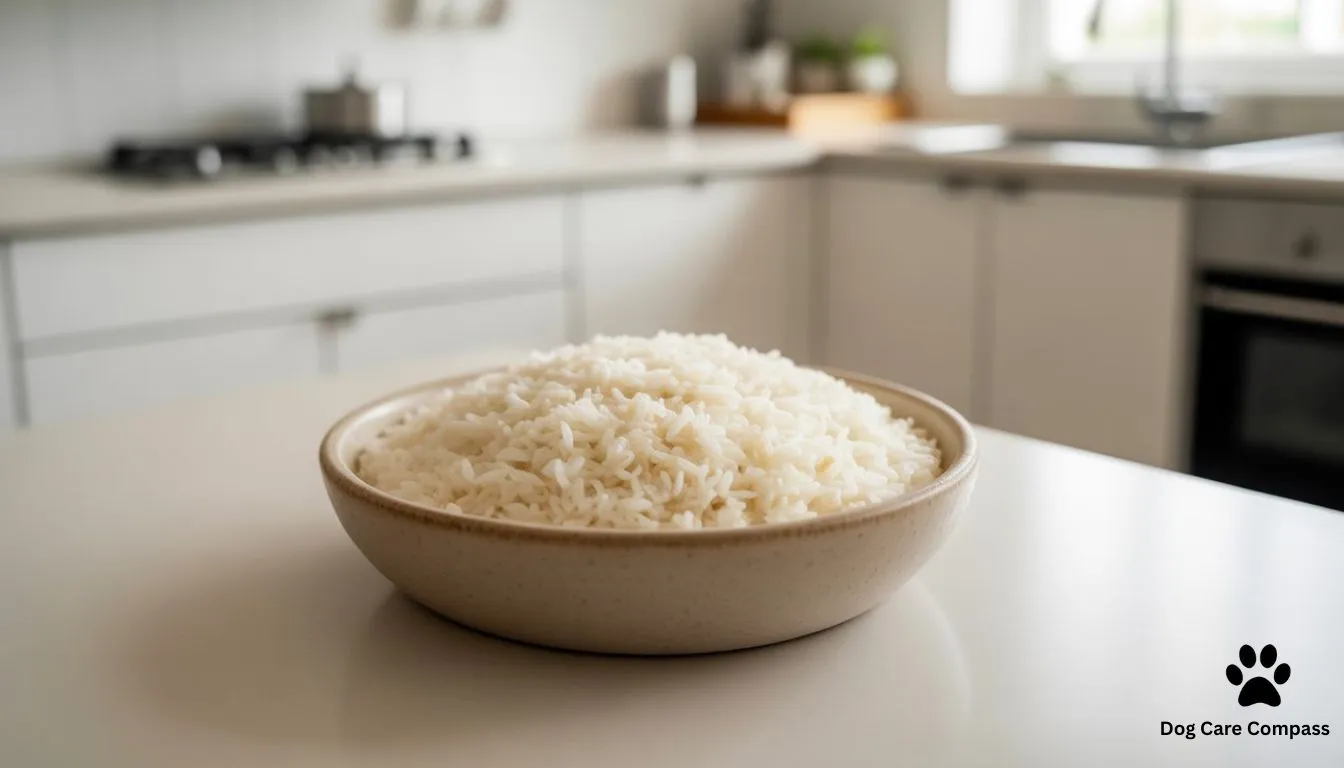
Can Dogs Eat Rice and Eggs? Benefits, Safe Preparation, and How Much to Give
Rice and eggs together is one of the most commonly recommended meals for dogs — from vets suggesting it for upset stomachs to owners looking for a simple homemade option.
But is it actually safe? And is it nutritionally complete enough for regular feeding?
The short answer is yes — rice and eggs are both safe for dogs and genuinely beneficial when prepared correctly. The longer answer involves preparation details and portion considerations that most guides skip over.
Can dogs eat rice and eggs? Yes — plain cooked rice and plain cooked eggs are both safe for dogs. Together they form a complete, easily digestible meal that works well for recovery feeding and occasional home-cooked meals.
Quick Answer
| Question | Answer |
|---|---|
| Is rice safe for dogs? | Yes — plain, cooked |
| Are eggs safe for dogs? | Yes — cooked, not raw |
| Can they be fed together? | Yes — excellent combination |
| Good for upset stomach? | Yes — one of the best options |
| Nutritionally complete long-term? | No — needs additions |
Why Rice and Eggs Work So Well Together
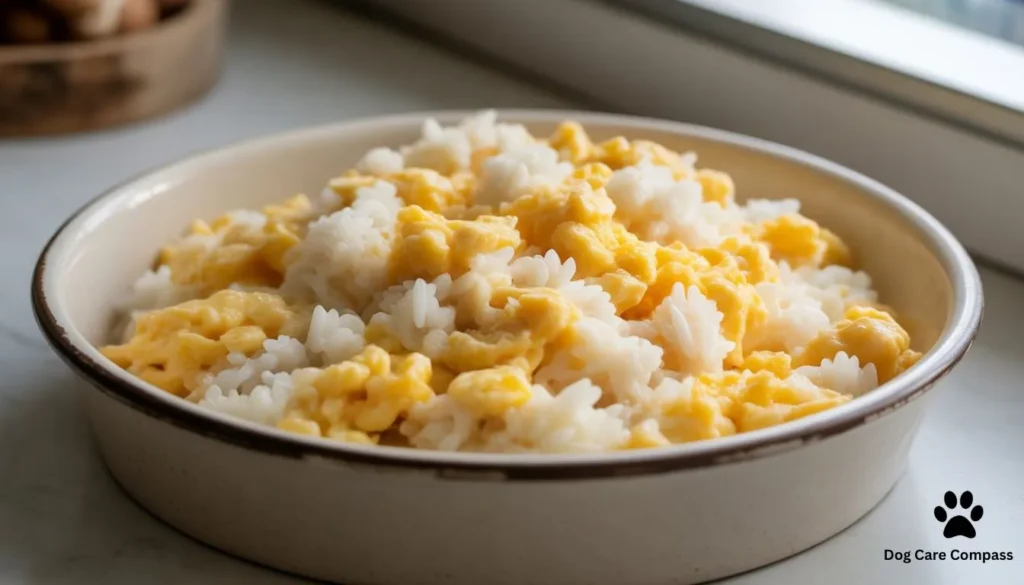
Rice and eggs complement each other nutritionally in ways that make the combination more useful than either alone.
Rice provides easily digestible carbohydrates, energy, and a bland base that settles digestive upset without adding fiber load that can irritate an already sensitive gut.
Eggs provide complete protein — all essential amino acids — alongside healthy fats, vitamins A, D, E, B12, and minerals including selenium and iron.
Together, the combination delivers energy, complete protein, and digestive gentleness in a meal that most dogs find highly palatable.
Dog food topper recipes
Nutritional Profile
White Rice (Per 100g cooked)
| Nutrient | Amount |
|---|---|
| Calories | 130 kcal |
| Carbohydrates | 28g |
| Protein | 2.7g |
| Fat | 0.3g |
| Fiber | 0.4g |
Whole Egg (Per large egg — 50g)
| Nutrient | Amount |
|---|---|
| Calories | 78 kcal |
| Protein | 6g |
| Fat | 5g |
| Vitamin A | 270 IU |
| Vitamin D | 44 IU |
| Vitamin B12 | 0.6mcg |
| Selenium | 15.4mcg |
Health Benefits of Rice and Eggs for Dogs
Easily Digestible — Best for Upset Stomachs
White rice is one of the most gentle foods a dog can eat during digestive recovery.
Its low fiber content means it passes through the digestive system without adding bulk or irritation. Its bland flavor means dogs eat it even when nausea has reduced appetite.
Combined with egg protein — which is highly bioavailable and requires minimal digestive effort — the rice and egg meal is the gold standard recovery diet recommended by veterinarians worldwide.
When dogs need digestive recovery after vomiting or diarrhea — this combination is where to start. Our diarrhea guide covers the full recovery feeding protocol.
Complete Protein From Eggs
Eggs have the highest biological value protein of any whole food — meaning the protein they provide is used almost entirely by the body with minimal metabolic waste.
For dogs recovering from illness, surgery, or muscle loss — egg protein supports tissue repair efficiently.
For healthy dogs as a regular treat or meal addition — egg protein supports muscle maintenance, immune function, and coat health.
Energy Without Fat Load
White rice provides clean carbohydrate energy without fat load — relevant for dogs managing pancreatitis, recovering from illness, or on low-fat diets.
For dogs that need calories without fat — rice is one of the best available sources. Our pancreatitis guide covers rice as the primary carbohydrate for fat-restricted dogs.
Supports Recovery After Illness
The combination of easily digestible carbohydrates and complete protein makes rice and eggs the most consistently recommended recovery meal in veterinary nutrition.
After vomiting, diarrhea, surgery, or any illness that has reduced appetite and stressed the digestive system — rice and egg provides nutrition the body can use immediately without adding digestive burden.
How to Prepare Rice and Eggs for Dogs
Rice Preparation
- Use plain white rice — not brown rice, not flavored rice, not instant rice
- Cook in plain water — no salt, no butter, no seasoning
- Cook until soft — slightly overcooked is better than al dente for dogs
- Cool completely before serving
- Store unused rice in refrigerator — use within 3 days
Egg Preparation
Scrambled: Cook in a dry pan — no butter, no oil, no salt, no milk. Plain scrambled eggs only.
Boiled: Hard boil completely — soft boiled or raw eggs carry Salmonella risk. Cool before serving.
Poached: Plain water only — no vinegar, no seasoning.
Never serve raw eggs — raw egg whites contain avidin, a protein that blocks biotin absorption. Raw eggs also carry Salmonella risk. Always cook completely.
How Much Rice and Eggs Can Dogs Eat?
As Recovery Meal — Upset Stomach
| Dog Weight | Amount Per Meal | Frequency |
|---|---|---|
| Under 10 lbs | 2-3 tbsp rice + half egg | Every 4-6 hours |
| 10-30 lbs | ¼ cup rice + 1 egg | Every 4-6 hours |
| 30-60 lbs | ½ cup rice + 1-2 eggs | Every 4-6 hours |
| 60+ lbs | ¾ cup rice + 2 eggs | Every 4-6 hours |
As Regular Meal Addition
Rice and eggs can replace up to 25% of a dog’s regular meal several times per week — not as a complete diet replacement.
As a full meal — it is nutritionally incomplete for long-term daily feeding. It lacks calcium, certain vitamins, and the variety a balanced diet requires.
Is Rice and Eggs Nutritionally Complete?
For short-term recovery — yes, adequate.
For long-term daily feeding — no.
Rice and eggs together lack:
- Calcium — critical for bone health
- Vitamin E — antioxidant
- Complete mineral profile
- Fiber for long-term gut health
For owners wanting to feed homemade food regularly — rice and eggs is an excellent base to build on. Adding vegetables, calcium sources, and varied proteins creates a complete diet.
Our sensitive stomach guide and diabetic diet guide cover how to build complete homemade diets around these foundational ingredients.
Brown Rice vs White Rice — Which Is Better?
For healthy dogs as a regular ingredient — brown rice provides more fiber and nutrients.
For sick dogs or digestive recovery — white rice is better. The lower fiber content is gentler on an irritated digestive system.
For diabetic dogs — neither is ideal in large amounts due to glycemic impact. White rice has a higher glycemic index than brown rice — relevant for blood sugar management.
Can Puppies Eat Rice and Eggs?
Yes — with appropriate portions.
Puppies have higher protein requirements than adult dogs — eggs are an excellent protein source for puppies. White rice is easily digestible and appropriate for puppies of all ages.
Portion sizes for puppies should be smaller — puppies eat less total volume than adults of the same breed.
For GSD puppies specifically — understanding their nutritional requirements at each developmental stage helps owners use rice and eggs appropriately. Our GSD nutrition guide covers puppy-specific dietary needs.
Rice and Eggs for Specific Health Conditions
Upset stomach / diarrhea: Excellent — first choice recovery meal
Pancreatitis: Rice yes — eggs with caution. Egg yolks contain fat. Use egg whites only for pancreatitis dogs. Full guidance in our pancreatitis guide.
Kidney disease: Rice yes — eggs with moderation. Eggs are high biological value protein which reduces metabolic waste, but quantity should be managed. Our kidney disease guide covers protein management for kidney dogs.
Diabetes: Rice in moderation — white rice has moderate glycemic impact. Brown rice is preferable. Eggs are excellent for diabetic dogs — zero carbohydrate, high protein.
Frequently Asked Questions
Can dogs eat rice and eggs every day? As part of a varied diet — yes, several times per week. As the sole diet every day — no. It is not nutritionally complete for long-term exclusive feeding without additions.
Can dogs eat scrambled eggs with butter? No. Butter adds unnecessary fat and can trigger digestive upset. Plain scrambled eggs in a dry pan only.
Can dogs eat fried eggs? Not recommended. Frying adds oil and fat that is unnecessary and potentially harmful for dogs with fat sensitivity. Boiled or plain scrambled is always preferable.
My dog has an egg allergy — can they eat rice alone? Yes — plain white rice is safe for dogs with egg allergies. Substitute a different lean protein — boiled chicken breast — for the egg component.
How long can I feed rice and eggs during recovery? Two to five days of exclusive rice and egg feeding is appropriate for most digestive upsets. After that — gradually transition back to the regular diet over three to five days.
Can I add vegetables to rice and eggs? Yes — plain cooked vegetables like green beans, zucchini, or carrots complement the rice and egg base well. No seasoning, no onion, no garlic.
Final Summary
- Rice and eggs are both safe for dogs — cooked, plain, no seasoning
- Together they form the best recovery meal for upset stomachs and digestive illness
- Always cook eggs completely — never serve raw
- White rice is better for recovery — brown rice is better for regular feeding
- Not nutritionally complete for exclusive long-term feeding — add variety for balanced diet
- Appropriate for puppies, senior dogs, and most health conditions with minor adjustments
- Pancreatitis dogs should use egg whites only — yolks contain fat
Make this today: If your dog has an upset stomach — boil two cups of white rice in plain water and scramble two eggs in a dry pan. Cool both completely. Mix together and serve in small amounts every four to six hours. This single meal helps more digestive upsets than almost any other home intervention.
For more dog nutrition guides, explore the complete library at dogcarecompass.com.

- How to Stop a Dog From Eating Poop: 9 Home Remedies That Work - July 21, 2026
- Is Blue Buffalo Good Dog Food? Honest Review After Testing - July 12, 2026
- Can Dogs Eat Wood Apple, Lotus Root & Chayote Squash? (Exotic Fruits Guide) - July 4, 2026