German Shepherd Bloated Stomach: Signs, Emergency Response, and Prevention
Every German Shepherd owner needs to read this guide before they need it.
Bloat in German Shepherds is not a minor digestive issue. It is a life-threatening emergency that kills within hours if untreated. Knowing the signs and responding immediately is the difference between a dog that survives and one that does not.
German Shepherd bloated stomach — medically known as Gastric Dilatation-Volvulus or GDV — occurs when the stomach fills with gas and rotates on its axis, cutting off blood supply to the stomach, spleen, and surrounding organs. Without emergency surgery, the outcome is fatal.
Quick Answer — Emergency Reference
| Sign | Action |
|---|---|
| Distended abdomen + retching | Emergency vet — now |
| Bloating + restlessness + drooling | Emergency vet — now |
| Hard stomach + no vomiting produced | Emergency vet — now |
| Mild bloating after eating — acting normal | Monitor 30 minutes |
| Recurring mild bloating | Vet appointment today |
What Is Bloat in German Shepherds?
There are two forms owners need to understand.
Simple bloat (gastric dilatation): The stomach fills with gas but does not rotate. Painful and serious — but more manageable if caught early. Can sometimes resolve with veterinary intervention without surgery.
GDV (gastric dilatation-volvulus): The stomach fills with gas AND rotates. This cuts off blood supply completely. This is always a surgical emergency. Time between onset and surgery directly determines survival.
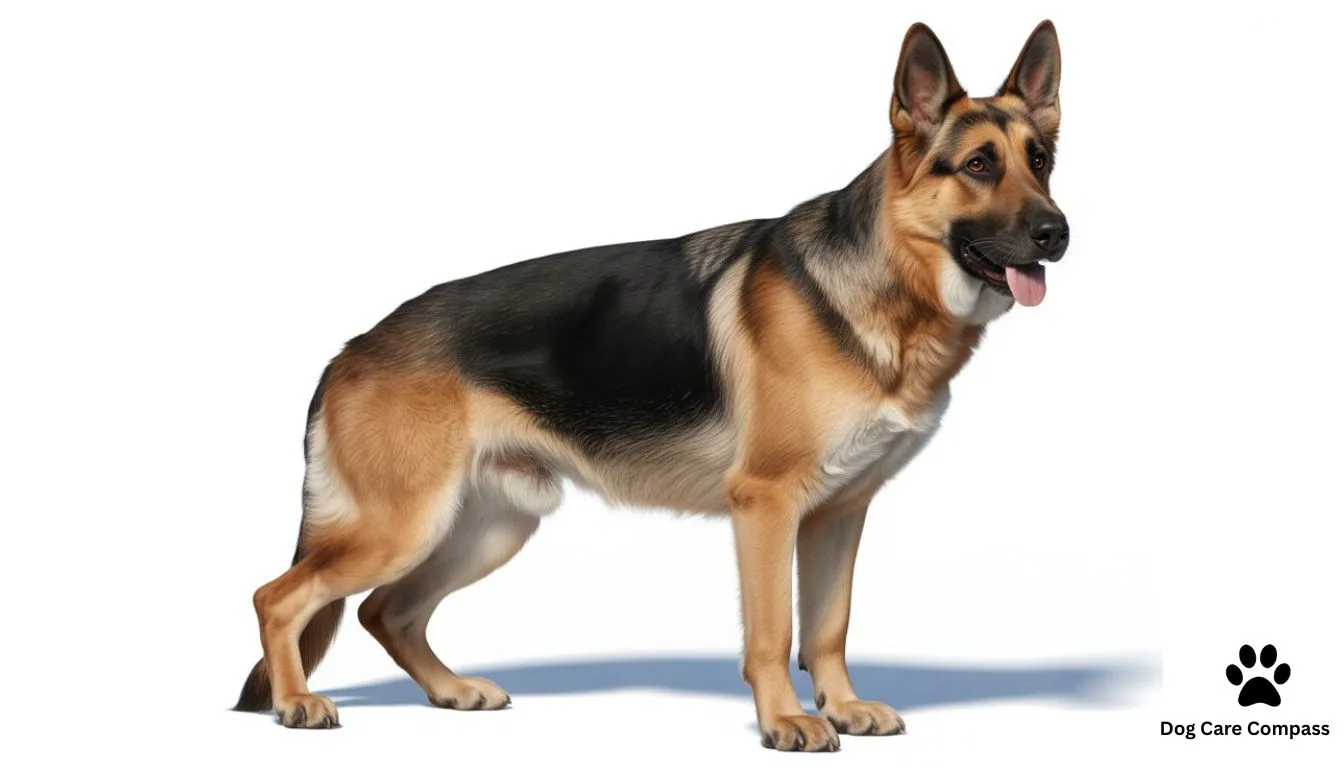
German Shepherds are one of the highest-risk breeds for GDV — their deep chest and large size create the anatomical conditions for stomach rotation. Every GSD owner should treat any suspected bloat as GDV until a vet says otherwise.
Emergency Signs — Memorize These
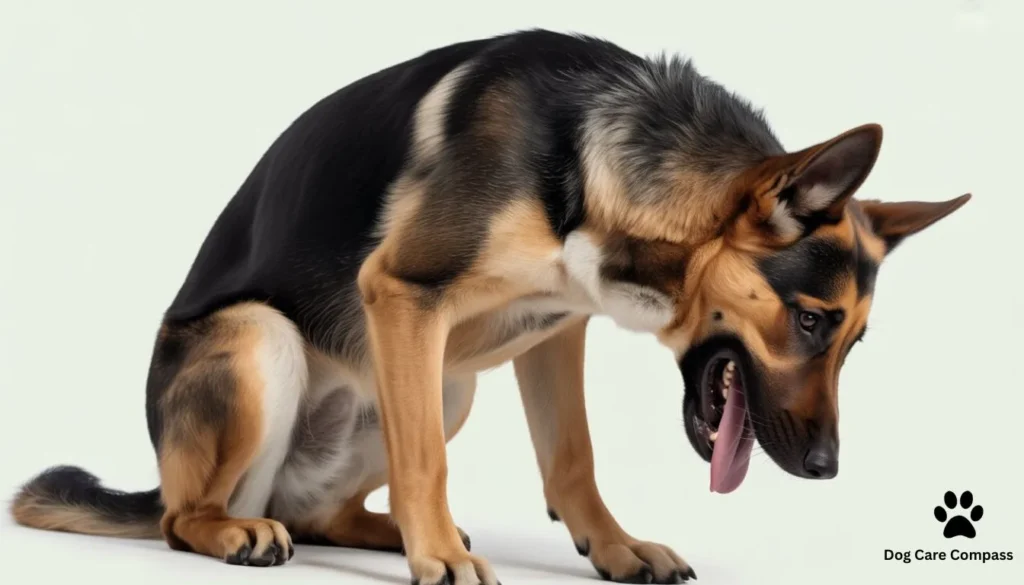
Do not wait. Go to emergency vet if you see:
- Visibly distended, hard, or drum-like abdomen
- Unproductive retching — the dog tries to vomit but nothing comes up
- Excessive drooling
- Extreme restlessness — cannot settle, pacing continuously
- Hunched posture — standing with back arched
- Rapid, shallow breathing
- Pale or white gums
- Weakness or collapse
The window between GDV onset and death without treatment is measured in hours — sometimes less. Speed is everything.
Why German Shepherds Are High Risk
GSD anatomy creates specific bloat vulnerability.
The deep, narrow chest gives the stomach more room to move. The large body size means more gas volume before symptoms become visible. The breed’s tendency to eat rapidly means more air swallowed during meals.
Additional risk factors include:
- Eating one large meal daily rather than multiple smaller meals
- Eating too fast — swallowing air with food
- Vigorous exercise within one hour of eating
- Stress and anxiety around meal times
- Family history of bloat
- Age — risk increases significantly after age five
Male GSDs have higher bloat risk than females. Older GSDs have higher risk than younger ones. A GSD with a first-degree relative that experienced bloat has approximately double the baseline risk.
What Causes the Stomach to Bloat
The exact mechanism is not fully understood — which is part of why prevention is imperfect.
Known contributing factors:
Rapid eating: Swallowing air alongside food is the most consistent dietary trigger. A dog that inhales its meal in under two minutes swallows a significant volume of air that the stomach must then manage.
Single large meals: One large daily feeding creates a single large stomach distension event. Three smaller meals distribute that load across the day.
Exercise after eating: Vigorous movement with a full stomach is consistently associated with higher bloat incidence. The one-hour rule — no vigorous exercise within one hour before or after meals — is based on this association.
Stress: Anxious feeding — eating in an anxious state, around competition from other dogs, or during high-stress periods — is associated with increased bloat risk.
Elevated food bowls: Despite once being recommended as prevention, research now suggests elevated bowls may actually increase bloat risk in large breeds. Floor-level feeding is now the standard recommendation.
Simple Bloat vs GDV — How to Tell
This distinction matters because simple bloat may have more time. GDV does not.
| Sign | Simple Bloat | GDV |
|---|---|---|
| Abdomen distension | Moderate | Severe, drum-like |
| Retching | May produce some vomit | Unproductive — nothing comes up |
| Pain | Moderate | Severe |
| Restlessness | Mild-moderate | Extreme |
| Gum color | Normal | Pale, white, or blue |
| Progression | Slower | Rapid deterioration |
In practice — do not try to distinguish at home. If you suspect either, treat it as GDV and go to an emergency vet immediately.
A vet can determine which type through physical examination and X-ray. Attempting to wait and see at home wastes the time that determines survival.
What to Do — Step by Step
Step 1 — Stay calm but move immediately
Step 2 — Call the emergency vet while travelling — tell them you are coming with a suspected bloat case. They will prepare.
Step 3 — Keep the dog calm during transport — do not allow vigorous movement
Step 4 — Do not give food, water, or any medication
Step 5 — Do not try home remedies — simethicone, walking the dog, or any other intervention wastes critical time
Step 6 — Provide the vet with: when symptoms started, what the dog ate and when, any recent exercise
Treatment — What the Vet Will Do
For simple bloat:
- Stomach tube to release gas
- IV fluids for shock management
- Monitoring for progression to GDV
- Possibly a preventive gastropexy
For GDV:
- IV fluids and shock stabilization
- Emergency surgery — derotation of the stomach and gastropexy
- Gastropexy — surgically attaching the stomach to the abdominal wall to prevent future rotation
Survival rate for GDV with prompt treatment is approximately 80%. Without treatment — zero.
Gastropexy — Preventive Surgery
For high-risk GSDs — particularly those with family history of bloat — preventive gastropexy is worth discussing with your vet.
Gastropexy surgically attaches the stomach to the abdominal wall. It does not prevent the stomach from filling with gas — but it prevents the rotation that makes GDV fatal.
Many GSD owners have gastropexy performed at the same time as spay or neuter surgery — adding minimal additional risk while providing significant long-term protection.
Prevention — What Actually Reduces Risk
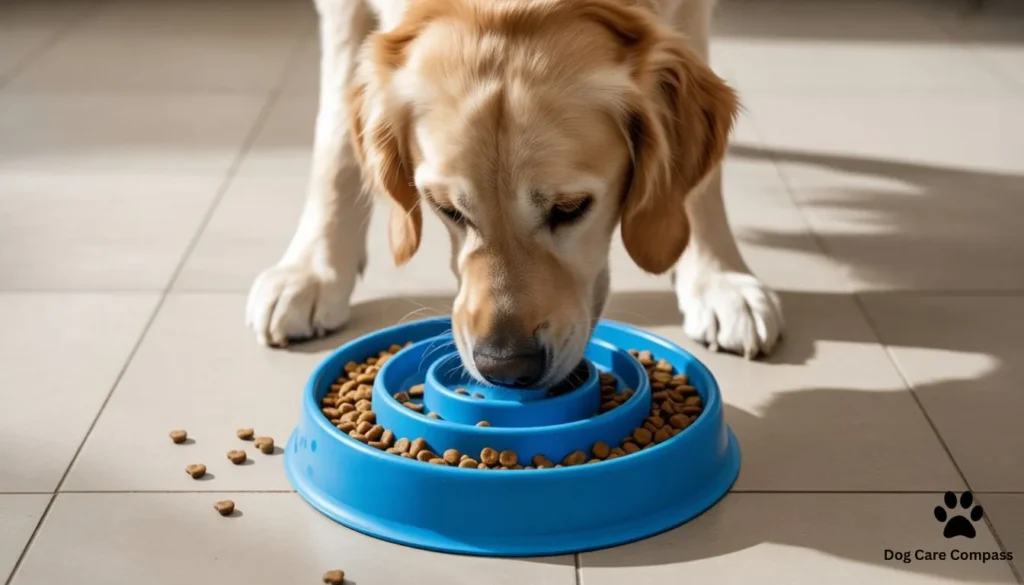
No prevention strategy eliminates bloat risk entirely. These measures reduce it meaningfully:
Feed 2-3 smaller meals daily — not one large meal
Use a slow feeder bowl — extends meal time and reduces air swallowing dramatically
No vigorous exercise one hour before or after meals — consistent and evidence-based
Feed at floor level — not elevated bowls
Manage meal-time anxiety — calm environment, no competition from other dogs
Know your dog’s family history — discuss preventive gastropexy with your vet if first-degree relatives had bloat
For GSD owners also concerned about their dog’s overall nutrition and digestive health — the dietary foundations that support healthy gut function are covered in our sensitive stomach guide.
Connection to Not Eating
A GSD that suddenly stops eating alongside any abdominal signs needs immediate assessment.
Appetite loss combined with abdominal distension — even mild — changes the urgency entirely. Our GSD not eating guide covers how to assess appetite loss and when it becomes an emergency.
Frequently Asked Questions
How quickly does GDV progress?
GDV can become fatal within two to six hours of onset without treatment. Some cases progress faster. There is no safe window for waiting at home.
Can bloat resolve on its own?
Simple bloat occasionally resolves without intervention. GDV never resolves on its own — it is always fatal without surgery. Since you cannot distinguish the two at home, always treat suspected bloat as an emergency.
My GSD’s stomach looks slightly bigger after eating — is this bloat?
Mild visible fullness immediately after a meal is normal. Concern arises when the distension is pronounced, hard, or drum-like — or when any other symptoms appear alongside it.
Is bloat painful for dogs?
Yes — significantly. GDV is one of the most painful conditions dogs experience. A dog in apparent distress with a distended abdomen is in genuine pain that requires emergency intervention.
Can puppies get bloat?
Yes — though it is less common in puppies than adult dogs. The risk increases significantly with age. Any GSD showing bloat symptoms requires the same emergency response regardless of age.
Will my GSD get bloat again after treatment?
Without gastropexy — recurrence risk is high. With gastropexy performed during the initial surgery — recurrence risk is dramatically reduced. Discuss this with your vet during treatment planning.
Final Summary
- GDV is a life-threatening emergency — not a digestive discomfort to manage at home
- Key signs: distended abdomen, unproductive retching, restlessness, pale gums
- Call the emergency vet and travel immediately — do not wait for symptoms to worsen
- Do not attempt home remedies — they waste the time that determines survival
- Prevention includes slow feeder bowls, multiple small meals, and no exercise around feeding
- Preventive gastropexy is worth discussing with your vet for high-risk GSDs
- Know these symptoms before you ever need them — in GDV, preparation saves lives
Save this information: Put your nearest emergency vet number in your phone contacts today. When bloat symptoms appear, you will not have time to search. That number already being in your phone could save your dog’s life.
For more German Shepherd health guides, explore the complete library at dogcarecompass.com.

- How to Stop a Dog From Eating Poop: 9 Home Remedies That Work - July 21, 2026
- Is Blue Buffalo Good Dog Food? Honest Review After Testing - July 12, 2026
- Can Dogs Eat Wood Apple, Lotus Root & Chayote Squash? (Exotic Fruits Guide) - July 4, 2026