Belgian Malinois Separation Anxiety: Why It Happens and What Actually Works
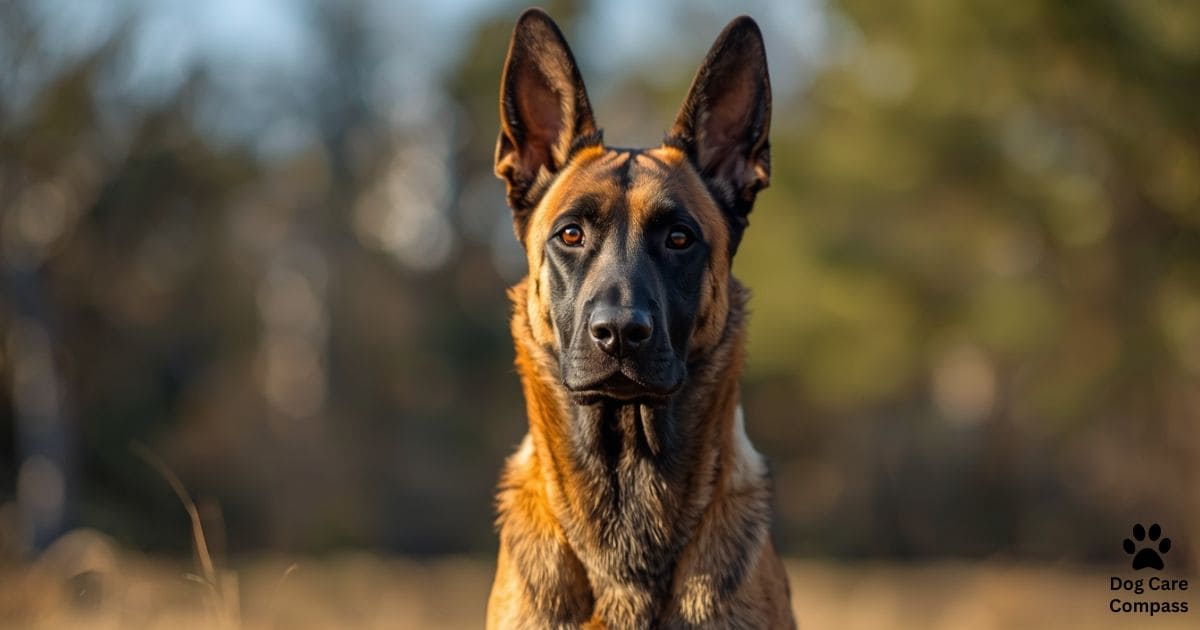
A Belgian Malinois left alone is a different animal from a Belgian Malinois with its owner present.
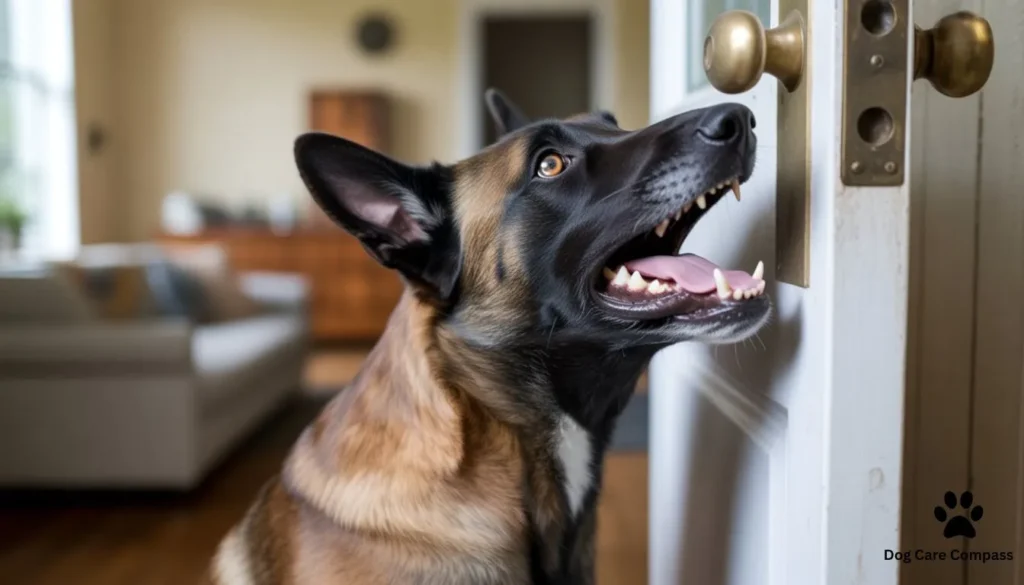
I have spoken with Malinois owners who came home to destroyed furniture, broken crates, neighbors complaining about continuous howling, and one particularly memorable case where the dog had somehow removed a door handle.
This is not bad behavior. This is separation anxiety in one of the most intense breeds on the planet.
Belgian Malinois separation anxiety is more common and more severe than in most breeds — driven by their exceptional bonding capacity, high intelligence, and working drive that has nowhere to go when left alone. This guide covers exactly why it happens and what treatment approaches actually produce results with this specific breed.
Quick Answer
| Question | Answer |
|---|---|
| Is separation anxiety common in Malinois? | Yes — extremely common |
| Is it worse than other breeds? | Yes — intensity is higher |
| Can it be fixed? | Managed significantly — with consistent work |
| How long does treatment take? | Weeks to months |
| Do I need a vet? | For severe cases — yes |
Why Belgian Malinois Are Especially Prone to Separation Anxiety
The Belgian Malinois is not a pet dog wearing a working dog costume.
It is a working dog — with all the drives, instincts, and emotional intensity that entails — living in a domestic environment that was not designed for it.
Three characteristics make Malinois uniquely vulnerable to separation anxiety:
Exceptional bonding: Malinois form intensely close attachments to their primary person. This bond is deeper and more all-encompassing than what most breeds experience. When that person leaves, the absence is felt with corresponding intensity.
High intelligence: A Malinois left alone has an active, problem-solving mind with nothing constructive to focus on. That intelligence becomes the anxiety’s engine — the dog thinks, anticipates, and catastrophizes in ways less intelligent breeds simply cannot.
Working drive with no outlet: Malinois were bred to work eight to twelve hours daily alongside a handler. Every instinct they have is oriented toward active engagement with a person. Solitude is fundamentally contrary to everything their genetics prepared them for.
Signs of Separation Anxiety in Belgian Malinois
Before you leave:
- Intense shadowing — follows every step
- Visible distress when departure cues appear
- Pacing and whining as you prepare to leave
- Refusing to settle even briefly
While you are away:
- Continuous vocalization — howling, barking, whining
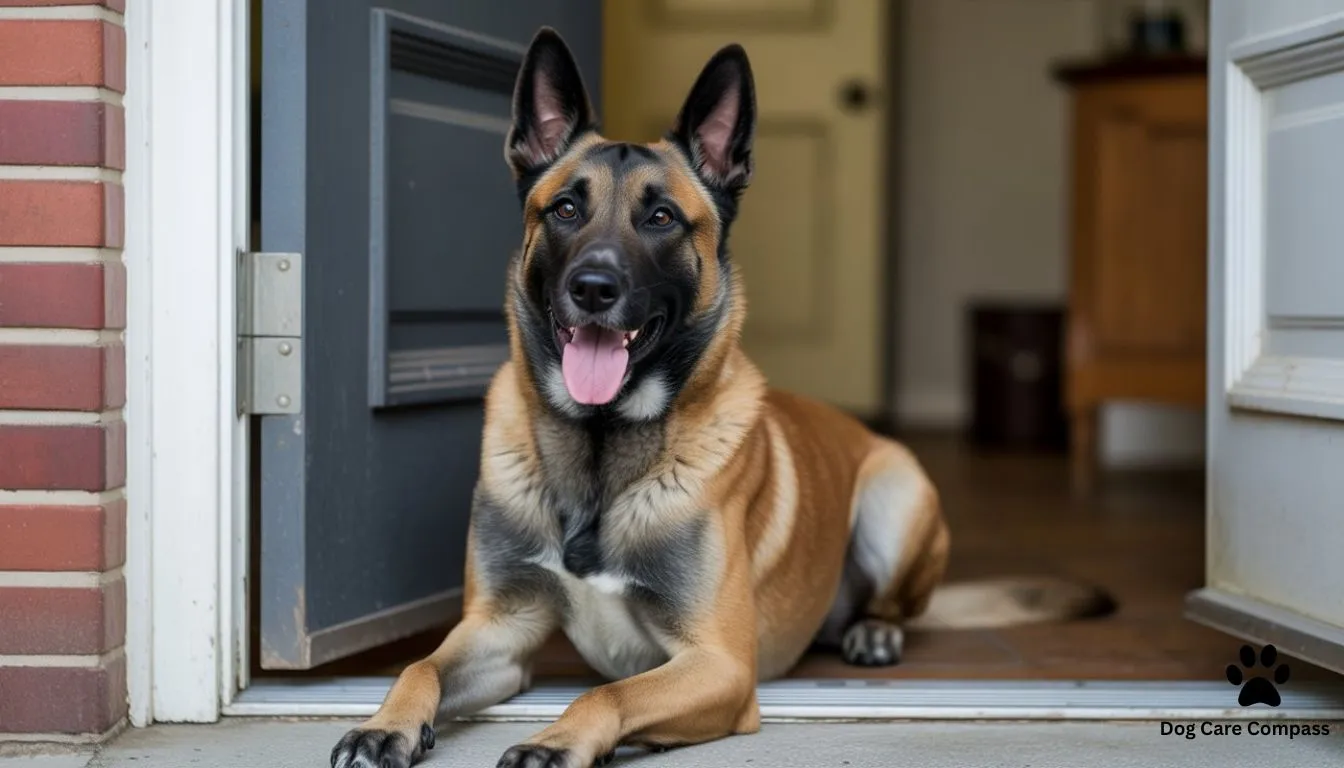
- Destructive behavior concentrated near exits
- Escape attempts — breaking through barriers
- House soiling despite being house-trained
- Self-injury from repeated escape attempts
When you return:
- Frantic, prolonged greeting that takes minutes to settle
- Clingy behavior lasting hours after return
- Visible physical exhaustion from the anxiety episode
The Malinois version of separation anxiety is typically more physical and more intense than what owners see in other breeds.
A German Shepherd with separation anxiety might bark and pace. A Malinois might break through a crate, damage walls, and injure itself in escape attempts — all within thirty minutes of the owner leaving.
What Causes Separation Anxiety in Malinois
Insufficient Exercise and Mental Engagement
This is the most common and most correctable cause.
A Malinois that has not received adequate daily exercise and mental stimulation has a reservoir of unspent drive that explodes when the owner leaves.
The anxiety is real — but it is significantly amplified by physical and mental energy with nowhere to go.
An exhausted, mentally satisfied Malinois handles solitude dramatically better than one whose needs have gone unmet. This single factor explains why many Malinois owners report that separation anxiety “disappeared” after establishing a rigorous daily exercise routine.
No Independence Training
A Malinois puppy that was never taught to be comfortable alone becomes an adult dog that cannot cope with solitude.
The puppy that follows everywhere seems endearing at eight weeks. At two years, that same attachment — untrained and unmanaged — produces a dog that genuinely cannot function without the owner’s physical presence.
Early independence training is the most effective prevention. Late independence training is the most important intervention.
Owner Schedule Changes
A Malinois accustomed to an owner working from home often develops severe separation anxiety when that owner returns to an office.
From the dog’s perspective — a reliable constant has been removed without explanation. The response is proportional to the depth of the bond and the abruptness of the change.
Rescue and Rehoming History
Malinois with histories of abandonment or multiple rehomings develop hypervigilance around owner departures.
Every departure triggers the same fear — that this time the owner will not return. This is not manipulative behavior. It is a genuine trauma response that requires patient, systematic treatment.
Treatment — What Actually Works With Malinois
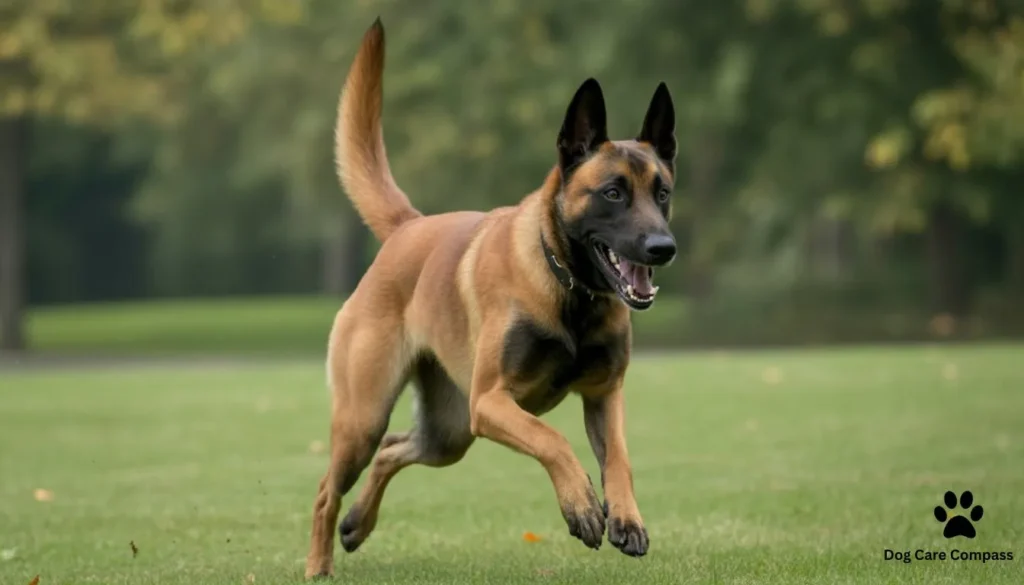
Step 1 — Exercise First, Everything Else Second
For Malinois — this is not a lifestyle suggestion. It is a treatment prerequisite.
A Malinois receiving insufficient exercise will not respond meaningfully to behavioral modification. The physical drive overwhelms the training.
Minimum daily requirements:
- 90 minutes to 2 hours of vigorous physical activity
- Not casual walking — running, fetch, structured training, agility
- Mental stimulation in addition to physical exercise — not instead of it
Morning exercise before planned alone time produces the best results. A Malinois that has run hard and worked mentally for two hours is a fundamentally different dog to leave alone than one that has been sitting in the house since morning.
We covered the exercise and behavioral calm connection for this breed in our Malinois guide.
Step 2 — Build Independence at Home First
Before addressing departure anxiety — teach the dog that being in a different room from the owner is safe and normal.
How to do it:
- Ask the dog to go to their mat or bed
- Reward them for staying while you move to another room
- Return before they get up — reward calm settling
- Gradually increase the distance and duration
Practice this multiple times daily. A Malinois that can settle calmly in a separate room while the owner is home is ready to begin departure training. One that cannot — is not.
Step 3 — Desensitization to Departure Cues
Malinois pick up departure signals with remarkable precision — keys, shoes, bags, jacket.
The anxiety response often starts twenty minutes before the owner actually leaves.
Desensitization protocol:
- Pick up keys — put them down and sit back down
- Put shoes on — take them off without leaving
- Pick up bag — unpack it
- Repeat these actions multiple times daily without leaving
Over days and weeks, these cues lose their predictive power. The anxiety response to them reduces progressively.
Step 4 — Graduated Departures
This is the core of separation anxiety treatment — teaching the dog that departures are temporary and that solitude is survivable.
Week 1:
- Step outside for 5 seconds — return calmly
- Repeat 10 times daily
- Build to 30 seconds, then 2 minutes
Week 2:
- Build to 10 minutes, then 20 minutes
- Leave the property briefly
Week 3 onward:
- Extend duration gradually week by week
- Never jump ahead faster than the dog’s comfort
The non-negotiable rule — always return before the dog reaches full panic.
You are teaching the Malinois that departure always leads to return. Returning to a dog already in full panic reinforces the fear rather than reducing it.
This is identical in principle to the graduated approach that works for GSD separation anxiety — the difference with Malinois is the intensity of the response and the greater exercise prerequisite.
Step 5 — Enrichment Before Departure
A Kong stuffed with high-value food, a puzzle feeder, or a long-lasting chew given immediately before leaving occupies the dog during the critical first minutes of alone time.
A Malinois focused on extracting food from a Kong is not focused on the departure.
By the time the enrichment is finished, the acute anxiety peak has typically passed.
Rotate enrichment options frequently — Malinois solve puzzles quickly and lose interest in predictable challenges.
Step 6 — Crate Training — Done Correctly
A properly crate-trained Malinois has a physical safe space that reduces anxiety during alone time.
The key word is “properly.” A Malinois forced into a crate without positive association will destroy it. A Malinois that has learned to love its crate voluntarily seeks it during stress.
Crate training for a Malinois requires weeks of positive association building before the crate is used for actual alone time confinement.
Never use the crate as punishment — this is particularly counterproductive with a breed this sensitive and intelligent.
Step 7 — Calm Departures and Returns
Malinois read owner emotion with extraordinary sensitivity.
An emotional goodbye — long fussing, apologetic tone, prolonged farewell — communicates that departure is a significant, concerning event.
A calm, matter-of-fact departure — no drama, no extended goodbye — produces less anxiety than an emotional one.
The same applies to returns. Greet calmly. Wait for the dog to settle before giving attention. Matching the Malinois’s frantic greeting with high energy excitement amplifies rather than calms the response.
When Home Treatment Is Not Enough
Self-directed treatment works for mild to moderate cases. These signs indicate professional help is needed:
- Self-injury during alone time
- Anxiety not improving after 8 weeks of consistent work
- Cannot be left alone even for 2 minutes without full panic
- Destructive behavior causing significant property damage consistently
- Owner’s schedule does not permit the frequency of practice sessions required
A veterinary behaviorist — not a general trainer — is the appropriate professional for severe Malinois separation anxiety. Veterinary behaviorists can prescribe situational anti-anxiety medication that reduces baseline anxiety enough for behavioral training to actually work.
Medication does not replace training. It creates the neurological conditions for training to take hold in a brain that is too anxious to learn without pharmacological support.
Diet and Anxiety in Malinois
A Malinois eating a high-quality, nutritionally complete diet shows lower baseline anxiety than one eating heavily processed food.
The gut-brain connection is documented and relevant. Chronic gut irritation from poor diet quality increases cortisol levels and reduces the nervous system’s capacity to regulate stress.
Omega-3 fatty acids — found in fish, flaxseed, and fish oil — have anti-inflammatory effects on nervous system tissue that directly support anxiety management.
For Malinois puppies — establishing a strong nutritional foundation during development supports both physical and behavioral health long-term. Our Malinois puppy nutrition guide covers the dietary foundation this breed needs from the start.
Comparison — Malinois vs German Shepherd Separation Anxiety
Both breeds are highly prone to separation anxiety. The presentation and intensity differ.
| Factor | German Shepherd | Belgian Malinois |
|---|---|---|
| Bond intensity | High | Extreme |
| Anxiety intensity | Moderate-High | High-Extreme |
| Physical expression | Barking, pacing | Destruction, escape |
| Exercise requirement | 1-2 hours | 1.5-2+ hours |
| Treatment timeline | Weeks to months | Months |
| Medication need | Moderate cases | More frequently needed |
The treatment principles are identical. The Malinois requires more exercise, more consistent application, and more patience before results become visible.
Frequently Asked Questions
Can Belgian Malinois be left alone at all?
Yes — with proper training and adequate exercise, most Malinois can be left alone for four to six hours comfortably. Eight hours daily alone is generally not compatible with this breed’s needs without significant management.
Will getting a second dog help?
Sometimes — if the anxiety is primarily social and the Malinois bonds well with the companion. It does not help if the anxiety is specifically about the owner’s absence. A second dog is not a guaranteed solution and should not be the first intervention.
My Malinois destroys everything when I leave — is this normal?
Destructive behavior concentrated near exits is a classic separation anxiety presentation in Malinois. It is not normal in the sense of being acceptable — but it is a predictable expression of genuine distress rather than spite or poor training.
How much exercise does a Malinois actually need before alone time?
A minimum of ninety minutes of vigorous activity. More is better. The exercise should be vigorous — running, fetch, structured training — not casual walking. Mental stimulation alongside physical exercise produces better results than physical exercise alone.
Should I get a camera to monitor my Malinois?
Yes — absolutely. A camera gives you objective information about what the dog does when alone, how quickly anxiety escalates, and whether treatment is producing measurable improvement. Without this information, you are guessing.
My Malinois is fine with other people but panics when I specifically leave — why?
This indicates the anxiety is owner-specific rather than generalized solitude anxiety. The treatment is the same — graduated departures — but the bond between dog and specific owner is the variable being addressed.
Final Summary
- Belgian Malinois separation anxiety is more intense than most breeds — driven by extreme bonding and working drive
- Insufficient exercise is the most common and most correctable contributing factor
- Ninety minutes to two hours of vigorous daily exercise is the treatment prerequisite — not optional
- Graduated departure training is the core behavioral intervention — start with seconds and build slowly
- Build independence at home before working on departures
- Calm, matter-of-fact departures and returns reduce anxiety faster than emotional ones
- Veterinary behaviorist involvement is appropriate for severe cases — medication can make training possible
- Most Malinois show meaningful improvement within two to three months of consistent management
Start today: Set up a camera to observe your Malinois during a planned five-minute absence. What you see tells you the severity of what you are dealing with — and gives you the baseline to measure every week of treatment against.
For more Belgian Malinois behavior and care guides, explore the complete library at dogcarecompass.com.