Dog Scared of Thunder: Home Remedies, Causes, and Long-Term Solutions
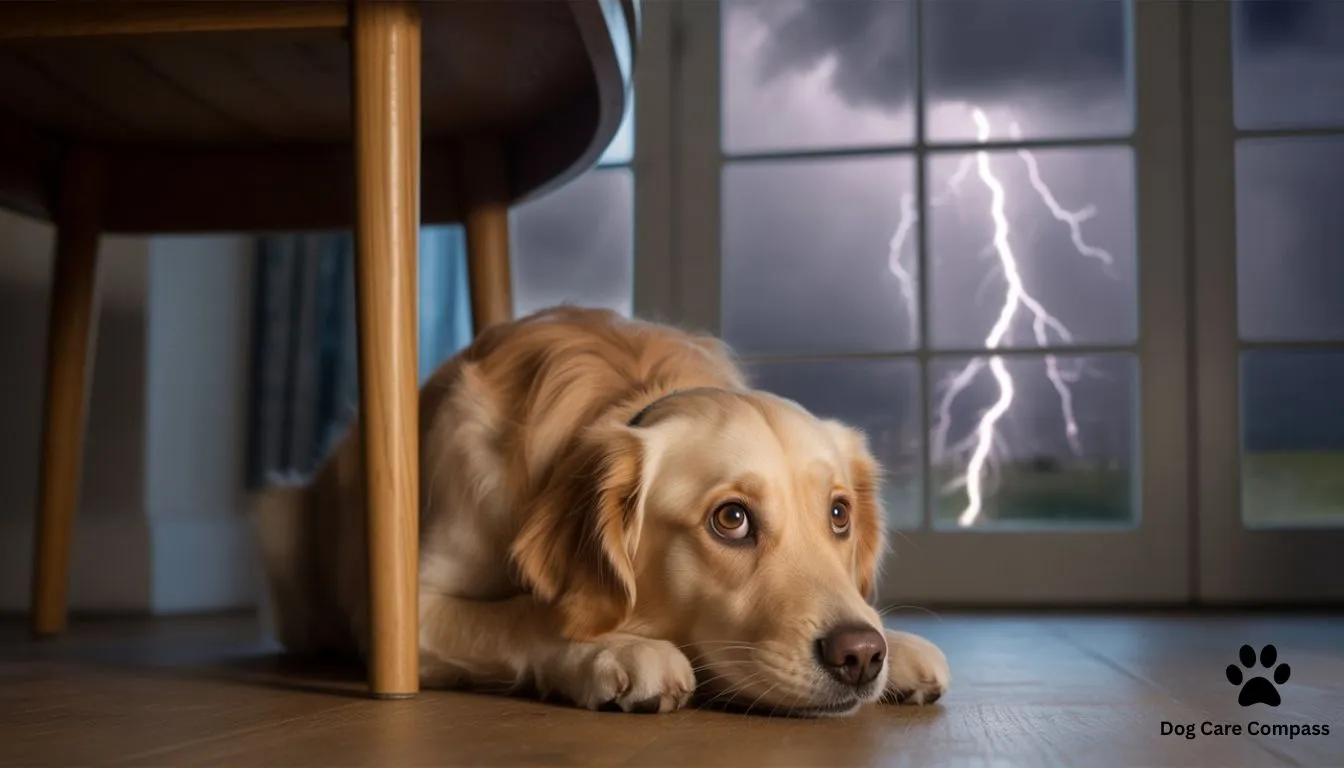
The storm rolled in at midnight. Within thirty seconds my dog went from sleeping peacefully to hiding under the bed, shaking so hard the frame was vibrating.
Thunder phobia in dogs is one of the most distressing things to witness as an owner — and one of the most common behavioral challenges across all breeds.
The good news is that most cases respond well to a combination of immediate home remedies and longer-term management strategies. This guide covers everything that actually works.
Why are dogs scared of thunder? Dogs experience thunder as a combination of loud sound, low-frequency vibration, static electricity, barometric pressure changes, and darkening skies. They cannot understand what is happening — only that something large and threatening is occurring. The fear response is instinctive and genuine.
Quick Answer
| Question | Answer |
|---|---|
| Is thunder phobia common? | Yes — very common in all breeds |
| Is it dangerous? | Stress is real — can worsen without management |
| Best immediate remedy? | Safe space + pressure wrap |
| Can it be fixed permanently? | Managed significantly — rarely eliminated entirely |
| When to see a vet? | Severe panic, self-injury, no improvement |
Why Dogs Fear Thunder More Than Just the Sound
Most owners assume thunder phobia is about the noise alone.
It is not.
Dogs experience a full sensory storm during thunderstorms — literally. The combination of factors creates a threat experience that goes far beyond a loud bang.
What dogs actually experience:
- Loud, unpredictable sound — no warning, no pattern
- Low-frequency vibration felt through floors and walls
- Static electricity buildup in their coat — genuinely uncomfortable
- Barometric pressure drop before storms begin
- Electromagnetic changes in the atmosphere
- Darkening skies and lightning flashes
Many dogs begin showing anxiety before the thunder starts — reacting to the pressure and atmospheric changes that precede the storm by thirty minutes or more. This is not imagination. Their sensory systems detect what ours cannot.
Signs Your Dog Is Scared of Thunder

Mild fear:
- Panting and pacing
- Seeking the owner constantly
- Ears back, tail low
- Yawning and lip licking
Moderate fear:
- Hiding under furniture or in closets
- Trembling and shaking
- Refusing food
- Excessive drooling
Severe fear:
- Destructive behavior — scratching doors, breaking through barriers
- Self-injury from escape attempts
- Urinating or defecating indoors
- Complete inability to settle for hours after the storm passes
Severe thunder phobia causes genuine physical stress — elevated cortisol, rapid heart rate, and physical exhaustion after episodes. It is not something to dismiss as drama.
9 Home Remedies for Dogs Scared of Thunder
1. Create a Safe Den Space
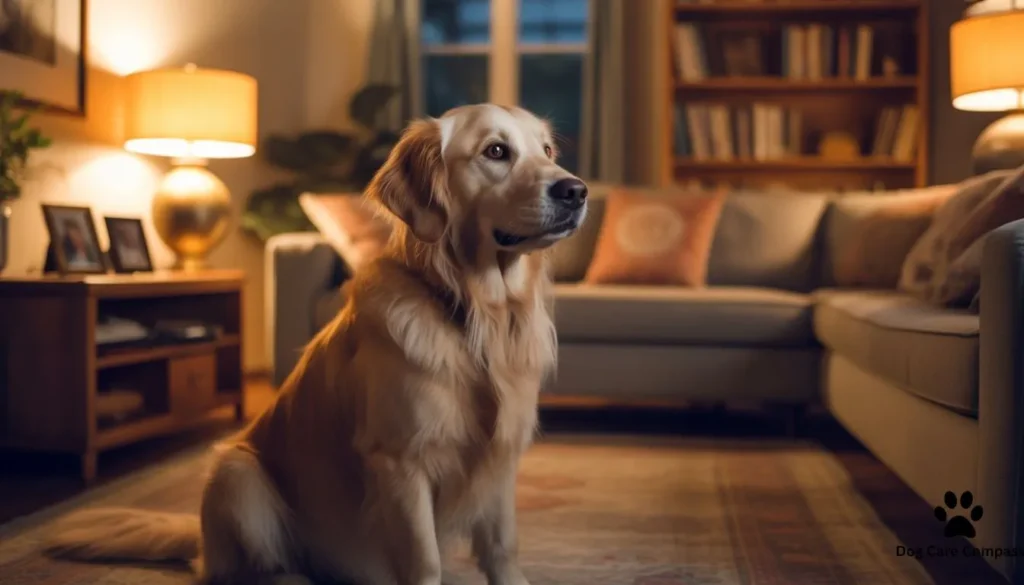
This is the single most important thing you can do.
Dogs instinctively seek enclosed, dark spaces during fear responses. This is not avoidance behavior to discourage — it is a healthy coping mechanism.
Provide a designated safe space:
- A crate covered with a heavy blanket on three sides
- A closet with the door left open and comfortable bedding inside
- Under a bed if the dog chooses this naturally
The key is letting the dog choose their safe space rather than forcing them to stay in an open room. Forcing a frightened dog to stay exposed amplifies the fear response.
2. Pressure Wraps — Anxiety Wraps
Gentle, consistent pressure has a documented calming effect on the nervous system in dogs.
Commercial anxiety wraps — like the Thundershirt — apply gentle compression to the dog’s torso. Many owners report significant improvement within the first use.
No commercial wrap available? A snug DIY wrap using an elastic bandage or compression shirt achieves a similar effect. The wrap should be firm but not restrictive — you should be able to slide two fingers underneath.
Put the wrap on before the storm starts — not mid-panic. Pre-storm application is significantly more effective than reactive application.
3. White Noise and Music
Partially masking the thunder with background sound reduces the startle response that accompanies each new thunderclap.
White noise, fan noise, or specific music reduces the contrast between silence and the sudden loud sound.
Research published in veterinary behavioral journals found that classical music and specifically-composed canine calming music reduced physiological stress markers in dogs.
Play the sound at a volume that partially masks the thunder without being loud itself. The goal is moderation — not replacement.
4. Calming Massage
Slow, firm strokes along the dog’s back, neck, and ears activate the parasympathetic nervous system — the system responsible for the “rest and digest” response that counteracts the fear-driven “fight or flight” state.
Use slow, rhythmic pressure — not quick, patting movements that can increase arousal.
The TTouch technique — a specific form of circular massage developed for anxious animals — is particularly effective. It involves light circular movements across the body that many dogs respond to visibly within minutes.
5. Calming Supplements — Natural Options
Several natural supplements have evidence-based support for situational anxiety in dogs:
| Supplement | How It Works | Notes |
|---|---|---|
| Melatonin | Promotes relaxation, reduces cortisol | Safe for most dogs — discuss dose with vet |
| L-theanine | Amino acid that promotes calm without sedation | Found in green tea — available as supplement |
| Valerian root | Natural sedative effect | Mild — better for moderate anxiety |
| CBD oil | Endocannabinoid system support | Variable research — vet guidance recommended |
| Chamomile | Mild calming effect | Safe — can be added to food |
Give supplements thirty to sixty minutes before the storm is expected — not during peak panic.
6. Antistatic Solutions
Static electricity buildup in a dog’s coat during storms causes genuine physical discomfort — some behaviorists believe this is a primary driver of thunder phobia rather than just the sound.
Practical antistatic interventions:
- Wipe the dog’s coat with a dryer sheet — reduces static charge
- Use an antistatic jacket designed for dogs
- Have the dog lie on an antistatic mat
- Ground the dog — contact with grounded surfaces like tile flooring reduces static
Dogs that specifically seek tile floors or bathtubs during storms are likely experiencing static discomfort and instinctively seeking grounded surfaces. Allow this behavior.
7. Distraction and Engagement
For dogs with mild to moderate thunder anxiety — engaging their brain can interrupt the anxiety spiral.
Training exercises, food puzzles, or a high-value chew given at the first sign of storm anxiety occupies the dog’s focus.
This works best as a preventive measure — started before the storm hits — rather than as a response to full-blown panic. A dog in full panic cannot focus on a puzzle. A dog showing early anxiety signs often can.
8. Your Own Calm Energy
Dogs read owner anxiety with extraordinary sensitivity.
An owner who rushes to comfort a panicking dog with high emotional energy — distressed voice, tense body language, excessive fussing — communicates that the storm is indeed something to panic about.
Stay calm. Move slowly. Speak in a low, even tone. Sit near the dog without hovering.
You do not need to ignore the dog — you need to model calm rather than mirror their panic.
9. Desensitization — The Long-Term Solution
Desensitization involves gradually exposing the dog to recorded storm sounds at very low volume during calm, positive activities.
The process:
- Play thunder recordings at barely audible volume while the dog eats or plays
- Reward calm behavior during the exposure
- Very gradually increase volume over days and weeks
- Pair each increase with positive experiences
This process takes weeks to months but produces genuine reduction in the fear response rather than temporary management.
The same desensitization principles that work for stranger fear in working breeds apply directly here — gradual exposure below the threshold of panic, paired with positive experiences.
A safe, familiar [crate] can become your dog’s comfort zone during storms
Breed Considerations

German Shepherds
GSDs are among the breeds most commonly reported to have thunder phobia.
Their sensitivity and emotional intelligence — the same qualities that make them exceptional companions — make them more reactive to atmospheric and environmental changes.
A GSD already managing separation anxiety is at higher risk for thunder phobia — both conditions share an underlying anxiety predisposition that benefits from the same management approach.
Belgian Malinois
Malinois show high-intensity responses to fear triggers — thunder phobia in this breed tends to present more dramatically than in most others.
Their drive and energy mean that anxiety responses are more physically expressed — more pacing, more destructive behavior, more escape attempts.
Exercise immediately before a forecast storm reduces the intensity of the Malinois response significantly — a physically tired Malinois handles fear triggers with noticeably less intensity.
Long Hair German Shepherds
Long-coated dogs may accumulate more static electricity than short-coated dogs — making the antistatic interventions particularly relevant for this coat type.
Regular brushing during storm season reduces static buildup in the coat. Antistatic wipes used before a forecast storm can make a meaningful difference for long-haired breeds.
Fear-based distraction such as dogs being scared of sudden noises like thunder can also reduce recall response.
Diet and Anxiety — The Connection
A dog eating a nutritionally balanced diet with adequate omega-3 fatty acids, B vitamins, and magnesium shows lower baseline anxiety than one eating a heavily processed diet.
These nutrients support the nervous system’s capacity to regulate stress responses.
A dog already dealing with digestive stress from a poor diet is physiologically less equipped to manage fear responses calmly. The sensitive stomach guide covers how dietary foundations affect overall stress resilience in dogs.
When to See a Vet
Most thunder phobia is manageable with home interventions. See a vet if:
- Dog injures itself during storm panic
- Panic continues for more than two hours after the storm has passed
- Phobia is worsening season over season
- Dog cannot be left alone during storms without destructive behavior
- Home remedies produce no improvement after consistent application
Prescription anti-anxiety medication — specifically situational medications like alprazolam or trazodone — can be given before forecast storms to reduce the physiological panic response. These do not sedate — they reduce the intensity of the fear response enough for the dog to cope.
Medication combined with behavioral management produces significantly better outcomes than either approach alone for severe thunder phobia.
Frequently Asked Questions

Will my dog grow out of thunder phobia?
Rarely — and untreated thunder phobia typically worsens with each storm season rather than improving. Early intervention produces better outcomes than waiting.
Can I give my dog human anxiety medication during storms?
Never give human medications without specific veterinary instruction. Many human anxiety medications are toxic to dogs. Veterinary-prescribed situational medications are safe and effective — human medications are not.
My dog hides in the bathroom during storms — should I stop this?
No. The bathroom — with its grounded plumbing and tile floors — actually reduces static electricity buildup. Your dog is instinctively seeking static relief. Allow access to the bathroom during storms.
Does the Thundershirt work?
For many dogs — yes. Research shows pressure wraps reduce anxiety scores in roughly two thirds of dogs tested. Individual response varies significantly. Apply before the storm for best results.
My dog only developed thunder phobia recently — why?
Thunder phobia can develop at any age. Single traumatic storm experiences, age-related sensory changes, or accumulated sensitization from repeated storms can trigger new onset phobia in previously calm dogs.
Should I comfort my dog during a storm?
Yes — but calmly. Calm, low-key reassurance does not reinforce the fear. Anxious, high-energy comforting can amplify it. Sit near your dog, speak quietly, and model calm.
Final Summary
- Thunder phobia involves sound, vibration, static electricity, and pressure changes — not just noise
- Create a safe den space and let the dog choose where they feel safest
- Apply pressure wraps before the storm starts — not during peak panic
- White noise partially masks thunder and reduces startle responses
- Antistatic interventions help dogs experiencing static discomfort — especially long-haired breeds
- Stay calm — your energy directly affects your dog’s response
- Desensitization with recorded storm sounds produces the most durable long-term improvement
- Prescription situational medication from a vet is appropriate for severe cases
Do this before the next storm: Set up a covered crate or den space with comfortable bedding in an interior room. Put the dog’s favorite blanket inside. When the storm forecast appears — put an anxiety wrap on thirty minutes before it arrives. These two changes alone produce meaningful improvement for most dogs.
For more dog behavior and health guides, explore the complete library at dogcarecompass.com.