Dog Suddenly Scared of Something in House: Causes and How to Help
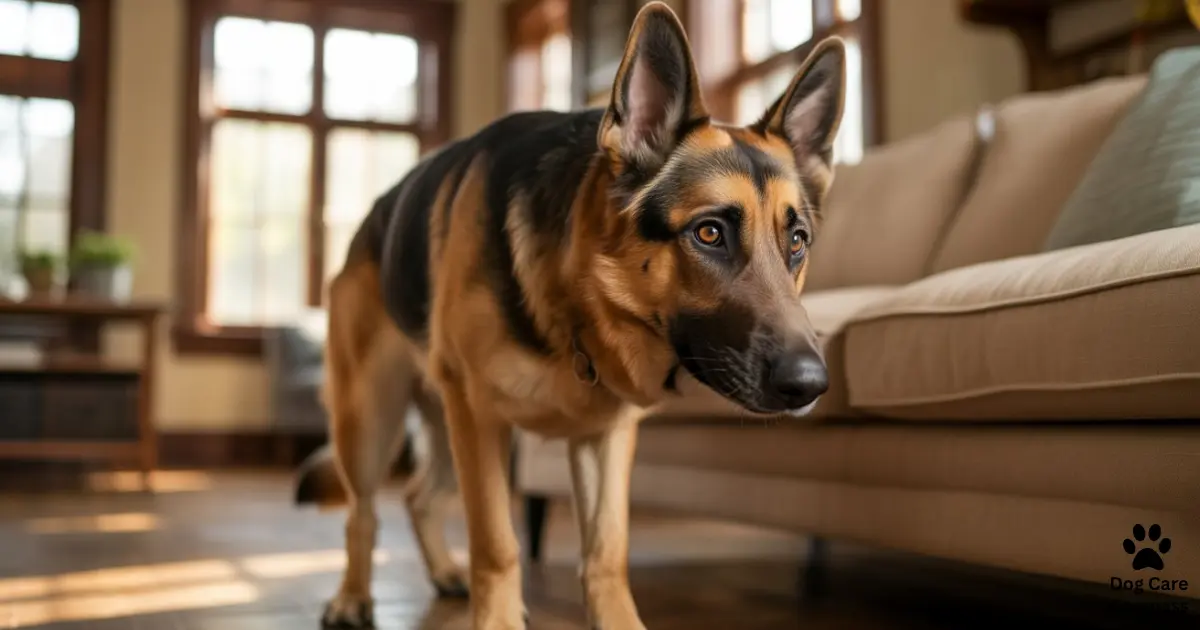
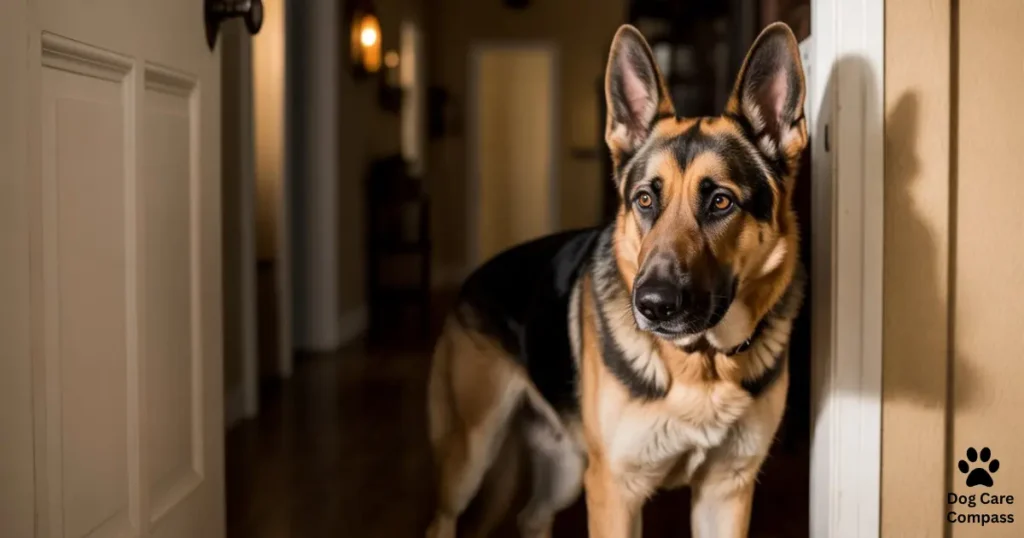
One evening my dog stopped at the hallway entrance and refused to walk through. Same hallway he had used a thousand times. Nothing visible had changed. He just stood there, hackles slightly raised, staring at nothing I could see.
It lasted three days. Then he walked through like it never happened.
If your dog has suddenly become scared of something in the house — a room, a corner, an object, a sound — you are dealing with one of the more puzzling behavioral situations dog owners encounter. The behavior is real, the fear is genuine, and the cause is almost always identifiable once you know what to look for.
Why is my dog suddenly scared of something in the house? Dogs develop sudden in-house fears due to negative associations with sounds or objects, sensory experiences humans cannot perceive, pain connected to a location, changes in the home environment, or anxiety disorders. The fear is always genuine — never manipulative.
Quick Answer
| Cause | How Common | Fix |
|---|---|---|
| Negative sound association | Very common | Desensitization |
| Pain connected to location | Common | Vet check first |
| New object or furniture | Common | Gradual introduction |
| Noise humans cannot hear | Common | Investigate environment |
| Anxiety disorder | Moderate | Behavioral treatment |
| Past trauma triggered | Moderate | Counter-conditioning |
| Vision or hearing changes | Less common | Vet check |
| Pest or wildlife in walls | Less common | Investigate |
Why Dogs Develop Sudden Fears Indoors
Dogs experience the world through a sensory lens completely different from ours.
Their hearing detects frequencies humans cannot. Their nose processes environmental information at a level of detail we cannot comprehend. Their visual system prioritizes movement differently than ours.
What appears to be irrational fear of nothing is almost always a response to something real — something the dog can detect that the owner cannot.
This is the most important reframe for owners dealing with this behavior. The dog is not being dramatic or manipulative. Something has changed in their environment — or something has changed in how they relate to their environment — and their nervous system is responding accordingly.
8 Real Causes of Sudden In-House Fear
1. Negative Sound Association
This is the most common cause — and the most frequently missed because the trigger happens and passes before the owner makes the connection.
A loud, startling noise — a truck backfiring outside, a smoke alarm going off briefly, something falling — occurs near a specific location. The dog makes an immediate association between the location and the frightening sound.
Long after the original noise has passed, the location retains its negative association. The dog avoids it, freezes at the entrance, or shows anxiety when near it.
The owner, who may not have noticed the original trigger, sees only the fear response — which appears to have materialized from nothing.
2. Pain Connected to a Location
A dog that slipped on a hard floor and hurt itself associates that floor surface with pain. A dog that was startled and jumped, landing awkwardly, associates the area with the pain of landing.
The pain may have been brief and apparently minor. The association it creates can persist for weeks.
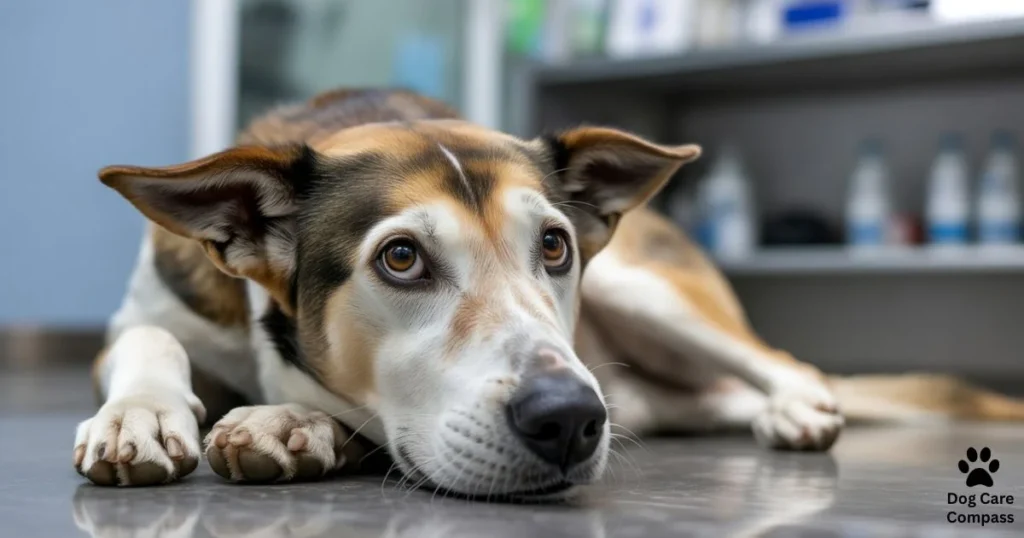
This cause is particularly important to rule out first — because a dog showing fear of a location due to ongoing pain from an injury needs veterinary attention, not behavioral modification.
A dog that suddenly refuses to climb stairs, enter a specific room, or walk on a certain surface alongside any sign of physical discomfort warrants a vet check before anything else. Our limping guide covers how to assess subtle pain signs that dogs do not always display obviously.
3. New Object or Furniture
Dogs notice environmental changes with far more acuity than owners often expect.
A new piece of furniture, a moved appliance, a decoration, a bag left in an unusual location, a mirror placed at floor level — any of these can produce genuine fear responses in dogs that are sensitive to environmental change.
The object does not need to look threatening to humans. Its novelty — its presence where previously there was nothing — is sufficient to trigger wariness in a dog with a sensitive temperament.
German Shepherds and Belgian Malinois — breeds with strong environmental awareness and protective instincts — are particularly prone to this cause. Their vigilance about changes in their territory that makes them excellent working dogs also makes them more reactive to novel objects indoors.
4. Sounds Humans Cannot Hear
Ultrasonic frequencies — from electronic devices, certain appliances, pest deterrent devices, or structural issues — are inaudible to humans but clearly perceptible to dogs.
A dog that suddenly refuses to enter a room where a new appliance was installed, where a pest deterrent device was placed, or where an electronic device is malfunctioning is often responding to a genuine auditory stimulus.
This is also relevant for structural sounds — pipes, heating systems, and ventilation can produce vibrations and sounds that trigger dog reactions without the owner ever hearing anything.
5. Smell Changes
Dogs detect chemical changes in their environment at concentrations far below human threshold.
New cleaning products, a gas leak, mold developing behind a wall, a pest presence, a dead animal in a wall cavity — all produce olfactory information the dog receives clearly and the owner does not.
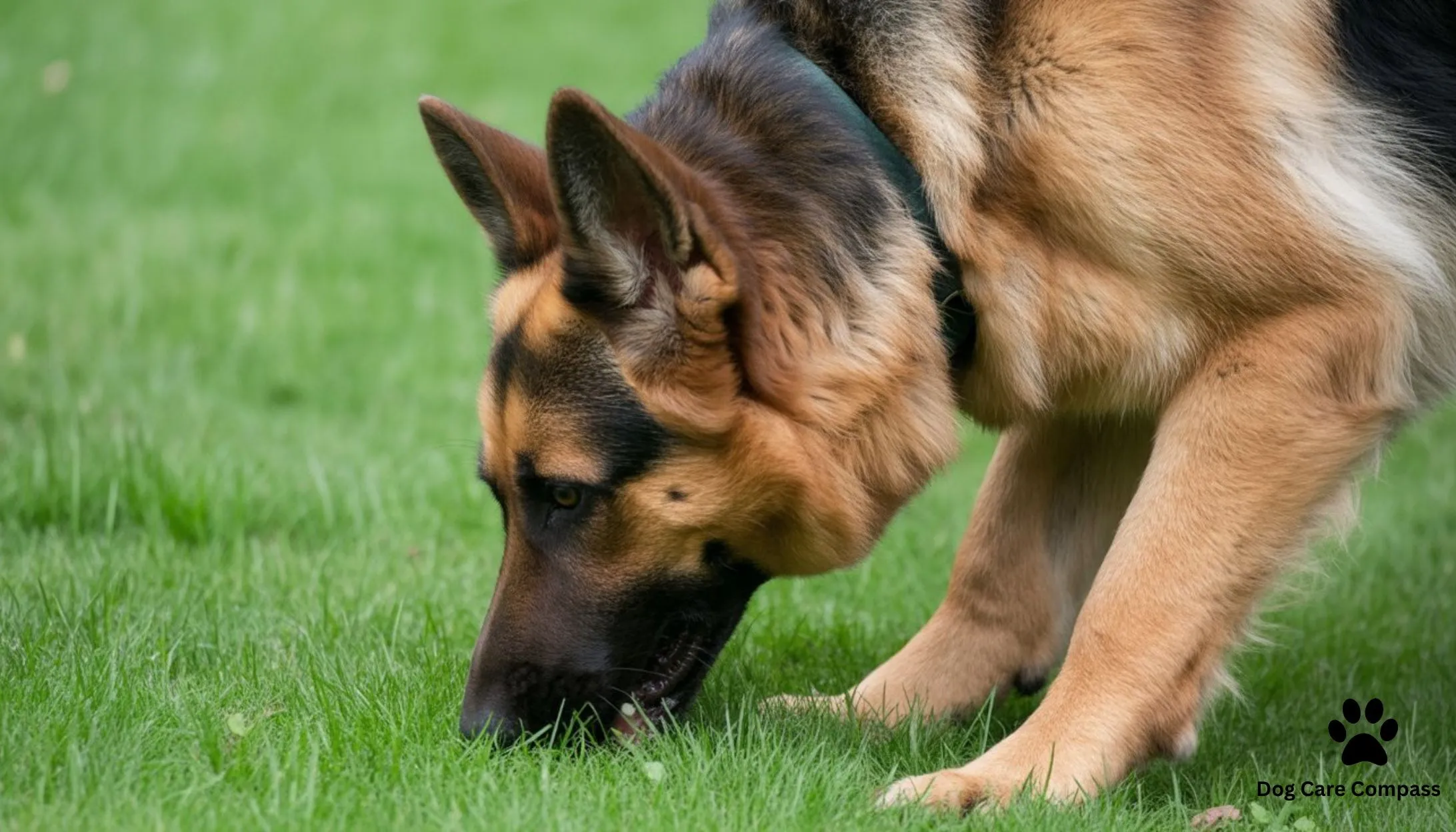
A dog consistently avoiding one specific area — particularly sniffing intently at walls, floors, or vents near the feared location — is frequently responding to a smell rather than a sound or visual trigger.
6. Anxiety Disorder — Generalized
Some dogs develop generalized anxiety that manifests as increasing fearfulness toward previously neutral stimuli.
A dog that has always been slightly anxious may reach a threshold — from accumulated stress, a significant life change, or simply age-related neurological changes — where their anxiety begins expressing in new ways.
Sudden fear of locations or objects that were previously neutral, alongside other anxiety signs — restlessness, panting, clinginess, changes in sleep — suggests a broader anxiety picture worth addressing systematically.
The same underlying anxiety that drives separation distress often manifests in multiple behavioral domains simultaneously.
7. Sensory Changes — Vision or Hearing Loss
Age-related sensory decline changes how dogs perceive their environment.
A dog with developing cataracts sees the world differently — shadows, reflections, and low-light areas that were previously navigated easily become uncertain. A dog with hearing loss loses the environmental information that previously helped them feel secure.
Both produce apparent fear of previously familiar locations — particularly areas with unusual lighting, reflective surfaces, or locations that relied on auditory cues for confident navigation.
Sudden apparent fear of specific rooms or features in a senior dog warrants a veterinary assessment of sensory function alongside behavioral investigation.
8. Pest or Wildlife in Walls or Floors
Mice, rats, insects, or other wildlife in walls, floors, or ceiling voids produce sounds, vibrations, and smells that dogs detect long before any visible evidence appears.
A dog that has suddenly become fixated on a specific wall section, scratches at the floor in one location, or refuses to settle near a particular area may be detecting a pest presence.
This is worth investigating practically — checking for entry points, droppings, or sounds — before attributing the behavior to anxiety.
How to Identify the Specific Cause
Before attempting any fix — identify what your dog is actually responding to.
Step 1 — Map the fear precisely Which location? Which direction does the dog face when fearful? Is it consistent — always the same spot — or variable?
Step 2 — Check for physical pain Does the dog show any physical hesitation, limping, or discomfort alongside the fear? Rule out pain before assuming behavioral cause.
Step 3 — Review recent history Did anything happen near this location in the days before the fear appeared? New objects? Loud sounds? Household changes?
Step 4 — Check for new objects or changes Walk the feared area yourself. Has anything changed — furniture, objects, lighting, appliances?
Step 5 — Investigate for pest presence Listen at walls. Check for droppings. Look for entry points near the feared area.
Step 6 — Consider sensory triggers Are there electronic devices, appliances, or pest deterrents near the feared location? Try unplugging them temporarily.
Breed-specific fear issues are common, especially in German Shepherds around strangers
How to Help a Dog Scared of Something in the House
Do Not Force the Issue
The single most counterproductive response is forcing the dog into or through the feared area.
Physically pushing, dragging, or carrying a frightened dog through a feared location does not extinguish the fear. It adds the stress of forced exposure on top of the existing fear — and damages the trust between dog and owner.
The dog’s nervous system needs to be convinced that the location is safe. That cannot happen through force.
Counter-Conditioning — The Core Approach
Counter-conditioning changes the emotional association — from negative to positive — through repeated pairing of the feared stimulus with positive experiences.
Basic protocol:
- Identify the threshold — how close can the dog get before showing fear?
- Work just below threshold — where the dog notices the location but does not react
- Every time the dog looks toward the feared area — deliver a high-value treat immediately
- Over sessions — gradually move slightly closer
- Never push past the dog’s comfort — if fear appears, move back and rebuild
This is identical in principle to the desensitization approach that works for stranger fear in German Shepherds — gradual, positive, always below threshold.
Eliminate the Trigger if Possible
If the cause is a new object — remove it or move it gradually.
If the cause is an electronic device or pest deterrent — unplug it.
If the cause is a new piece of furniture — cover it with a familiar-smelling blanket initially, then gradually remove the cover over days.
Removing or modifying the trigger is faster and more effective than training through it when the trigger is modifiable.
Create Positive Associations With the Location
Feed the dog near — but not at — the feared location. Move the food bowl progressively closer over days and weeks.
Play the dog’s favorite game near the location. Practice training exercises they enjoy nearby. Allow them to approach voluntarily and reward every approach with enthusiasm.
The goal is accumulating positive experiences associated with the area until the positive outweighs the negative.
Maintain the Rest of the Routine
Dogs experiencing in-house fear benefit from the stability of a consistent routine everywhere else.
Consistent meal times, walk times, play sessions, and sleep locations communicate that the world is fundamentally stable — even if one area currently feels uncertain.
A dog whose routine has been disrupted alongside the fear response recovers more slowly than one whose routine remains intact.
Diet and Anxiety — Supporting Nervous System Health
A dog eating a high-quality diet rich in omega-3 fatty acids and B vitamins shows lower baseline anxiety than one eating heavily processed food.
The nervous system’s capacity to regulate fear responses is directly influenced by nutritional status. Chronic low-grade gut inflammation from poor diet quality increases cortisol baseline — making fear responses more intense and slower to resolve.
For dogs showing fear responses alongside other anxiety signs — dietary support is a meaningful background intervention alongside behavioral work. The sensitive stomach guide covers dietary foundations that support both gut and nervous system health.
Why dog hiccups
Breed Considerations
German Shepherds
GSDs are highly environmentally aware — changes in their territory register with more intensity than in many other breeds.
A German Shepherd that becomes suddenly fearful of a location in the home is almost always responding to a genuine trigger — sound, smell, or visual change — rather than generalizing anxiety without cause.
Their intelligence means they form strong associations quickly and maintain them persistently. Early counter-conditioning produces faster results than waiting for the fear to resolve on its own.
Belgian Malinois
Malinois share the GSD’s environmental sensitivity with even greater intensity.
A Malinois that has developed fear of a location needs both the behavioral approach and adequate exercise — a physically and mentally satisfied Malinois has more neurological resources available for managing fear responses than an under-stimulated one.
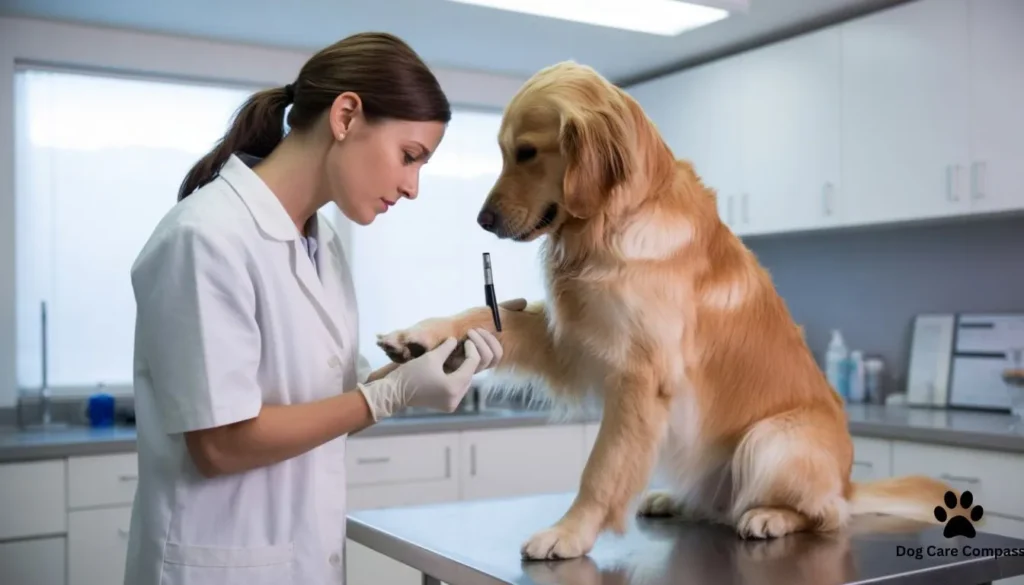
When to See a Vet
See a vet if:
- Any physical symptom accompanies the fear — limping, stiffness, reluctance to move
- Fear has generalized to multiple locations rather than remaining specific
- The dog is showing other new behavioral changes alongside the location fear
- Fear is intensifying rather than stable or improving
- Senior dog with sudden onset fear — sensory assessment needed
- No environmental cause can be identified after thorough investigation
Frequently Asked Questions
Can dogs sense things humans cannot in a house?
Yes — definitively. Dogs detect ultrasonic frequencies, detect smells at concentrations far below human threshold, and sense vibrations through surfaces. What appears as fear of nothing is almost always a response to something the dog genuinely perceives.
My dog is scared of a specific corner — what could it be?
Check for electronic devices or appliances nearby. Listen at the wall for pest sounds. Check for new objects in the area. Review whether anything happened near that corner recently. The specificity of location-based fear almost always points to an environmental trigger rather than generalized anxiety.
How long does it take for in-house fear to resolve?
With active counter-conditioning — most cases improve meaningfully within two to four weeks. Without intervention — some fears persist indefinitely or worsen. The duration depends heavily on the strength of the original negative association and the consistency of the positive reconditioning.
Should I comfort my dog when they show this fear?
Calm, low-key reassurance is appropriate. High-energy, anxious comforting can amplify the fear response. Sit quietly near the dog, speak in a calm tone, and avoid hovering or displaying your own concern about their behavior.
My dog is scared of their own reflection — is this normal?
Yes — particularly in dogs encountering mirrors for the first time or seeing their reflection in a new location. The movement of a “strange dog” in the mirror triggers the response. Gradual positive exposure — feeding near the mirror, playing near it — resolves this in most cases within a few weeks.
Could my dog be sensing a ghost or spirit?
Dogs are responding to real sensory stimuli — sounds, smells, vibrations — that humans cannot detect. There is no scientific evidence for canine perception of supernatural phenomena. The practical investigation of environmental triggers almost always identifies a real-world cause.
Final Summary
- Sudden in-house fear is almost always a response to something real the dog can perceive
- Rule out physical pain first — a vet check before behavioral intervention is appropriate when any physical symptom is present
- Most common causes are sound associations, new objects, ultrasonic noise, and smell changes
- Never force a dog through a feared location — it worsens the fear and damages trust
- Counter-conditioning — pairing the feared area with positive experiences gradually — is the most effective fix
- Eliminating the trigger is faster than training through it when the trigger is modifiable
- Diet quality supports the nervous system’s capacity to regulate fear responses
- Senior dogs with sudden onset fear need sensory assessment alongside behavioral investigation
Do this today: Walk slowly through the feared area yourself — quietly and deliberately. Note the dog’s response to watching you navigate it calmly. Then sit in the area and eat something the dog finds appealing nearby. These two actions begin the positive association process immediately.
For more dog behavior and health guides, explore the complete library at dogcarecompass.com.

researching veterinary sources, scientific studies, and expert
guides to bring dog owners accurate, practical information. Every
article is written with care and reviewed against credible
veterinary references including ASPCA, AKC, and peer-reviewed
literature.
- Why Does My Dog Sleep So Much All of a Sudden? 8 Real Reasons - August 10, 2026
- How to Train a Dog to Stop Pulling Without Treats: This Method Works - August 5, 2026
- How to Train an Older Dog New Tricks (Even If They’ve Never Been Trained) - August 1, 2026