Can Dogs Eat Durian? Is Durian Safe for Dogs?
Can dogs eat durian? If you live in Southeast Asia or regularly enjoy this powerfully aromatic fruit, this question has probably crossed your mind more than once.
The direct answer is: durian flesh is not toxic to dogs, but it comes with real concerns that make it one of the most cautious recommendations in dog nutrition. The seeds, however, are a different story entirely — and that distinction matters enormously.
This guide covers everything you need to know before sharing durian with your dog — the risks, the safe amounts, preparation rules, and why most veterinary nutritionists recommend extreme caution.
- Yes, dogs can eat durian in very small amounts.
- The flesh is not toxic, but the seeds are dangerous and must be removed.
- Most vets recommend feeding it only occasionally due to high sugar and fat.
Quick Answer — Is Durian Safe for Dogs?
| Question | Answer |
|---|---|
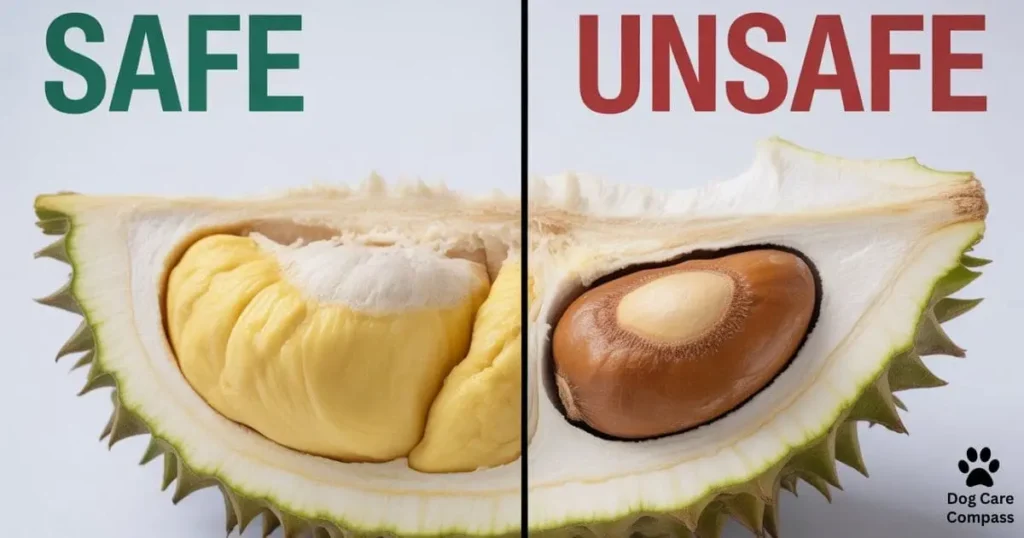
| Is durian safe for dogs? | Yes — flesh only, very small amounts |
| Can dogs eat durian flesh? | Yes — plain, seeds fully removed |
| Are durian seeds safe for dogs? | No — toxic, remove completely |
| Is durian skin safe? | No — dangerous, keep away |
| Safe for puppies? | Not recommended |
What Is Durian?
Durian is a large tropical fruit native to Southeast Asia, recognized by its thick spiky shell and notoriously strong smell. Inside, the flesh is soft, creamy, and rich — with a flavor that inspires genuine devotion across much of Asia.
It is eaten fresh, used in desserts, and processed into ice cream, candy, and pastries. For dog owners in countries where durian is a daily staple, the temptation to share a piece is completely understandable.
The nutritional profile looks impressive on the surface. But when you look closer at what those numbers mean for a dog’s digestive system, the picture becomes more complicated.
Nutritional Profile of Durian (Per 100g)
| Nutrient | Amount |
|---|---|
| Calories | 147 kcal |
| Carbohydrates | 27.1g |
| Natural Sugar | 19.1g |
| Dietary Fiber | 3.8g |
| Protein | 1.5g |
| Fat | 5.3g |
| Vitamin C | 19.7mg |
| Potassium | 436mg |
| Vitamin B6 | 0.3mg |
| Folate | 36mcg |
Two numbers stand out immediately — 19.1g of natural sugar and 5.3g of fat per 100g. For context, jicama contains just 1.8g of sugar per 100g. Durian contains more than ten times that amount. This single comparison tells you most of what you need to know about portion control.
Can Dogs Eat Durian? The Honest Answer
A small piece of plain durian flesh will not send your dog to the emergency vet. It is not in the same toxicity category as grapes, xylitol, or onions.
But here is my honest assessment after researching this thoroughly — durian is a fruit where the risk-to-benefit ratio simply does not favor regular feeding. A dog’s body is not designed to process this level of sugar and fat from a single food source, and the consequences of overfeeding it are real and well-documented.
The dogs best positioned to handle occasional durian are large, healthy, active adults with no existing health conditions — and even then, portions need to be genuinely small.
Health Benefits of Durian for Dogs

There are legitimate benefits worth acknowledging, even with the caveats.
Fiber Content Supports Dog Digestive Health
At 3.8g of fiber per 100g, durian does provide meaningful dietary fiber that supports healthy gut bacteria and regular digestion.
That said, the same benefit comes from far safer options. Jicama, green beans, and sweet potato all deliver comparable fiber without the caloric density. If digestive support is your goal, those are better starting points — our guide on Homemade Dog Food Recipes for Sensitive Stomach covers the best whole-food fiber sources for dogs in detail.
Potassium and B Vitamins Support Active Dogs
Durian contains 436mg of potassium per 100g — meaningful support for muscle contractions, nerve function, and heart health in active dogs.
The vitamin B6 and folate content also support energy metabolism and red blood cell production. For working breeds like German Shepherds and Belgian Malinois, these nutrients matter. The problem is not their presence — it is that safer fruits deliver them without the accompanying sugar load.
Risks of Feeding Durian to Dogs
This section matters most. I want to be completely direct about each concern.
Durian Is Rich in Sugar — A Real Problem for Dogs
Dogs do not metabolize sugar the way humans do. Regular consumption of sugar-dense foods leads to:
- Weight gain and obesity
- Dental decay
- Blood sugar instability
- Increased risk of diabetes over time
For dogs already managing blood sugar issues, durian should be completely off the table. Our Homemade Food for Diabetic Dogs guide explains exactly how dietary sugar affects canine insulin management.
The Fat Content Raises Pancreatitis Risk
At 5.3g of fat per 100g, durian is unusually fat-heavy for a fruit. Dogs are genuinely susceptible to pancreatitis — painful inflammation of the pancreas triggered by fatty foods.
A dog that has experienced pancreatitis before should never be given durian. Even in healthy dogs, repeated exposure to fat-rich treats accumulates risk over time.
Durian Seeds Cause Toxicity in Dogs
This is the most critical point in the entire guide. Durian seeds contain cyclopropyl fatty acids — compounds that interfere with normal metabolic function and cause serious durian toxicity in dogs.
Symptoms of durian seed ingestion include:
- Vomiting and diarrhea
- Lethargy and weakness
- Neurological signs in severe cases
If your dog swallows a durian seed, contact your vet immediately. The ASPCA Animal Poison Control Center is available 24/7 at 888-426-4435. According to the ASPCA’s poisoning guidance, early intervention significantly improves outcomes in seed toxicity cases.
The Shell Is a Physical Hazard
Durian’s spiky outer shell can cause serious injury to a dog’s mouth, throat, and digestive tract. Keep the whole uncut fruit well away from dogs. Only ever offer carefully prepared flesh.
Caloric Density Adds Up Quickly
At 147 kcal per 100g, durian is one of the most calorie-dense fruits a dog could encounter. Even a modest serving adds a meaningful caloric load — particularly problematic for smaller breeds where portion sizes are already tiny.
Dogs That Should Never Eat Durian
Some dogs should avoid durian regardless of how small the portion:
- Dogs with diabetes or blood sugar regulation issues
- Dogs with a history of pancreatitis
- Dogs with kidney or liver disease
- Overweight or obese dogs
- Puppies under 6 months
- Small breeds — the sugar and fat impact is proportionally greater
How to Safely Prepare Durian for Dogs
If you are going to offer durian to a healthy adult dog, preparation is everything.
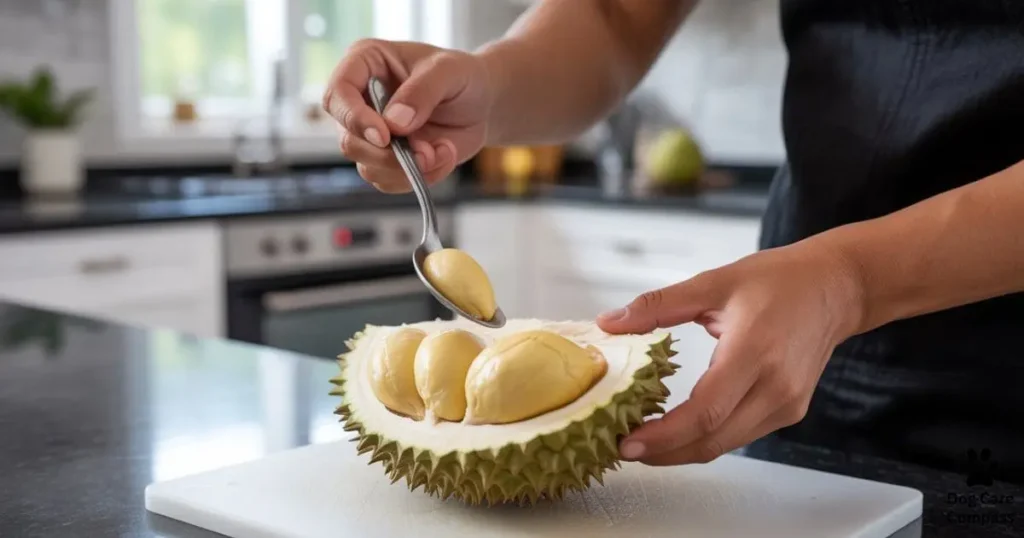
- Choose fresh ripe durian — not canned, not sweetened, not processed
- Open carefully — use gloves to handle the spiky shell
- Remove every seed — inspect the flesh thoroughly before serving
- Scoop a small amount of plain flesh only
- Remove any fibrous strings from the flesh
- Serve at room temperature — plain, nothing added
- Never offer durian ice cream, candy, paste, or any commercial product
Commercial durian products almost always contain added sugar or artificial ingredients that compound the risks significantly.
How Much Durian Can Dogs Eat? — Feeding Chart
| Dog Size | Weight | Safe Amount |
|---|---|---|
| Small | Under 10 lbs | Not recommended |
| Medium | 10–50 lbs | 1 teaspoon, occasionally |
| Large | 50+ lbs | 1–2 teaspoons, occasionally |
“Occasionally” means once every week or two at most — not a regular treat. This is one of the most restricted portion recommendations in dog nutrition, and it reflects the sugar and fat content genuinely warranting that caution.
Is Durian Safe for Dogs Compared to Other Fruits?
Since we have been building out a complete guide to safe fruits for dogs, here is how durian compares:
| Fruit | Safe? | Sugar per 100g | Fat per 100g | Verdict |
|---|---|---|---|---|
| Durian | Caution | 19.1g | 5.3g | Very small amounts only |
| Papaya | Yes | 7.8g | 0.1g | Good regular option |
| Jicama | Yes | 1.8g | 0.1g | Excellent option |
| Raspberries | Yes | 4.4g | 0.7g | Good option |
| Lotus root | Yes | Low | 0.1g | Cook before serving |
| Tamarind | No | 38.8g | 0.6g | Not recommended |
For dogs that enjoy fruit treats, papaya and jicama are far better daily options. Read Can Dogs Eat Papaya? and Can Dogs Eat Jicama? for complete guides on both.
For the opposite end of the spectrum — a fruit even more sugar-laden than durian — our Can Dogs Eat Tamarind? guide explains why tamarind is one of the least suitable fruit choices for dogs.
What to Do If Your Dog Eats Durian Seeds
Do not wait for symptoms to appear — act immediately.
- Stay calm and assess how much was eaten
- Call your vet right away
- Contact ASPCA Poison Control at 888-426-4435 if your vet is unavailable
- Note the exact time and approximate amount consumed
- Do not induce vomiting unless your vet specifically instructs you to
- Watch for vomiting, diarrhea, lethargy, or neurological signs
For general guidance on vomiting after eating something problematic, our Vomiting in Dogs guide covers warning signs and when to seek emergency care.
What If My Dog Ate a Large Amount of Durian Flesh?
Plain flesh in larger amounts will most likely cause digestive upset — loose stools, vomiting, stomach discomfort — rather than acute toxicity.
Ensure fresh water is available and monitor closely for 24 hours. If your dog has a history of pancreatitis, is a small breed, or shows significant distress, contact your vet.
For recovery feeding after digestive upset, our guide on What to Feed a Dog with Diarrhea has a complete plan to follow.
Frequently Asked Questions
Is durian toxic to dogs?
The flesh is not classified as toxic in small amounts. However, durian seeds cause genuine toxicity in dogs and must be removed completely before serving. Even the flesh should only be given in very small amounts due to its sugar and fat content.
Can dogs eat durian skin or shell?
No. The spiky outer shell can cause serious physical injury to a dog’s mouth, throat, and digestive tract. Never allow your dog near an uncut durian.
Is durian safe for German Shepherds?
Healthy adult German Shepherds can tolerate a teaspoon of plain flesh occasionally. Their larger size handles the caloric load better than small breeds. However, safer fruit options provide similar nutritional benefits without the concerns.
Can dogs eat durian ice cream or candy?
No. Commercial durian products contain added sugar, dairy, and sometimes artificial sweeteners that are harmful or toxic to dogs. Only plain fresh flesh in tiny amounts is ever acceptable.
My dog loves the smell of durian — should I be concerned?
Dogs have highly sensitive noses and react strongly to durian’s powerful aroma. Enthusiasm for the smell does not change the nutritional concerns — the portion rules remain the same regardless of how interested your dog seems.
Can dogs eat durian every day?
No. Even the smallest safe amounts should only be offered once every week or two at most. Daily feeding would contribute to weight gain, blood sugar issues, and cumulative pancreatitis risk over time.
Final Summary
- Durian flesh is not toxic to dogs but requires strict portion control
- Durian seeds cause toxicity — remove every single seed before serving
- The spiky shell is physically dangerous — keep the whole fruit away from dogs
- The fruit is rich in sugar and fat-heavy — not suitable as a regular treat
- Maximum amount is 1–2 teaspoons for large dogs, given only occasionally
- Dogs with diabetes, pancreatitis history, or weight issues should avoid it entirely
- Safer fruit alternatives like papaya, jicama, and raspberries deliver better nutrition with far less risk
For more guides on safe fruits and foods for dogs, explore the complete library at dogcarecompass.com.