Can Dogs Eat Lotus Root? The Safe Way to Serve This Crunchy Vegetable
If you’ve ever wondered, “Can dogs eat lotus root?” while preparing this crunchy vegetable, you’re not alone. The short answer is yes, but how you prepare it makes all the difference.
Lotus root is safe for dogs when cooked plain and served in small amounts. But there are a few important rules every dog owner needs to know before sharing it.
Quick Answer Box
| Question | Answer |
|---|---|
| Is lotus root safe for dogs? | Yes — when cooked and plain |
| Can dogs eat it raw? | Not recommended |
| Which parts are safe? | Root/flesh only |
| Toxic parts? | None — but cook it first |
| Safe for puppies? | Small amounts only |
What Is Lotus Root?
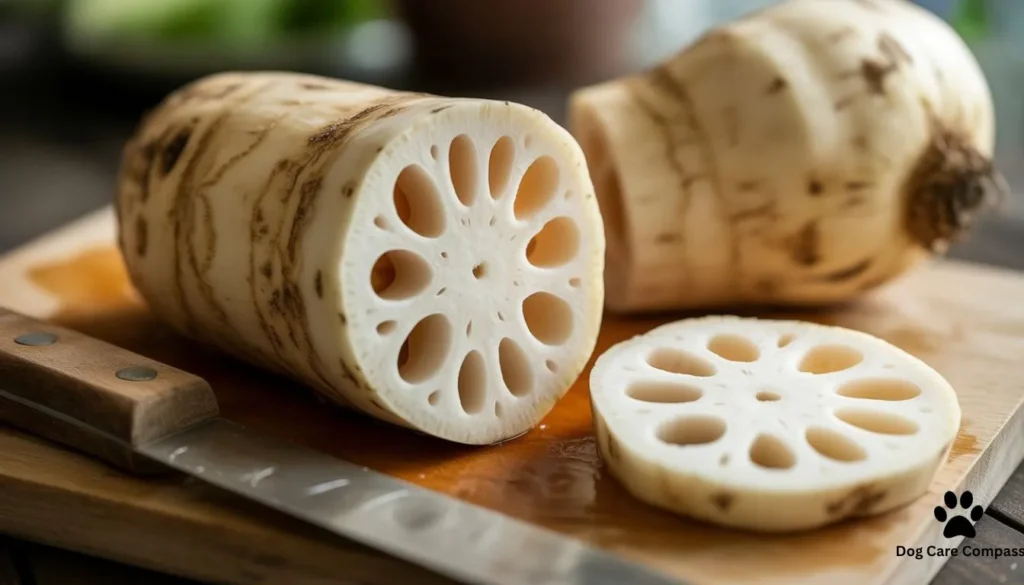
Lotus root is the underground stem of the lotus plant (Nelumbo nucifera), widely used in Asian cooking. When sliced, it reveals a beautiful pattern of holes through white, crunchy flesh.
It has a mild, slightly sweet flavor and holds up well whether raw or cooked. More importantly for dog owners — it’s packed with fiber, vitamin C, potassium, and antioxidants.
Is Lotus Root Safe for Dogs?
Yes — lotus root is not toxic to dogs. It’s one of those vegetables that actually offers real nutritional value when prepared correctly.
The key word is “prepared.” Raw lotus root grown in aquatic environments can carry waterborne bacteria that light cooking eliminates completely. Always cook it before serving — it takes five minutes and makes all the difference.
Nutritional Profile of Lotus Root (Per 100g)
| Nutrient | Amount |
|---|---|
| Calories | 74 kcal |
| Carbohydrates | 17.2g |
| Dietary Fiber | 4.9g |
| Protein | 2.6g |
| Fat | 0.1g |
| Vitamin C | 44mg |
| Potassium | 556mg |
| Vitamin B6 | 0.3mg |
| Iron | 1.2mg |
| Copper | 0.3mg |
What stands out immediately is the combination of high fiber, significant vitamin C, and potassium — three nutrients that play genuinely important roles in dog health.
Health Benefits of Lotus Root for Dogs
1. High Fiber Supports Dog Digestive Health
At 4.9g of fiber per 100g, lotus root is one of the better natural fiber sources you can offer a dog.
Fiber slows digestion, feeds beneficial gut bacteria, and keeps stools regular. Dogs with sensitive stomachs or mild digestive irregularity particularly benefit from consistent fiber in their diet.
If you’re already managing your dog’s gut health through food, lotus root pairs well with the approach covered in our guide on Homemade Dog Food Recipes for Sensitive Stomach.
2. Vitamin C Boosts Immune Health in Dogs
44mg of vitamin C per 100g is higher than many fruits. While dogs produce their own vitamin C, additional antioxidants from whole food sources support immune function and reduce inflammation.
This matters most for senior dogs, where oxidative stress accumulates over time. Lotus root delivers antioxidant support quietly and naturally.
3. Potassium Supports Active Dog Breeds
556mg of potassium per 100g is a meaningful amount. For healthy active dogs — especially working breeds like German Shepherds and Belgian Malinois — potassium supports muscle function, nerve signaling, and heart health.
After a long training session or run, a few pieces of lotus root makes a genuinely functional recovery snack.
We discussed potassium benefits and risks in detail in our guide on Is Coconut Water Safe for Dogs.
4. Copper Supports Joint Health in Dogs
Copper plays a role in collagen production and joint health — particularly relevant for larger breeds prone to joint issues as they age.
German Shepherds are a classic example. Quietly supporting joint health through copper-rich foods like lotus root is a simple, long-term strategy that costs almost nothing.
5. Low Fat — Safe for Weight Management
At just 0.1g of fat per 100g, lotus root is one of the cleanest vegetable treats available. For dogs managing weight or recovering from digestive illness, it fits perfectly without any fat overload concern.
Risks of Feeding Lotus Root to Dogs
Raw Lotus Root May Carry Bacteria
Lotus root grows in aquatic environments — ponds and muddy water. Raw, it can carry waterborne bacteria and parasites.
Light steaming or boiling for 5-7 minutes eliminates this risk completely. I consider this non-negotiable before serving lotus root to any dog.
Choking Hazard for Small Dogs
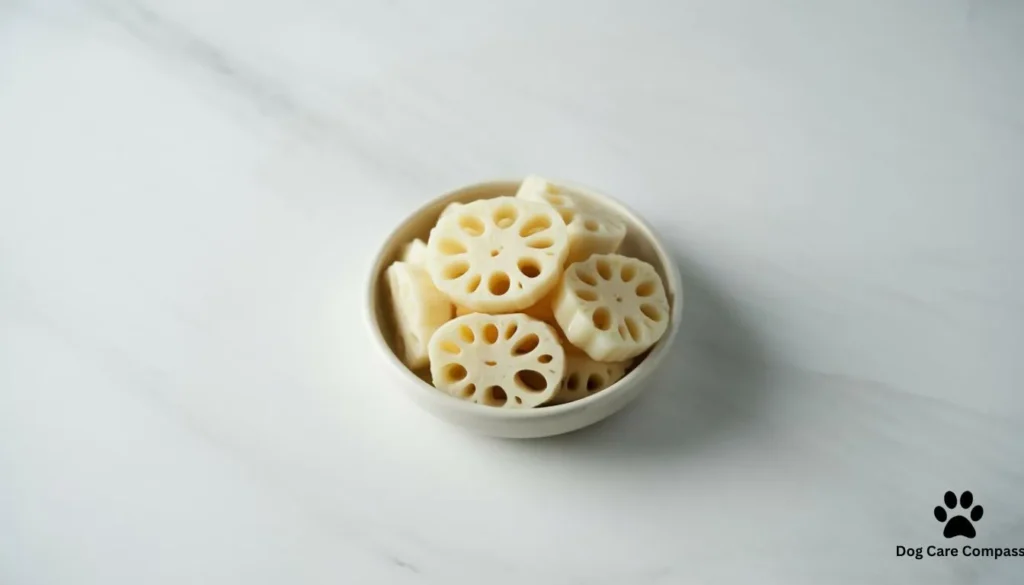
Lotus root is dense and firm. Those distinctive hole patterns create uneven edges when sliced.
For small dogs, medium-sized pieces are a real choking hazard. Always cut into small cubes sized appropriately for your dog.
High Potassium — Caution for Dogs with Kidney or Heart Issues
Dogs with kidney disease or heart conditions cannot filter excess potassium efficiently. This can lead to dangerous electrolyte imbalances.
If your dog has any existing health condition — including Cushing’s disease — always check with your vet before introducing new foods. Our Cushing Disease Dog Diet guide covers this in detail.
Seasoned Lotus Root Is Off-Limits
In traditional cooking, lotus root is almost always seasoned — soy sauce, vinegar, chili, sesame oil. Any of these additions make it completely unsafe for dogs.
Soy sauce alone contains enough sodium to cause toxicity in dogs. Always prepare lotus root completely plain — separate from your own meal.
How to Safely Prepare Lotus Root for Dogs
- Choose fresh lotus root — firm, no soft spots, light beige color
- Wash thoroughly under cold running water
- Peel the outer skin completely
- Slice into rounds, then cut into small cubes
- Steam or boil for 5–7 minutes in plain water — zero seasoning
- Allow to cool completely
- Serve plain — nothing added
Simple, clean, and done in under 10 minutes. According to the ASPCA’s safe food guidelines, preparing vegetables plain without additives is always the safest approach for dogs.
How Much Lotus Root Can Dogs Eat? — Feeding Chart

| Dog Size | Weight | Safe Amount Per Serving |
|---|---|---|
| Small | Under 10 lbs | 1–2 small cubes |
| Medium | 10–50 lbs | 4–6 small cubes |
| Large | 50+ lbs | Small handful |
Start with even less the first time — one or two pieces — and watch for any digestive reaction over 24 hours.
Frequency: 2–3 times per week maximum — occasional treat, not a daily staple.
Can Puppies Eat Lotus Root?
Yes — but with extra caution. Puppies have more sensitive digestive systems that are still developing.
Wait until your puppy is confidently eating solid food and at least 3–4 months old. Start with a single tiny cooked piece. Watch for loose stools or vomiting over 24 hours.
Lotus Root vs. Other Safe Vegetables for Dogs
| Vegetable | Safe? | Fiber | Calories | Preparation Note |
|---|---|---|---|---|
| Lotus root | Yes | High | Moderate | Cook before serving |
| Jicama | Yes | High | Very low | Flesh only, raw ok |
| Cucumber | Yes | Low | Very low | Raw fine |
| Carrot | Yes | Medium | Low | Raw or cooked |
| Tamarind | Caution | Medium | High | Too much sugar |
For detailed guides on these comparisons, read Can Dogs Eat Jicama? and Can Dogs Eat Tamarind? — two very different ends of the safety spectrum.
What If My Dog Eats a Large Amount of Lotus Root?
Plain cooked lotus root in large amounts will most likely cause digestive upset — loose stools or vomiting — rather than serious toxicity.
Ensure fresh water is available and monitor closely for 24 hours. If significant distress appears, contact your vet. For managing vomiting, our guide on Vomiting in Dogs covers exactly what to watch for and when to seek help.

Frequently Asked Questions
Is lotus root toxic to dogs?
No. Lotus root is not toxic to dogs. The main preparation rule is to cook it lightly — this eliminates the bacterial risk that comes with raw aquatic vegetables.
Can dogs eat lotus root chips or crackers?
No. Commercial lotus root chips are seasoned with salt and spices harmful to dogs. Only plain home-prepared lotus root is safe.
Can diabetic dogs eat lotus root?
Lotus root has a moderate glycemic index. Small amounts of cooked lotus root may be acceptable for diabetic dogs, but always consult your vet first. Our Homemade Food for Diabetic Dogs guide covers blood sugar management in detail.
Can dogs eat lotus root leaves or flowers?
The lotus plant is considered non-toxic across all parts. However, leaves and flowers from aquatic plants carry the same bacterial risk as raw root. Monitor for digestive upset if your dog snacks on these near a pond.
How do I know if my dog reacted badly to lotus root?
Watch for vomiting, loose stools, excessive gas, lethargy, or loss of appetite within 24 hours of first feeding. Stop immediately if any of these appear and allow their digestive system to recover.
Is lotus root good for dogs with joint problems?
The copper content in lotus root supports collagen production and joint health — making it a quietly beneficial treat for larger breeds prone to joint issues as they age.
Final Summary
- ✅ Lotus root is safe for dogs — not toxic
- 🔥 Always cook it first — steaming 5–7 minutes eliminates bacteria
- ✂️ Cut into small pieces — prevents choking
- 🚫 Plain only — no salt, no seasoning, no soy sauce
- 📏 Small portions — follow the feeding chart above
- ⚠️ Avoid for dogs with kidney or heart conditions without vet approval
For more guides on what dogs can safely eat, explore our complete library at dogcarecompass.com.