

Is Coconut Water Safe for Dogs? Everything You Need to Know Before Sharing
Many dog owners wonder is coconut water safe for dogs before sharing it with their pets. Coconut water may seem healthy, but understanding whether coconut water is safe for dogs requires knowing its sugar, potassium, and electrolyte levels.
The good news is yes — coconut water is generally safe for dogs in small amounts. But there are important caveats that every dog owner needs to understand before making it a regular part of their dog’s routine. The sugar content, the potassium levels, and the way it’s packaged all matter significantly.
This complete guide covers everything — what coconut water actually contains, how it benefits dogs, what the real risks are, how much is safe, and which dogs should avoid it entirely.
Coconut water is generally safe for dogs in small amounts if it is plain and unsweetened. However, due to its potassium and natural sugar content, it should only be given occasionally and never replace fresh water.
What Is Coconut Water?
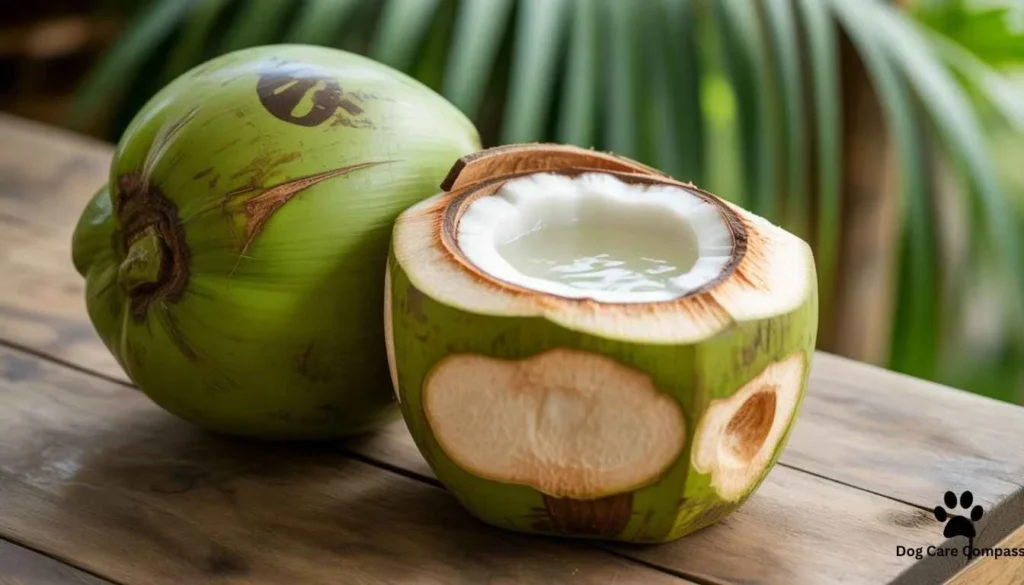
Coconut water is the clear liquid found naturally inside young, green coconuts. It is different from coconut milk — coconut milk is made by blending coconut flesh with water and is much higher in fat and calories. Coconut water, by contrast, is relatively light, low in calories, and naturally rich in electrolytes like potassium, magnesium, and sodium.
It has become one of the fastest-growing health beverages globally, popular among athletes and health-conscious consumers for its natural hydration properties. But what works for a human athlete doesn’t automatically translate to what’s right for a dog.
Is Coconut Water Safe for Dogs? The Direct Answer
Yes — plain, natural coconut water is safe for dogs in small, occasional amounts. It is not toxic, and it does contain nutrients that can benefit dogs when given appropriately.
However, there are three important conditions:
- ✅ Plain, unsweetened coconut water — safe in moderation
- ❌ Flavored or sweetened coconut water — avoid completely
- ❌ Coconut water with added ingredients — check label carefully for xylitol
- ⚠️ Large amounts — risky due to high potassium and natural sugar content
The key word throughout is moderation. Coconut water is not a daily drink replacement for dogs — it is an occasional supplement at best.
Nutritional Profile of Coconut Water (Per 240ml / 1 Cup)
| Nutrient | Amount |
|---|---|
| Calories | 46 kcal |
| Natural Sugar | 6.3g |
| Carbohydrates | 8.9g |
| Potassium | 600mg |
| Sodium | 252mg |
| Magnesium | 60mg |
| Calcium | 57mg |
| Vitamin C | 5.8mg |
| Fat | 0.5g |
The most notable numbers here are potassium and sodium — both electrolytes that play critical roles in dog health, but both capable of causing serious problems when consumed in excess.
Health Benefits of Coconut Water for Dogs
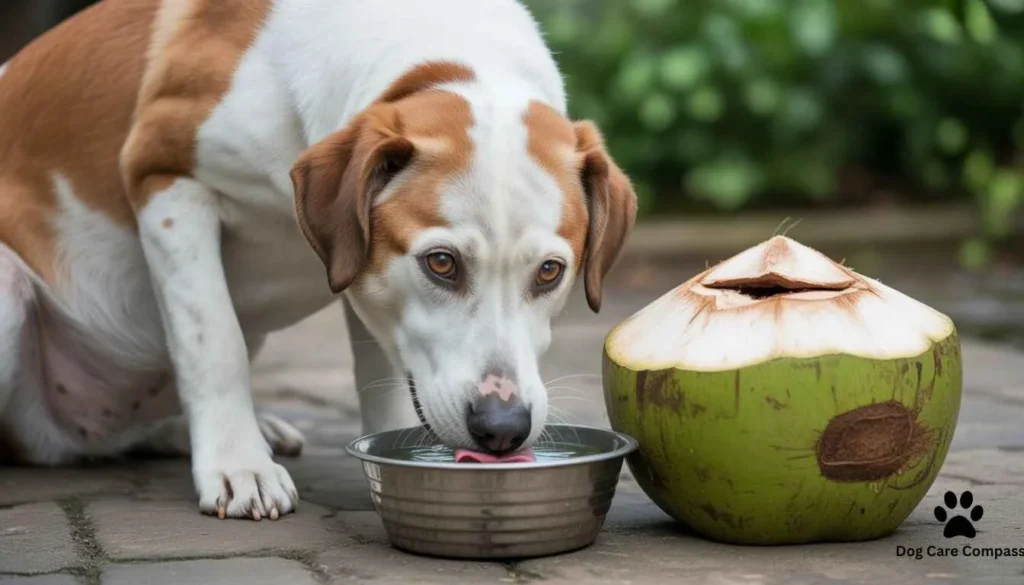
When given correctly and in appropriate amounts, coconut water offers some genuine benefits:
1. Natural Electrolyte Replenishment
Coconut water is one of nature’s best sources of electrolytes — particularly potassium, magnesium, and sodium. After intense exercise, hot weather exposure, or mild illness, dogs can lose electrolytes through sweating and panting. A small amount of coconut water can help restore this balance naturally.
This is especially relevant for active breeds. German Shepherd owners who take their dogs on long runs or hikes often look for natural post-exercise recovery options — a small amount of plain coconut water can serve this purpose well without the artificial ingredients found in commercial sports drinks.
2. Hydration Support
Coconut water is approximately 94% water, making it a naturally hydrating option. For dogs that are reluctant to drink enough plain water — which is surprisingly common — adding a small splash of coconut water to their bowl can encourage drinking. The mild, slightly sweet flavor makes it more appealing than plain water for some dogs.
This is particularly useful during hot summers or for dogs recovering from mild dehydration. If your dog has been dealing with digestive upset and fluid loss, you may also want to read our guide on What to Feed a Dog with Diarrhea for a complete hydration and recovery feeding plan.
3. Antioxidant Properties
Coconut water contains cytokinins — plant hormones with antioxidant and anti-aging properties. While research in dogs specifically is limited, antioxidants generally help combat oxidative stress, which is linked to inflammation, aging, and chronic disease. Senior dogs in particular may benefit from additional antioxidant support in their diet.
4. Digestive Support
The natural enzymes present in fresh coconut water — including bioactive enzymes that support metabolism — may help with mild digestive irregularity. For dogs with sensitive stomachs, a small amount of coconut water occasionally can be a gentle digestive aid.
For dogs with ongoing digestive sensitivity, also explore our complete guide on Homemade Dog Food Recipes for Sensitive Stomach for a broader dietary approach.
5. Low in Fat
Unlike coconut milk, coconut water is very low in fat — just 0.5g per cup. This makes it a reasonable occasional treat even for dogs on weight management plans, as long as the sugar content is kept in check through portion control.
Real Risks of Coconut Water for Dogs
1. High Potassium — Risk for Dogs with Kidney or Heart Issues
Coconut water contains 600mg of potassium per cup — which is actually higher than many fruits and vegetables. For healthy dogs, this is fine in small amounts. But for dogs with kidney disease or heart conditions, excess potassium can be dangerous.
The kidneys regulate potassium levels in the body. When kidneys are compromised, they cannot filter excess potassium efficiently — leading to a condition called hyperkalemia, which can cause muscle weakness, irregular heartbeat, and in severe cases, cardiac arrest.
If your dog has any known kidney or heart condition, avoid coconut water entirely and consult your vet before adding any new food or drink to their diet.
2. Natural Sugar Content
Coconut water contains approximately 6.3g of natural sugar per cup. While this is lower than many fruit juices, it is still significant for dogs — especially smaller breeds, dogs prone to weight gain, or dogs managing diabetes.
For diabetic dogs, any sugar intake needs to be carefully controlled. If you are exploring dietary options for a dog with diabetes, our upcoming guide on homemade food for diabetic dogs will cover this in complete detail — including which ingredients support stable blood sugar and which to avoid entirely.
Sweetened coconut water products can contain dramatically more sugar — sometimes 15-20g per serving — making them completely inappropriate for dogs.
3. Sodium Levels
With 252mg of sodium per cup, coconut water has a relatively high sodium content compared to what dogs need daily. Small dogs especially can reach their sodium limit quickly. Too much sodium causes excessive thirst, water retention, and in high amounts, sodium toxicity — symptoms of which include vomiting, diarrhea, tremors, and seizures.
Always offer only a small amount — never a full cup — and ensure fresh water is always available alongside.
4. Packaged Coconut Water — Hidden Dangers
This is where the real risk lies for most dogs. Many commercially packaged coconut water products contain:
- Added sugars — compounds the natural sugar problem
- Artificial sweeteners including xylitol — extremely toxic to dogs, can cause liver failure
- Natural flavors — vague term that can include ingredients harmful to dogs
- Preservatives — unnecessary for dogs and potentially irritating
Always read the label thoroughly. If you see xylitol, sorbitol, or any artificial sweetener on the ingredient list, keep it far away from your dog. This is the same rule that applies to checking labels on treats like beef jerky — our guide on Can Dogs Eat Beef Jerky? explains exactly how to read labels for hidden harmful ingredients.
5. Not a Water Replacement
Coconut water should never replace fresh water in a dog’s diet. Dogs need consistent access to clean, plain water for proper kidney function, digestion, and temperature regulation. Coconut water is a supplement — an occasional treat — not a daily hydration solution.
How Much Coconut Water Can a Dog Have?
Follow strict portion limits based on your dog’s size:
| Dog Size | Safe Amount | Frequency |
|---|---|---|
| Small dogs (under 10 lbs) | 1-2 tablespoons | Occasionally |
| Medium dogs (10-50 lbs) | ¼ cup maximum | Occasionally |
| Large dogs (50+ lbs) | ½ cup maximum | Occasionally |
“Occasionally” means a few times per week at most — not daily. Always introduce coconut water slowly the first time and watch for any digestive reaction over the next 24 hours.
Which Dogs Should Avoid Coconut Water Completely?
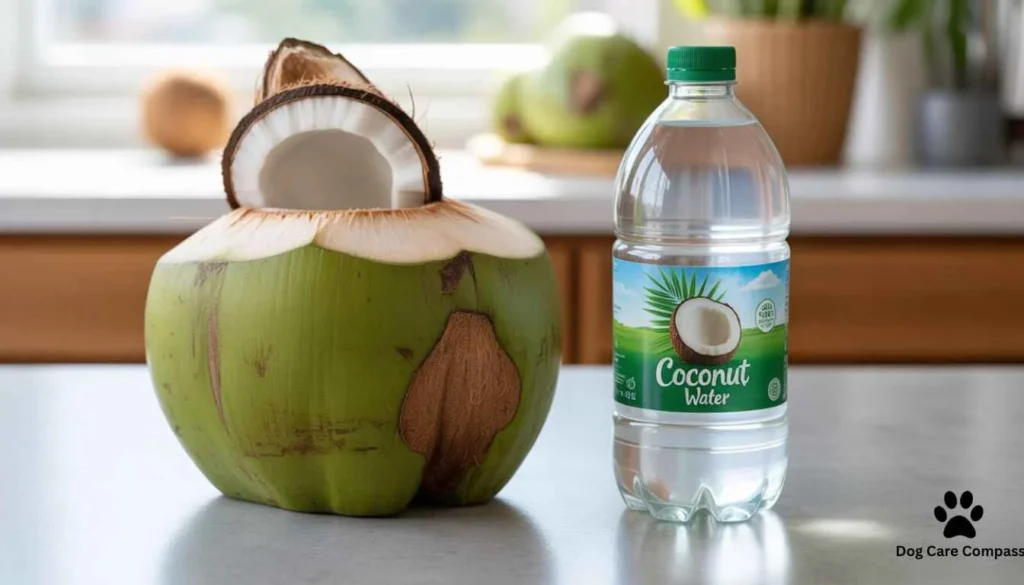
Some dogs should not have coconut water at all:
- 🚫 Dogs with kidney disease — cannot handle excess potassium
- 🚫 Dogs with heart conditions — potassium and sodium both problematic
- 🚫 Diabetic dogs — natural sugar content affects blood sugar levels
- 🚫 Dogs on low-sodium diets prescribed by a vet
- 🚫 Puppies under 3 months — digestive systems too immature
- 🚫 Dogs with known coconut sensitivity
When in doubt, always consult your vet before introducing coconut water — especially for dogs with existing health conditions.
Fresh Coconut Water vs Packaged — Which Is Better for Dogs?
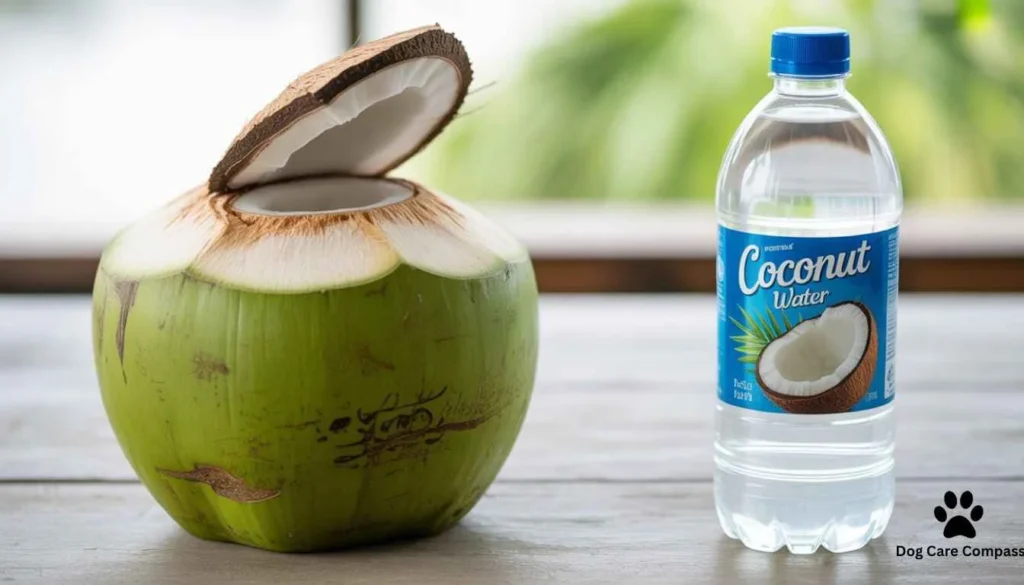
| Feature | Fresh Coconut Water | Packaged Coconut Water |
|---|---|---|
| Added sugar | ❌ None | ⚠️ Often present |
| Preservatives | ❌ None | ⚠️ Often present |
| Xylitol risk | ❌ None | ⚠️ Check label |
| Nutrient quality | ✅ Highest | ⚠️ Reduced |
| Convenience | ⚠️ Less convenient | ✅ Easy to find |
| Safety for dogs | ✅ Best option | ⚠️ Read label carefully |
Fresh coconut water — straight from a young green coconut — is always the safest option for dogs. If using packaged, choose brands with zero added ingredients — just 100% coconut water on the label and nothing else.
Coconut Water vs Other Dog-Safe Drinks and Foods
Wondering how coconut water compares to other things dogs can safely consume?
| Option | Safe for Dogs? | Key Benefit |
|---|---|---|
| Plain water | ✅ Always | Best hydration source |
| Coconut water (plain) | ✅ In moderation | Electrolytes, hydration |
| Papaya juice (plain) | ⚠️ Very small amounts | Digestive enzymes |
| Jicama (flesh) | ✅ Yes | Fiber, hydration, low sugar |
| Tamarind | ⚠️ Not recommended | Too much sugar and acidity |
| Fruit juices | ❌ Avoid | Too much sugar, often artificial |
| Milk | ❌ Avoid | Lactose intolerance in most dogs |
For comparison, jicama — which we covered in detail — is actually a better hydration snack than coconut water for most dogs because it has significantly less sugar and no sodium concerns. Read the full breakdown in our guide on Can Dogs Eat Jicama?
Similarly, if you have been wondering about tamarind as a treat, our guide on Can Dogs Eat Tamarind? explains why its high sugar and strong acidity make it a much riskier choice than coconut water.
What to Do If Your Dog Drinks Too Much Coconut Water
If your dog accidentally drinks a large amount of coconut water:
- Stay calm — plain coconut water is not acutely toxic
- Ensure fresh water is available — dilute the sodium and sugar intake
- Watch for symptoms — vomiting, diarrhea, lethargy, excessive thirst
- Call your vet if symptoms appear or if your dog has kidney or heart issues
- Monitor for 24 hours — most dogs recover fine with small accidental amounts
If your dog vomits after drinking coconut water, our guide on Vomiting in Dogs: Causes, Symptoms, and How to Help Your Pet will help you assess whether veterinary attention is needed.
How to Safely Introduce Coconut Water to Your Dog
First time giving coconut water? Follow these steps:
- Choose fresh or 100% plain packaged — read the label
- Start with one tablespoon only — regardless of dog size
- Mix into their water bowl — dilutes it further and makes it less intense
- Watch for 24 hours — loose stools, vomiting, or lethargy means stop
- Increase slowly — only if no reaction after first introduction
- Never replace water — always keep fresh water available
Frequently Asked Questions
Is coconut water safe for dogs daily?
No. Coconut water should be an occasional treat, not a daily drink. The potassium and sodium content can accumulate and cause problems with regular daily consumption. Fresh water should always be the primary hydration source.
Can dogs drink coconut water for upset stomach?
In very small amounts, plain coconut water may help soothe mild digestive upset due to its natural enzymes and electrolyte content. However, for dogs with ongoing digestive issues, a proper dietary approach is more effective — see our guide on Homemade Dog Food Recipes for Sensitive Stomach.
Can German Shepherds drink coconut water?
Yes, healthy German Shepherds can have small amounts of plain coconut water occasionally. Given their active nature and larger size, they can handle slightly more than small breeds — up to half a cup after intense exercise. Always ensure it is plain and unsweetened.
Can puppies drink coconut water?
Puppies under 3 months should avoid coconut water entirely. Older puppies can have a tiny amount — one teaspoon maximum — but fresh water remains the best and only necessary hydration source for puppies.
Is coconut water good for dogs with diabetes?
No. Diabetic dogs should avoid coconut water due to its natural sugar content. Even small amounts can affect blood sugar levels in diabetic dogs. Always consult your vet before giving any new food or drink to a diabetic dog. For a complete dietary approach for diabetic dogs, our upcoming guide on homemade food for diabetic dogs will cover safe ingredients, meal planning, and blood sugar management in detail.
Can dogs eat coconut flesh as well?
Yes, plain coconut flesh is also safe for dogs in small amounts. However, it is much higher in fat than coconut water — too much can cause digestive upset or pancreatitis in sensitive dogs. Stick to small pieces as an occasional treat only.
What happens if a dog drinks flavored coconut water?
Check the ingredients immediately for xylitol or artificial sweeteners — if present, contact your vet right away. If no toxic ingredients are found, monitor for digestive upset. Going forward, only offer plain, unsweetened coconut water.
Final Thoughts
Coconut water sits comfortably in the “safe but proceed carefully” category for dogs. It is not toxic, it does offer real nutritional benefits, and for active dogs it can be a useful occasional electrolyte boost. The key is choosing the right product — plain, unsweetened, with zero additives — and keeping portions appropriately small.
Active breeds like German Shepherds can benefit most from coconut water as a post-exercise recovery drink in small amounts. For dogs with kidney disease, heart conditions, or diabetes, it is best avoided entirely.
As with any new addition to your dog’s diet, start small, watch carefully, and when in doubt, check with your vet first. Your dog’s primary hydration source should always be fresh, clean water — coconut water is simply a healthy occasional bonus.
For more guides on what dogs can and cannot safely eat and drink, explore the full library at dogcarecompass.com.
Pingback: Homemade Food for Diabetic Dogs: The Complete Nutrition Guide to Managing Blood Sugar Naturally - Dog Care Compass
Pingback: How to Clean Dog Ears at Home Naturally (Safe & Vet-Approved Method) - Dog Care Compass
Pingback: Can Dogs Eat Lotus Root? The Safe Way to Serve This Crunchy Vegetable - Dog Care Compass
Pingback: Can Dogs Eat Lychee? What Every Dog Owner Should Know Before Sharing - Dog Care Compass