Can Dogs Eat Beef Jerky
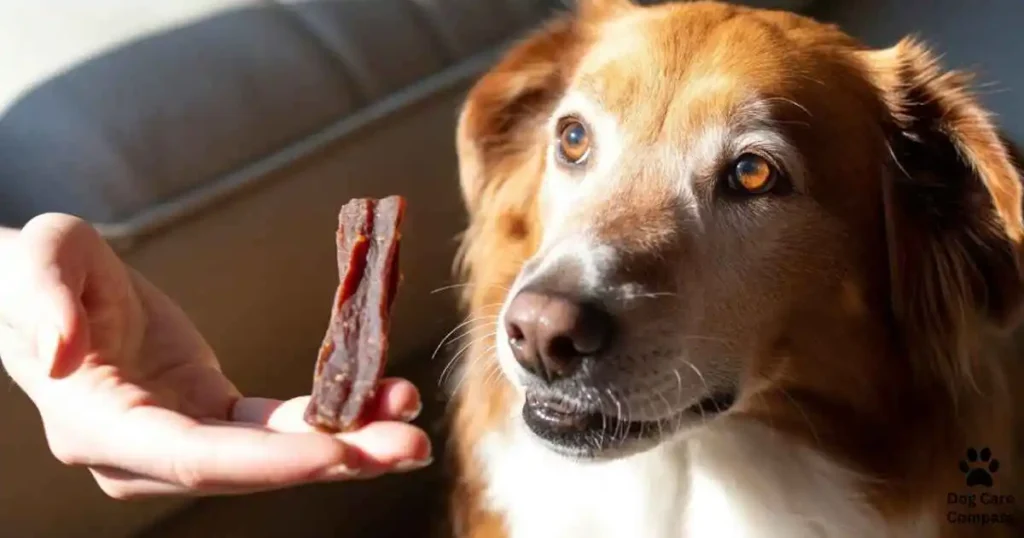
Can Dogs Eat Beef Jerky.You just tore open a bag of beef jerky, and before you even get the first piece to your mouth, your dog is already sitting right there — tail wagging, eyes locked on your hand like you’re holding the most precious thing on earth.
It happens every time.
And honestly, it’s hard not to give in. It’s just meat, after all. But here’s the thing — what seems harmless can actually send your dog to the vet. I’ve seen it happen, and it’s completely avoidable once you know what’s really inside that bag.
Let’s get into it.
What Is Beef Jerky, and Why Are Dogs So Obsessed With It?
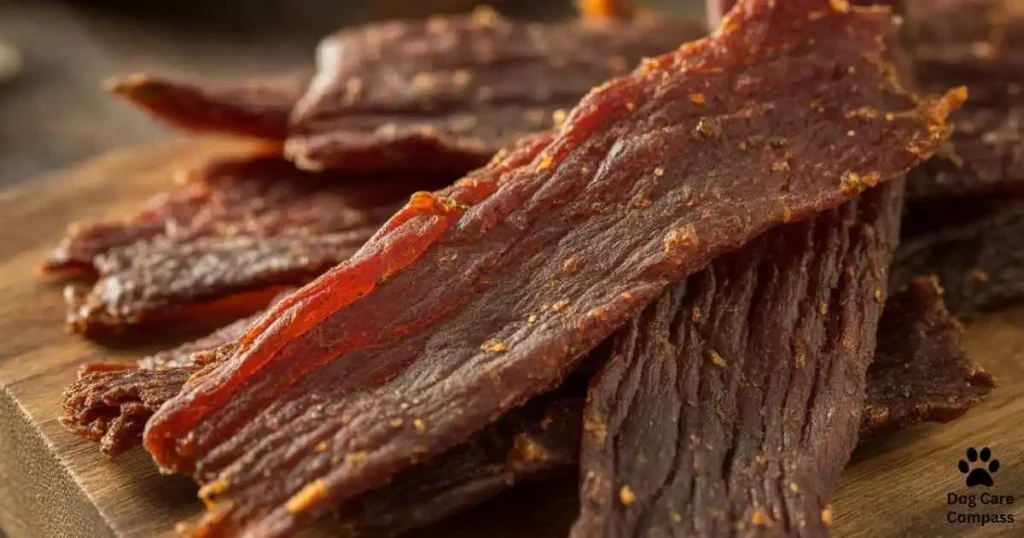
Beef jerky is dehydrated, seasoned meat — usually made from lean cuts like flank steak or top round. The drying process pulls out all the moisture, which concentrates the protein and intensifies the smell.
That smell is exactly what drives dogs wild.
Dogs are wired to chase high-protein, high-fat food sources. It’s pure instinct. So when your dog smells beef jerky from across the room, they’re not being dramatic — their nose is picking up something their body is biologically programmed to want.
The beef itself isn’t the problem. Everything added to it is.
Can Dogs Eat Beef Jerky? Here’s the Real Answer
Short answer: it depends entirely on what’s in it.
Plain, unseasoned beef jerky — yes, dogs can have a small piece occasionally. No harm done.
Store-bought, seasoned beef jerky — no. Keep it away from your dog completely.
Most commercial jerky you find at gas stations, grocery stores, or in your snack drawer is packed with sodium, preservatives, and spices that are either toxic or seriously damaging to a dog’s system. The label might say “natural” or “made with real beef” — but those claims are written for humans, not dogs.
Here’s a quick comparison to make it easy:
| Type of Beef Jerky | Safe for Dogs? | Why |
|---|---|---|
| Plain homemade (no seasoning) | Yes, in moderation | No harmful additives |
| Store-bought original flavor | No | High sodium, spices |
| Teriyaki or BBQ flavored | No | Garlic, onion, excess sugar |
| Jack Link’s or similar brands | No | Sodium nitrite, preservatives |
| Dog-specific jerky treats | Yes | Formulated for canine digestion |
The Ingredients That Make Beef Jerky Dangerous for Dogs
This is where most dog owners get blindsided. Let’s break down exactly what’s lurking inside commercial jerky.
Too Much Salt
A single serving of beef jerky can contain 400 to 600 mg of sodium. A medium-sized dog only needs around 100 mg of sodium per day. That gap is enormous.
Too much salt in a dog’s system causes:
- Extreme thirst and frequent urination
- Vomiting and loose stool
- Muscle weakness or tremors
- In severe cases, sodium ion poisoning
One or two strips of regular jerky is enough to push a small dog over their safe daily limit.
Garlic and Onion Powder
This one is non-negotiable — garlic and onion are toxic to dogs, even in powdered form.
Both belong to the Allium plant family. They damage red blood cells, leading to hemolytic anemia. What makes this especially scary is that symptoms — pale gums, weakness, rapid breathing — often don’t show up for two to four days after your dog ate it. By then, real damage is already done.
A lot of commercial beef jerky uses garlic powder as a base seasoning. Even small amounts matter. Always flip the bag over and read the full ingredient list before anything else.
Xylitol
Some low-calorie or teriyaki-style jerky products use xylitol as a sugar substitute. This artificial sweetener causes a rapid, dangerous drop in blood sugar in dogs and can trigger acute liver failure.
There is no safe amount of xylitol for dogs. If you see it on the label, that product should never go near your pet.
Sodium Nitrite
This is the preservative that keeps jerky shelf-stable and gives it that deep red color. Studies suggest sodium nitrite can interfere with oxygen transport in a dog’s blood — a condition called methemoglobinemia.
It’s not something that shows up immediately, but repeated exposure through processed treats can have cumulative effects on your dog’s health.
Spices and Black Pepper
Even without toxic ingredients, heavy seasoning irritates a dog’s stomach lining. Black pepper, chili, paprika — these cause gas, bloating, cramping, and diarrhea in sensitive dogs.
If your dog already has a delicate stomach, any seasoned food is a gamble. Dogs that vomit or get loose stools frequently after eating something new usually have underlying digestive sensitivity — something worth paying attention to long-term, not just when it happens.
What Happens If Your Dog Eats Beef Jerky?

The response varies based on how much they ate and what was in it.
One small piece of lightly salted jerky: Most dogs will be completely fine. Offer fresh water and keep an eye on them for a couple of hours.
A few strips of seasoned commercial jerky: Watch carefully for the next 24 to 48 hours. Look for vomiting, diarrhea, unusual lethargy, excessive drooling, or loss of balance.
Jerky containing garlic, onion, or xylitol: Don’t wait. Call your vet right away — even if your dog seems totally normal at that moment.
A neighbor of mine had a Beagle who snagged half a bag of teriyaki jerky off the kitchen counter. The dog seemed fine that evening. By the next morning, he was pale, weak, and not eating. The vet confirmed early-stage anemia triggered by garlic toxicity. It took nearly a week of supportive care before he fully recovered.
The point is — your dog looking okay in the moment doesn’t mean they are okay.
Breed Considerations: Does It Matter What Kind of Dog You Have?
To a point, yes.
Larger, active breeds like German Shepherds and Belgian Malinois have higher metabolisms and process food differently than small or sedentary breeds. But a higher metabolism doesn’t offer protection from toxic ingredients — it just means the threshold before symptoms appear might be slightly different.
Small breeds like Chihuahuas or Shih Tzus are especially vulnerable to sodium toxicity because their body weight is so low. What seems like a tiny piece to you can represent a significant sodium load for a 6-pound dog.
Dogs with pre-existing conditions — especially those dealing with acid reflux, kidney sensitivity, or chronic digestive issues — face the highest risk. Even plain jerky’s protein density can trigger inflammation in dogs whose gut lining is already compromised.
Making Dog-Safe Beef Jerky at Home
Here’s the good news: you don’t have to say no to jerky forever. You just have to make it yourself.
Homemade dog jerky is genuinely simple. And it gives your dog everything they love about the treat — the chew, the flavor, the smell — without anything harmful.
What you need:
- Lean beef (flank steak, top round, or sirloin)
- A sharp knife or a meat slicer
- A food dehydrator or an oven
How to make it:
- Slice the beef into thin strips, about ¼ inch thick
- Do not add salt, seasoning, or marinade of any kind
- Place strips on a dehydrator tray or oven rack
- Dehydrate at 160°F (71°C) for 4 to 6 hours until fully dry
- Let cool completely, then store in an airtight container
Refrigerated, these keep for up to two weeks. Frozen, they’ll last a couple of months. Your dog gets real beef, nothing else — exactly the way it should be.
How Much Jerky Can Dogs Have?
Even with safe, homemade jerky, portion control matters. Treats should never make up more than 10% of your dog’s daily calories.
| Dog Size | Serving Size | How Often |
|---|---|---|
| Small (under 20 lbs) | 1 small strip (~5g) | 2–3 times per week |
| Medium (20–50 lbs) | 1–2 strips (~10–15g) | 3–4 times per week |
| Large (50+ lbs) | 2–3 strips (~20–25g) | 4–5 times per week |
Stick to these ranges and you won’t run into issues. Jerky is a reward, not a daily staple.
What About Other Meat Jerkies?
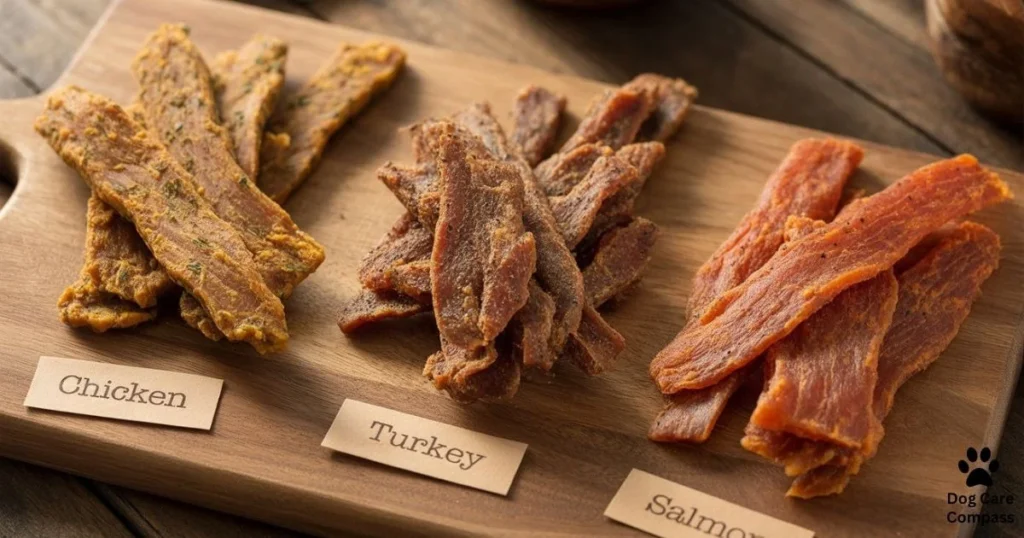
The same basic principle applies across all meat types:
- Chicken jerky — safe plain, great for dogs with beef sensitivities
- Turkey jerky — fine unseasoned, lean and digestible
- Salmon jerky — excellent choice, naturally rich in omega-3 fatty acids that support coat health and joint function
- Pork jerky — not toxic, but high in fat and harder to digest; use rarely if at all
Avoid anything marketed to humans with exotic flavors, glazes, or sweet coatings. Stick to single-ingredient, species-appropriate proteins whenever possible.
FAQ: Can Dogs Eat Beef Jerky?
Q: My dog ate a piece of Jack Link’s beef jerky. Should I be worried?
One small piece likely won’t cause serious harm, but Jack Link’s contains high sodium and spices. Give your dog plenty of fresh water and watch for vomiting, lethargy, or unusual behavior over the next 24 hours. If they ate multiple pieces, call your vet.
Q: Is beef jerky a good source of protein for dogs?
Technically yes — beef jerky is high in protein. But the sodium and additive content in commercial versions makes it a poor choice as a regular protein source. Stick to cooked, plain beef or dog-specific treats if you want to add protein to their diet.
Q: Can puppies eat beef jerky?
No. Puppies have developing digestive systems and are far more sensitive to sodium, spices, and preservatives than adult dogs. Even plain homemade jerky should be kept minimal for puppies under 12 months.
Q: What should I do if my dog ate jerky with garlic or onion powder?
Contact your vet immediately — even if your dog seems fine right now. Garlic and onion toxicity in dogs can take 2 to 4 days to show symptoms. Early intervention is critical.
Q: Are store-bought dog jerky treats safe?
Most reputable brands formulated specifically for dogs are safe in moderation. Look for single-ingredient or limited-ingredient options with no artificial preservatives. Avoid anything with xylitol, propylene glycol, or artificial colors.
Q: Can dogs eat teriyaki beef jerky?
No. Teriyaki jerky typically contains soy sauce (very high sodium), garlic, ginger, and often sugar or artificial sweeteners. This combination is particularly harmful. Keep teriyaki jerky completely away from your dog.
Conclusion: Is Beef Jerky Worth the Risk?
Here’s where it lands: the beef in jerky is perfectly fine for dogs. It’s everything else — the salt, the garlic powder, the preservatives, the spices — that turns a harmless snack into a health risk.
Commercial beef jerky was made for human taste buds, not canine digestive systems. The two are very different, and treating them the same is where most pet owners make mistakes.
If you want to share that jerky moment with your dog, make your own. Ten minutes of prep, no seasoning, 160°F for a few hours — and you’ve got something your dog will go absolutely crazy for, safely.
Your dog trusts you to make the right call. Now you have everything you need to do exactly that.
Want to keep building a healthier diet for your dog? Explore our guides on homemade dog food recipes for sensitive stomachs, gut health for dogs, and safe fruits like papaya and raspberries — all written with the same goal: real answers for real dog owners.