
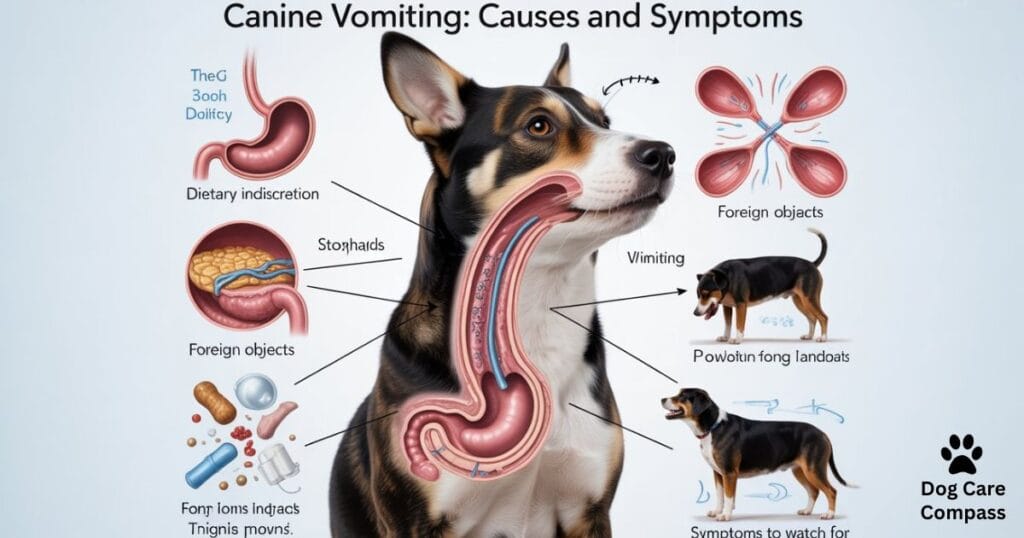
Vomiting in Dogs: Causes, Symptoms, and Treatments
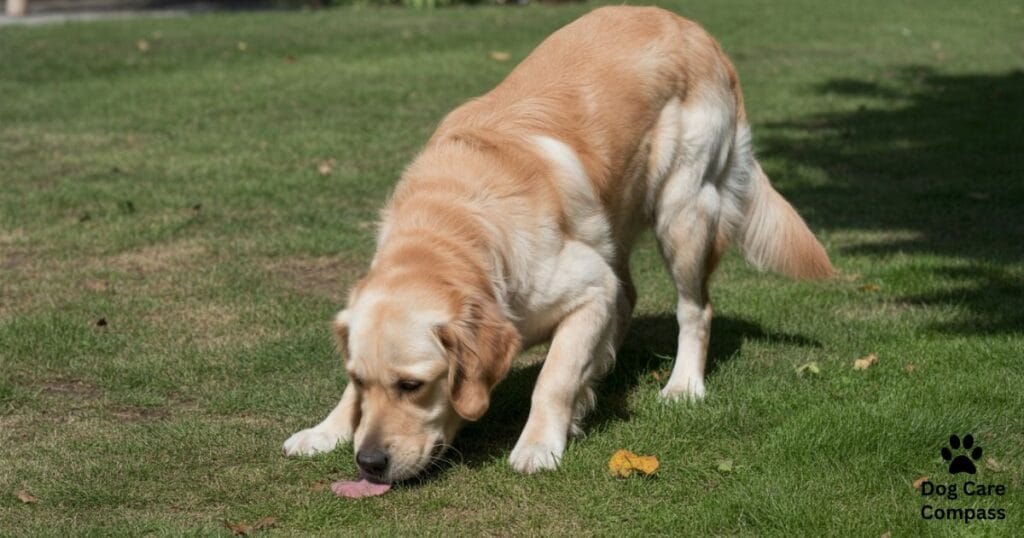
Vomiting in dogs is a common and often alarming issue that every dog owner should understand. When your pet experiences dog vomiting, it may be a minor upset stomach or a sign of a more serious condition.
Differentiating between dog regurgitation and true vomiting is important, as regurgitation is usually passive while vomiting involves active abdominal contractions. Causes can range from food intolerances in dogs and sudden diet changes in dogs to more severe problems like pancreatitis in dogs or intestinal obstruction. Recognizing the early signs, observing behavior, and knowing when to seek veterinary care ensures your dog stays healthy and safe.
Digestive problems are common in active breeds like German Shepherds and other working dogs.
What Is Vomiting in Dogs?
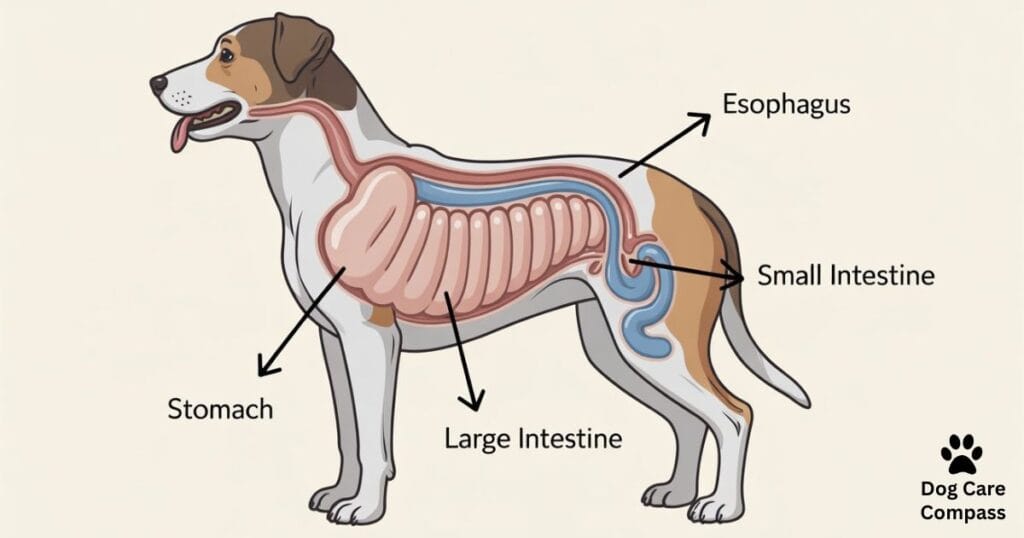
Vomiting in dogs is the forceful expulsion of stomach or intestinal contents. Unlike dog regurgitation, vomit is usually partially digested and may contain bile. Dogs often show physical signs like retching, drooling, and abdominal pain in dogs. Sometimes, it is just a one-time incident, but repeated vomiting indicates a more serious problem.
Veterinarians emphasize differentiating between acute vs chronic vomiting. Acute vomiting happens suddenly and may resolve on its own, while chronic vomiting occurs regularly and can signal serious illness. Understanding this difference allows dog owners to respond appropriately and seek early care when needed.
Common Causes of Vomiting in Dogs
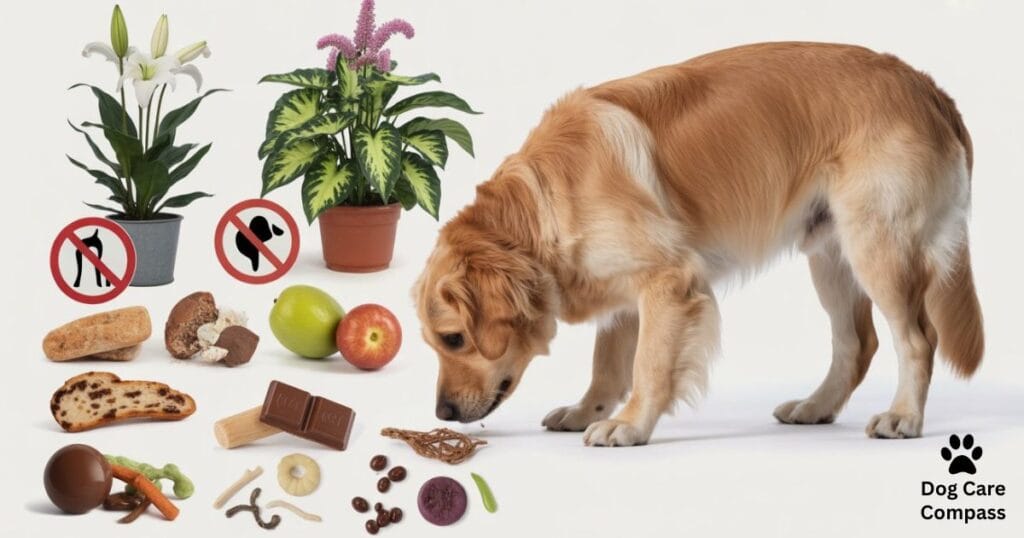
Dog throwing up can happen due to simple dietary issues or more serious medical conditions. Common causes include food intolerances in dogs, diet change in dogs, intestinal parasites in dogs, bacterial infections in dogs, or viral infections in dogs. Sometimes dogs swallow foreign objects in the gastrointestinal tract, leading to obstruction and severe vomiting.Sudden diet changes and poor quality food often trigger stomach problems in dogs.
Serious causes include bloat in dogs, pancreatitis in dogs, kidney failure in dogs, liver failure in dogs, parvovirus in dogs, colitis in dogs, and uterine infection in dogs. Even ingestion of toxic substances can trigger canine vomiting. Identifying the underlying cause is essential to determine the proper treatment for vomiting dogs.
Symptoms and Signs to Watch For

Watch your dog closely for vomiting in dogs accompanied by abdominal pain in dogs, weakness in dogs, dehydration in dogs, or vomit with bile or blood. Other concerning signs include weight loss in dogs, depression in dogs, fever in dogs, and continuous refusal to eat. These dog illness symptoms may indicate an emergency.
Even if vomiting seems mild, tracking patterns is important. Frequent vomiting in dogs or vomiting in young or old dogs requires attention. Keeping a record of vomiting vs regurgitation, along with food intake and behavior changes, helps the vet make an accurate veterinarian diagnosis.
Types of Vomit and What They Mean
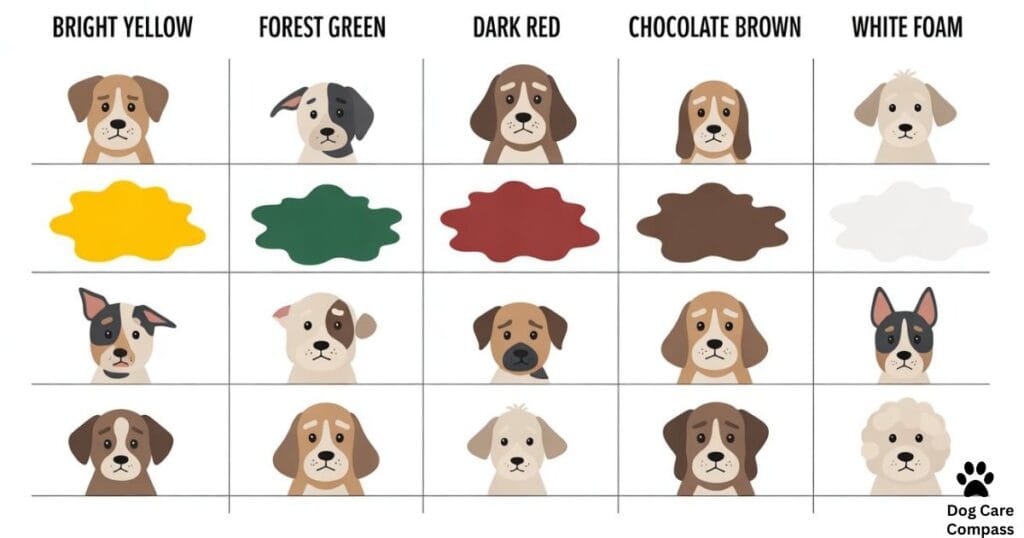
The appearance of vomit provides clues about your dog’s health. Yellow or green vomit usually contains bile, while red vomit indicates vomit with blood, suggesting a serious condition. Brown vomit may indicate old blood, and foam may occur from upset stomach in dogs.
Frequency, color, and texture are also important. Vomiting that occurs once might be a minor upset. However, frequent vomiting in dogs or vomiting with bile over several hours can suggest conditions like intestinal obstruction, pancreatitis in dogs, or gastrointestinal infections. Use a simple chart to track symptoms:
| Vomit Color | Possible Cause | Action Needed |
|---|---|---|
| Yellow/Green | Bile, upset stomach | Monitor, mild diet |
| Red | Blood, ulcers | Immediate vet visit |
| Brown | Old blood | Vet evaluation |
| Foam/White | Gastric irritation | Home care, monitor |
| Undigested food | Regurgitation | Observe feeding habits |
When to Contact Your Vet
You should contact your vet if dog vomiting occurs repeatedly, involves vomit with blood, or is paired with dehydration in dogs. Puppies, senior dogs, or dogs with pre-existing illnesses should receive urgent care for any vomiting.
Also, seek veterinary help if vomiting lasts more than 24 hours, or if your dog shows weakness in dogs, abdominal pain in dogs, or refuses to eat and drink. Prompt action can prevent life-threatening complications like kidney failure in dogs or liver failure in dogs.
How Veterinarians Diagnose Vomiting in Dogs
Vets start with a thorough physical exam and review of dog illness symptoms. They may recommend blood tests for dogs, fecal tests in dogs, ultrasound for dogs, or radiographs / X-ray in dogs. For complex cases, endoscopy in dogs, biopsy in dogs, or even exploratory surgery may be necessary.
Accurate diagnosis ensures targeted treatment. By combining test results with observed vomiting vs regurgitation, vets can pinpoint causes like intestinal obstruction, parvovirus in dogs, or colitis in dogs. Proper evaluation is key for effective treating vomiting in dogs at home.
Treatment Options for Vomiting Dogs
Treatment depends on severity and cause. Vets may prescribe antiemetics for dogs to control vomiting or antibiotics for dogs if infection is present. Fluid therapy in dogs is often needed for dehydration, while surgery may be required for intestinal obstruction.
Mild cases may only need diet change for dogs. Feeding skinless chicken, boiled potatoes, rice for dogs helps settle the stomach. Following vet instructions and avoiding raw food prevents further complications. Timely treatment ensures recovery and prevents chronic issues.
Long term digestive stability also depends on gut health management.
Home Remedies and Care at Home
If vomiting is mild, you can help your dog at home. Encourage safe feeding for upset stomach, provide water, and let them rest. Offering small, bland meals like skinless chicken, boiled potatoes, rice for dogs can calm the digestive system.
Monitor your dog carefully. Note the frequency, appearance of vomit, and any other dog illness symptoms. Avoid giving medications without vet approval. These precautions support recovery while waiting for professional care and prevent worsening of conditions like pancreatitis in dogs or colitis in dogs.
Prevention Strategies
Preventing dog vomiting involves careful management of diet and environment. Gradually introduce new foods, avoid toxic substances, and prevent access to trash. Regular vet visits, proper hydration, and routine deworming reduce risks of intestinal parasites in dogs and gastrointestinal infections.
Keep an eye on your dog during hot weather to prevent bloat in dogs or heat-related vomiting. Knowing your dog’s breed and age helps in preventing vomiting in dogs. Simple routines and vigilance can save your dog from serious illness.
Preventive care includes regular training and stress management for high-energy breeds.
Understanding the Difference: Vomiting, Retching, and Regurgitation
Many owners confuse vomiting vs regurgitation. Vomiting is active and may include abdominal pain in dogs and bile, while regurgitation is passive and produces undigested food. Retching is a dry heaving motion without expelling food.
Understanding these differences helps track health and provide accurate information to your vet. Keeping notes of time, frequency, and appearance ensures a precise veterinarian diagnosis and better treatment outcomes.
Breeds and Dogs at Higher Risk
Certain breeds are more prone to canine vomiting. Boxers, Labrador Retrievers, and German Shepherds often face dietary sensitivities. Smaller breeds may be at risk of bloat in dogs, while older dogs are more vulnerable to kidney failure in dogs or liver failure in dogs.
Age, size, and health history all matter. Puppies and senior dogs require extra care. Knowing these risks helps with early detection and preventing vomiting in dogs, ultimately keeping your pet healthier and happier.
FAQ
Why is my dog panting then throwing up?
Panting before vomiting often indicates nausea, pain, or stress, sometimes caused by upset stomach in dogs or serious conditions like bloat or gastrointestinal issues.
What are the first signs of internal bleeding in dogs?
Early signs include weakness in dogs, pale gums, rapid heartbeat, vomiting blood, and lethargy.
When should I be worried about my dog vomiting?
Be concerned if vomiting is frequent, contains blood or bile, or is paired with dehydration in dogs, abdominal pain in dogs, or lethargy.
What are signs your dog is going to pass away?
Signs include severe weakness in dogs, loss of appetite, extreme lethargy, difficulty breathing, and unresponsiveness.
What are the signs my dog is suffering?
Indicators include persistent abdominal pain in dogs, vomiting, difficulty moving, depression in dogs, and refusal to eat or drink.
What are the early signs of dog heart failure?
Early signs include coughing, rapid breathing, weakness in dogs, fatigue, and swelling in the abdomen or limbs.
Pingback: German Shepherd Puppy Temperament and Behavior: What Every Owner Should Know - Dog Care Compass
Pingback: Can Dogs Eat Beef Jerky? Everything You Need to Know Before Sharing That Snack - Dog Care Compass
Pingback: Can Dogs Eat Jicama? Safe Parts, Toxic Parts & How to Serve It the Right Way - Dog Care Compass
Pingback: Can Dogs Eat Star Fruit? Safe or Dangerous? (Vet-Backed Guide) - Dog Care Compass
Pingback: Why Does My Dog Eat Grass? The Real Reasons (And When to Worry) - Dog Care Compass