
Dog Licking Paws at Night: Causes, Remedies, and When to See a Vet
If your dog licks their paws at night, you are not imagining it — and you are definitely not alone. This is one of the most common concerns dog owners raise, and the frustrating part is that it rarely has one single obvious cause.
The good news is that most cases are manageable at home once you understand what is actually driving the behavior. This guide walks through every likely cause, the most effective home remedies, and the signs that tell you when professional help is genuinely necessary.
Quick Answer — Why Is My Dog Licking Paws at Night?
| Cause | How Common |
|---|---|
| Environmental allergies | Very common |
| Food allergies or sensitivities | Common |
| Yeast infection between toes | Common |
| Contact irritation from surfaces | Common |
| Anxiety or stress-related behavior | Moderate |
| Boredom or habit | Moderate |
| Pain or injury | Less common but important |
| Parasites (fleas, mites) | Less common |
Why Does It Happen Specifically at Night?

This is the question most guides skip — and it is actually the most useful starting point.
Daytime activity masks a lot of behaviors dogs would otherwise repeat constantly. When the house gets quiet and activity winds down, dogs focus entirely on whatever their body has been signaling all day. A dog that has been mildly itchy for hours finally gets the chance to act on it.
Nighttime paw licking is rarely a new problem. It is usually an existing problem becoming visible.
Common Causes of Dog Paw Licking at Night
Environmental Allergies — The Most Likely Cause
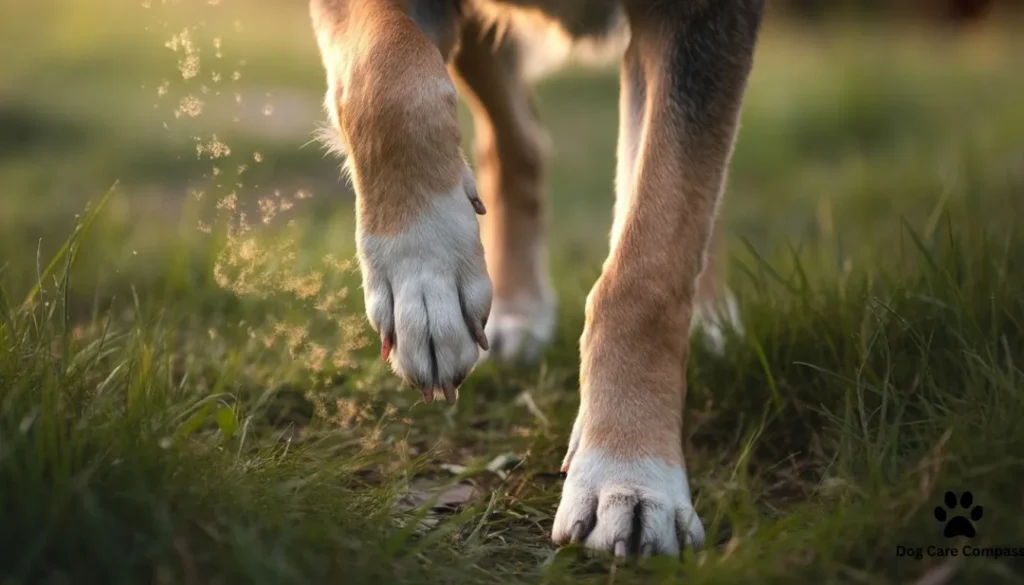
Environmental allergens — grass, pollen, dust mites, mold — are responsible for the majority of chronic paw licking cases. Unlike humans who sneeze and get watery eyes, dogs tend to express allergic reactions through their skin, and the paws are among the most exposed and sensitive areas.
Dogs that lick seasonally — worse in spring and autumn — almost always have environmental allergies as the primary driver. Dogs that lick year-round are more likely reacting to indoor allergens like dust mites or mold.
The paws contact every surface the dog walks on. Whatever is on that surface — pollen, cleaning product residue, grass treatment chemicals — transfers directly to the paw skin and triggers a reaction in sensitive dogs.
Food Sensitivities and Dietary Triggers
Food allergies in dogs are less common than environmental ones but frequently overlooked. The most common dietary triggers are beef, chicken, dairy, wheat, and soy.
A dog that licks consistently regardless of season — winter and summer alike — with no obvious environmental pattern often has a food component at the root. The connection between gut health and skin inflammation in dogs is well established. What goes into the bowl directly affects what happens at the skin surface.
Dogs with food sensitivities tend to improve significantly when their diet shifts toward whole, minimally processed ingredients built around a single protein source. The same dietary approach that helps dogs with chronic digestive sensitivity and gut inflammation often produces noticeable skin improvement within four to six weeks.
Yeast Infection Between the Toes
Yeast overgrowth is one of the most underdiagnosed reasons for repetitive paw attention. The warm, moist space between a dog’s toes is an ideal environment for Malassezia — the yeast organism responsible for most canine yeast infections.
Signs that yeast is involved:
- Strong musty or corn-chip smell from the paws
- Brown or reddish-brown staining of fur between toes
- Visible redness and inflammation in skin folds
- Licking focused specifically between toes rather than on the pads
Yeast infections rarely clear on their own. They need antifungal treatment — topical or oral depending on severity — and often a dietary adjustment to remove the conditions that allowed yeast to thrive.
Contact Irritation from Surfaces and Chemicals
Many dogs react to what they walk on every day without owners making the connection. Common contact irritants include:
- Lawn treatment chemicals and fertilizers
- Floor cleaning products
- Road salt and de-icing chemicals in winter
- Rough or hot pavement causing micro-abrasions
A dog that licks primarily after walks — and settles down after paws are cleaned — is dealing with contact irritation rather than a systemic allergy. The fix here is simpler than most owners expect.
Anxiety and Stress-Related Paw Attention
Repetitive licking is a self-soothing behavior for many dogs. The physical sensation releases endorphins that temporarily reduce anxiety — similar to how humans might bite their nails or tap their feet when stressed.
Dogs with separation anxiety, noise sensitivity, or generalized anxiety often show increased paw licking in the evening when the household settles. The behavior becomes a coping mechanism — and like most coping mechanisms, it can persist as habit even after the original stressor improves.
This matters particularly for certain breeds. German Shepherds are intelligent, high-drive dogs that develop anxiety-related behaviors when their mental and physical needs go unmet. A German Shepherd already dealing with fear-based reactions or social anxiety is more likely to channel that tension into physical self-soothing behaviors at night.
Pain or Physical Injury
A dog licking one specific paw consistently — rather than rotating between paws — should always be checked for injury. Cracked pads, a foreign object lodged between toes, a broken nail, or early arthritis can all drive focused repetitive attention that owners mistake for a skin condition.
Run your hand gently along each paw, between every toe, and along the nail line. Note any swelling, heat, cuts, or pain response when gentle pressure is applied.
Home Remedies for Dog Licking Paws at Night
1. Paw Soak in Diluted Apple Cider Vinegar
Apple cider vinegar has natural antifungal and antibacterial properties effective for mild yeast and bacterial surface irritation.
Mix one part apple cider vinegar with two parts water. Soak paws for 3–5 minutes, then pat completely dry — the drying step is critical. Moisture left between toes worsens yeast conditions.
Do not use on cracked or broken skin — the acidity causes discomfort on open wounds.
2. Baking Soda Paste for Immediate Itch Relief
Baking soda neutralizes the pH imbalance that drives surface-level itching. Mix with enough water to form a thick paste, apply between toes and on irritated areas, leave for 10–15 minutes, then rinse and dry thoroughly.
This works well as a short-term relief measure while identifying what is actually causing the reaction.
3. Coconut Oil Applied Topically
Coconut oil contains lauric acid — a compound with natural antimicrobial and anti-inflammatory properties. Applied to irritated paw skin, it soothes surface inflammation and creates a mild barrier against further exposure to irritants.
Use a small amount, massage gently into affected areas, and allow to absorb. It is safe if licked — which is inevitable.
4. Daily Paw Wipe After Every Walk
This single habit eliminates contact irritation as a contributing factor almost entirely. Keep a bowl of clean water and a cloth by the door. After every walk, wipe each paw thoroughly — between toes, around the pads, along the nail line.
For dogs reacting to seasonal pollen, this step alone often produces visible improvement within a week. It costs nothing and takes two minutes.
5. Epsom Salt Soak for Active Inflammation
Epsom salt reduces inflammation and draws out minor infections from irritated skin. Dissolve two tablespoons in warm water, soak paws for five minutes, rinse well, and dry completely.
Use two to three times per week during active flare-ups. Avoid on open wounds or broken skin.
6. Dietary Review
For dogs that lick year-round with no seasonal pattern and no obvious contact trigger, what they eat is worth investigating seriously.
An elimination diet — removing common allergens and feeding a single novel protein source for eight to twelve weeks — is the most reliable way to identify food-driven paw issues. This requires patience, but owners who commit to it consistently report meaningful skin improvement.
Dogs eating clean, whole-food meals built around digestible ingredients tend to show better skin health overall. The same principles that make a difference for dogs with digestive conditions and food-related inflammation apply here — the gut and skin are more connected than most owners realize.
7. Anxiety Management for Stress-Related Cases
For dogs whose paw attention is driven by tension rather than a physical condition, topical remedies address the symptom without touching the cause. Practical measures that reduce baseline anxiety include:
- Consistent daily exercise matched to the breed’s energy level
- Mental stimulation through training sessions and puzzle feeders
- A calm, predictable evening routine
- A designated space where the dog feels secure
When Home Care Is Not Enough — Time to See a Vet
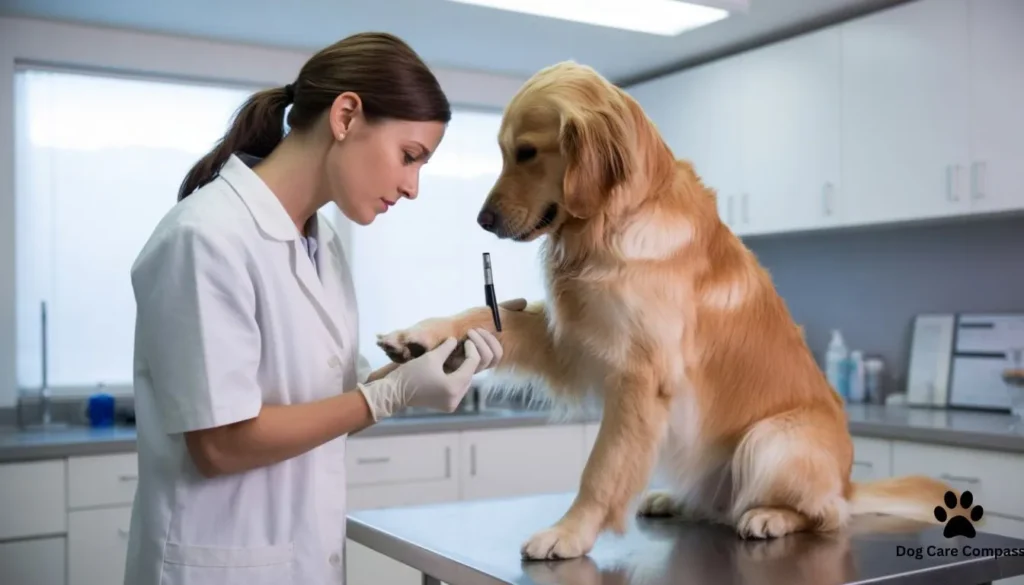
Home remedies work well for mild, early cases. The following signs indicate that professional assessment is needed:
- Licking persisting beyond two weeks without any improvement
- Raw, bleeding, or deeply inflamed skin between toes
- Strong odor from paws suggesting active infection
- Swelling, heat, or pain when paws are touched
- Hair loss around the paw area
- Licking focused on one paw only
- Skin thickening from chronic long-term licking
According to the American Kennel Club’s veterinary guidance, chronic paw licking that does not respond to basic care almost always has a medical cause requiring diagnosis rather than symptom management. The ASPCA notes that repetitive licking behaviors frequently have stress or allergy components that benefit from professional evaluation when persistent. PetMD’s veterinary team recommends ruling out yeast and bacterial infections early, as both worsen significantly without appropriate treatment.
The Diet and Skin Connection
Skin health in dogs is directly linked to what they eat. A dog with chronic low-grade gut irritation — often driven by poor ingredient quality or unidentified food sensitivities — tends to show that irritation at the skin surface. Paw licking, recurring ear infections, and coat dullness frequently reflect an internal imbalance that topical treatment alone will never fully address.
For dogs also managing systemic conditions that affect immune function — Cushing’s disease being one of the more significant examples — skin symptoms are often among the first visible signs. Understanding how diet supports dogs with Cushing’s disease illustrates how internal health and skin health are two expressions of the same underlying situation.
Breed Considerations Worth Knowing
Some breeds are meaningfully more prone to this behavior than others.
German Shepherds are susceptible to environmental allergies and anxiety-related behaviors simultaneously — both often present at the same time and both need addressing for real improvement.
Belgian Malinois are high-drive working dogs that develop repetitive behaviors — including obsessive paw attention — when under-stimulated or anxious. Their intensity makes them exceptional working dogs and also makes them more vulnerable when their needs go unmet.
Long-haired breeds carry additional moisture between their toes after walks, increasing yeast risk significantly. Owners of Long Hair German Shepherds in particular need to pay attention to thorough drying after every wash and consider trimming fur between toes to reduce the warm, moist conditions yeast thrives in. Grooming requirements for this coat type — including paw maintenance — are covered in detail in the Long Hair German Shepherd complete owner’s guide.
Long-Term Prevention
Treating the current episode matters — but preventing recurrence requires addressing the conditions that allowed it to develop.
Practical steps for long-term management:
- Daily paw wipes after every walk — especially for allergy-prone breeds
- Regular trimming of fur between toes to reduce moisture retention
- Using only pet-safe floor cleaners throughout the home
- Rotating protein sources in the diet periodically to reduce sensitization risk
- Consistent daily exercise and mental stimulation
- Annual veterinary skin check for dogs with a recurring history
Frequently Asked Questions
Why does my dog only lick paws at night and not during the day?
Daytime activity and distraction mask the behavior. When the house quiets at night, dogs focus on persistent irritation — itchiness, anxiety, or discomfort — that was present all along but overshadowed by activity.
Is occasional paw licking normal in dogs?
Yes. Brief grooming-related licking is completely normal. The concern arises when licking becomes frequent, focused on specific areas, and leads to redness, staining, or damaged skin.
How do I tell if it is allergies or anxiety?
Allergy-driven licking tends to be localized — between toes, on pads — and often comes with redness or odor. Anxiety-driven licking tends to be more generalized and predictably increases during stressful situations or at bedtime.
Can I put something on the paws to stop the licking?
Bitter apple spray is a common deterrent that is safe and discourages licking without addressing the cause — useful as a short-term measure while you work on what is driving the behavior.
Does what my dog eats actually affect paw licking?
More than most owners expect. Food sensitivities are a well-documented driver of chronic skin irritation in dogs. An elimination diet trial of eight to twelve weeks is the most reliable way to determine whether food is a contributing factor.
When should I take my dog to the vet?
If licking persists beyond two weeks despite home care, if skin is visibly damaged, or if there is swelling, odor, or focused attention on one paw only — see your vet. These point to conditions that home care will not resolve.
Can puppies develop this habit?
Yes. Puppies can develop paw licking from early allergic reactions, contact irritation, or anxiety. Addressing it early matters — habitual behavior established in puppyhood is harder to change than patterns caught when they first appear.
Final Thoughts
If your dog is struggling with nighttime paw licking, the most important thing to understand is that the behavior itself is not the problem — it is a signal. Something is causing discomfort, whether that is an allergy, a yeast condition, a dietary sensitivity, or an anxiety response that has nowhere else to go at night.
Start with the simplest step today: wipe your dog’s paws thoroughly after every single walk. Track whether the licking reduces over the following week. That one change alone tells you a great deal about whether contact irritation is involved — and it costs nothing.
If the behavior persists, work through the other causes systematically rather than trying everything at once. Most dogs show clear improvement once the right driver is identified and addressed consistently.
Pingback: Dog Limping But Not in Pain: Causes, What to Watch For, and When to Act - Dog Care Compass
Pingback: Dog Reverse Sneezing Home Remedy: Causes, Relief Tips, and When to Worry - Dog Care Compass