
Can Dogs Eat Bitter Melon? Everything You Need to Know Before Sharing
I grow bitter melon in my garden every summer — and one afternoon I turned around to find my dog had knocked a freshly picked one off the kitchen counter and was investigating it with serious interest.
That moment sent me straight into research mode. Bitter melon is a staple in South Asian, East Asian, and Caribbean cooking — but what I found about its effects on dogs was more nuanced than I expected, particularly around blood sugar and certain at-risk dogs.
Can dogs eat bitter melon? Yes — the flesh of bitter melon is generally safe for healthy adult dogs in small amounts. However, its powerful blood sugar-lowering compounds, seed toxicity concerns, and documented risks for pregnant dogs and diabetic dogs mean it requires more careful consideration than most vegetables.
Quick Answer
| Question | Answer |
|---|---|
| Is bitter melon safe for dogs? | Yes — flesh only, small amounts |
| Is it toxic? | Not classified as toxic — but seeds are risky |
| Can dogs eat the seeds? | No — remove completely |
| Can dogs eat the skin? | Yes — but remove if very tough or bitter |
| Safe for diabetic dogs? | No — lowers blood sugar dangerously |
| Safe for pregnant dogs? | No — avoid completely |
| Safe for puppies? | Not recommended |
What Is Bitter Melon?
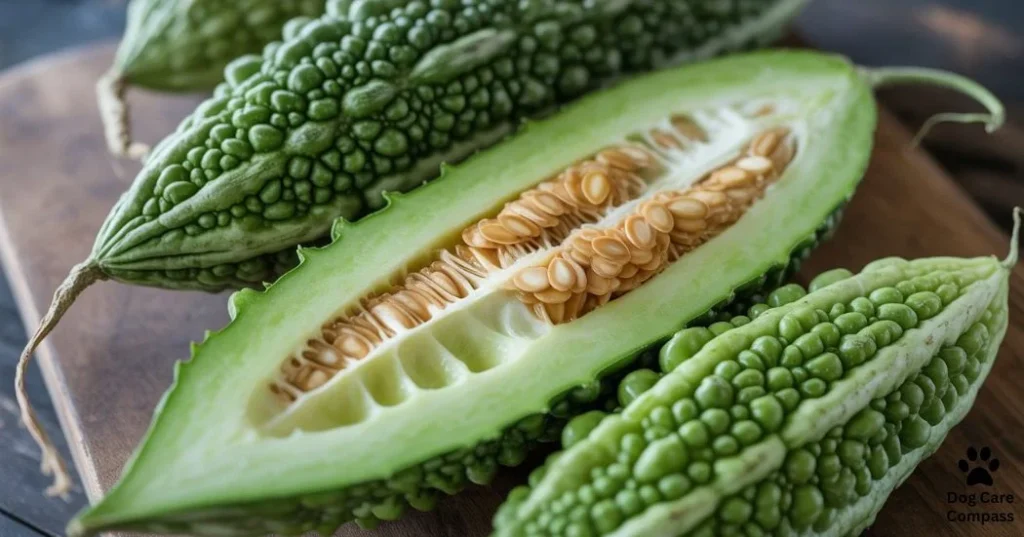
Bitter melon (Momordica charantia) — also known as bitter gourd, karela, or balsam pear — is a tropical vine vegetable belonging to the Cucurbitaceae family, the same family as cucumber, pumpkin, zucchini, and watermelon.
The fruit is elongated and bumpy with a distinctive bright green exterior. Inside is crisp white flesh surrounding a soft seed cavity. The flavor is intensely bitter — unlike anything else in the vegetable world — which makes it one of the most acquired tastes in cooking.
It is widely consumed across India, Pakistan, Bangladesh, Sri Lanka, the Philippines, China, and the Caribbean — eaten stir-fried, stuffed, juiced, and used extensively in traditional medicine. In Ayurvedic and Traditional Chinese Medicine, bitter melon has been used for centuries specifically for blood sugar management.
Nutritionally, bitter melon is low in calories, very low in sugar, high in fiber, and rich in vitamins C, A, and folate. It contains unique bioactive compounds — including charantin, polypeptide-p, and vicine — that actively lower blood glucose levels.
Nutritional Profile of Bitter Melon (Per 100g)
| Nutrient | Amount |
|---|---|
| Calories | 17 kcal |
| Carbohydrates | 3.7g |
| Natural Sugar | 1.9g |
| Dietary Fiber | 2.8g |
| Protein | 1.0g |
| Fat | 0.2g |
| Vitamin C | 84mg |
| Vitamin A | 471 IU |
| Folate | 72mcg |
| Potassium | 296mg |
| Iron | 0.4mg |
| Zinc | 0.8mg |
Several numbers stand out here. At only 17 calories per 100g, bitter melon is one of the lowest-calorie vegetables available — excellent for dogs managing weight. The vitamin C content at 84mg per 100g is very high — far exceeding most fruits commonly fed to dogs. The sugar content at just 1.9g per 100g is extremely low — one of the lowest of any fruit or vegetable.
The key nutritional story of bitter melon, however, is not the vitamins — it is the bioactive compounds that lower blood sugar. These are the compounds that make bitter melon both medicinally valuable and potentially dangerous for the wrong dog.
Is Bitter Melon Safe for Dogs?

Bitter melon is not listed as toxic to dogs by major veterinary authorities. The flesh, in small amounts, is considered safe for healthy adult dogs without underlying health conditions.
The practical concern is not toxicity in the conventional sense — it is the fruit’s powerful effect on blood glucose. Bitter melon contains charantin, polypeptide-p, and vicine — compounds that actively stimulate insulin secretion and lower blood sugar levels. These effects are well-documented and intentional in human traditional medicine use.
In a healthy dog, a small amount of bitter melon flesh causes no serious harm. In a diabetic dog on glucose-lowering medication — even a small amount can push blood sugar dangerously low. The same risk applies to dogs currently on any medication that affects blood sugar.
The seeds present a separate concern — they contain compounds that are difficult to digest, can cause gastrointestinal distress, and pose choking and blockage risks.
Potential Benefits of Bitter Melon for Dogs
Very Low Sugar — Ideal for Weight Management
At just 1.9g of natural sugar per 100g, bitter melon is one of the lowest-sugar vegetables a dog can eat.
For dogs managing obesity, bitter melon delivers fiber and nutrients without the sugar load that comes with most fruits. This makes it a genuinely useful option for overweight dogs that benefit from low-calorie, high-fiber snacks — assuming no blood sugar medication is involved.
Exceptionally High Vitamin C
84mg of vitamin C per 100g is a very high amount — higher than guava, papaya, or most commonly fed dog-safe fruits.
Vitamin C supports immune function, collagen production, wound healing, and reduction of inflammatory markers. While dogs synthesize their own vitamin C, additional dietary sources offer genuine antioxidant support — particularly valuable for senior dogs and those recovering from illness.
Vitamin A for Skin, Coat, and Vision
471 IU of vitamin A per 100g supports healthy skin, coat condition, and eye function in dogs.
This is a meaningful amount. Vitamin A deficiency in dogs leads to poor coat quality, dry skin, and vision problems — bitter melon’s vitamin A content makes a real contribution to these areas.
High Fiber Supports Digestive Health
At 2.8g of fiber per 100g, bitter melon delivers solid dietary fiber without the laxative compounds found in wood apple or the high sugar of jackfruit.
The fiber in bitter melon supports regular bowel movements, feeds beneficial gut bacteria, and contributes to a feeling of fullness — useful for dogs on calorie-restricted diets.
Folate for Cell Growth and Development
72mcg of folate per 100g is a significant contribution to this essential B vitamin.
Folate supports cell growth, DNA synthesis, and healthy skin, coat, and muscle development in dogs. It is particularly important for growing dogs — though the other risks of bitter melon mean it should not be given to puppies for this reason.
Antioxidants and Anti-Inflammatory Compounds
Bitter melon contains tannins, flavonoids, and phenolic compounds alongside its better-known bioactive molecules.
These compounds reduce oxidative stress and inflammation — relevant for senior dogs where chronic low-grade inflammation contributes to joint pain, cognitive decline, and immune weakening.
Real Risks of Feeding Bitter Melon to Dogs
Blood Sugar Lowering Effect — The Most Critical Risk
This is the most important risk in this entire guide — and it is specific to certain dogs.
Bitter melon contains charantin, polypeptide-p, and vicine — compounds that actively lower blood glucose by stimulating insulin release and improving glucose uptake. These effects are powerful enough that bitter melon is used medicinally as a blood sugar-lowering treatment in human traditional medicine across Asia.
For a healthy dog not on any medication — a small amount of bitter melon causes mild blood sugar adjustment that the body compensates for without serious consequence.
For a diabetic dog on insulin or glucose-lowering medication — bitter melon can cause hypoglycemia. Symptoms of dangerous low blood sugar in dogs include sudden weakness, trembling, disorientation, seizures, and collapse.
Never feed bitter melon to a diabetic dog or any dog on blood sugar medication.
Seeds — Remove Before Serving
Bitter melon seeds should not be fed to dogs.
The seeds are hard and numerous, presenting choking risk and potential intestinal blockage if swallowed whole. Beyond the physical risk, seed compounds are poorly digested and can cause gastrointestinal distress — vomiting, abdominal pain, and diarrhea.
Remove every seed before offering bitter melon to a dog. Inspect the flesh carefully — seeds are embedded throughout the seed cavity and can be missed.
Absolutely Not Safe for Pregnant Dogs
This is a hard rule with no exceptions.
Bitter melon has documented anti-fertility properties and has been shown to cause miscarriage and premature labor in animal studies. The compounds responsible — vicine and related alkaloids — interfere with reproductive function.
Never feed bitter melon to a pregnant dog under any circumstances.
Cucurbitacin Content — Risk at High Amounts
Bitter melon contains cucurbitacin — a bitter compound present in varying amounts depending on the variety and ripeness.
In small amounts, cucurbitacin causes the characteristic bitter flavor and poses no serious risk. In larger amounts, cucurbitacin can cause severe digestive upset — bloating, abdominal pain, vomiting, diarrhea, and in significant quantities, can trigger pancreatitis.
This is why strict portion control is not optional with bitter melon — the cucurbitacin content makes overconsumption genuinely harmful regardless of the dog’s health status.
Intense Bitterness — Most Dogs Will Refuse It
Most dogs will turn away from bitter melon on first encounter — and this is not a problem.
The intense bitter flavor is a natural deterrent. Do not try to mask the taste with seasoning, sweeteners, or mixing with other strong flavors to force consumption. If a dog refuses bitter melon, respect that response and offer a safer, more palatable alternative.
Interaction with Medications
Beyond blood sugar medications, bitter melon may interact with other drugs — including some anti-inflammatory medications and liver-processed compounds.
If your dog is on any regular medication, consult your veterinarian before introducing bitter melon, even in small amounts.
Which Dogs Should Avoid Bitter Melon Completely
- Diabetic dogs — blood sugar-lowering effect is dangerous
- Pregnant dogs — causes miscarriage and anti-fertility effects
- Dogs on blood sugar or insulin medication — hypoglycemia risk
- Dogs on any regular medication — potential drug interaction
- Puppies — digestive systems not ready for bitter compounds and bioactive compounds
- Dogs with chronic digestive conditions — cucurbitacin aggravates existing issues
- Dogs with pancreatitis — cucurbitacin in large amounts can trigger flare-up
How to Safely Prepare Bitter Melon for Dogs

- Choose a firm, bright green bitter melon — avoid overripe ones which have higher cucurbitacin concentration
- Wash thoroughly under running water
- Slice lengthwise and scoop out all seeds and the soft seed cavity — discard completely
- Decide whether to serve raw or cooked — steaming or boiling reduces bitterness significantly
- If cooking, use no oil, no seasoning, no salt, no spices of any kind
- Cut into small bite-sized pieces appropriate for your dog’s size
- Offer one small piece first — observe for 24 to 48 hours before offering again
- The skin can be left on for crunch-loving dogs or removed if too tough or bitter
How Much Bitter Melon Can Dogs Eat?
Given the cucurbitacin content and blood sugar effects — portions must be conservative.
| Dog Size | Weight | Maximum Amount | Frequency |
|---|---|---|---|
| Small | Under 10 lbs | 1–2 small pieces | Once a week |
| Medium | 10–50 lbs | 3–4 small pieces | 2–3 times a week |
| Large | 50+ lbs | 5–6 small pieces | 2–3 times a week |
These amounts assume a healthy adult dog with no underlying conditions and no current medications.
Bitter Melon vs Other Safe Vegetables for Dogs
| Vegetable | Safe? | Sugar | Calories | Main Risk | Verdict |
|---|---|---|---|---|---|
| Bitter melon | Caution | 1.9g | 17 kcal | Blood sugar effect, seeds | Small amounts, healthy dogs only |
| Cucumber | Yes | 1.7g | 15 kcal | None significant | Excellent |
| Zucchini | Yes | 2.5g | 17 kcal | None significant | Excellent |
| Carrot | Yes | 4.7g | 41 kcal | High sugar vs bitter melon | Good option |
| Pumpkin | Yes | 2.8g | 26 kcal | None significant | Excellent |
| Green beans | Yes | 3.3g | 31 kcal | None significant | Excellent |
| Okra | Yes | 1.5g | 33 kcal | None significant | Good option |
Bitter melon’s nutritional profile — especially the very low sugar and high vitamin C — is genuinely impressive. But for most healthy dogs, cucumber, zucchini, or pumpkin deliver comparable benefits without the blood sugar complications or seed removal requirement.
What to Do If Your Dog Eats Bitter Melon
If your dog ate a small amount of flesh — no seeds: Monitor for digestive upset over 24 hours. Mild loose stools or gas from the fiber and bitter compounds is possible. Ensure fresh water is available. Most healthy dogs recover without any intervention.
If your dog ate bitter melon seeds: Contact your veterinarian promptly. Seeds can cause digestive blockage and compound gastrointestinal distress that may need professional assessment.
If your dog is diabetic and ate bitter melon: Watch immediately for signs of hypoglycemia — weakness, trembling, disorientation, glazed eyes, or collapse. Contact your vet without delay. This is a medical situation that requires prompt attention.
If your dog is pregnant and ate bitter melon: Contact your veterinarian the same day. The anti-fertility compounds in bitter melon require professional monitoring in pregnant dogs.
Frequently Asked Questions
Can dogs eat cooked bitter melon?
Yes — plain steamed or boiled bitter melon is actually preferable to raw for dogs. Cooking reduces the cucurbitacin content and bitterness significantly, making it easier to digest. Never cook with oil, salt, onion, garlic, or any seasoning.
Can dogs drink bitter melon juice?
Not recommended. Bitter melon juice concentrates the blood sugar-lowering compounds far more than the whole fruit. Even small amounts of juice can cause significant blood glucose effects in dogs. Fresh water is always the better choice.
Can dogs eat bitter melon leaves?
Research on bitter melon leaf safety for dogs is limited. The leaves contain similar bioactive compounds as the fruit. The safest approach is to stick to small amounts of prepared flesh only and keep dogs away from the plant.
Is bitter melon the same as bitter gourd?
Yes — bitter melon and bitter gourd are the same plant (Momordica charantia). Different regions use different names — bitter melon in English, karela in South Asia, ampalaya in the Philippines, ku gua in Chinese. All the same safety guidance applies regardless of the name.
My dog ate bitter melon and is now vomiting — what should I do?
Ensure fresh water is available. If vomiting is persistent — more than two to three times — or if your dog seems lethargic or in pain, contact your veterinarian. A small amount of flesh causing mild digestive upset usually resolves within 24 hours.
Can dogs eat the white variety of bitter melon?
White or pale bitter melon varieties are slightly less bitter than the standard green variety. The same preparation rules apply — seeds removed, plain, small amounts. The blood sugar-lowering compounds are present in all varieties.
Final Summary
- Bitter melon flesh is not toxic to healthy adult dogs — and offers genuinely impressive nutritional value
- The blood sugar-lowering compounds make it dangerous for diabetic dogs and dogs on glucose medication
- Pregnant dogs must never eat bitter melon — documented anti-fertility and miscarriage risk
- Seeds must be removed completely — choking hazard and digestive distress
- Cucurbitacin content means overconsumption causes serious digestive upset regardless of health status
- Plain steamed or boiled bitter melon is preferable to raw — reduces bitterness and cucurbitacin
- Maximum 2–3 times per week for medium and large dogs — strict portion control is not optional
- If your dog is diabetic and ate bitter melon — contact your vet immediately for hypoglycemia monitoring
- Cucumber, zucchini, and pumpkin are safer alternatives with comparable nutritional benefits and no blood sugar complications
This article is written for informational purposes. Always consult a licensed veterinarian for medical advice about your pet.

- How to Stop a Dog From Eating Poop: 9 Home Remedies That Work - July 21, 2026
- Is Blue Buffalo Good Dog Food? Honest Review After Testing - July 12, 2026
- Can Dogs Eat Wood Apple, Lotus Root & Chayote Squash? (Exotic Fruits Guide) - July 4, 2026