Dog Limping But Not in Pain: Causes, What to Watch For, and When to Act
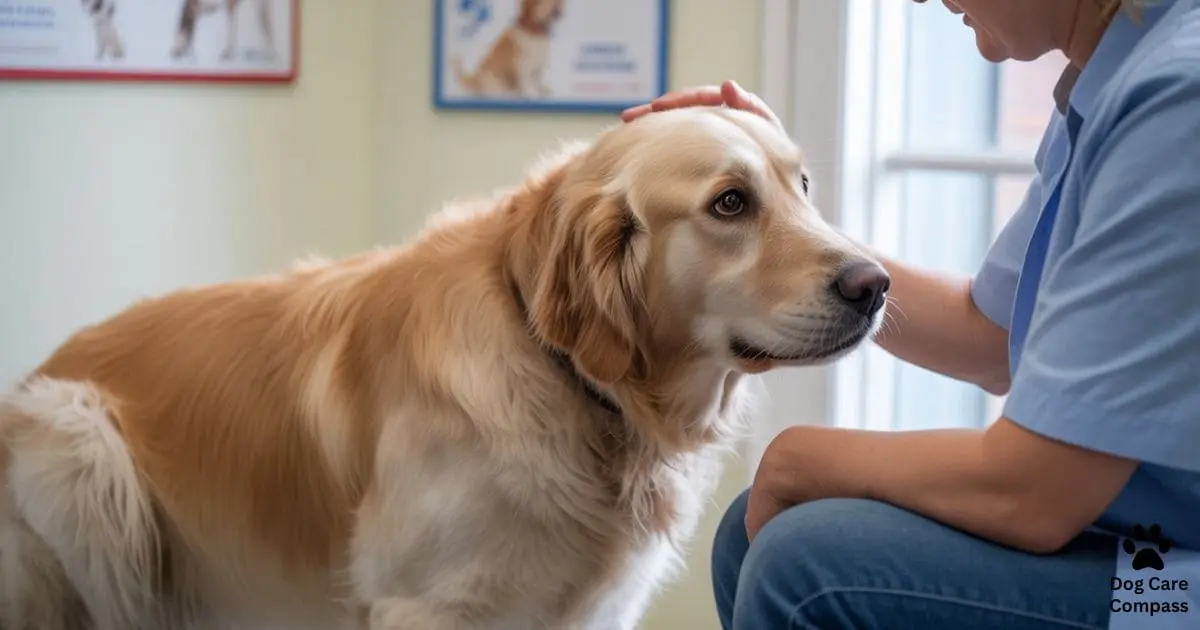
A dog limping but not showing obvious pain is one of those situations that leaves owners genuinely unsure what to do. The limp is visible — something is clearly off — but your dog is eating normally, wagging their tail, and acting like nothing is wrong. Do you wait and see? Do you go to the vet immediately?
The honest answer depends entirely on what is causing the limp. Some causes are genuinely minor and resolve on their own. Others look mild on the surface but are early signs of something that gets significantly worse without attention. This guide walks through every likely cause, what to watch for at home, and the signs that tell you when waiting is no longer the right call.
“Paw pad cracks and minor wounds sometimes need topical treatment — [Sudocrem] is a common question.”
Quick Answer — Dog Limping But Not in Pain
| Question | Answer |
|---|---|
| Is a painless limp serious? | Depends on cause and duration |
| Can dogs hide pain? | Yes — very effectively |
| Should I wait and see? | 24–48 hours for mild cases only |
| When to see a vet immediately? | Swelling, sudden onset, won’t bear weight |
| Common causes? | Minor injury, joint issues, paw irritation |
Can Dogs Actually Feel No Pain While Limping?
This is the first thing to understand — and it changes how you interpret everything else.
Dogs are remarkably good at masking discomfort. Centuries of instinct tell them that showing weakness is dangerous. A dog in moderate pain will often continue eating, playing, and engaging normally — while quietly compensating for the affected limb in ways owners do not immediately notice.
When your dog limps but seems fine otherwise, there are two real possibilities. Either the cause is genuinely minor — a small irritation, a sleeping limb, a mild muscle strain — or the pain is present but your dog is managing it well enough that it does not show in their behavior.
Neither possibility should be dismissed. Both deserve attention.
Common Causes of Dog Limping Without Obvious Pain
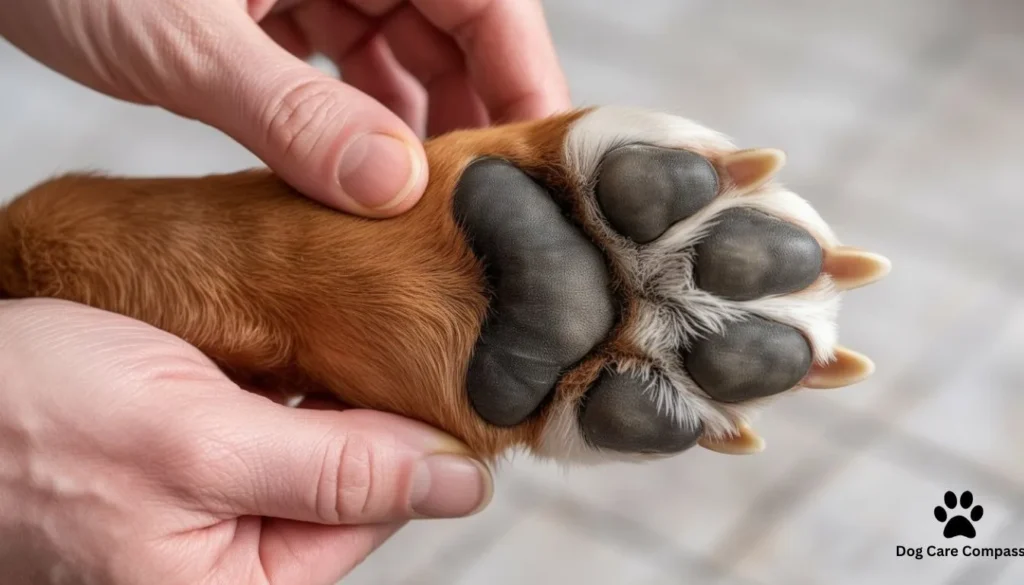
Minor Paw Irritation or Foreign Object
This is the most common cause of sudden limping in otherwise normal dogs — and the easiest to check yourself before assuming anything more serious.
Small stones, thorns, grass seeds, and splinters lodge between toes and in pads regularly. The dog limps to reduce pressure on the affected area, but the irritation is mild enough that it does not produce visible distress.
Run your hand carefully along every toe, between the pads, and along the nail line. Look for swelling, redness, embedded material, or any reaction when gentle pressure is applied. A dog that flinches when you touch a specific spot has told you exactly where to focus.
Paw health matters more than most owners realize — dogs that walk on rough surfaces, grass treated with chemicals, or road salt regularly are far more prone to this kind of irritation. The same daily paw wipe routine that helps dogs dealing with chronic skin irritation and paw licking works just as well as a preventive measure against foreign object injuries.
Muscle Strain or Soft Tissue Injury
Dogs strain muscles the same way humans do — an awkward jump, a sudden direction change, an overenthusiastic game of fetch. Soft tissue injuries produce a limp that looks concerning but often resolves with rest within 24 to 48 hours.
The key characteristic of a muscle strain is that the dog is weight-bearing — they will put the leg down, just with less confidence than normal. A dog that completely refuses to use a limb is communicating something more significant than a soft tissue strain.
Joint Stiffness — Especially After Rest
A dog that limps for the first few minutes after waking up, then gradually walks it off and moves normally — this is a classic presentation of early joint stiffness. It is particularly common in older dogs and in larger breeds with a genetic predisposition to joint issues.
German Shepherds and Belgian Malinois are both breeds where joint health deserves consistent attention from early adulthood. The physical demands placed on working and high-drive dogs accumulate over time — and what starts as mild morning stiffness that resolves with movement can develop into something more limiting if the underlying joint health is not supported.
Diet plays a more significant role in joint health than most owners appreciate. Dogs eating whole food diets rich in omega-3 fatty acids, copper, and anti-inflammatory ingredients tend to maintain better joint function into older age. The nutritional approach used for dogs with Cushing’s disease — a condition that directly affects musculoskeletal health — illustrates how systemic diet choices express themselves through physical symptoms owners often treat in isolation.
Early Arthritis
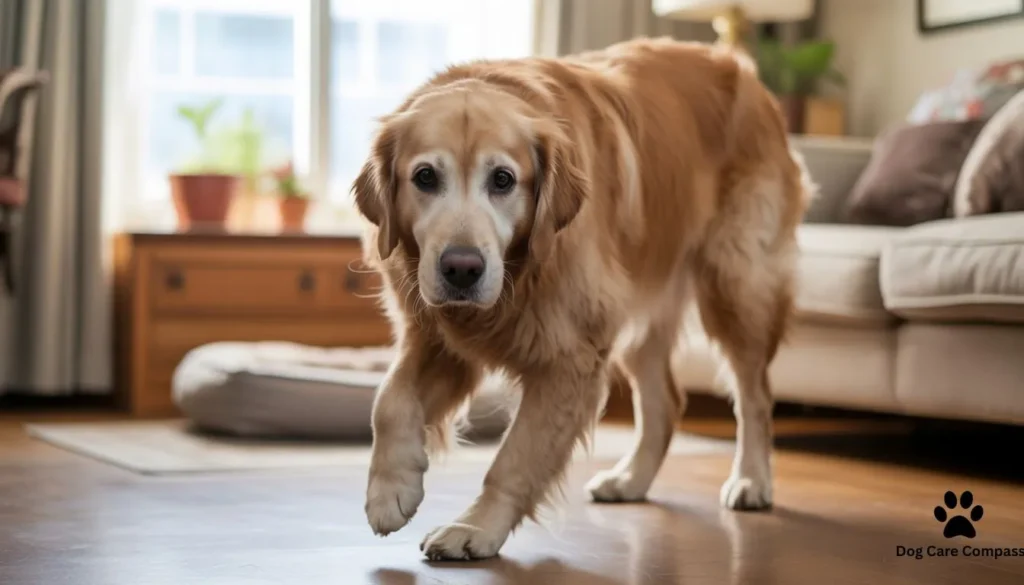
Arthritis in dogs develops gradually and is frequently missed in its early stages precisely because dogs compensate so effectively. A dog with early arthritis may limp intermittently — worse after rest, better after warming up — without showing obvious behavioral signs of pain.
Large breeds, senior dogs, and dogs with a history of joint injuries are most at risk. The absence of obvious distress does not mean the condition is not progressing.
Early arthritis responds well to dietary support, weight management, controlled exercise, and — in many cases — veterinary-guided supplementation. Catching it early makes a meaningful difference to long-term quality of life.
Panosteitis — Growing Pains in Young Dogs
Panosteitis is a condition that affects young, fast-growing dogs — typically between 5 and 18 months of age. It causes intermittent limping that shifts between legs without any obvious injury, and the dog often appears completely normal between episodes.
German Shepherds are one of the breeds most commonly affected. The condition is genuinely painful during episodes, but dogs often mask it well enough that owners assume the limp is minor. If you have a young German Shepherd limping on different legs at different times with no apparent cause, panosteitis is a strong possibility worth discussing with your vet.
Elbow or Hip Dysplasia — Early Presentation
Dysplasia — abnormal joint development in the elbow or hip — is another condition that frequently presents as a limp without obvious distress in its early stages. Affected dogs compensate by adjusting their gait, distributing weight differently, and avoiding certain movements — all without vocalizing or showing clear behavioral pain signals.
Large and giant breeds carry significantly higher genetic risk. German Shepherds in particular have high rates of hip dysplasia — it is one of the most well-documented health concerns in the breed. A young German Shepherd limping intermittently on a rear leg should be evaluated for hip dysplasia even if the dog seems otherwise fine.
For owners managing the full health picture of a German Shepherd — including behavioral, physical, and nutritional considerations — the complete German Shepherd guide covers breed-specific health predispositions in detail.
Lyme Disease and Tick-Borne Illness
In areas where ticks are common, Lyme disease is a genuine cause of intermittent limping in dogs. The limp shifts between legs, the dog may seem mildly lethargic but otherwise normal, and the connection to tick exposure is often missed.
Lyme disease responds well to antibiotic treatment when caught early. Left untreated, it can progress to kidney disease and more serious complications. If your dog has had tick exposure and develops shifting-leg lameness — even without obvious pain — Lyme disease belongs on the list of possibilities to rule out.
Neurological Causes
Less commonly, limping without obvious pain is caused by a neurological issue rather than a musculoskeletal one. Nerve compression, spinal problems, or early degenerative myelopathy can all affect limb function without producing the localized pain response owners expect.
Neurological limping often has distinctive characteristics — the leg may drag slightly, the dog may knuckle over on the paw, or the movement pattern may look different from a typical pain-avoidance limp. Any of these signs warrant veterinary assessment without delay.
Front Leg vs. Rear Leg Limping — What the Location Tells You
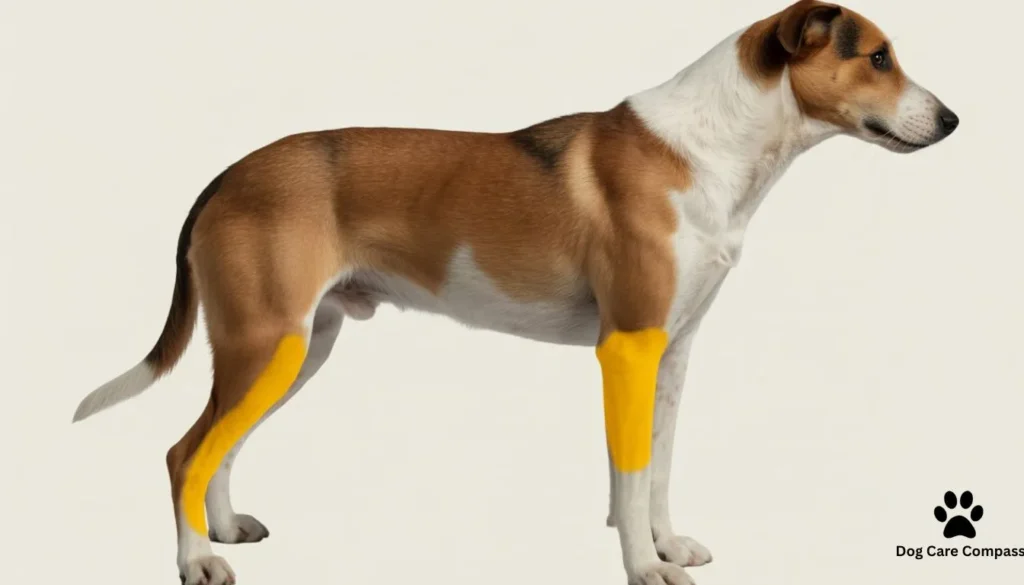
The location of the limp is one of the most useful diagnostic clues available before a vet visit.
| Location | Common Causes |
|---|---|
| Front leg | Elbow dysplasia, paw injury, shoulder strain, panosteitis |
| Rear leg | Hip dysplasia, knee injury, panosteitis, arthritis |
| Shifts between legs | Panosteitis, Lyme disease, early arthritis |
| One specific leg consistently | Injury, dysplasia, nerve issue |
A limp that shifts between legs — never staying in one place — is almost never a simple injury. It points toward systemic causes that need proper diagnosis.
Assessing Your Dog at Home — What to Check
Before calling your vet, a careful home assessment gives you useful information and helps you describe what you are seeing accurately.
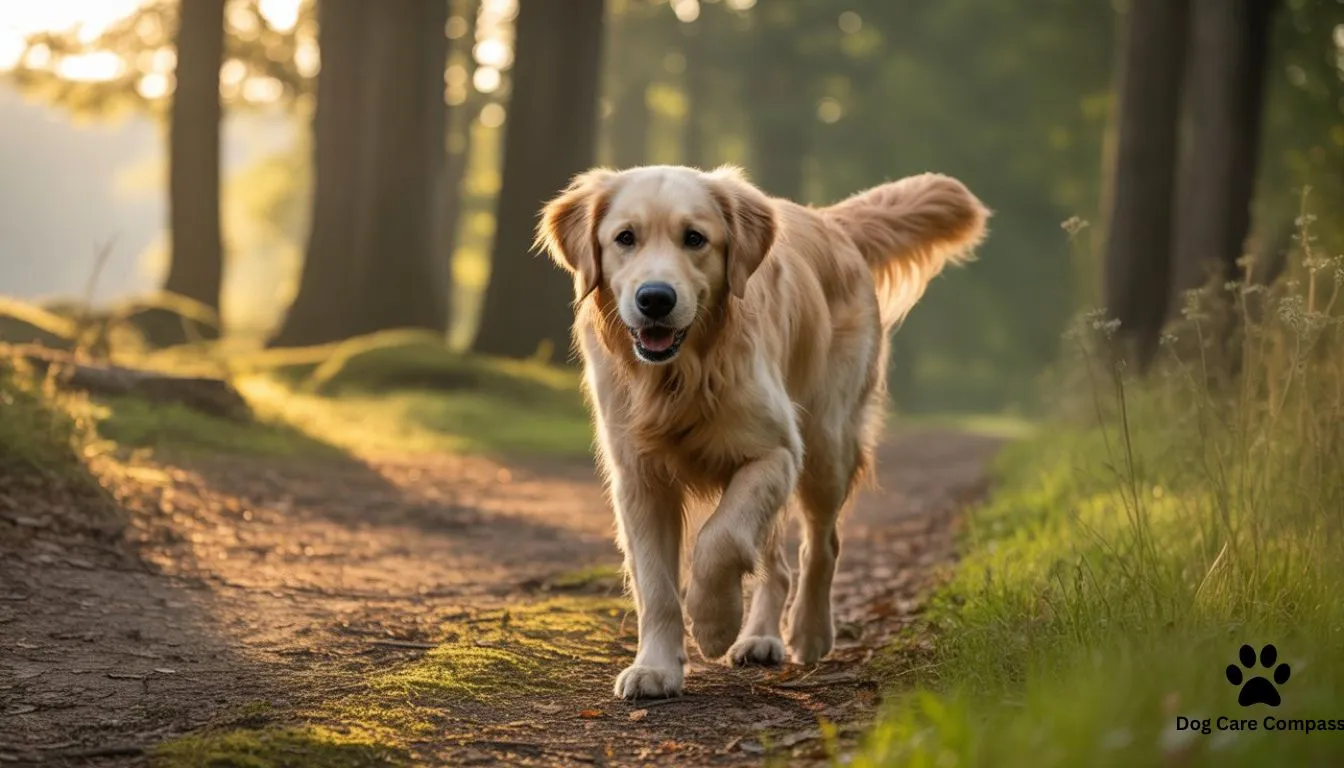
Step 1 — Watch your dog walk from a distance. Note which leg is affected and whether they are bearing any weight on it at all.
Step 2 — Check the paw thoroughly. Between toes, on pads, along nail line. Look for cuts, swelling, embedded objects, heat, or odor.
Step 3 — Gently run your hand up the leg from paw to shoulder or hip. Note any swelling, heat, or flinching response.
Step 4 — Observe the dog at rest and when first getting up. Morning stiffness that improves with movement suggests joint involvement.
Step 5 — Check recent activity. Did your dog jump from height, play unusually hard, or change surfaces recently? This context matters significantly.
Step 6 — Note duration. Has this appeared suddenly or been building gradually over days or weeks?
When to Wait and When to Go to the Vet
This is the decision most owners struggle with — and the answer genuinely depends on what you observe.
Monitor at Home for 24–48 Hours If:
- The dog is fully weight-bearing — leg touches the ground with every step
- No visible swelling, heat, or wound on the paw or leg
- Dog is eating, drinking, and behaving normally
- The limp appeared after exercise and is mild
- No history of joint disease or previous limping
Rest the dog — no running, jumping, or stairs — and reassess after 24 to 48 hours. Improvement suggests a minor soft tissue strain. No improvement or worsening means a vet visit is needed.
See a Vet Within 24 Hours If:
- The limp has not improved after 48 hours of rest
- The dog is intermittently non-weight-bearing
- You can see swelling or feel heat in the leg or joint
- The limp shifts between legs
- Your dog is a large breed puppy between 5 and 18 months
Go to the Vet Immediately If:
- The dog completely refuses to use the limb
- Visible bone deformity or wound
- The limp appeared suddenly after trauma — fall, collision, vehicle accident
- Severe swelling developing rapidly
- Dog is crying, whimpering, or showing clear distress alongside the limp
- Limb is hanging at an unusual angle
According to the American Kennel Club’s veterinary guidance, sudden non-weight-bearing lameness always warrants same-day veterinary assessment regardless of how calm the dog appears. The ASPCA notes that dogs masking pain effectively is one of the most common reasons owners delay seeking care for conditions that are actively progressing. PetMD’s veterinary team recommends assessing weight-bearing as the single most important indicator when deciding whether to wait or seek immediate care.
Diet and Joint Health — The Long-Term Connection
A dog’s diet directly influences how their joints hold up over time — and this connection is worth understanding before problems develop, not after.
Dogs eating diets consistently rich in omega-3 fatty acids experience less joint inflammation than dogs eating diets low in these nutrients. Omega-3s — found in fish, flaxseed, and fish oil — reduce the inflammatory processes that drive both arthritis progression and the pain associated with joint disease.
Weight management is equally important. Every excess kilogram a dog carries adds disproportionate load to joints — particularly hips and elbows in large breeds. A dog eating a calorie-appropriate whole-food diet maintains a healthy weight without effort, while a dog eating calorie-dense processed food often carries weight that accelerates joint deterioration silently.
For dogs whose diet needs complete restructuring — whether due to joint disease, weight issues, or a health condition affecting mobility — the same nutritional principles apply across conditions. Dogs with sensitive systems dealing with digestive issues alongside joint problems often benefit most from a clean, whole-food dietary foundation that reduces systemic inflammation across the board.
Breed-Specific Considerations
Some breeds carry significantly higher risk for the conditions most likely to cause painless-seeming limping.
German Shepherds have genetic predisposition to hip dysplasia, degenerative myelopathy, and panosteitis. A limping German Shepherd — at any age — deserves more thorough investigation than the same limp in a breed without these predispositions.
Belgian Malinois are physically demanding dogs on their own bodies. Their drive and work ethic means they will push through discomfort that would stop most other breeds — making pain masking particularly pronounced. An owner who understands their Malinois well enough to notice subtle behavioral shifts has a significant advantage in catching problems early. The full physical and behavioral picture of this breed is covered in the Belgian Malinois complete owner’s guide.
Long Hair German Shepherds carry the same joint predispositions as standard GSDs, with the additional consideration that their coat can conceal swelling and skin changes around joints that would be immediately visible on a short-coated dog. Regular physical checks — running hands along joints and limbs — matter more for this coat type.
Frequently Asked Questions
My dog is limping but seems happy — should I be worried?
A happy demeanor does not rule out a genuine physical problem. Dogs mask discomfort instinctively. Assess weight-bearing, check the paw carefully, and monitor for 24–48 hours. If the limp persists or worsens, see your vet regardless of how cheerful your dog seems.
Can a dog limp from sleeping in an awkward position?
Yes — exactly like humans get pins and needles. A dog that limps briefly after waking up and then walks normally within a few minutes has most likely experienced a temporary circulatory issue from an awkward sleeping position. This is harmless. Limping that persists beyond a few minutes after waking is a different situation.
My dog limps sometimes but not always — what does that mean?
Intermittent limping is one of the more diagnostically important patterns. It often points toward joint disease — arthritis, dysplasia — that is not yet severe enough to cause constant symptoms but is present and progressing. Intermittent limping that has continued for more than a week warrants a vet visit.
Should I give my dog pain medication if they are limping?
Never give human pain medication to a dog — ibuprofen, paracetamol, and aspirin are all toxic to dogs at various doses. If you want to manage discomfort while awaiting a vet appointment, rest is the safest intervention. Discuss appropriate canine pain relief with your vet.
Can diet help a dog that limps from joint issues?
Yes — meaningfully. Omega-3 fatty acids reduce joint inflammation. Weight management reduces mechanical load on joints. Anti-inflammatory whole foods support the conditions that allow joints to function with less pain. Diet does not replace veterinary treatment for serious joint disease, but it creates significantly better conditions for recovery and long-term management.
My puppy is limping on different legs at different times — what is this?
Shifting-leg lameness in young dogs — particularly large breeds between 5 and 18 months — is a classic presentation of panosteitis. It is painful during episodes but dogs often mask it well. See your vet for confirmation and guidance on management during growth phases.
How long should I wait before taking a limping dog to the vet?
For mild limping with full weight-bearing and no visible injury — 24 to 48 hours of rest is reasonable. If there is no improvement, or if the limp worsens at any point, see your vet. Non-weight-bearing lameness or any visible injury warrants same-day assessment.
Final Summary
- A limping dog that seems pain-free may still be experiencing discomfort — dogs mask pain instinctively
- Check the paw thoroughly first — foreign objects and minor irritation are the most common cause
- Full weight-bearing with mild limp — monitor for 24 to 48 hours with rest
- Non-weight-bearing, swelling, trauma, or shifting-leg pattern — see a vet promptly
- Morning stiffness that improves with movement suggests joint involvement
- Young large-breed dogs limping on rotating legs — consider panosteitis
- Diet and weight management directly affect long-term joint health
- German Shepherds and Belgian Malinois carry higher risk for the conditions most likely to cause this presentation
If your dog has been limping for more than 48 hours without improvement, book a vet appointment today — catching joint and soft tissue problems early consistently produces better outcomes than waiting until symptoms become impossible to ignore.