
When Do German Shepherds Calm Down? The Honest Answer Every GSD Owner Needs
I remember sitting on my kitchen floor at 11pm, exhausted, watching my 8-month-old German Shepherd systematically destroy a cushion he had already been told three times to leave alone. I typed “when do German Shepherds calm down” into my phone with one hand while holding the cushion remains with the other.
If you are here, you probably know exactly how that feels.
When do German Shepherds calm down? Most GSDs start calming down between 2 and 3 years of age. However, proper exercise, mental stimulation, and consistent training can make a GSD noticeably calmer even earlier. Age is part of the answer — but not the whole story.
German Shepherd Life Stages — What to Expect at Each Age
| Life Stage | Age | Behavior |
|---|---|---|
| Puppy | 8 weeks – 6 months | Very high energy, easily distracted |
| Adolescence | 6 – 18 months | Most intense phase, testing limits |
| Young Adult | 18 months – 3 years | Gradually settling, training pays off |
| Mature Adult | 3 years onward | Calm, focused, manageable |
| Senior | 7 years onward | Significantly reduced energy |
Why German Shepherds Are So Intense
Understanding the breed comes first.
German Shepherds were developed as working dogs — herding, protection, police and military service. Every characteristic that makes them exceptional at those roles also makes them genuinely challenging as household pets when those drives have nowhere to go.
They are highly intelligent — which means they need mental stimulation, not just physical exercise.
They are loyal and deeply bonded — which makes them prone to anxiety when understimulated or left alone too long.
They are alert and reactive — which means the world around them keeps them in a near-constant state of engagement.
A GSD with no outlet for these drives does not become calm. It becomes destructive, anxious, or both.
The GSD Life Stages in Detail
Puppy Phase — 8 Weeks to 6 Months
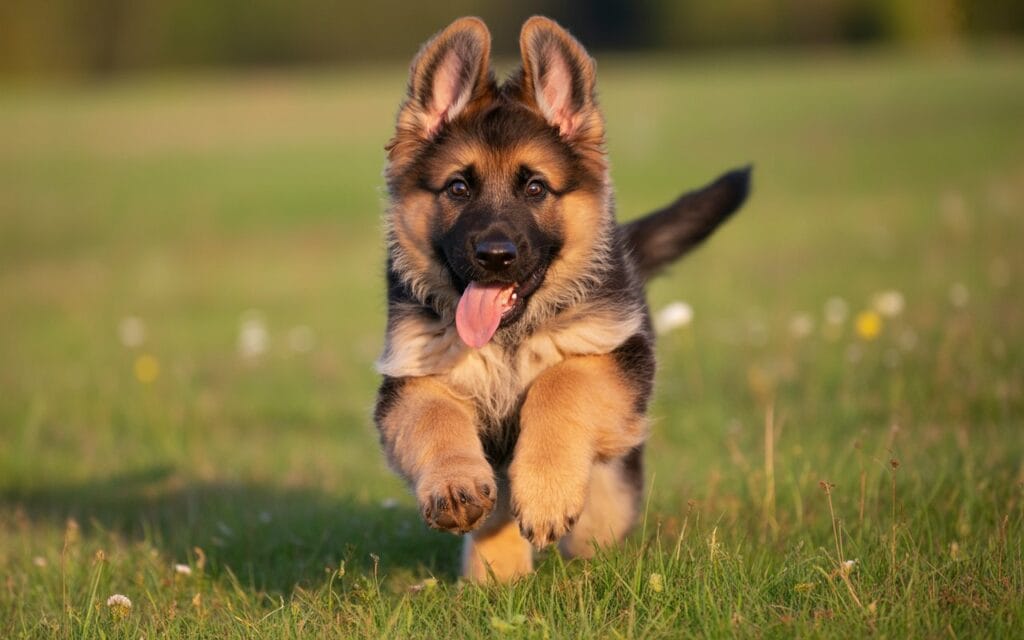
GSD puppies are energetic, curious, and completely without impulse control. Short bursts of intense energy followed by long sleep periods is the pattern. Everything is new, everything is interesting, and focus during training lasts about forty-five seconds before something across the room demands attention.
This phase is chaotic — but it is also the most important window for foundation training. What you establish now determines how manageable the adolescent phase becomes.
The temperament patterns emerging during this stage — confidence levels, social responses, anxiety tendencies — are worth understanding clearly. Misreading normal puppy behavior as a problem leads to responses that create actual problems. Our German Shepherd puppy temperament guide covers what is normal at this stage and what genuinely needs attention.
Adolescence — 6 to 18 Months — The Hardest Phase
This is the phase that sends owners searching for answers at 11pm.
The puppy that seemed to be responding well to training suddenly appears to forget everything. Energy spikes. Threshold for frustration drops. Boundary testing increases dramatically.
This is completely normal — driven by hormonal changes and neurological development that happen regardless of what you do.
What owners typically experience:
- Selective hearing — the dog knows the command, simply chooses not to respond
- Increased reactivity — barking at things they ignored before
- Restlessness and genuine difficulty settling
- More chewing and destructive behavior when under-stimulated
A GSD that develops fear-based reactivity during this phase needs specific behavioral work — not just time. The practical approach to working with fear responses in German Shepherds applies directly here.
Young Adult — 18 Months to 3 Years
This is where owners start seeing light at the end of the tunnel — if the foundation work was done.
The hormonal intensity of adolescence begins settling. Training that felt like it was going nowhere starts showing. The dog begins demonstrating genuine calm — not just exhausted collapse after exercise, but actual settled behavior at rest.
Energy levels are still high. Mental engagement is still necessary daily. But the impulsive, scattered quality of adolescent behavior gives way to something more purposeful.
Mature Adult — 3 Years Onward
Three years is the milestone most experienced GSD owners point to as the real turning point.
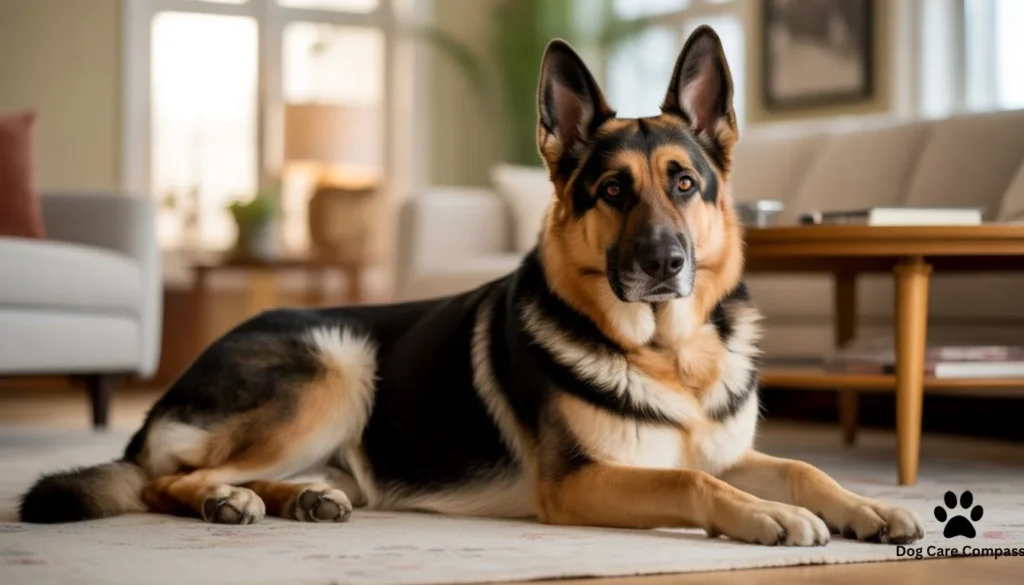
The dog that was bouncing off walls at 10 months is now capable of lying calmly in the same room for hours. Training that felt like constant maintenance now feels like second nature on both sides.
This does not mean a 3-year-old GSD becomes a couch dog. They still need daily vigorous exercise and mental engagement. But the quality of their rest changes significantly — genuine calm rather than exhausted recovery.
What Actually Determines When a GSD Calms Down
Age is a factor. It is not the only one.
Daily Exercise — Non-Negotiable
A German Shepherd that does not receive adequate daily exercise will not calm down at 2 years, 3 years, or 5 years. Exercise is not optional for this breed — it is foundational.
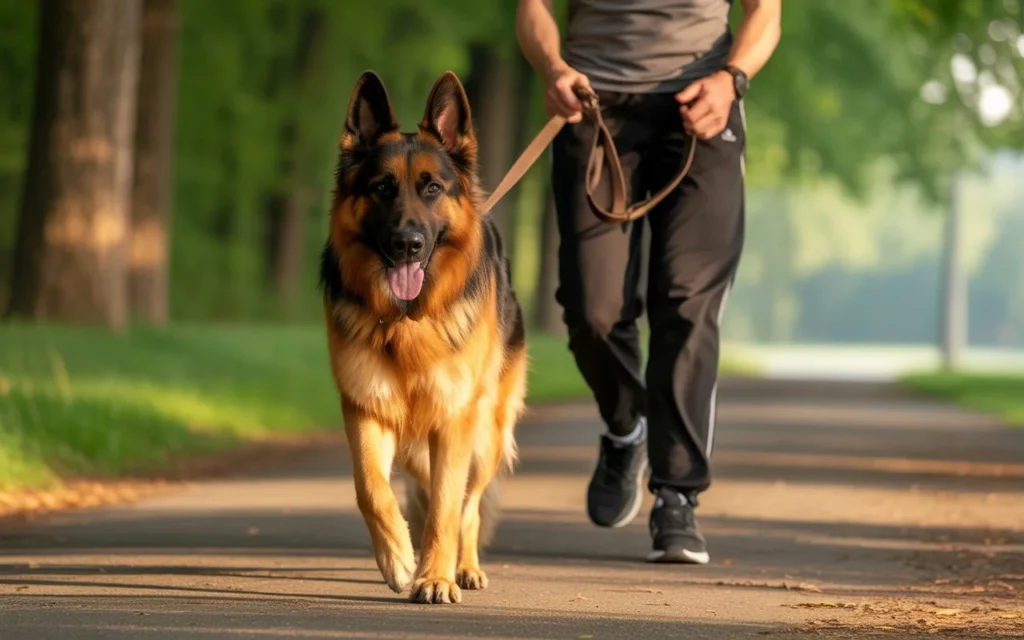
Adult GSDs need a minimum of 1 to 2 hours of vigorous physical activity daily. Not a walk around the block. Actual vigorous exercise — running, fetch, structured walks with directional changes, off-leash play in a secure area.
Mental Stimulation — As Important as Physical Exercise
This is the one most owners underestimate.
A GSD that has run five kilometers but received no mental engagement still has an active mind looking for something to do. Twenty minutes of training or puzzle feeding can produce more genuine calm than an hour of physical exercise alone.
Practical options:
- Obedience training — 10 to 15 minutes, multiple times daily
- Scent work — hide treats for the dog to find
- Puzzle feeders — make the dog work for meals
- Learning new commands — GSDs thrive on having a job
Consistent Training and Clear Boundaries
A GSD living in a household with inconsistent rules will not settle as reliably as one in a structured environment.
This is not rigidity for its own sake. German Shepherds are happiest when they understand exactly what is expected of them. Ambiguity creates anxiety. Anxiety creates the restless, unsettled behavior owners mistake for hyperactivity.
Diet and Nutrition
Less discussed — but genuinely relevant.
A dog eating a diet high in processed ingredients and artificial additives tends to show higher baseline restlessness than one eating clean, whole-food meals. The gut-brain connection is real and documented — chronic low-grade gut inflammation from poor diet quality often presents as anxiety and reactivity.
For GSD owners thinking about diet as part of the behavioral picture, the nutritional foundation for German Shepherd puppies covers what healthy development looks like from the ground up — and how diet choices in the early months shape behavioral patterns long-term.
Neutering — More Nuanced Than Most Owners Expect
Neutering does not reliably calm a GSD.
Early neutering — before 18 months in males — has been associated with increased anxiety and fear-based reactivity in some studies. The hormones involved in adolescent development play a role in the maturation process, and removing them before that process completes can affect behavioral development.
This is worth discussing with your vet before making the decision based purely on the assumption that neutering will solve a hyperactivity problem.
Signs Your GSD Is Maturing and Settling
These are the markers experienced owners watch for:
- Settling voluntarily without being asked
- Eye contact duration increasing — a sign of growing attentiveness
- Recovering from excitement faster — reacts but returns to baseline quicker
- Sleeping more deeply — genuinely resting rather than crashing from exhaustion
- Less reactive to familiar stimuli — things that triggered barking now get a glance
- Better focus during training — able to work longer without losing attention
These changes accumulate gradually. Most owners notice in retrospect that something shifted rather than experiencing a clear before-and-after moment.
What to Do If Your GSD Is Not Calming Down
Some GSDs remain genuinely difficult past 3 years. When that happens, examine why rather than simply waiting longer.
Questions worth asking:
- Is daily exercise genuinely vigorous and consistent?
- Is mental stimulation built into every day?
- Are training boundaries consistent across all household members?
- Is diet quality adequate?
- Is there an underlying anxiety component that training alone will not address?
A GSD still restless at 3 years typically has one or more of these factors working against them. Identifying which one produces faster results than waiting for age to solve it.
The Long Hair GSD — Any Difference?
Long Hair German Shepherds share the same temperament, energy levels, and developmental timeline as standard coat GSDs. The coat difference does not influence behavior.
What differs is the grooming requirement and the additional moisture retention between toes that can contribute to skin issues in active dogs. The Long Hair German Shepherd complete owner’s guide covers the full care picture including temperament and exercise needs specific to this coat type.
Diet, Fruit, and Behavioral Health in GSDs
One area owners often overlook entirely is the role of diet variety and treat choices in overall behavioral health.
GSDs eating nutrient-rich, varied diets — including appropriate fruits and vegetables as occasional treats — tend to show better coat condition, steadier energy, and more consistent behavior than those eating monotonous processed diets.
If you are thinking about expanding your GSD’s diet with safe fruit options, our guide on fruits German Shepherd puppies can safely eat covers exactly which options support development and which to avoid entirely.
Frequently Asked Questions
At what age do German Shepherds calm down?
Most GSDs show noticeably calmer behavior from 2 to 3 years of age. The adolescent phase between 6 and 18 months is typically the most intense. Age alone does not determine calmness — exercise, mental stimulation, and consistent training all play significant roles.
Do female German Shepherds calm down faster than males?
Generally yes — female GSDs tend to mature slightly faster and often show calmer behavior earlier in adolescence. Individual variation is significant though, and a well-exercised male will behave calmer than an under-stimulated female at any age.
Will neutering my German Shepherd calm him down?
Not reliably — and early neutering may increase anxiety in some cases. Exercise and mental stimulation have more reliable effects on behavior than neutering alone.
My 4-year-old GSD is still hyperactive — is something wrong?
Evaluate exercise, mental stimulation, diet, and training consistency first. Most 4-year-old GSDs that remain genuinely hyperactive are not receiving adequate daily exercise or mental engagement. If those factors are addressed and behavior persists, a veterinary behavioral assessment is worthwhile.
How much exercise does a GSD need to actually settle?
Adult GSDs need a minimum of 1 to 2 hours of vigorous exercise daily. Mental stimulation on top of physical exercise produces the best behavioral results.
Can a GSD ever be too calm suddenly?
Yes — sudden behavioral changes toward unusual calm in a previously energetic dog warrant veterinary attention. Sudden lethargy can indicate pain, illness, or a health condition rather than desirable settling.
Final Summary
- Most German Shepherds calm down noticeably between 2 and 3 years of age
- The adolescent phase — 6 to 18 months — is the most intense and challenging period
- Exercise, mental stimulation, and training consistency matter as much as age
- Adult GSDs need minimum 1 to 2 hours of vigorous daily exercise to settle properly
- Diet quality influences baseline energy and anxiety levels meaningfully
- Neutering does not reliably calm a GSD — address exercise and training first
- GSDs still restless at 3 years typically have one or more unmet needs — identify and address those directly
For more German Shepherd guides covering behavior, health, training, and nutrition, explore the complete library at dogcarecompass.com.
Pingback: Dog Reverse Sneezing Home Remedy: Causes, Relief Tips, and When to Worry - Dog Care Compass