
What Fruits Can Dogs Eat? Complete Safe and Toxic Guide (2026)

A few months ago, a friend called me in a panic. Her Labrador had snatched a handful of grapes off the kitchen counter while she was looking away. She had no idea whether to rush to the emergency vet or wait and see. That ten-minute conversation reminded me just how many dog owners are genuinely unsure about something as seemingly simple as fruit.
The truth is, some fruits are genuinely good for dogs. Others are harmless in small amounts. And a few can cause organ failure even in quantities that seem insignificant.
What fruits can dogs eat? Dogs can safely eat papaya, blueberries, watermelon, dragon fruit, guava, raspberries, and jicama among others. Grapes, star fruit, cherries, and avocado are toxic and must never be given. Preparation method and portion size matter as much as which fruit you choose.
Quick Reference — Safe and Toxic Fruits for Dogs
| Fruit | Safe? | Key Note |
|---|---|---|
| Papaya | Yes | Remove seeds and skin |
| Blueberries | Yes | Excellent — no preparation needed |
| Watermelon | Yes | Remove seeds and rind |
| Dragon fruit | Yes | Remove skin only |
| Guava | Yes | Wash skin, remove seeds for small dogs |
| Raspberries | Yes | Small amounts only |
| Jicama | Yes | Flesh only — skin is toxic |
| Banana | Yes | High sugar — small amounts |
| Mango | Yes | Remove pit and skin |
| Lotus root | Yes | Must be cooked before serving |
| Lychee | Caution | Seeds toxic — remove completely |
| Durian | Caution | Very high sugar and fat |
| Tamarind | No | Too much sugar and acid |
| Star fruit | Never | Toxic — causes kidney failure |
| Grapes | Never | Toxic — causes kidney failure |
| Cherries | Never | Pits contain cyanide compounds |
| Avocado | Never | Persin toxicity — all parts dangerous |
| Raisins | Never | Dried grapes — more concentrated toxicity |
Why Fruits Affect Dogs Differently Than Humans
This context matters before anything else.
Dogs process sugar differently than humans. A piece of fruit that represents a negligible sugar hit for a 70kg adult delivers a proportionally significant glucose load to a 10kg dog. Portion sizes that seem trivially small by human standards are genuinely meaningful for dogs.
Dogs also lack certain digestive enzymes that humans use to process plant material efficiently. High-fiber fruits in large amounts cause digestive upset in dogs that would be completely manageable for a human eating the same quantity.
And most critically — some fruits contain compounds metabolized harmlessly by humans but cause organ damage in dogs. Grapes are the clearest example. The toxin responsible for grape-related kidney failure in dogs has not been definitively identified, which means there is no established safe amount. A dog eating what seemed like an insignificant number of grapes has developed kidney failure. This is not theoretical risk — it is documented clinical reality.
Understanding these differences is what separates informed fruit feeding from dangerous guesswork.
Safe Fruits for Dogs — Complete Breakdown

Papaya — Best for Digestive Health
Papaya is one of the most consistently recommended fruits for dogs — and the reason is specific. The natural enzymes in papaya, particularly papain, actively support protein digestion and reduce gut inflammation.
For dogs with sensitive stomachs or digestive irregularity, papaya provides quiet support that complements rather than disrupts the digestive process. The sugar content sits at a moderate 7.8g per 100g — manageable in appropriate portions for most healthy dogs.
Remove seeds and skin before serving. Cut into small pieces. Two to three pieces is a generous serving for most dogs.
I have seen dogs with chronic digestive sensitivity respond noticeably well to papaya as a regular occasional treat — not because it is medicinal, but because the enzymes genuinely support what the gut is already trying to do. Everything about safe preparation is in our papaya guide.
Blueberries — The Safest Starting Point
Blueberries are the fruit I recommend first to any dog owner introducing fruit treats. Small enough to serve whole. Soft enough to pose no choking risk. Nutritionally dense enough to justify the treat.
Each blueberry delivers antioxidants, vitamin C, and fiber in a package even sensitive digestive systems handle easily. Three to five blueberries is an appropriate serving for most dogs. No complex preparation required — wash and serve.
The antioxidant content is genuinely impressive. For senior dogs dealing with age-related inflammation, consistent small amounts of antioxidant-rich foods like blueberries contribute to better long-term health outcomes than supplements alone.
Watermelon — Natural Hydration in Hot Weather
Watermelon is 92% water. In hot weather or after exercise, a few small pieces of plain watermelon flesh provide natural hydration alongside vitamins A, B6, and C.
Remove every seed — not acutely toxic but cause digestive irritation. Remove the rind completely — the green outer layer is too fibrous and causes stomach upset. Plain flesh only, cut into cubes appropriate for your dog’s size.
Two to three cubes after a summer walk is a genuinely useful treat rather than just an indulgence.
Dragon Fruit — Low Risk, Genuinely Nutritious
Dragon fruit is one of the more relaxed options in this category. The seeds are tiny and harmless — unlike many other fruits where seed removal is critical. The flesh is mild, moderately sweet, and well tolerated by most dogs.
At 8g of sugar per 100g and just 0.4g of fat, dragon fruit is clean enough for dogs on weight management and breeds with pancreatitis susceptibility. Remove the skin — tough and indigestible — and serve plain flesh in small cubes.
The full breakdown including nutritional profile is in our dragon fruit guide.
Guava — Exceptional Vitamin C Content
At 228mg of vitamin C per 100g, guava delivers more of this antioxidant than almost any other commonly available fruit. An orange contains around 53mg. Guava delivers more than four times that amount.
The fiber content at 5.4g per 100g is equally impressive — among the higher counts of any fruit regularly offered to dogs.
Wash the skin thoroughly — edible but carries surface residues. Remove seeds for small dogs and sensitive stomachs. Serve plain flesh two to three times per week. Our guava guide covers everything about preparation and safe amounts.
Raspberries — Antioxidant Rich, Very Low Sugar
Raspberries contain naturally occurring xylitol — the compound acutely toxic to dogs in concentrated forms. The levels in fresh raspberries are far too low to cause toxicity at normal treat amounts. Two or three raspberries occasionally is completely safe.
At just 4.4g of sugar per 100g, raspberries are one of the better choices for dogs whose owners want to minimize sugar intake while still offering fruit variety.
Jicama — The Lowest Sugar Option
Jicama is technically a root vegetable but belongs in this guide because it is the lowest-sugar, highest-fiber option in the entire category — and genuinely underused as a dog treat.
At 1.8g of sugar per 100g, jicama is appropriate even for dogs that cannot handle most fruits. The prebiotic fiber supports gut health directly. The flesh is safe — the skin, seeds, and leaves contain rotenone and are toxic.
Flesh only, peeled completely, seeds removed. Full preparation details in our jicama guide.
Lotus Root — Nutritious but Must Be Cooked
Lotus root offers high fiber, vitamin C, and potassium with just 0.1g of fat per 100g. The preparation requirement is non-negotiable — lotus root grows in aquatic environments and must be cooked before serving to eliminate waterborne bacteria.
Steam or boil for five to seven minutes in plain water. Peel completely, cut into small pieces, serve plain. Our lotus root guide covers the full method.
Fruits Requiring Extra Caution
Lychee — Safe Flesh, Toxic Seeds
Lychee flesh is not toxic to dogs in small amounts. The seeds contain saponins and other compounds that cause hypoglycemia and neurological symptoms. A single seed swallowed whole creates genuine risk that escalates quickly.
At 15.2g of sugar per 100g, lychee is also one of the higher-sugar options — not appropriate for diabetic dogs or those managing weight.
Fresh only, seeds removed completely, skin discarded, one to two small pieces maximum. The full seed risk breakdown is in our lychee guide.
Durian — Very Small Amounts Only
Durian flesh is not toxic but the combination of 19.1g of sugar and 5.3g of fat per 100g makes it one of the most restricted recommendations in dog nutrition. One to two teaspoons of plain flesh for large dogs, occasionally — nothing more.
Seeds contain cyclopropyl fatty acids that are toxic — remove every seed without exception. Full risk profile in our durian guide.
Tamarind — Not Recommended
Tamarind is not acutely toxic but 38.8g of natural sugar per 100g, a strong laxative effect, and high acidity make it a poor choice at any portion size. The risks consistently outweigh any nutritional benefit.
Our tamarind guide explains exactly why this fruit belongs in the avoid category.
Fruits That Are Toxic — Never Feed These
Grapes and Raisins
The toxin responsible for kidney failure in dogs has not been identified — which means there is no established safe dose. Cases of kidney failure exist in dogs that ate what appeared to be a negligible amount.
Raisins are dried grapes. Dehydration concentrates whatever toxic compound is present. More dangerous per gram than fresh grapes.
No amount is acceptable. If your dog eats even one grape — call your vet immediately. Do not wait for symptoms.
Star Fruit — Direct Kidney Toxicity
Star fruit contains oxalic acid and unidentified nephrotoxic compounds that directly damage kidney tissue. There is no established safe amount for any dog — healthy or otherwise.
If your dog eats any amount of star fruit — contact your vet immediately. ASPCA Poison Control is available 24 hours at 888-426-4435.
Symptoms, emergency response, and full toxicity details are in our star fruit guide.
Cherries
Cherry pits contain cyanogenic glycosides — compounds that release cyanide when metabolized. The flesh is not toxic but the pit-to-flesh ratio makes safe preparation impractical. Skip cherries entirely.
Avocado
All parts of the avocado plant contain persin — a fungicidal toxin causing vomiting, diarrhea, and heart muscle damage in dogs. Fruit, seed, leaves, and bark are all dangerous. No part of an avocado is appropriate for dogs in any form.
Sugar Content Comparison — All Fruits Covered
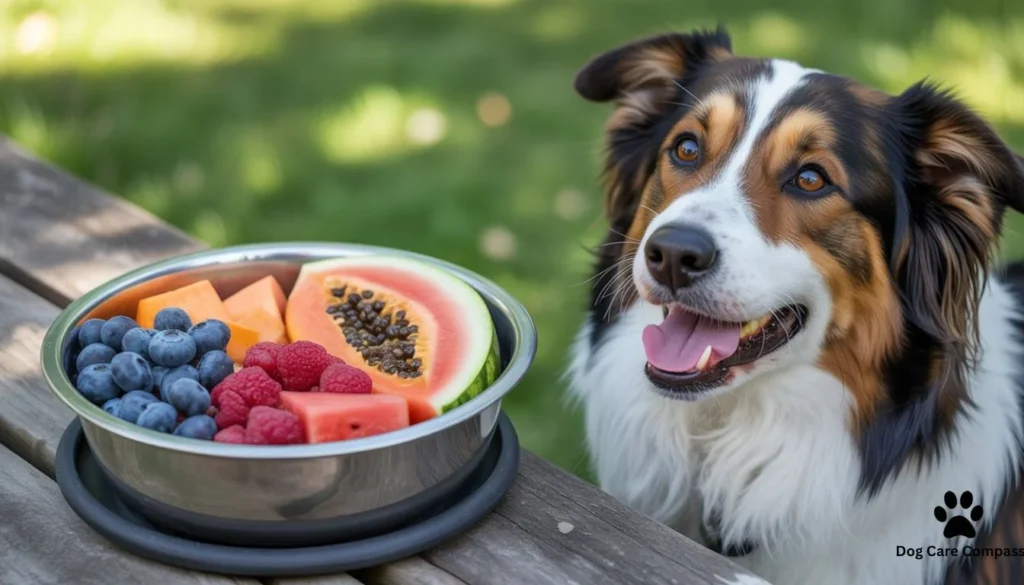
Understanding sugar content helps owners make better decisions — especially for diabetic or overweight dogs.
| Fruit | Sugar per 100g | Rating |
|---|---|---|
| Jicama | 1.8g | Lowest |
| Raspberries | 4.4g | Very low |
| Watermelon | 6.2g | Low |
| Papaya | 7.8g | Low-moderate |
| Dragon fruit | 8g | Moderate |
| Guava | 8.9g | Moderate |
| Banana | 12g | High |
| Lychee | 15.2g | High |
| Durian | 19.1g | Very high |
| Tamarind | 38.8g | Extreme |
For dogs managing diabetes or weight issues, the top of this table is where to focus. The full dietary approach for diabetic dogs is covered in our diabetic dog diet guide.
How Much Fruit Is Safe? — Feeding Chart by Dog Size
| Dog Size | Weight | Daily Treat Budget | Approximate Fruit Amount |
|---|---|---|---|
| Small | Under 10 lbs | 40–60 kcal | 2–3 small pieces |
| Medium | 10–50 lbs | 80–150 kcal | 4–6 small pieces |
| Large | 50+ lbs | 150–250 kcal | Small handful |
These are maximums across all treats combined — not fruit-specific allowances on top of other treats.
Fruits and German Shepherd Puppies
German Shepherd puppies have specific considerations around fruit introduction. Their developing digestive systems handle new foods differently than adult dogs, and the wrong choice at the wrong time causes problems that take weeks to resolve.
Safest starting points from 8 weeks onward: blueberries and small pieces of watermelon. A broader range becomes appropriate from 3 to 4 months as the digestive system matures.
Our dedicated GSD puppy fruit guide covers safe options, toxic ones, and portion guidelines by age in complete detail.
What to Do If Your Dog Eats a Toxic Fruit
Speed matters. Do not wait for symptoms.
- Identify exactly what was eaten and how much
- Call your vet immediately
- Contact ASPCA Poison Control at 888-426-4435 if vet is unavailable
- Do not induce vomiting unless vet explicitly instructs
- Note the time and bring any remaining fruit to the appointment
For grapes, star fruit, or cherries — treat as medical emergency regardless of quantity. Knowing when vomiting needs emergency care versus home monitoring helps owners respond confidently.
Frequently Asked Questions
Can dogs eat fruit every day?
Two to three times per week is more appropriate than daily for most fruits. Daily feeding adds cumulative sugar without additional nutritional benefit. Blueberries and jicama are exceptions — their very low sugar content makes them suitable for more regular inclusion.
What is the single safest fruit for dogs?
Blueberries. Small, soft, nutritionally dense, no preparation complexity, and no toxic components. Start here before introducing anything else.
Are fruits necessary in a dog’s diet?
No. Dogs do not require fruit to meet nutritional needs. Fruits are supplementary treats — they add variety and some beneficial nutrients, but a well-balanced dog diet functions perfectly without them.
Can dogs be allergic to fruit?
Yes — though fruit allergies are less common than protein allergies. Signs include skin irritation, digestive upset, or excessive itching after eating a specific fruit. Introduce new fruits one at a time and monitor for 24 hours.
Is dried fruit safe for dogs?
No. Dehydration concentrates sugar dramatically — sometimes two to three times the content per gram. Dried fruit often also contains added sugar or preservatives. Fresh only for all fruits.
What about fruit juice for dogs?
Not recommended. Juice removes the fiber that moderates sugar absorption. Commercial juices contain added ingredients. Fresh whole fruit only.
My dog ate an unknown fruit — what do I do?
Identify the fruit immediately if possible. If it is on the toxic list — call your vet without waiting. If it is on the safe list — monitor for 24 hours for any digestive reaction. If you cannot identify it — treat as potentially toxic and call your vet.
Final Summary
- Safe choices include papaya, blueberries, watermelon, dragon fruit, guava, raspberries, and jicama
- Lychee and durian require careful preparation and strict portion control
- Tamarind is not recommended despite not being acutely toxic
- Grapes, star fruit, cherries, and avocado are toxic — never feed these
- Follow the 10% treat rule — use the feeding chart above
- Fresh only — dried fruit, juice, and processed products are not appropriate
- Introduce one new fruit at a time and monitor for 24 hours
- If your dog eats a toxic fruit — call your vet immediately
Start today: Pick one safe fruit from this guide, prepare it correctly, and offer a single small piece to your dog. Watch for 24 hours. That is how a safe, varied fruit rotation begins — one careful introduction at a time.
For individual deep-dive guides on every fruit covered here, browse the complete library at dogcarecompass.com.
Pingback: Homemade Dog Food for Kidney Disease: The Complete Diet Guide - Dog Care Compass