
German Shepherd vs Wolf in Yellowstone: Differences, Similarities & Real Facts
Yellowstone National Park is home to some of the most stunning wildlife in the world. Among its famous residents are the wolf and the German Shepherd, both of which share a connection through their wild ancestors. However, the two are vastly different in many ways.
In this article, we’ll explore the German Shepherd vs Wolf in Yellowstone comparison in detail. From their physical traits to their behavior and bite force, we will examine what sets them apart and what they have in common.
If you’re interested in understanding the breed itself, you may also want to explore our detailed guide on the long coat variation of the German Shepherd.
What Does “German Shepherd Wolf Yellowstone” Actually Mean?
The phrase “German Shepherd Wolf Yellowstone” might be searched often, but what does it really mean? This combination likely refers to the German Shepherd dog breed’s resemblance to wolves, and the fascination with wolves in Yellowstone National Park. Many people wonder if German Shepherds are related to wolves, or if they share any traits. This is where the lines between domesticated dogs and wild predators get blurred.
Wolves in Yellowstone have been an important part of the park’s ecosystem, and many wonder how these majestic animals compare to the German Shepherd, which also shares certain wolf-like characteristics.
Are German Shepherds Related to Wolves?
Yes, German Shepherds are related to wolves. Like all domestic dogs, the German Shepherd is a descendant of the wolf. While they are much more domesticated and trained for specific purposes like protection and guarding, their lineage is rooted in the wild wolf. The difference lies in the thousands of years of selective breeding that has made the German Shepherd a loyal and trained companion for humans.
It’s important to note that while both share a common ancestor, a German Shepherd and a wolf are different species with distinct behavioral traits. Their genetic makeup still shows some wolf DNA, but it’s vastly different in terms of domestication and function.
Understanding their ancestry also helps explain why German Shepherds require proper nutrition and structured care during their early development.
Physical Differences: German Shepherd vs Wolf
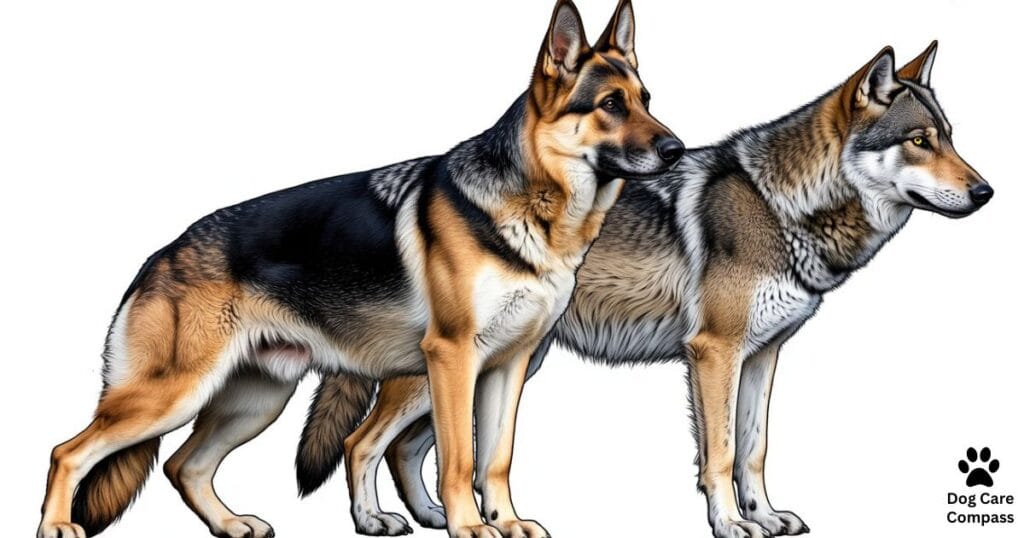
When it comes to physical traits, German Shepherds and wolves have noticeable differences. Wolves, especially those in Yellowstone, are typically larger and have a more muscular build designed for survival in the wild. Wolves weigh between 70 to 115 pounds, while a German Shepherd typically weighs between 50 to 90 pounds.
A wolf’s coat is often thicker and denser, suited for cold climates, while the German Shepherd’s coat is shorter and more manageable in domestic settings. Wolves also have longer, thicker tails and larger paws that help them in hunting and surviving in harsh conditions. The German Shepherd, on the other hand, is bred for working purposes, with sharp, alert features that make them ideal for protection.
| Feature | German Shepherd | Wolf |
|---|---|---|
| Weight | 50-90 pounds | 70-115 pounds |
| Height | 22-26 inches (at the shoulder) | 26-32 inches (at the shoulder) |
| Coat | Short to medium-length, thick | Long, dense, thicker fur for cold climates |
| Tail | Bushy, medium length | Long, bushy, thicker tail |
| Ears | Pointed, erect | Pointed, erect |
| Paws | Rounded and compact | Larger, more rugged paws |
| Snout | Shorter, more defined | Longer, narrower |
| Muscle Mass | Athletic and toned | Strong and muscular for survival in the wild |
Bite Force Comparison: Wolf vs German Shepherd
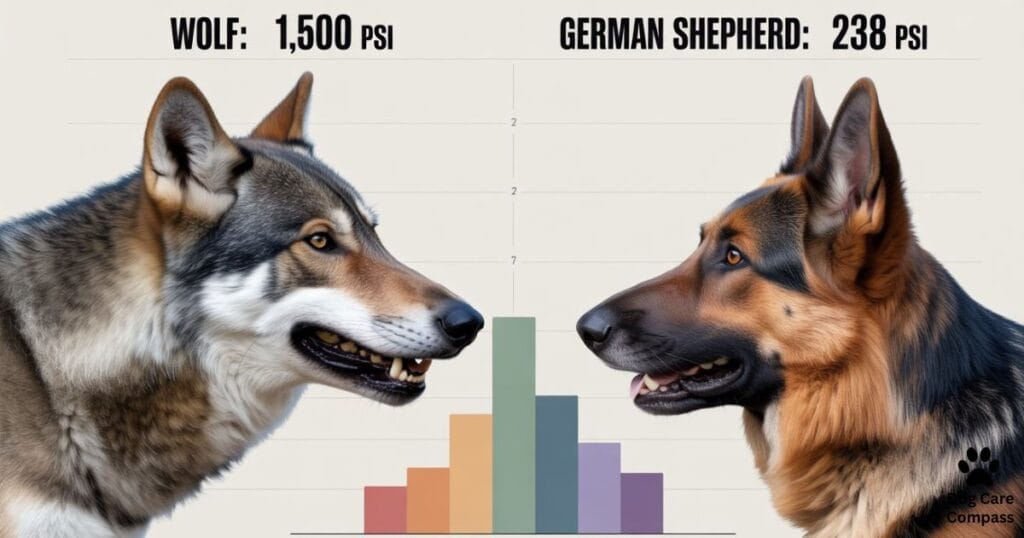
The bite force of a wolf is significantly stronger than that of a German Shepherd. Wolves can exert a bite force of around 1,500 psi (pounds per square inch), whereas a German Shepherd has a bite force of about 238 psi. This is one of the key differences that set these animals apart. Wolves need their powerful bite for survival—whether it’s catching prey or defending their pack.
On the other hand, German Shepherds, despite their strength, are more accustomed to protecting their human families rather than hunting for survival. This difference in bite strength also affects how each animal uses its jaws. Wolves use their bites to tear through meat, while German Shepherds use theirs to hold and guard.
Temperament Differences: Domesticated Guardian vs Wild Predator
When it comes to temperament, there’s a huge difference between a German Shepherd and a wolf. German Shepherds are known for their intelligence and trainability. They can be excellent family pets and loyal guardians. Their behavior is shaped by thousands of years of domestication, and they are bred to follow commands and protect their territory.
Wolves, however, are wild predators with instincts designed for survival in harsh environments. They are highly social animals, but their behavior is driven by instincts rather than training. Wolves in Yellowstone often form tight-knit packs for hunting, whereas a German Shepherd forms bonds with humans and can be trained for various tasks.
Similar to other high-drive working breeds, proper training and mental stimulation are essential to prevent behavioral issues.
Can a German Shepherd Look Like a Wolf?
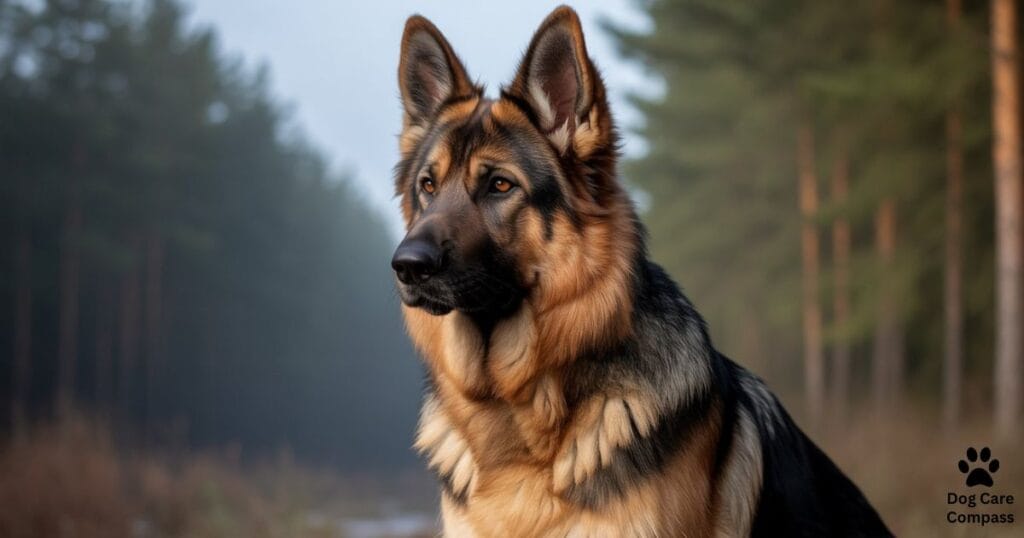
Sometimes, it’s easy to see why people may think a German Shepherd looks like a wolf. The German Shepherd has a wolf-like appearance, especially with their pointed ears, sharp eyes, and thick fur. Some people even mix them up with wolf hybrids, which are a cross between a dog and a wolf.
While the German Shepherd’s appearance may resemble a wolf, it’s important to remember that they are completely different species. The German Shepherd is a domestic dog, while the wolf remains a wild animal, with different behavioral instincts and needs. Despite their similarities in looks, they serve entirely different roles.
Were Real Wolves Used in Yellowstone?
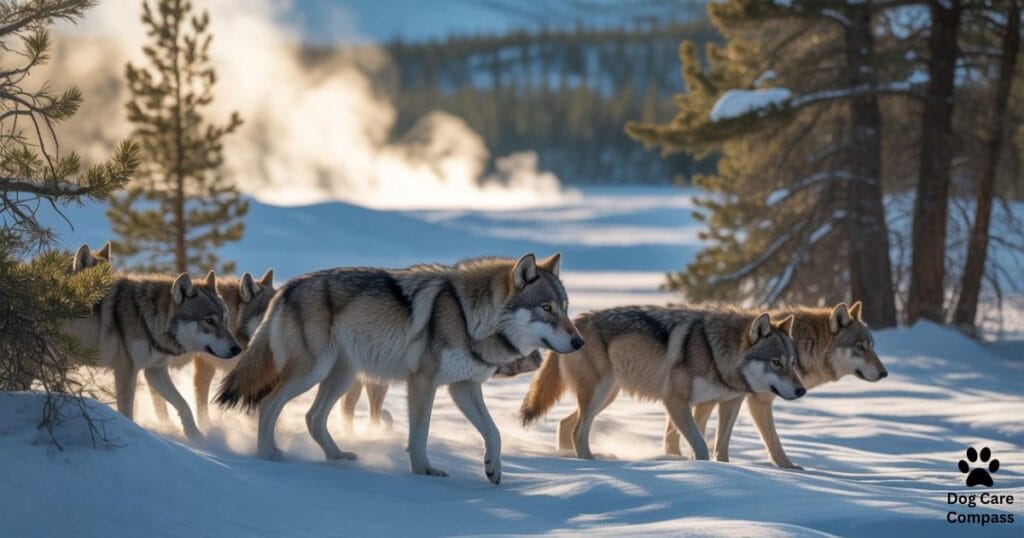
Yes, real wolves were brought back to Yellowstone National Park in 1995 after being extirpated from the area for decades. Their reintroduction has helped restore balance to the park’s ecosystem, particularly by controlling elk populations. While wolves in Yellowstone are the true wild counterparts of the domesticated German Shepherd, the Yellowstone wolf population is known for their unique adaptation to the park’s environment.
The reintroduction of wolves in Yellowstone has been a major conservation success story. It has influenced not only the animal populations but also the vegetation and the environment. This real-world example of wolves being part of the Yellowstone habitat sets them apart from domesticated dogs.
Which One Is Stronger?
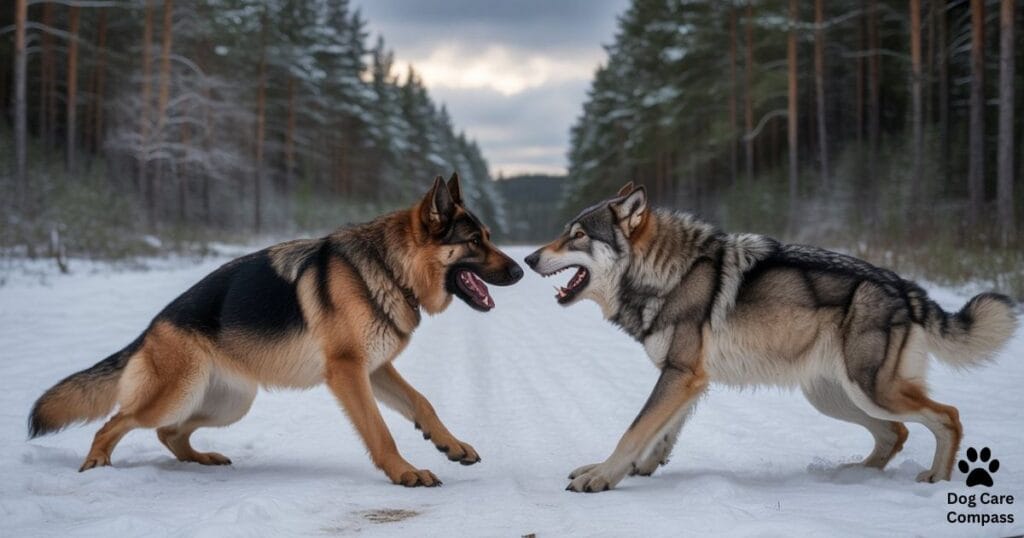
In terms of strength, wolves are definitely stronger than German Shepherds. While the German Shepherd is a strong dog, known for its athleticism, wolves are much better adapted to surviving in the wild. They are built for endurance, and their strength comes from the need to hunt and protect their packs. German Shepherds, while strong and protective, rely on human guidance and cannot survive as wolves do in the wild.
When it comes to survival, wolves are built to endure harsh climates and hunt for food. The German Shepherd, while strong in its own right, is meant to work in collaboration with humans rather than survive on its own in the wild.
Can You Own a Wolf or Wolf Hybrid?
Owning a wolf or a wolf hybrid is illegal in many states across the USA, and even when it’s legal, it comes with many restrictions. Wolf hybrids, which are a mix between a wolf and a domestic dog, have become more popular, but they can be difficult to manage due to their wild instincts.
Many people believe that owning a wolf hybrid is similar to owning a German Shepherd, but in reality, a wolf hybrid can be much more dangerous and challenging to train. If you’re interested in a dog that looks like a wolf, a German Shepherd is a much safer and more manageable option.
Quick Comparison Summary
| Feature | German Shepherd | Wolf |
|---|---|---|
| Size | 50-90 pounds | 70-115 pounds |
| Bite Force | 238 psi | 1,500 psi |
| Temperament | Loyal, trainable | Wild, instinctive |
| Role | Protection, companionship | Predator, survival |
| Habitat | Domestic, home | Wild, Yellowstone |
Final Verdict
While German Shepherds and wolves share a common ancestor, they are vastly different in many aspects, from their physical traits to their behavior and bite strength. In Yellowstone, wolves play a critical role in the park’s ecosystem, while German Shepherds continue to serve humans in various roles.
Ultimately, understanding the differences between a German Shepherd and a wolf allows us to appreciate both animals for their unique qualities. Whether you’re interested in the Yellowstone wolves or a German Shepherd’s protective nature, both animals deserve respect for their incredible abilities.
If you want to learn more about the German Shepherd breed, grooming needs, and ownership costs, read our detailed owner guide.
Are German Shepherds related to wolves?
Yes, German Shepherds are descendants of wolves, though they have been domesticated over thousands of years.
What is the difference in size between a German Shepherd and a wolf?
Wolves are generally larger, weighing between 70 to 115 pounds, whereas German Shepherds typically weigh between 50 to 90 pounds.
Can a German Shepherd survive in the wild like a wolf?
No, German Shepherds are domesticated and rely on humans for care and protection, while wolves are built for survival in the wild.
What is the bite force comparison between a German Shepherd and a wolf?
A wolf’s bite force is much stronger, around 1,500 psi, compared to a German Shepherd’s 238 psi.
Can you own a wolf or a wolf hybrid?
Owning a wolf hybrid is illegal in many areas and requires special permits, as they can be difficult to manage due to their wild instincts.