

Can Dogs Eat Lychee? What Every Dog Owner Should Know Before Sharing
Can dogs eat lychee? If you have ever peeled open this small, fragrant fruit and wondered whether your dog could have a piece, you are asking exactly the right question before acting. The answer is yes — but with conditions that matter more than most fruit safety guides acknowledge.
Lychee flesh is safe for dogs in small amounts. The seeds and skin are a different matter entirely. This guide covers everything you need to know — what lychee contains, how it benefits dogs, what the real risks are, and exactly how to prepare it safely.
Quick Answer — Is Lychee Safe for Dogs?
| Question | Answer |
|---|---|
| Is lychee safe for dogs? | Yes — flesh only, small amounts |
| Can dogs eat lychee skin? | No — tough and indigestible |
| Are lychee seeds safe? | No — toxic, remove completely |
| Safe for puppies? | Not recommended under 4 months |
| Safe for diabetic dogs? | No — too much natural sugar |
What Is Lychee?
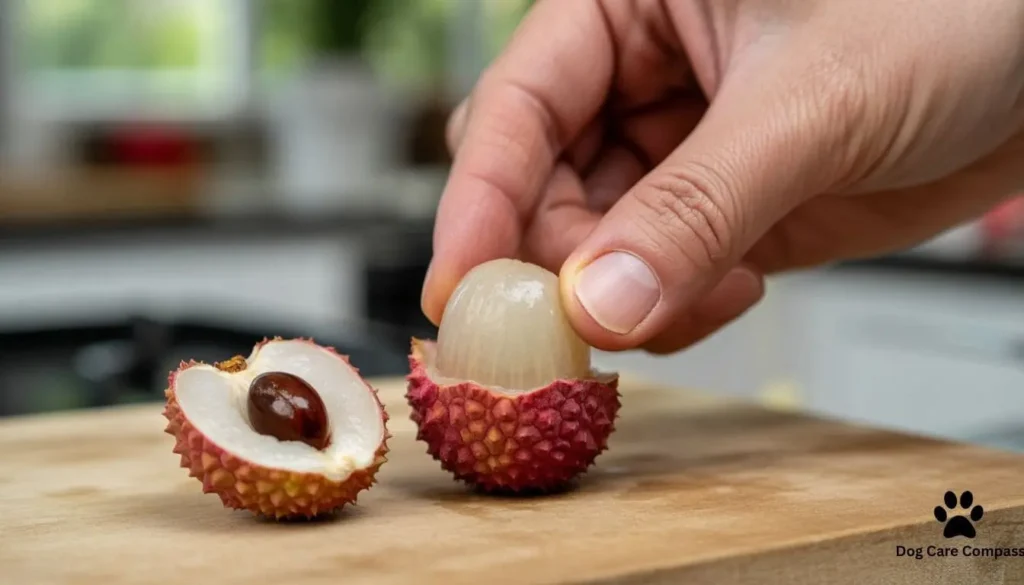
Lychee (Litchi chinensis) is a small tropical fruit native to southern China, now cultivated widely across Southeast Asia, India, and parts of Africa. The outer skin is rough and pinkish-red, the flesh inside is white, juicy, and sweet, and at the center sits a single large dark seed.
It is eaten fresh, dried, canned, and used in desserts and drinks across much of Asia. The flavor is floral and sweet — somewhere between a grape and a rose water candy. For dog owners who eat lychee regularly, the question of sharing it comes up naturally.
The nutritional profile looks appealing on the surface. But lychee has a notably high sugar content that places it firmly in the occasional treat category for dogs — not a regular snack.
Nutritional Profile of Lychee (Per 100g)
| Nutrient | Amount |
|---|---|
| Calories | 66 kcal |
| Carbohydrates | 16.5g |
| Natural Sugar | 15.2g |
| Dietary Fiber | 1.3g |
| Protein | 0.8g |
| Fat | 0.4g |
| Vitamin C | 71.5mg |
| Potassium | 171mg |
| Copper | 0.1mg |
| Folate | 14mcg |
Two numbers stand out immediately. Vitamin C at 71.5mg per 100g is genuinely impressive — higher than many fruits commonly recommended for dogs. But natural sugar at 15.2g per 100g is also significant — nearly double the sugar content of dragon fruit, and far above the near-zero levels found in options like jicama.
That contrast defines how lychee fits into a dog’s diet: genuinely nutritious in small amounts, problematic in large ones.
Is Lychee Safe for Dogs?
Yes — lychee flesh is not toxic to dogs. A small piece of properly prepared lychee is unlikely to cause any harm to a healthy adult dog.
The problem is not the flesh itself — it is the seed. Lychee seeds contain compounds that are harmful to dogs, and a single seed swallowed whole creates a risk that goes beyond simple digestive upset. The skin, while not toxic, is tough enough to cause gastrointestinal irritation and represents a choking hazard for smaller breeds.
Prepared correctly — flesh only, seed fully removed, skin discarded — lychee is a reasonable occasional treat for most healthy dogs.
Health Benefits of Lychee for Dogs
Vitamin C Delivers Strong Antioxidant Support
At 71.5mg of vitamin C per 100g, lychee is one of the better natural sources of this antioxidant among fruits commonly available. While dogs synthesize their own vitamin C internally, additional dietary antioxidants support immune function, reduce inflammation, and help manage the oxidative stress that accumulates with age.
Senior dogs, dogs recovering from illness, and breeds prone to joint inflammation benefit most from consistent antioxidant support in their diet. Lychee delivers this in a meaningful quantity — even a small serving contributes.
Potassium Supports Heart and Muscle Health
171mg of potassium per 100g supports proper muscle contractions, nerve function, and heart rhythm in healthy dogs. For active working breeds — German Shepherds and Belgian Malinois in particular — potassium-rich foods contribute to recovery after physical exertion.
We discussed the relationship between potassium and dog health in detail when covering whether coconut water is safe for dogs — a guide worth reading for owners of dogs with kidney or heart conditions, where potassium management becomes more critical.
Hydration Support From High Water Content
Fresh lychee is approximately 82% water. As a juicy, high-moisture treat, it contributes meaningfully to daily fluid intake — particularly useful for dogs that are reluctant water drinkers or for active dogs in hot weather.
Copper and Folate for Cellular Health
Lychee contains modest amounts of copper and folate — both of which support red blood cell production, cellular energy metabolism, and connective tissue health. These are not the headline nutrients in lychee, but they contribute to the overall nutritional picture in small ways.
Risks of Feeding Lychee to Dogs
Lychee Seeds Are Toxic — Remove Every Time
This is the most critical point in this entire guide. Lychee seeds contain saponins and other compounds that are harmful to dogs. Ingestion can cause:
- Hypoglycemia — dangerous drop in blood sugar
- Vomiting and diarrhea
- Lethargy and weakness
- Neurological symptoms in severe cases
This is not a theoretical risk. Cases of lychee seed toxicity in dogs have been documented, and the consequences of a swallowed seed can escalate quickly. According to the ASPCA Animal Poison Control guidelines, fruit seeds and pits are among the most common sources of accidental toxicity in dogs.
If your dog swallows a lychee seed, contact your vet immediately. The ASPCA Poison Control hotline is available 24 hours at 888-426-4435.
Very High Sugar Content
At 15.2g of natural sugar per 100g, lychee is one of the more sugar-dense fruits in this category. To put that in perspective — tamarind aside, lychee contains roughly twice the sugar of dragon fruit and nearly eight times the sugar of jicama.
For healthy dogs in appropriate portions, this is manageable. But for dogs with diabetes, blood sugar instability, or weight issues, lychee is not an appropriate treat at all. Building a diet that genuinely supports stable blood sugar in dogs — especially those managing diabetes — requires careful attention to every source of dietary sugar, and lychee simply does not fit that picture. Owners managing diabetic dogs will find the full dietary approach covered in our homemade food guide for diabetic dogs.
Canned Lychee Is Off-Limits
Canned lychee is almost always preserved in heavy sugar syrup — dramatically amplifying the already significant natural sugar content. Some products also contain artificial sweeteners including xylitol, which is acutely toxic to dogs even in tiny amounts.
Always use fresh lychee only. Never offer canned, dried, or processed lychee products to your dog.
The Skin Causes Digestive Irritation
Lychee skin is rough, fibrous, and genuinely difficult for dogs to digest. While it is not toxic, swallowing pieces of skin can cause stomach upset, loose stools, and in smaller dogs represents a choking risk.
Remove the skin completely before serving — every time, without exception.
Overconsumption Causes Digestive Upset
Even fresh lychee flesh in large amounts delivers a sugar and fluid load that can overwhelm a dog’s digestive system. Loose stools, vomiting, and gas are the typical result of too much at once.
Start with one small piece on the first introduction and monitor over 24 hours. A dog that handles it well can have it occasionally in small amounts going forward.
Which Dogs Should Never Eat Lychee
Some dogs should avoid lychee entirely regardless of portion size:
- Dogs with diabetes or blood sugar regulation issues
- Overweight or obese dogs
- Dogs with kidney disease — potassium management required
- Dogs with a history of pancreatitis — though fat content is low, sugar load is a concern
- Puppies under 4 months — digestive systems too immature
- Any dog that tends to gulp food without chewing — seed ingestion risk
How to Safely Prepare Lychee for Dogs
- Choose fresh, ripe lychee — avoid canned or dried entirely
- Wash the outside under cold running water
- Peel the skin off completely — discard
- Split the flesh open and remove the seed fully — inspect carefully
- Cut the flesh into small pieces appropriate for your dog’s size
- Serve plain and fresh — nothing added, no syrup, no sugar
- Use immediately — do not store prepared lychee for later
According to PetMD’s canine nutrition guidelines, fresh lychee flesh without seeds or skin is safe for dogs in small amounts, but the seed represents a genuine toxicity risk that makes careful preparation non-negotiable.
How Much Lychee Can Dogs Eat? — Feeding Chart
| Dog Size | Weight | Safe Amount Per Serving |
|---|---|---|
| Small | Under 10 lbs | Half a piece — rarely |
| Medium | 10–50 lbs | 1–2 small pieces occasionally |
| Large | 50+ lbs | 2–3 small pieces occasionally |
“Occasionally” here means once a week at most — not a regular treat rotation. The sugar content makes frequency control more important with lychee than with lower-sugar options like papaya or jicama.
Lychee vs. Other Safe Fruits for Dogs
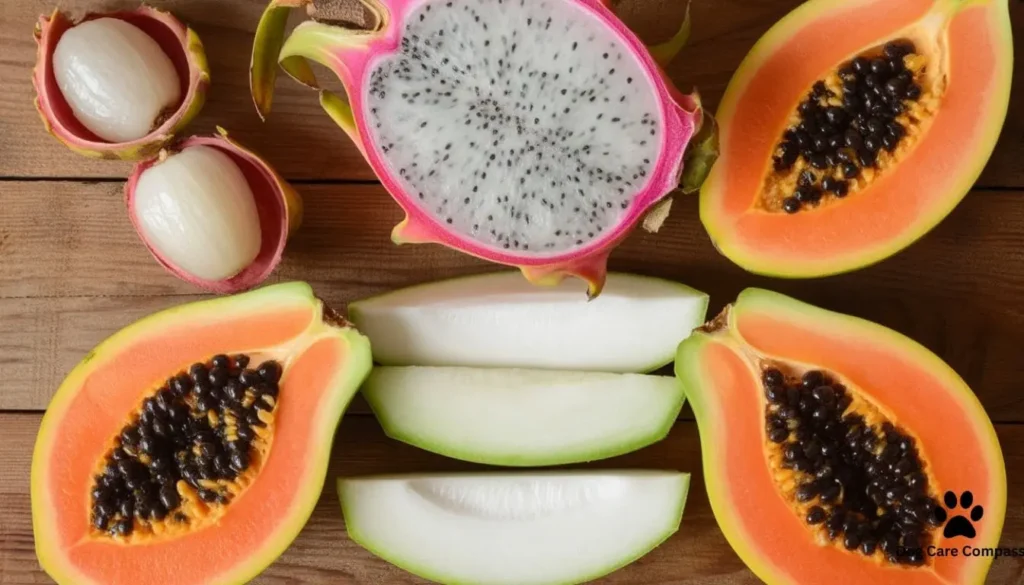
Since we have been building a complete reference for safe fruits for dogs, here is how lychee compares to what we have covered so far:
| Fruit | Safe? | Sugar per 100g | Seed Safety | Recommendation |
|---|---|---|---|---|
| Lychee | Caution | 15.2g | Seeds toxic | Occasional, flesh only |
| Dragon fruit | Yes | 8g | Seeds safe | Good regular option |
| Papaya | Yes | 7.8g | Seeds remove | Good regular option |
| Jicama | Yes | 1.8g | Seeds toxic | Excellent option |
| Lotus root | Yes | Low | N/A | Cook before serving |
| Durian | Caution | 19.1g | Seeds toxic | Very small amounts only |
| Tamarind | No | 38.8g | Seeds toxic | Not recommended |
Lychee sits in the middle of this list — safer than durian and tamarind in terms of overall toxicity, but richer in sugar than dragon fruit or papaya. For dogs that enjoy fruit treats, dragon fruit and papaya are more consistent everyday options.
For owners who want to understand the full spectrum of what makes some fruits safer than others — including why seed toxicity varies so dramatically between species — our guide on jicama covers the rotenone risk in detail, while the tamarind guide explains why some fruits are better avoided entirely regardless of portion size.
Can Puppies Eat Lychee?
Not recommended. Puppies under 4 months have immature digestive systems that handle new foods unpredictably. The sugar content in lychee is disproportionately impactful for small bodies, and the seed risk is more serious for puppies that tend to chew and swallow without much discrimination.
For older puppies over 4 months that are confidently eating solid food, one very small piece of flesh — carefully prepared — can be offered as an occasional curiosity. Watch for 24 hours before repeating.
What to Do If Your Dog Eats a Lychee Seed
Act immediately — do not wait for symptoms.
- Stay calm and assess how many seeds were eaten
- Call your vet right away
- Contact ASPCA Poison Control at 888-426-4435 if your vet is unavailable
- Note the time and approximate amount consumed
- Do not induce vomiting unless your vet specifically instructs you to
- Watch for vomiting, lethargy, weakness, or disorientation
Hypoglycemia from lychee seed ingestion can develop within hours. Early contact with a vet significantly improves the outcome. For understanding vomiting symptoms and when they require emergency care, our guide on vomiting in dogs helps owners assess severity accurately.
Frequently Asked Questions
Is lychee toxic to dogs?
The flesh is not toxic in small amounts. The seeds, however, contain compounds that can cause hypoglycemia and neurological symptoms in dogs. Remove the seed completely every single time — there are no exceptions to this rule.
Can dogs eat lychee every day?
No. The sugar content makes daily feeding inappropriate for most dogs. Once a week at most, in small amounts, for healthy adult dogs only.
Can dogs eat dried lychee?
Not recommended. Dried lychee is far more concentrated in sugar than fresh fruit — sometimes three to four times the sugar content per gram once water is removed. The dehydration process also makes it easier to accidentally ingest seed fragments. Fresh only.
Can dogs eat canned lychee?
No. Canned lychee is preserved in sugar syrup and may contain artificial sweeteners including xylitol, which is acutely toxic to dogs. Never offer canned lychee in any form.
My dog ate one lychee with the seed — what should I do?
Contact your vet immediately. Do not wait for symptoms. One seed can be enough to cause a dangerous blood sugar drop in smaller dogs. Early intervention matters significantly here.
Is lychee safe for German Shepherds?
Healthy adult German Shepherds can tolerate one to two pieces of plain lychee flesh occasionally. Their larger body weight gives them more buffer against the sugar load. Remove the seed completely — there are no exceptions regardless of breed size.
Why is lychee more risky than dragon fruit?
Two reasons — the seed toxicity risk and the higher sugar content. Dragon fruit seeds are tiny and harmless. Lychee seeds are large, easy to miss during preparation, and genuinely dangerous. The sugar difference — 8g in dragon fruit versus 15.2g in lychee per 100g — also makes dragon fruit a more consistent choice for regular treats.
Final Summary
- Lychee flesh is safe for dogs in small amounts — not toxic when properly prepared
- Lychee seeds are dangerous — remove every seed, every single time, without exception
- Lychee skin is indigestible — remove completely before serving
- The high sugar content makes it an occasional treat only — not a daily option
- Canned and dried lychee are off-limits entirely
- Dogs with diabetes, weight issues, or kidney disease should avoid lychee
- Dragon fruit and papaya are more consistent safer alternatives for regular fruit treats
If your dog enjoys fruit as part of a varied treat rotation, lychee can fit in occasionally — as long as preparation is careful and portions stay small. Start with half a piece, watch for 24 hours, and let your dog’s response guide you from there.
For more guides on safe fruits and foods for dogs, explore the complete library at dogcarecompass.com.
Pingback: Dog Limping But Not in Pain: Causes, What to Watch For, and When to Act - Dog Care Compass