

Can Dogs Eat Guava? Benefits, Risks & Safe Portions
Last summer I was sitting on my porch eating a fresh guava when my dog walked over, sat down directly in front of me, and stared at that fruit like it owed him something. I had no idea whether it was safe. I put the guava down, went inside, and spent the next twenty minutes reading everything I could find.
What I found was reassuring — but the details mattered more than I expected.
Can dogs eat guava? Yes — dogs can eat guava in small amounts. The flesh is safe and rich in vitamin C and fiber, but seeds should be removed for small dogs, and diabetic dogs should avoid it entirely due to sugar content.
Quick Answer — Is Guava Safe for Dogs?
| Question | Answer |
|---|---|
| Is guava safe for dogs? | Yes — flesh only, in moderation |
| Can dogs eat guava skin? | Yes — wash thoroughly first |
| Are guava seeds safe? | Best removed for small dogs |
| Safe for puppies? | Small amounts, 4 months and older |
| Safe for diabetic dogs? | No — sugar content too high |
What Is Guava?
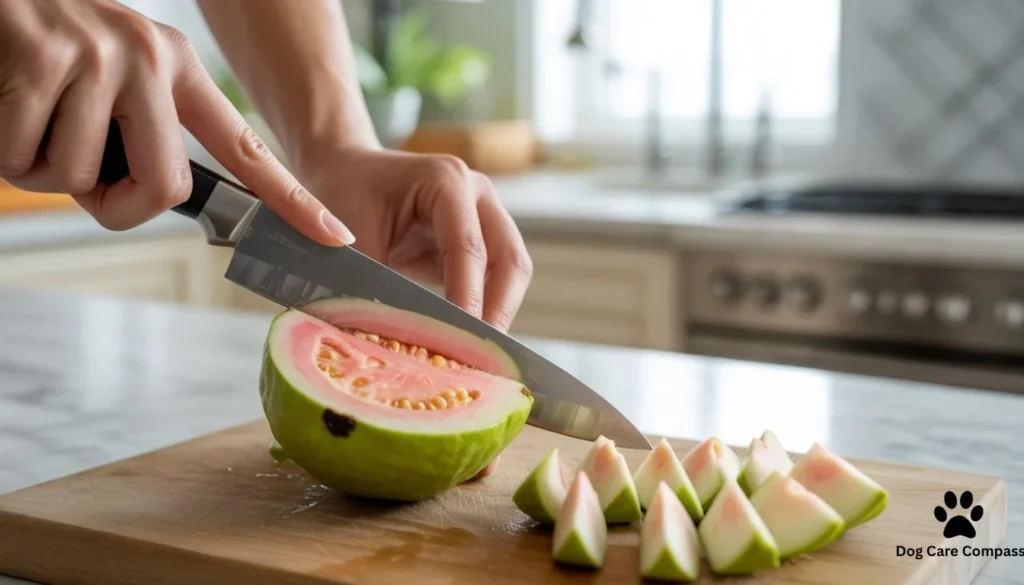
Guava is a tropical fruit native to Central America, now grown widely across South Asia, Southeast Asia, and the Caribbean. The flesh ranges from white to deep pink, the skin is thin and edible, and the center holds small hard seeds in soft pulp.
The flavor is sweet, slightly musky, and floral — distinctive enough that most people either love it immediately or need a few tries to appreciate it.
Nutritionally, guava is one of the more impressive fruits available. Its vitamin C content rivals and often exceeds citrus fruits, and its fiber profile puts most commercial dog treats to shame.
Nutritional Profile of Guava (Per 100g)
| Nutrient | Amount |
|---|---|
| Calories | 68 kcal |
| Carbohydrates | 14.3g |
| Natural Sugar | 8.9g |
| Dietary Fiber | 5.4g |
| Protein | 2.6g |
| Fat | 0.9g |
| Vitamin C | 228mg |
| Potassium | 417mg |
| Folate | 49mcg |
| Magnesium | 22mg |
That vitamin C number — 228mg per 100g — is what stops most people in their tracks. An orange contains around 53mg. Guava delivers more than four times that amount per gram of fruit.
The fiber at 5.4g per 100g is equally solid — higher than dragon fruit, higher than lychee, and comparable to jicama.
Health Benefits of Guava for Dogs
Exceptional Vitamin C for Immune Support
228mg of vitamin C per 100g places guava at the top of the natural antioxidant list for dogs. While dogs produce their own vitamin C, additional antioxidants from whole food sources reduce inflammation and support immune resilience.
I have seen the difference consistent antioxidant-rich feeding makes in older dogs. A dog that eats varied whole foods tends to age more gracefully than one living on the same processed kibble for years. Guava contributes to that picture in a small but real way.
High Fiber Supports Digestive Health
At 5.4g of fiber per 100g, guava is genuinely useful for dogs with sluggish digestion or mild irregularity.
Fiber is only one part of digestive health though. A dog whose daily diet is already creating gut stress will not be fixed by occasional high-fiber treats — the foundation matters more than the additions. Dogs that consistently struggle with sensitive stomachs tend to do far better when their everyday meals are built around clean ingredients rather than treating symptoms with single-ingredient fixes.
Potassium for Active Dogs
417mg of potassium per 100g supports muscle function, nerve signaling, and heart rhythm. For active breeds — German Shepherds, Belgian Malinois — potassium-rich foods contribute meaningfully to post-exercise recovery.
Low in Fat — Clean for Most Dogs
At 0.9g of fat per 100g, guava is appropriate for dogs on weight management and breeds prone to pancreatitis. A meaningful advantage over durian, where fat content alone demands extra caution.
Risks of Feeding Guava to Dogs
Sugar Content Requires Portion Control
8.9g of natural sugar per 100g is moderate — similar to dragon fruit, well below lychee. For healthy adult dogs in appropriate portions, this is fine.
For dogs managing diabetes, even moderate fruit sugar creates problems. A dog whose pancreas is already struggling with insulin regulation cannot afford extra glucose load. The full approach to blood sugar management in dogs goes well beyond avoiding single ingredients — it requires rebuilding the entire dietary picture around metabolic stability.
Seeds Can Irritate Sensitive Stomachs
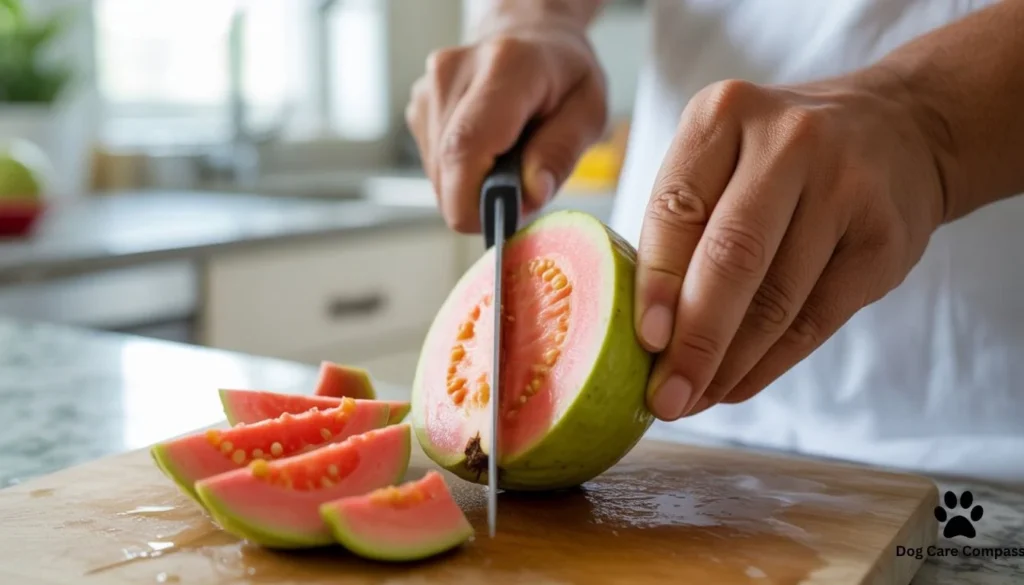
Guava seeds are small but firm. Most healthy adult dogs pass them without issue. For small breeds and dogs with sensitive digestive tracts, removing seeds before serving is the safer approach — it takes thirty seconds and removes the variable entirely.
Wash the Skin Before Serving
The skin is edible and not toxic — but it carries pesticide residue and surface contaminants from growing and transport. A thorough wash under running water addresses this adequately. Organic guava removes the concern entirely.
Too Much Causes Digestive Upset
Guava’s high fiber content works against dogs when portions are too large. Too much at once causes loose stools, gas, and stomach discomfort.
Start with one small piece on the first introduction. Watch for 24 hours. Let your dog’s response determine frequency going forward.
Processed Guava Is Off-Limits
Guava juice, jam, paste, candy — all contain concentrated sugar far beyond what fresh fruit delivers. Some contain artificial sweeteners. None are appropriate for dogs in any form. Fresh only, prepared simply.
Which Dogs Should Avoid Guava
- Dogs with diabetes or blood sugar issues
- Dogs with pancreatitis history
- Very small breeds — remove seeds first
- Puppies under 4 months
- Dogs with known fruit sensitivities
How to Prepare Guava for Dogs
- Choose fresh ripe guava — firm but yields slightly to pressure
- Wash the skin thoroughly under cold running water
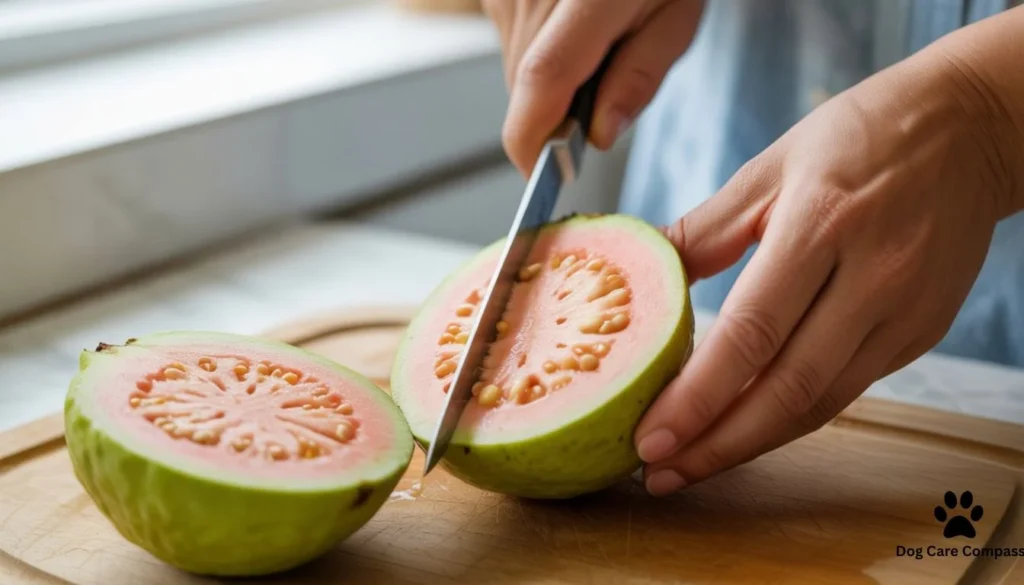
- Slice in half and inspect the center
- Remove seeds for small dogs or sensitive stomachs
- Cut flesh into small bite-sized pieces
- Serve plain — no sugar, no salt, nothing added
- Refrigerate unused portions and use within 24 hours
According to the American Kennel Club’s fruit safety guidance, fresh guava served without additives is safe for dogs in appropriate amounts. The ASPCA does not list guava among toxic plants for dogs. PetMD recommends introducing high-fiber fruits gradually to avoid digestive upset in sensitive dogs.
How Much Guava Can Dogs Eat? — Feeding Chart
| Dog Size | Weight | Safe Amount |
|---|---|---|
| Small | Under 10 lbs | 1 small piece — seeds removed |
| Medium | 10–50 lbs | 2–3 small pieces |
| Large | 50+ lbs | Small handful |
Two to three times per week is appropriate for healthy adult dogs. Daily feeding adds cumulative sugar with no additional benefit.
Guava vs Other Safe Fruits for Dogs
| Fruit | Safe? | Sugar per 100g | Fiber per 100g | Verdict |
|---|---|---|---|---|
| Guava | Yes | 8.9g | 5.4g | Good regular option |
| Dragon fruit | Yes | 8g | 3g | Good regular option |
| Papaya | Yes | 7.8g | 1.8g | Good regular option |
| Lychee | Caution | 15.2g | 1.3g | Occasional only |
| Jicama | Yes | 1.8g | 4.9g | Excellent option |
| Durian | Caution | 19.1g | 3.8g | Small amounts only |
| Tamarind | No | 38.8g | 5.1g | Not recommended |
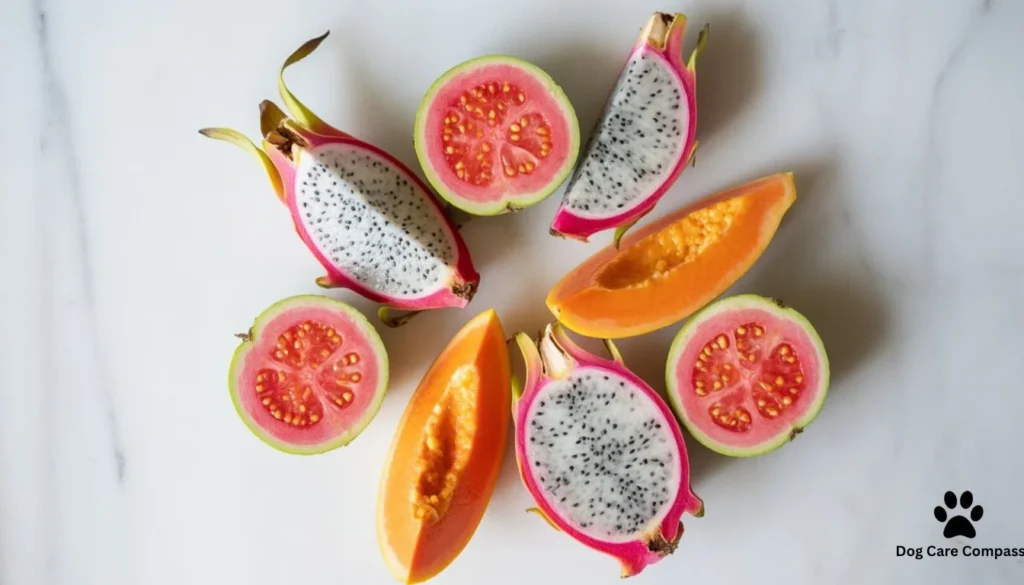
Guava, dragon fruit, and papaya form a genuinely solid tropical fruit rotation. Similar sugar levels, different nutrient profiles — rotating between them gives more nutritional breadth than relying on any single option.
The contrast with lychee is worth noting specifically. Both are tropical fruits in a similar sugar range — but lychee seeds cause dangerous blood sugar drops in dogs while guava seeds are merely a digestive irritant at worst. For owners cautious about lychee, guava is the more relaxed alternative.
For the lowest-sugar option in this entire category, jicama remains the benchmark — barely any sugar, excellent fiber, appropriate even for dogs that cannot handle most fruits.
Can Puppies Eat Guava?
Yes — with restrictions. Puppies 4 months and older that are confidently eating solid food can have one small piece of plain guava flesh occasionally.
Remove seeds before serving puppies. Watch for 24 hours after the first introduction and let their response guide frequency going forward.
What to Do If Your Dog Eats a Large Amount of Guava
Fresh guava in large amounts causes digestive upset rather than serious toxicity. Loose stools, gas, and stomach discomfort are the typical result.
Ensure water is available and monitor for 12–24 hours. Most dogs settle without intervention. Knowing when vomiting needs a vet versus when to wait it out is one of those practical skills that saves owners both unnecessary panic and unnecessary delay.
Frequently Asked Questions
Is guava toxic to dogs?
No. Guava is not listed as toxic by the ASPCA or any major veterinary authority. The flesh, skin, and seeds in small amounts are all considered safe.
Can dogs eat pink guava vs white guava?
Both are safe. Pink guava contains more lycopene — an antioxidant associated with heart health. White guava tends to be slightly sweeter. Either variety is appropriate.
Can dogs drink guava juice?
No. Commercial guava juice contains concentrated sugar and often artificial ingredients. Even fresh-squeezed juice removes the fiber that moderates sugar absorption. Whole fresh fruit only.
Is guava good for dogs with constipation?
The high fiber content can help with mild constipation. Start with a very small amount — too much fiber at once causes loose stools rather than resolving constipation.
Can dogs eat guava leaves?
Insufficient research exists on guava leaf safety for dogs. Stick to the flesh only.
My dog ate guava including seeds — should I worry?
For most healthy adult dogs, guava with seeds causes nothing beyond possible mild digestive upset. Monitor for 24 hours. If your dog is very small or shows persistent symptoms, contact your vet.
Can dogs eat guava every day?
Not recommended. Two to three times per week is sufficient. Daily feeding adds cumulative sugar with no additional nutritional benefit beyond what occasional servings deliver.
Final Summary
- Guava is safe for dogs — not toxic in any variety
- Exceptional vitamin C and solid fiber make it one of the more nutritious fruit treats available
- Wash the skin — edible but carries surface residues
- Remove seeds for small dogs and sensitive stomachs
- Fresh only — processed guava products are off-limits entirely
- Diabetic dogs should avoid guava
- Two to three times per week in appropriate portions is the right frequency
For more guides on safe fruits and foods for dogs, explore the complete library at dogcarecompass.com.
Pingback: Can Dogs Eat Star Fruit? Safe or Dangerous? (Vet-Backed Guide) - Dog Care Compass
Pingback: Fruits German Shepherd Puppies Can Eat: Safe Options, Toxic Ones, and How to Serve Them - Dog Care Compass