How to Train a Dog to Stop Pulling Without Treats: The Complete Method
Food-based leash training creates a specific problem that becomes obvious the first time you forget to bring treats on a walk.
The dog that walked beautifully in exchange for liver treats last week pulls exactly as hard as before when there is no food in your pocket. This is not stubbornness or regression — the dog was never trained to walk nicely. They were trained to walk nicely in exchange for food. Remove the food and the training context disappears with it.
I have trained multiple dogs on loose leash walking without food as the primary reinforcer. The approach takes slightly longer to establish in the initial stages — because you are building a genuinely different behavioral habit rather than managing the pulling through reward frequency. But the result is a dog that walks on a loose leash because loose leash walking is the default pattern, not because you have treats in your pocket.
Why Treats Often Fail as the Only Leash Training Tool
Treats work through a principle called continuous reinforcement — every correct response produces a reward. This produces fast initial learning and reliable behavior while reinforcement is consistent. The problem: behaviors trained under continuous reinforcement extinguish quickly when reinforcement is removed.
A dog that pulls and gets no food, or walks nicely and gets no food, receives the same outcome. The food was the signal that the training context was active. Without it, the dog has no signal that walking-nicely behavior is expected.
The goal of leash training is not “walk nicely when food is available.” The goal is “walk nicely always.” That goal requires the leash itself — and forward movement — to function as the reinforcer and the punisher. No food necessary.
The Tools That Replace Treats
Leash Pressure and Release
Leash pressure — light tension on the leash — is mild discomfort. The release of that pressure — the instant the dog moves toward you and the leash goes slack — is relief. Relief is a powerful reinforcer that requires no food.
The dog learns: being away from you produces light leash pressure. Moving toward you releases the pressure. Over repetitions, moving toward you becomes the default response because it is the behavior that consistently produces relief.
This is negative reinforcement in its technical definition — the removal of something mildly uncomfortable as a consequence of the correct behavior. Used correctly, with very light pressure and immediate release, it is effective and welfare-appropriate.
Forward Movement
Forward movement — getting to go where the dog wants to go — is a life reward that exists on every walk regardless of whether you have food.
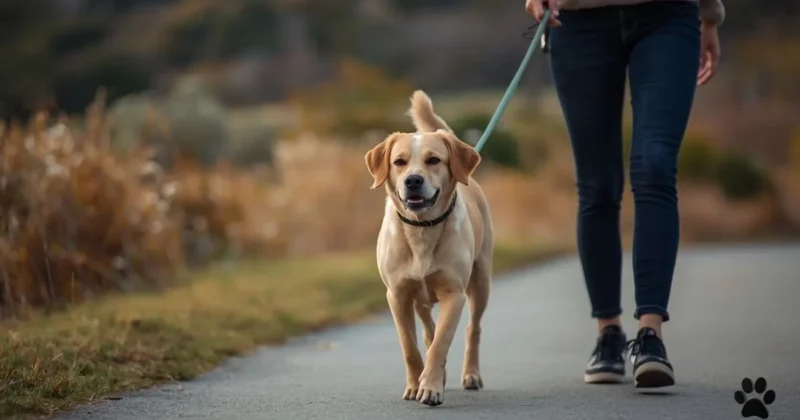
A dog that discovers that loose leash walking produces consistent forward movement and tight leash walking produces complete stops develops the correct behavior because the walk itself is the reward. The destination, the smells, the environmental access — all of it is contingent on loose leash.
Play Reward
A brief play interaction — thirty seconds of tug, an enthusiastic ball throw, an excited verbal reward and physical engagement — functions as a powerful non-food reinforcer for dogs with play drive.
Play reward works particularly well for working breeds that are more motivated by activity and interaction than by food in exciting outdoor environments where food value is reduced by competing stimuli.
Step-by-Step: Training Without Treats
Week 1 — Establish the Fundamental Rule in Low Distraction
The rule is simple and must be applied without exception: tight leash equals complete stop. Loose leash equals forward movement.
Start in the driveway or garden — not on the actual walk. Stimulation is lower, the dog can focus on the rule, and you can apply it consistently without the social pressure of performing on a public street.
Walk forward. The instant the leash tightens — plant both feet. Do not move. Do not speak. Do not make eye contact. Wait.
The dog will eventually reduce pressure on the leash — by stopping, by sitting, by turning toward you, by simply ceasing to pull. The instant the leash goes slack — take three enthusiastic steps forward.
The leash tightens again — stop immediately.
Repeat. The walk covers very little ground. That is correct.
After five sessions over two to three days, most dogs begin to show awareness of the leash tension — checking it before committing to the full pull. This awareness is the beginning of the correct behavior.
Week 2 — Add Release Cue and Direction Communication
Once the dog shows awareness of leash tension, add a release cue when you take forward steps. A word like “let’s go” or “forward” paired with forward movement tells the dog that the movement phase has started.
Over repetitions, the cue begins to predict forward movement before the dog has committed to pulling. This gives them something to orient toward — move with the cue — rather than simply reacting to stops.
Introduce gentle directional leash pressure when the dog has drifted wide — light pressure back toward your side, releasing the instant they move in the correct direction. The dog learns that lateral pressure means “come this way” in the same way they already know that forward pressure means stop.
Week 3 — Transfer to Real Walks
Expect regression when you move to the real street. This is not failure.
The distraction level of a real walk is dramatically higher than the driveway. The dog’s arousal is higher. Competing motivations — smells, other dogs, movement — are more compelling. The loose-leash behavior that was reliable in low distraction must be rebuilt at the new distraction level.
Apply exactly the same rule: tight leash, stop. Loose leash, forward.
Walk slowly. Stop frequently. The walk takes longer. The behavior rebuilds faster than it was initially established because the rule is already understood — it just needs to be applied in the new context.
Week 4 — Introduce the Play Reward for Check-Ins
When the dog, now walking with less consistent pulling, offers a moment of position alongside you with a loose leash — deliver an enthusiastic play interaction. Excited verbal praise, brief tug if you carry a toy, or a thrown toy if you are in an appropriate space.
The dog begins to discover that checking in with the handler position produces something exciting — without food ever being part of the picture. This shifts their orientation from “away from handler” to “toward handler” as the more rewarding option.
Reinforce these check-ins heavily in weeks four and five. They are the foundation of genuinely pleasant loose leash walking — a dog that wants to walk with you rather than one that is mechanically prevented from pulling effectively.
Adding Distractions — The Essential Stage
Distraction proofing is where every leash training method is either secured or lost. Most owners either rush this stage or skip it entirely.
For each new category of distraction — other dogs, cyclists, children, running animals — apply the same threshold approach:
Start at the distance where the dog notices the distraction but can still respond to the stop-and-plant rule — typically fifty to one hundred meters for significant distractions like other dogs.
Practice loose leash walking at that distance until ten consecutive steps with no pulling.
Decrease distance by ten meters. Practice until the same standard.
Continue until the dog walks on a loose leash directly past the distraction.
This takes weeks to months. A dog that walks nicely past other dogs at fifty meters is not necessarily going to walk nicely at ten meters next week — the distraction level at ten meters is meaningfully different from fifty.
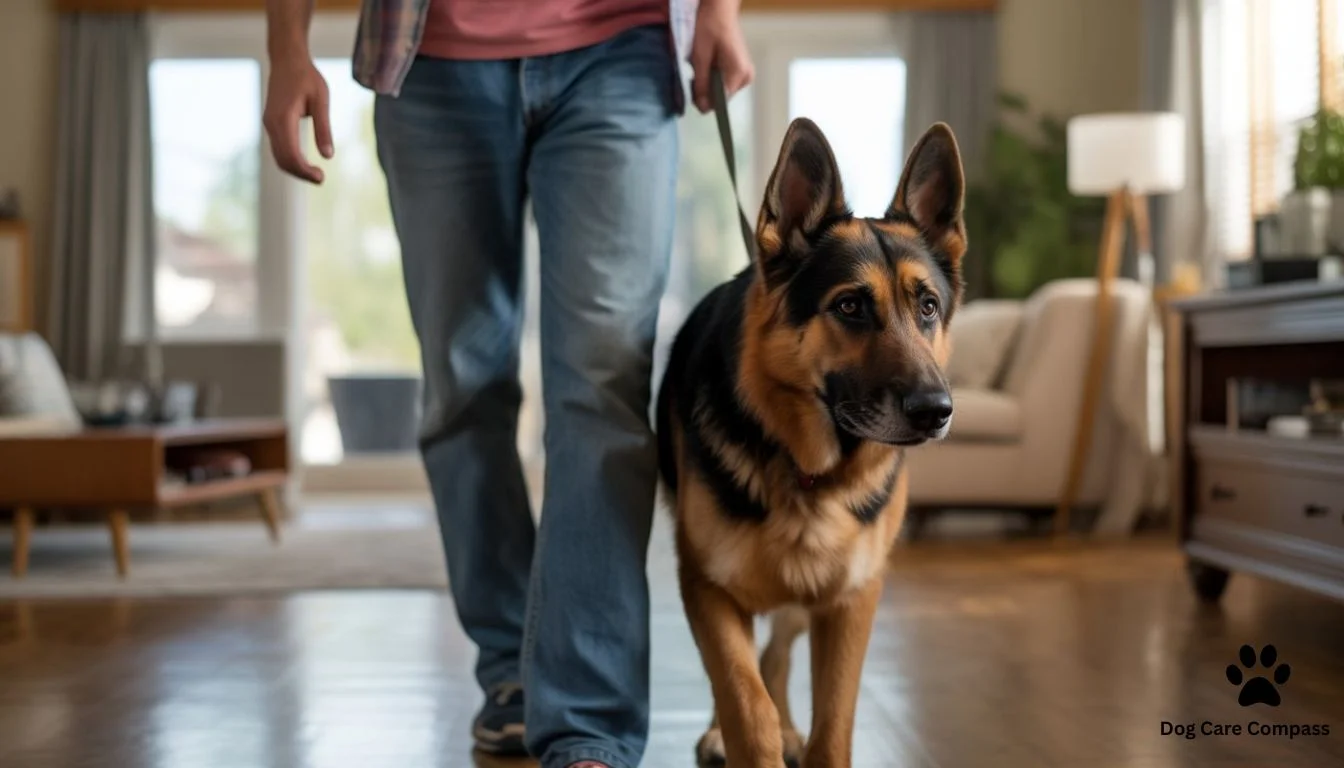
For German Shepherds — whose intelligence means they test rules consistently in new contexts — thorough distraction proofing at multiple locations and distraction types is essential for reliable results.
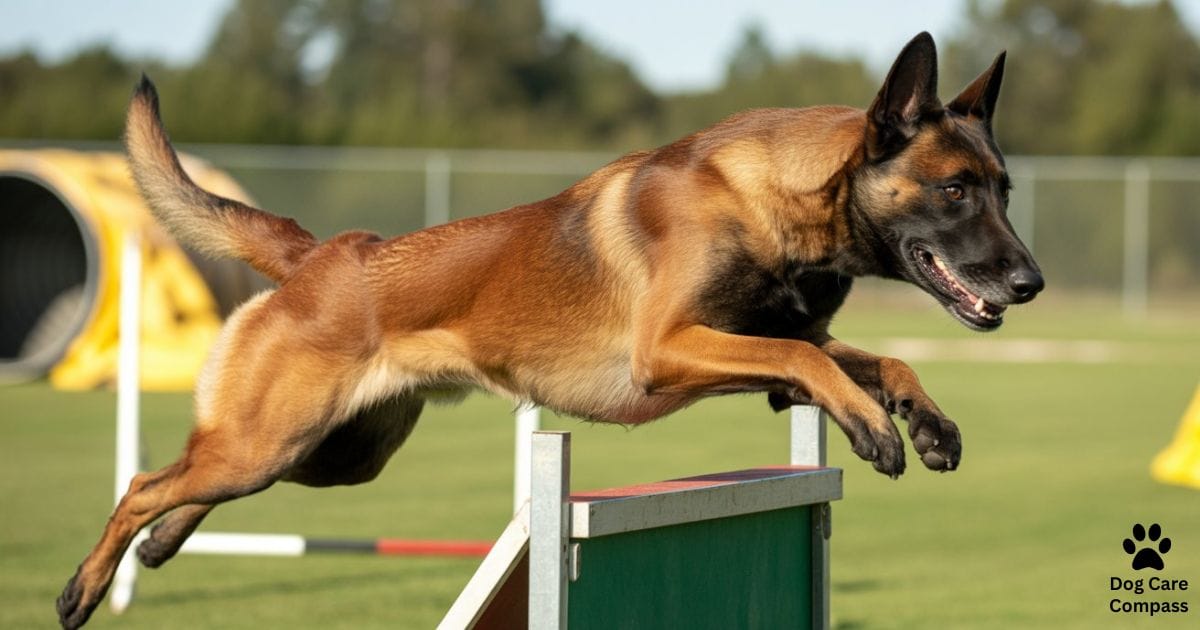
For Belgian Malinois — whose drive and intensity means they pull from explosive motivation rather than ignorance of the rule — the play reward for check-ins during distraction proofing is particularly powerful. A Malinois that discovers that looking at the handler in the presence of another dog produces a game of tug is a Malinois that begins orienting toward the handler when other dogs appear.
Our leash pulling guide covers the equipment and management approaches that work alongside the treat-free method, and our heel training guide covers the progression from loose leash to formal heel position.
Common Mistakes in Treat-Free Leash Training
Waiting too long to move forward when the leash loosens. The release of leash pressure and the forward movement must happen within one to two seconds of the leash going slack. Delayed reward means the dog cannot connect the behavior to the consequence.
Stopping for too long at each halt. The stop should be stationary until the leash goes slack — then immediate movement. Standing still for thirty seconds after the leash goes slack teaches the dog that stopping and standing happens regardless of their behavior.
Inconsistent application on some walks. One walk where pulling is permitted sets the training back significantly. Every walk — every step — applies the same rule.
Applying the method while emotionally escalated. A frustrated, high-energy owner transmits that energy to the dog. The dog’s arousal increases, making the pulling more likely and the focused engagement with the rule less likely. Calm, mechanical consistency from the handler is a prerequisite for the method to work.
Frequently Asked Questions
How long does treat-free leash training take compared to treat-based?
The initial establishment of the concept takes slightly longer — typically one to two additional weeks compared to treat-based methods. The resulting behavior is more durable and transfers to contexts without treats more reliably, making the total time investment roughly equivalent and the result significantly better.
Can I use this method on a puppy?
Yes — though puppies have shorter attention spans and may need shorter sessions. The principles are identical. For very young puppies — eight to twelve weeks — keep sessions to three to five minutes.
What if my dog sits and refuses to move when I stop?
Sitting is the correct response to a stop — it means the dog is no longer pulling and the leash is loose. Take forward steps when the dog sits and the leash is slack. The sit is compliance, not defiance.
My dog is very large and I am physically not strong enough to stop — what do I do?
A front-clip harness reduces the mechanical advantage that makes large dogs difficult to stop physically. Use it alongside this method — the harness manages the physical challenge while the training teaches the behavioral rule.
Can this method work on a dog that has been pulling for years?
Yes — it takes longer because an established pulling habit is deeply reinforced. But the method works on behavior at any stage of establishment. Expect four to eight weeks of consistent application before significant improvement in a dog with years of pulling history.
Final Summary
Treat-based leash training produces dogs that walk nicely when food is present. Treat-free leash training produces dogs that walk nicely because loose leash is the established behavioral pattern. The method uses leash pressure and release, complete stops for tight leash, forward movement for loose leash, and play rewards for check-ins — building a dog that walks with you because the behavior itself produces access to forward movement and handler engagement. Apply consistently on every walk, proof at every distraction level, and the result is reliable loose leash walking in all circumstances without food dependency.

researching veterinary sources, scientific studies, and expert
guides to bring dog owners accurate, practical information. Every
article is written with care and reviewed against credible
veterinary references including ASPCA, AKC, and peer-reviewed
literature.
- Why Does My Dog Sleep So Much All of a Sudden? 8 Real Reasons - August 10, 2026
- How to Train a Dog to Stop Pulling Without Treats: This Method Works - August 5, 2026
- How to Train an Older Dog New Tricks (Even If They’ve Never Been Trained) - August 1, 2026