
How to Clean Dog Ears at Home Naturally
Let me ask you something. When was the last time you actually checked inside your dog’s ears?
If the honest answer is “not recently enough” — you’re not alone. Ear cleaning is one of those things nobody really teaches you when you first get a dog. You figure out feeding, training, grooming — but ears tend to get overlooked until something goes wrong.
Here’s the thing though. Knowing how to clean dog ears at home naturally is one of the simplest skills you can learn as a dog owner. Regular cleaning keeps your dog comfortable, prevents painful infections, and saves you expensive vet visits down the line. And the best part? You don’t need fancy products — a few natural ingredients you probably already have at home will do the job beautifully.
This guide walks you through everything, step by step.
What Healthy Dog Ears Look Like
Before you learn how to clean dog ears at home naturally, you need to know what you’re working with. Healthy dog ears have a few things in common.
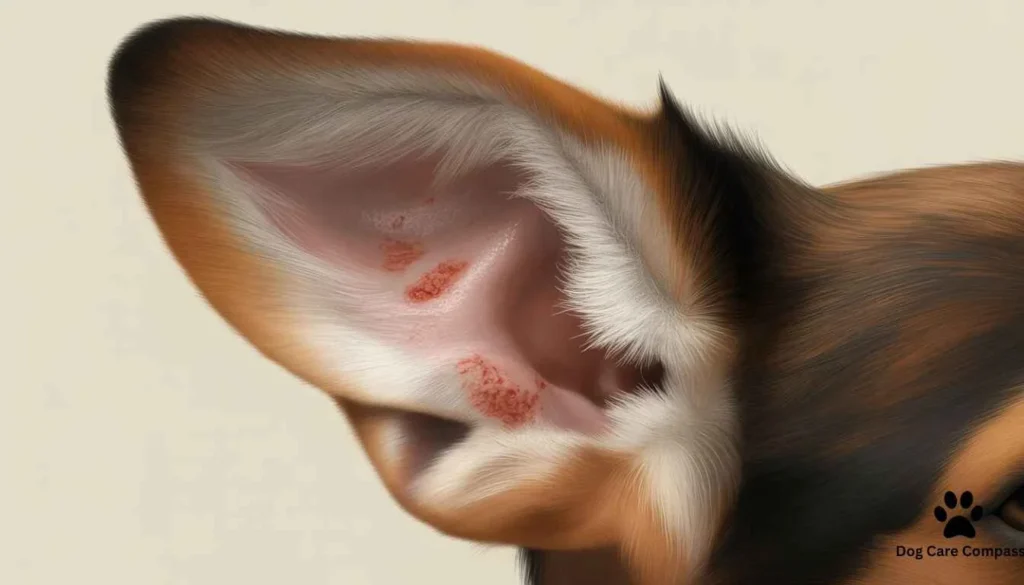
The inside of the ear flap should be pale pink — not red, not dark brown, just a clean light pink. There should be a very faint natural odor, but nothing that makes you pull your head back. A small amount of light yellowish or tan wax is completely normal — think of it like earwax in humans. A little bit is fine. A lot is a problem.
What you don’t want to see:
- Dark brown or black discharge that looks like coffee grounds
- Redness or swelling inside the ear canal
- Your dog constantly shaking their head or scratching at their ear
- A strong, yeasty, or foul smell
If you’re seeing any of those signs — especially dark discharge or a strong odor — put this guide down and call your vet first. Those are signs of an infection that needs medical treatment, not just a cleaning.
How Often to Clean Dog Ears
This is one of the most common questions dog owners ask, and the honest answer is: it depends on your dog.
Some dogs barely need ear cleaning at all. Others — especially breeds with floppy ears, dogs that swim regularly, or dogs prone to allergies — need cleaning every week or two.
A good rule of thumb is to check your dog’s ears once a week. If they look clean and smell fine, you’re good. If you notice wax building up or a slight odor developing, that’s your cue to clean.
For German Shepherds specifically, their upright ears give them a natural advantage. Good airflow means less moisture buildup and lower infection risk compared to floppy-eared breeds. But they still need regular checks — especially if your GSD spends time outdoors or near water. For more on German Shepherd specific care, our German Shepherd Complete Guide covers everything in detail.
Why Choose Natural Ear Cleaning Solutions
You can absolutely use commercial ear cleaners — many of them work well. But a lot of dog owners prefer natural options for good reasons.
Commercial ear cleaners often contain alcohol, which stings and dries out sensitive ear tissue. Some contain synthetic fragrances that irritate dogs with allergies. And if you already have a dog that gets anxious about ear cleaning, the last thing you want is a product that makes the experience uncomfortable.
Natural solutions are gentler, cheaper, and for routine maintenance cleaning, they work just as well. The key word there is routine maintenance. If your dog has an active infection, natural cleaning alone won’t fix it — that needs a vet.
Best Natural Ear Cleaning Solutions for Dogs

Apple Cider Vinegar and Water
This is probably the most well-known way to clean dog ears at home naturally, and it works because apple cider vinegar has natural antimicrobial and antifungal properties. The acidity breaks down wax and creates an environment where bacteria and yeast struggle to survive.
Mix equal parts raw apple cider vinegar and distilled water. That’s it — a simple 50/50 solution.
One important warning — never use this if your dog’s ear is red, inflamed, or has any broken skin. Vinegar in an irritated ear will sting badly, and your dog will never let you near their ears again.
Coconut Oil
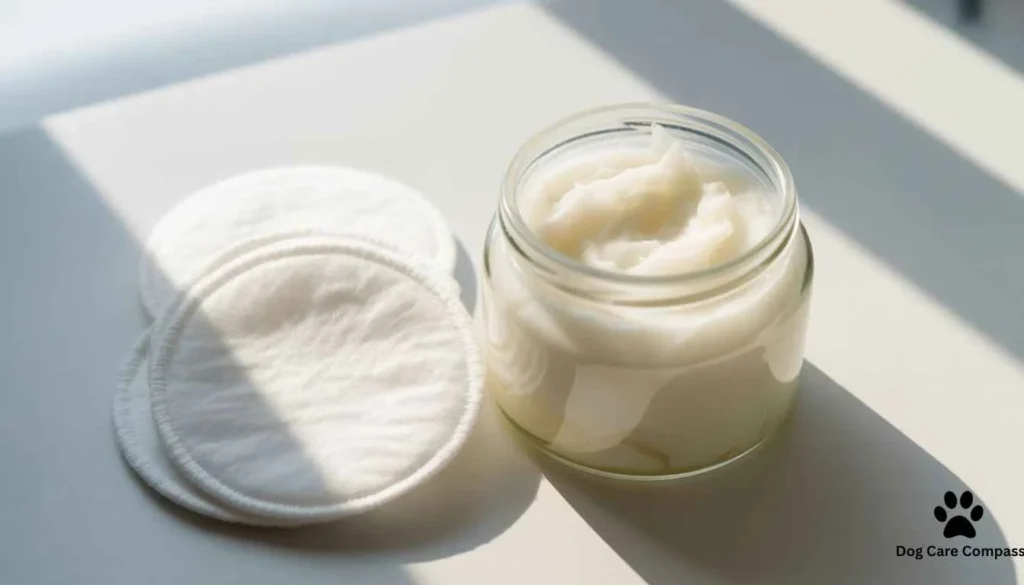
Coconut oil has natural antibacterial and antifungal properties and is incredibly soothing on sensitive skin. Warm a small amount between your fingers until it melts, then apply gently. It works particularly well for dogs with dry, flaky skin inside the ear flap.
We’ve covered the many benefits of coconut for dogs in detail — check out our guide on Is Coconut Water Safe for Dogs? for more on how coconut products can benefit your dog’s health.
Witch Hazel
Witch hazel is a natural astringent that gently cleanses and reduces inflammation. It’s slightly milder than apple cider vinegar, making it a good choice for dogs with more sensitive ears. Dilute it — mix one part witch hazel with two parts distilled water.
Aloe Vera Juice
Pure aloe vera juice — not gel, and not the kind with added ingredients — is soothing and anti-inflammatory. It works well for dogs whose ears tend to get slightly irritated after cleaning. For light maintenance on already-healthy ears, it’s very gentle and effective.
Plain Distilled Water
Sometimes the simplest solution really is the best. For dogs with healthy ears that just need a light refresh, plain distilled water on a cotton ball does the job without any risk of irritation. Always use distilled rather than tap water — tap water can contain minerals and bacteria that do more harm than good.
What You Need Before You Start
Get everything ready before you bring your dog over. Once you start, you want to keep things moving:
- Your chosen natural cleaning solution
- Cotton balls or gauze pads — never cotton swabs
- A few high-value treats — the good stuff, not everyday kibble
- A towel — things get messy when your dog shakes their head
- Good lighting — a phone flashlight works perfectly
Keep the cotton swabs in the drawer. Pushing a cotton swab into a dog’s ear canal can damage the eardrum and push wax deeper in — the exact opposite of what you’re trying to achieve.
Step-by-Step Guide to Clean Dog Ears Naturally at Home
Step 1 — Set the Right Mood
Don’t try to clean your dog’s ears when they’re already hyper or anxious. Pick a calm moment — after a walk when they’re relaxed works well. Sit on the floor with your dog rather than putting them up on a table. Being at their level feels less threatening. Give them a treat just for coming to you — you’re building a positive association before you’ve even started.
Step 2 — Check the Ear First
Before you put anything in, gently fold the ear flap back and use your phone light to look inside. Check for color, discharge, and smell. If everything looks and smells normal, you’re good to go. If something looks off, call your vet before doing anything else.
Step 3 — Apply Your Cleaning Solution
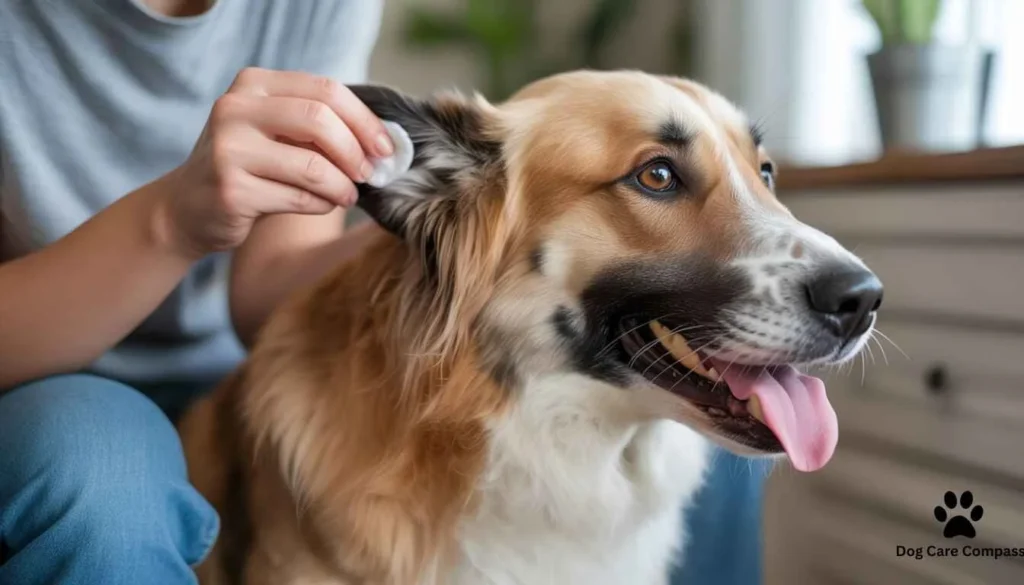
Dampen a cotton ball with your chosen solution — moist but not dripping. Gently wipe the ear flap and the visible outer ear canal using smooth circular motions, removing visible wax and debris from the surfaces you can see.
For the ear canal itself, let a few drops of your solution drip in, then gently massage the base of the ear — just below the ear opening — for about 20 to 30 seconds. You’ll hear a slight squishing sound. That’s the solution working through the wax.
Step 4 — Let Your Dog Shake
After massaging, step back and let your dog shake their head. This is actually helpful — the shaking brings loosened wax and debris up and out of the canal naturally. This is exactly why you need that towel nearby.
Step 5 — Wipe Clean
Use a fresh cotton ball to wipe out whatever has come up to the surface. Work from the inside out — never push debris deeper. Keep using fresh cotton balls until they come out clean.
Step 6 — Reward Generously
The moment you’re done — treats, praise, whatever your dog loves most. Every single time without exception. You want your dog to associate cleaning dog ears at home naturally with the best thing that happens in their week. Over time, most dogs go from tolerating it to being genuinely calm about the whole process.
How to Clean Dog Ears for Anxious Dogs
Some dogs genuinely hate having their ears touched, and forcing the issue only makes it worse. If your dog is one of them, here’s what actually helps.
Start by touching their ears casually during normal petting — not in a “now I’m going to clean your ears” way, just naturally as part of regular affection. Do this daily for a week before you attempt any cleaning. You’re teaching them that ear contact is normal and safe.
When you do start cleaning, break it into the smallest possible steps. Day one: touch the ear, give a treat, stop. Day two: fold the ear flap back, give a treat, stop. Day three: touch a cotton ball to the outer ear, give a treat, stop. It feels slow — but this builds a dog that cooperates willingly rather than one that runs every time you pick up a cotton ball.
This patience-first approach works across all kinds of dog anxiety. If your dog struggles with fearfulness in other areas — like being nervous around unfamiliar people — our guide on German Shepherd Scared of Strangers uses the exact same principles and has plenty of ideas you can apply here too.
Ear Cleaning for Specific Situations
After Swimming or Bathing
Water trapped in the ear canal is one of the most common causes of ear infections in dogs. After any swim or bath, use a dry cotton ball to gently wipe out the visible ear canal. A few drops of your apple cider vinegar solution can also help — the acidity counteracts moisture and prevents bacterial growth from taking hold.
Dogs with Allergies
If your dog has food or environmental allergies, their ears are often one of the first places symptoms appear — recurring infections, dark wax buildup, persistent odor. Managing the allergies is the long-term solution, but regular cleaning helps control symptoms in the meantime.
Diet plays a huge role in allergy management. Our guide on Homemade Dog Food Recipes for Sensitive Stomach covers how to build an anti-inflammatory diet that supports overall skin and ear health from the inside out.
Puppies
Getting puppies used to ear cleaning early is one of the best things you can do. A puppy that learns ear touching is normal grows into an adult dog that doesn’t fight you on it. Keep sessions very short, use plain distilled water rather than vinegar, and be extremely generous with the treats.
Signs of Ear Infection — When to See a Vet
Natural cleaning is great for maintenance, but it has limits. Here’s when you need professional help:
Your dog is shaking their head constantly throughout the day — not just after cleaning. The discharge is dark brown or black, has a strong smell, or looks like coffee grounds. The coffee ground appearance often indicates ear mites, which need medication. You can see redness or swelling inside the ear canal. Your dog yelps or pulls away when you touch near their ear. Your dog is tilting their head to one side consistently.
If you’re seeing any of these signs, please don’t try to push through with home cleaning. A vet visit now costs far less than waiting until a minor infection becomes a serious one.
How Diet Affects Dog Ear Health
This surprises a lot of dog owners — but what your dog eats directly affects how prone they are to ear infections.
Dogs on poor quality diets with lots of fillers and artificial additives tend to have higher inflammation levels throughout their body, and the ears are often where that inflammation shows up first. Recurring ear infections in an otherwise healthy dog are often a dietary signal worth investigating seriously.
Feeding a diet rich in omega-3 fatty acids reduces systemic inflammation significantly. Foods like fish, flaxseed, and high quality proteins support skin and ear health from the inside out.
If your dog is dealing with ongoing health challenges alongside ear problems, it’s worth reviewing their whole diet. Our guides on Best Dog Food for Acid Reflux and Cushing Disease Dog Diet both cover anti-inflammatory dietary principles that benefit overall health — including ear health.
FAQs
How do I clean my dog’s ears at home naturally without hurting them?
Use a natural solution like diluted apple cider vinegar or coconut oil on a cotton ball. Never use cotton swabs, never pour large amounts of liquid forcefully into the canal, and always work gently. If your dog shows pain during cleaning, stop and consult your vet.
How often should I clean my dog’s ears at home?
Check weekly and clean when needed — typically every two to four weeks for most dogs. Dogs with floppy ears, dogs that swim, and allergy-prone dogs may need weekly cleaning.
Can I use hydrogen peroxide to clean my dog’s ears naturally?
No. Hydrogen peroxide damages the delicate tissue inside the ear canal. Apple cider vinegar solution, witch hazel, or coconut oil are all much safer and equally effective natural alternatives.
My dog hates ear cleaning — what do I do?
Start with desensitization before you attempt any cleaning. Touch the ears, give treats, stop. Do this daily for a week. Introduce cleaning tools gradually over multiple sessions. Patience and high-value treats are your best tools.
What does a dog ear infection smell like?
Start with desensitization before you attempt any cleaning. Touch the ears, give treats, stop. Do this daily for a week. Introduce cleaning tools gradually over multiple sessions. Patience and high-value treats are your best tools.
Is it normal for my dog’s ears to have some wax?
Yes — a small amount of light tan or yellowish wax is completely normal. Heavy dark brown or black buildup is not normal and warrants investigation.
My dog keeps getting ear infections despite regular cleaning — why?
Recurring infections despite regular cleaning almost always point to an underlying cause — most commonly food or environmental allergies. Talk to your vet about allergy testing and take a close look at their diet.
Final Thoughts
Learning how to clean dog ears at home naturally is genuinely one of the most practical things you can do as a dog owner. It takes five minutes, costs almost nothing, and can prevent weeks of discomfort and expensive treatment for your dog.
Check often, clean when needed, and know when to call the vet. Natural solutions work brilliantly for routine maintenance — but they’re not a substitute for medical treatment when something is actually wrong.
Your dog can’t tell you when their ears are bothering them. Regular checks mean you catch problems early, before a minor wax buildup becomes a painful infection. That’s genuinely one of the best things you can do for them.
For more practical dog care guides, explore everything at dogcarecompass.com.
Pingback: Dog Licking Paws at Night: Causes, Remedies, and When to See a Vet - Dog Care Compass