
Homemade Dog Food for Pancreatitis: The Complete Low-Fat Diet Guide
The call from the vet was not what any dog owner wants to hear. Pancreatitis. Suddenly a condition I had barely thought about became the center of everything — what my dog could eat, when, how much, and in what form.
If your dog has been diagnosed with pancreatitis — acute or chronic — this guide covers exactly what to feed, what to avoid, and how to build a homemade diet that supports recovery and prevents future episodes.
Homemade dog food for pancreatitis needs to be low in fat above everything else. The pancreas produces enzymes that digest fat — when it is inflamed, fat intake directly triggers the inflammatory cascade that causes pain and tissue damage.
Quick Answer
| Question | Answer |
|---|---|
| Most important rule? | Very low fat — under 10% of calories |
| Best protein sources? | Chicken breast, white fish, egg whites |
| Safe carbohydrates? | White rice, plain pasta, white potato |
| Foods to avoid? | All fatty meats, dairy, oils, organ meats |
| How often to feed? | 3-4 small meals daily |
Understanding Pancreatitis in Dogs
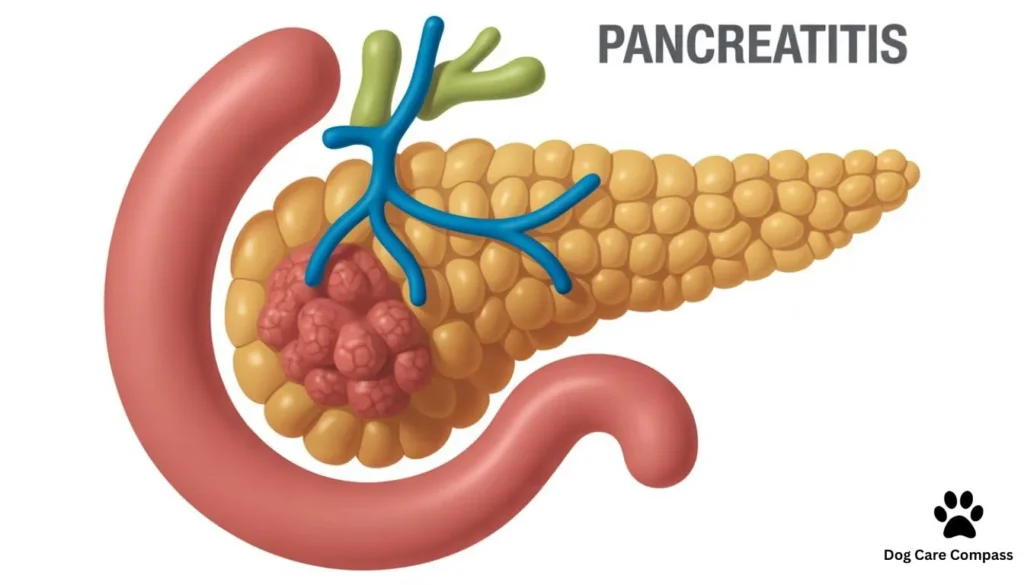
The pancreas has two jobs.
First — it produces hormones including insulin that regulate blood sugar. Second — it produces digestive enzymes that break down food, particularly fat and protein.
When the pancreas becomes inflamed, those digestive enzymes activate prematurely — inside the pancreas itself rather than in the small intestine. The pancreas begins digesting its own tissue.
This is why pancreatitis is painful, dangerous, and directly diet-dependent.
Acute pancreatitis comes on suddenly — often after a high-fat meal. Symptoms include vomiting, abdominal pain, lethargy, and loss of appetite. Requires immediate veterinary treatment.
Chronic pancreatitis is ongoing, lower-grade inflammation. Symptoms are subtler — occasional vomiting, inconsistent appetite, weight loss over time. Dietary management is the primary long-term tool.
Why Diet Is So Critical
Fat is the primary trigger for pancreatic enzyme release.
When a dog eats fat, the pancreas responds by releasing lipase — the enzyme that breaks down fat. In a healthy pancreas, this is normal and beneficial. In an inflamed pancreas, this response amplifies the inflammation.
Reducing dietary fat reduces the demand on the pancreas. Less demand means less inflammation. Less inflammation means less pain, faster recovery, and lower risk of future episodes.
This is not optional dietary advice — it is the primary medical intervention alongside veterinary treatment.
What Low Fat Actually Means
Many owners hear “low fat” and reduce fat somewhat. That is not sufficient for pancreatitis management.
For dogs with pancreatitis:
| Fat Level | Meaning |
|---|---|
| Under 10% of calories | Required for pancreatitis management |
| 10-15% | Borderline — not appropriate for active disease |
| Above 15% | Too high — risk of triggering episodes |
For context — most commercial dog foods contain 30-50% of calories from fat. A proper pancreatitis diet is dramatically lower than what most dogs eat.
Safe Ingredients — What to Include
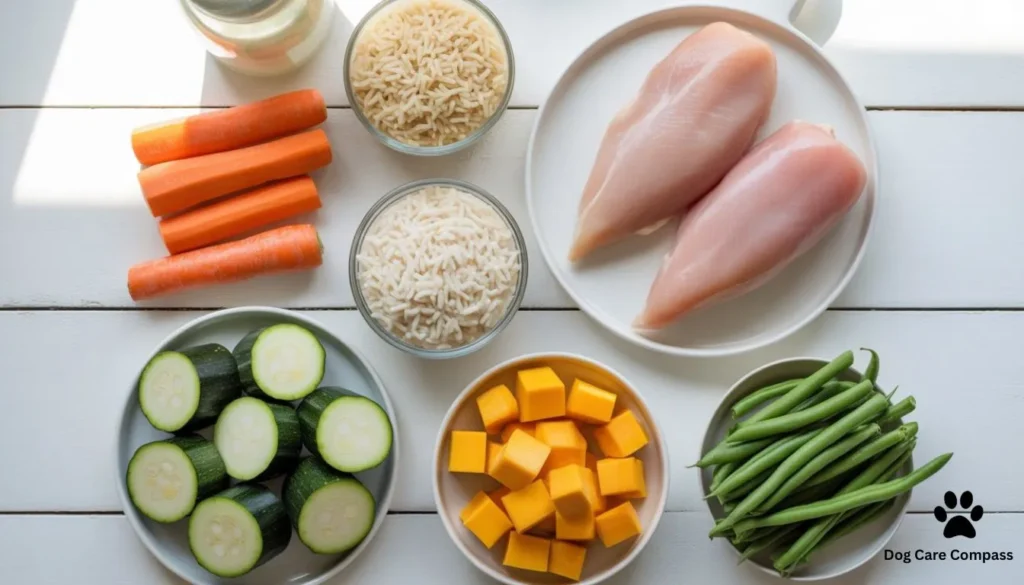
Proteins
| Ingredient | Fat Content | Notes |
|---|---|---|
| Chicken breast — skinless, boiled | Very low | Best starting protein |
| Turkey breast — skinless, boiled | Very low | Good alternative |
| White fish — cod, tilapia, boiled | Very low | Omega-3 benefit |
| Egg whites only — boiled | Zero fat | Highest quality protein |
| Very lean ground beef — well drained | Low | Use occasionally |
The skin is the problem with poultry — not the meat itself.
Remove every trace of skin before cooking. The fat content difference between skinless chicken breast and chicken with skin is significant enough to trigger episodes in sensitive dogs.
Carbohydrates
| Ingredient | Notes |
|---|---|
| White rice — plain, boiled | Best choice — easy to digest |
| Plain pasta — cooked | Good calorie source |
| White potato — boiled, no skin | Moderate choice |
| Sweet potato — small amounts | Higher fiber, use carefully |
White rice is the carbohydrate of choice for pancreatitis — it is easily digestible, low in fat, and well tolerated even during active inflammation.
Vegetables
| Vegetable | Notes |
|---|---|
| Green beans | Excellent — low everything |
| Zucchini | Gentle, hydrating |
| Carrots — boiled | Soft, easy to digest |
| Cucumber | Very low calorie, hydrating |
| Pumpkin — plain | Supports digestion |
Foods to Avoid — Completely
| Food | Why Avoid |
|---|---|
| Fatty meats — lamb, pork, beef with fat | Direct pancreatitis trigger |
| Chicken skin or turkey skin | Very high fat |
| Dairy — cheese, butter, milk | High fat |
| Organ meats — liver, kidney | High fat |
| Oils — olive oil, coconut oil | Pure fat |
| Egg yolks | High fat — whites only |
| Commercial treats | Usually high fat |
| Bones or bone broth | High fat |
| Avocado | High fat + toxic |
| Nuts | Extremely high fat |
Even small amounts of high-fat food can trigger an acute episode in a dog with chronic pancreatitis.
This includes “healthy” fats. Coconut oil is often marketed as beneficial for dogs — for pancreatitis dogs it is dangerous regardless of the source.
3 Complete Recipes for Dogs with Pancreatitis
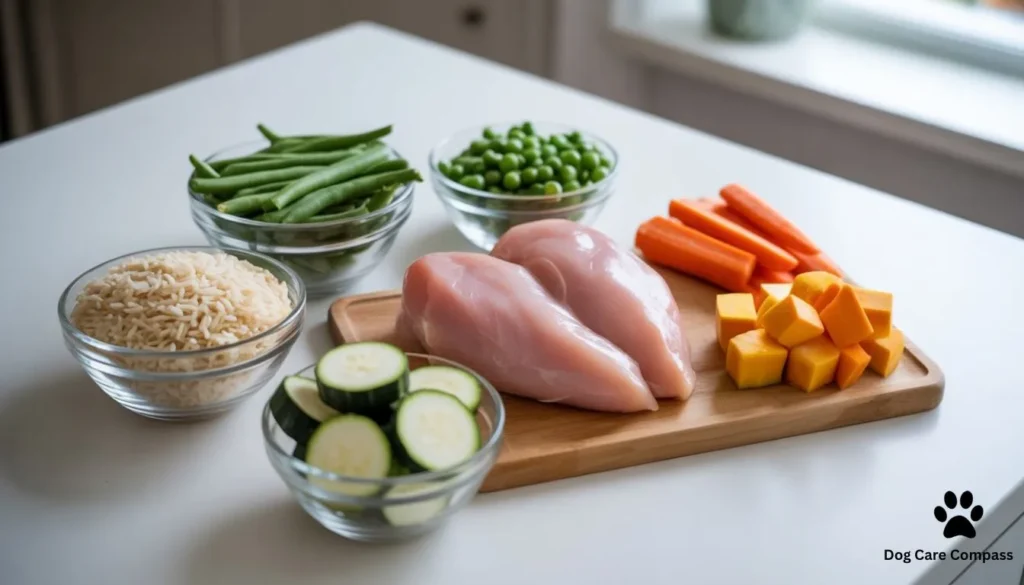
Recipe 1 — Chicken and Rice (Recovery Phase)
This is the safest recipe for dogs in the immediate recovery period after an acute episode.
Ingredients for 30 lb dog — one day:
- 100g chicken breast — skinless, boiled
- 200g white rice — cooked
- 100g green beans — steamed
- Water to moisten
Instructions:
- Boil chicken breast completely — no skin, no seasoning
- Shred into very small pieces
- Cook white rice in plain water
- Steam green beans until soft
- Combine — add water to create soft consistency
- Cool completely
- Divide into 4 equal portions — feed throughout the day
Why this works: Minimal fat, easily digestible, gentle on inflamed pancreas.
Recipe 2 — White Fish and Rice Bowl
Ingredients for 30 lb dog — one day:
- 120g cod or tilapia — boiled
- 180g white rice — cooked
- 80g zucchini — steamed
- 80g carrots — boiled soft
- Water to moisten
Instructions:
- Boil fish in plain water — no seasoning
- Flake carefully — check for bones
- Cook rice in plain water
- Steam or boil vegetables until very soft
- Combine with water
- Cool completely
- Divide into 3-4 small portions
Why this works: White fish is naturally low fat and provides protein without triggering fat digestion demands.
Recipe 3 — Turkey and Vegetable Stew
Ingredients for 30 lb dog — one day:
- 110g turkey breast — skinless, boiled
- 170g white rice — cooked
- 100g pumpkin — plain, boiled
- 80g green beans — steamed
- Low-sodium broth — small amount
Instructions:
- Boil turkey breast — remove all skin before cooking
- Shred finely
- Cook rice
- Boil pumpkin and mash lightly
- Combine everything with broth
- Cool completely
- Divide into 3-4 portions
Why this works: Pumpkin supports digestive health. Turkey breast is one of the leanest proteins available.
Portion Sizes and Feeding Schedule
For pancreatitis — how you feed matters as much as what you feed.
Large meals trigger a larger pancreatic enzyme response than small meals. Multiple small meals throughout the day reduce the demand on the pancreas at each feeding.
| Dog Weight | Daily Amount | Portions Per Day |
|---|---|---|
| 10 lbs | 120-150g | 4 |
| 20 lbs | 200-240g | 3-4 |
| 30 lbs | 280-320g | 3-4 |
| 50 lbs | 400-450g | 3 |
| 70 lbs | 520-570g | 3 |
Three to four small meals daily is the standard recommendation for pancreatitis management — not one or two large meals.
Transitioning from Acute Episode to Long-Term Diet
After an acute pancreatitis episode — veterinary guidance on when to reintroduce food is essential. Do not feed during active vomiting without vet direction.
Once cleared to feed:
Days 1-2: Plain boiled chicken and white rice only — tiny amounts every 4 hours
Days 3-5: Gradually increase portion size — maintain same simple ingredients
Days 6-10: Introduce one additional ingredient at a time — green beans, then zucchini
Week 2 onward: Transition to full recipe — maintain 3-4 small meals
Monitor stool consistency, appetite, and energy throughout. Any return of vomiting or abdominal discomfort — return to the simplest recipe and contact your vet.
The same gradual transition approach that works for dogs with kidney disease applies here — slow introduction, consistent monitoring, and close vet communication throughout.
Supplements — What Helps, What to Avoid
| Supplement | Status | Notes |
|---|---|---|
| Digestive enzymes | Beneficial | Reduces pancreatic workload |
| Probiotics | Beneficial | Supports gut health |
| B vitamins | Beneficial | Water-soluble, safe |
| Fish oil | Caution | Small amounts only — discuss with vet |
| Vitamin E | Beneficial | Antioxidant support |
| Coconut oil | Avoid | Too high fat |
| MCT oil | Avoid | Fat source — inappropriate |
Digestive enzyme supplements are particularly relevant for chronic pancreatitis — they reduce the demand on the pancreas by partially pre-digesting food before it reaches the digestive tract.
Discuss any supplement with your vet before adding — some interact with medications commonly used in pancreatitis management.
Pancreatitis and Other Conditions
Many dogs managing pancreatitis also have related conditions.
Diabetes: Pancreatitis and diabetes are closely linked — a damaged pancreas often loses insulin-producing function. A pancreatitis diet is naturally compatible with diabetic management. Our diabetic diet guide covers the overlap in detail.
Acid reflux: Dogs recovering from pancreatitis often experience concurrent acid reflux from the inflammation. Small meals, easily digestible ingredients, and consistent timing help manage both simultaneously. The acid reflux guide covers dietary management for this overlap.
Sensitive stomach: The recovery diet for pancreatitis is essentially a highly refined version of the sensitive stomach diet — same principles, stricter fat restrictions. Our sensitive stomach guide provides the broader dietary framework.
Breed Considerations
German Shepherds — GSDs have documented predisposition to exocrine pancreatic insufficiency, a condition where the pancreas cannot produce adequate digestive enzymes. This is related to but distinct from pancreatitis. A GSD with digestive symptoms alongside weight loss despite adequate food intake should be evaluated specifically for EPI. The full health picture for this breed is in our GSD guide.
Miniature Schnauzers and Cocker Spaniels have the highest genetic predisposition to pancreatitis — but any breed can develop it, particularly after dietary indiscretion.
Frequently Asked Questions
Can pancreatitis be cured with diet?
Acute pancreatitis can resolve completely with treatment and dietary management. Chronic pancreatitis is managed rather than cured — the right diet prevents episodes and maintains quality of life but does not repair damaged tissue.
How do I know if the diet is working?
Consistent appetite, normal stools, normal energy, and absence of vomiting indicate the diet is appropriate. Weight maintenance without loss is a positive sign. Bloodwork monitoring — lipase and amylase levels — gives the most objective indication of pancreatic health.
Can dogs with pancreatitis eat treats?
Only very low-fat treats — plain rice cakes, plain boiled chicken pieces, or specific low-fat commercial treats. Most commercial treats are too high in fat. Check fat content on any treat label before offering.
Is commercial low-fat dog food better than homemade?
Neither is universally superior. Commercial low-fat foods are convenient but may contain ingredients that are not ideal for sensitive dogs. Homemade food gives complete ingredient control and higher moisture content. Many owners use both.
Can I use olive oil in pancreatitis recipes?
No. Oil is pure fat regardless of source. Even small amounts of added oil are inappropriate for dogs with pancreatitis.
How long does my dog need to stay on a low-fat diet?
Dogs with chronic pancreatitis typically need a low-fat diet for life. Dogs that had a single acute episode with no recurrence may be able to return to a moderate-fat diet under veterinary guidance — but many vets recommend maintaining low-fat feeding permanently once pancreatitis has occurred.
My dog won’t eat the low-fat food — what do I do?
Warming the food slightly increases aroma and palatability. Adding a small amount of low-sodium broth improves acceptance. Shredding meat very finely changes the texture some dogs prefer. If appetite loss persists beyond 48 hours — contact your vet.
Final Summary
- Low fat is the single most important rule — under 10% of calories from fat
- Chicken breast, turkey breast, white fish, and egg whites are the safest proteins
- White rice is the preferred carbohydrate — easy to digest and well tolerated
- Feed 3-4 small meals daily — not one or two large meals
- Never add oils, dairy, fatty meats, or organ meats
- Introduce new ingredients one at a time after the recovery phase
- Digestive enzyme supplements reduce pancreatic workload — discuss with vet
- Vet monitoring of bloodwork is essential alongside dietary management
Start today: If your dog is in recovery — boil plain chicken breast and white rice, cool completely, and divide into four small portions. That is the safest starting point while you build toward a fuller recipe.
For more dog health and nutrition guides, explore the complete library at dogcarecompass.com.