
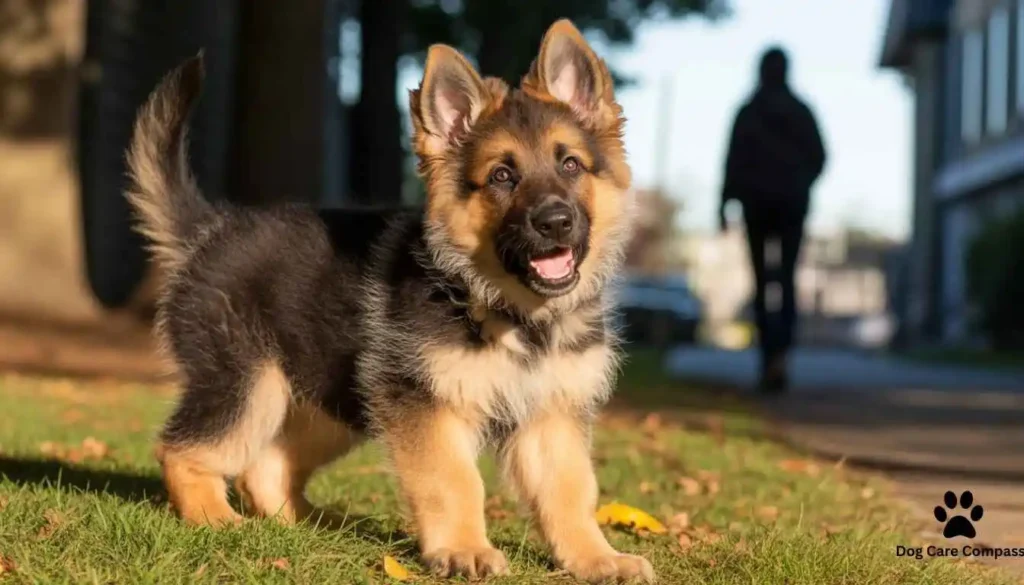
German Shepherd Scared of Strangers: Why It Happens and How to Fix It
Your German Shepherd is confident, alert, and fearless with family — but the moment a stranger walks in, something shifts. They might back away, bark aggressively, hide behind you, or freeze completely. If this sounds familiar, you are not alone.
Many German Shepherd owners notice the same issue — their dog becomes nervous or defensive when strangers appear.. And contrary to what many people assume, it is not a sign of a bad dog or poor breeding. In most cases, it is a completely addressable issue that comes down to socialization, early experiences, and the right training approach.
This complete guide breaks down exactly why German Shepherds develop fear of strangers, what the warning signs look like, and a step-by-step plan to help your dog become calmer, more confident, and less reactive around unfamiliar people.
Why Some German Shepherds Become Nervous Around Strangers
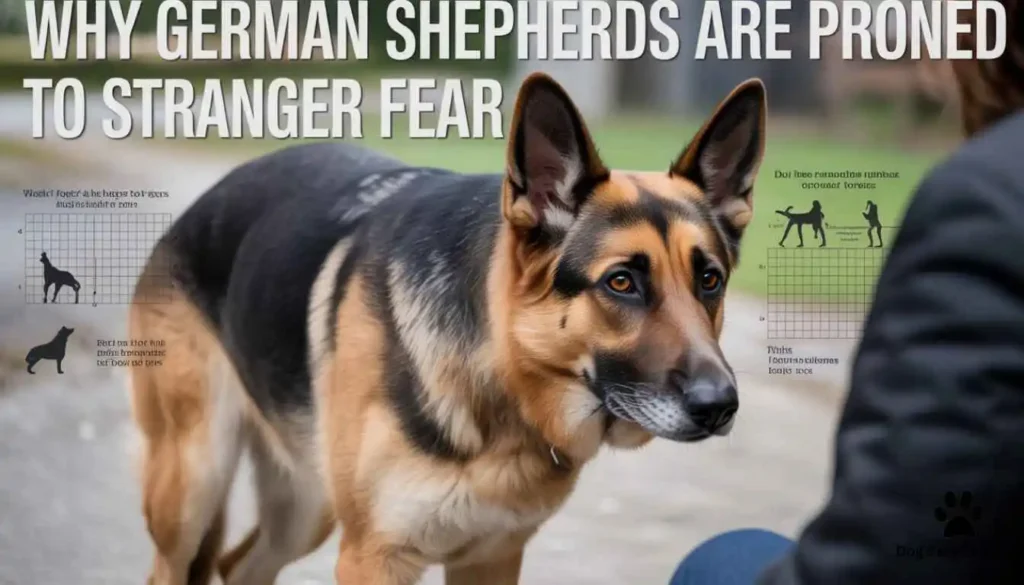
German Shepherds are not naturally timid dogs. They are working breed dogs bred for intelligence, loyalty, and protectiveness. But these very traits — particularly their strong bond with family and natural wariness of outsiders — make them more susceptible to developing fear-based reactions toward strangers than many other breeds.
Several factors contribute to this:
1. Genetics and Breed Temperament
German Shepherds are naturally aloof with strangers. This is a breed characteristic, not a flaw. In their original working role as herding and protection dogs, wariness toward unfamiliar people was an asset. However, when this natural aloofness combines with insufficient socialization, it can develop into genuine fear or anxiety.
Understanding your German Shepherd’s temperament is the foundation of addressing any behavioral issue. For a complete breakdown of GSD personality traits and what to expect at different life stages, our guide on German Shepherd Puppy Temperament and Behavior covers this in full detail.
2. Insufficient Early Socialization
The critical socialization window for dogs is between 3 and 14 weeks of age. During this period, puppies form their foundational understanding of the world — what is safe, what is threatening, and what is normal. Dogs that meet many different types of people during this window typically grow up comfortable around strangers.
German Shepherds that had limited exposure to diverse people, environments, and social situations during this window are significantly more likely to develop fear-based reactions later in life.
3. A Negative Experience
A single frightening encounter with a stranger — being grabbed, startled, cornered, or handled roughly — can leave a lasting impression on a German Shepherd. Their intelligence and memory mean they can form strong negative associations from even one bad experience, especially during puppyhood.
4. Inadvertent Reinforcement
Many owners accidentally reinforce fear without realizing it. When a dog shows fear and the owner responds with excessive comfort — picking them up, baby-talking, or soothing them repeatedly — the dog learns that fearful behavior brings attention and reassurance. This does not calm the fear; it confirms to the dog that there was indeed something to be afraid of.
5. Underlying Anxiety
Some German Shepherds have a generally anxious temperament. Stranger fear in these dogs is often one symptom of broader anxiety that may also include separation anxiety, noise phobia, or reactivity in general. These dogs benefit most from a comprehensive behavioral approach combined with veterinary guidance.
Fear vs. Aggression — Understanding the Difference
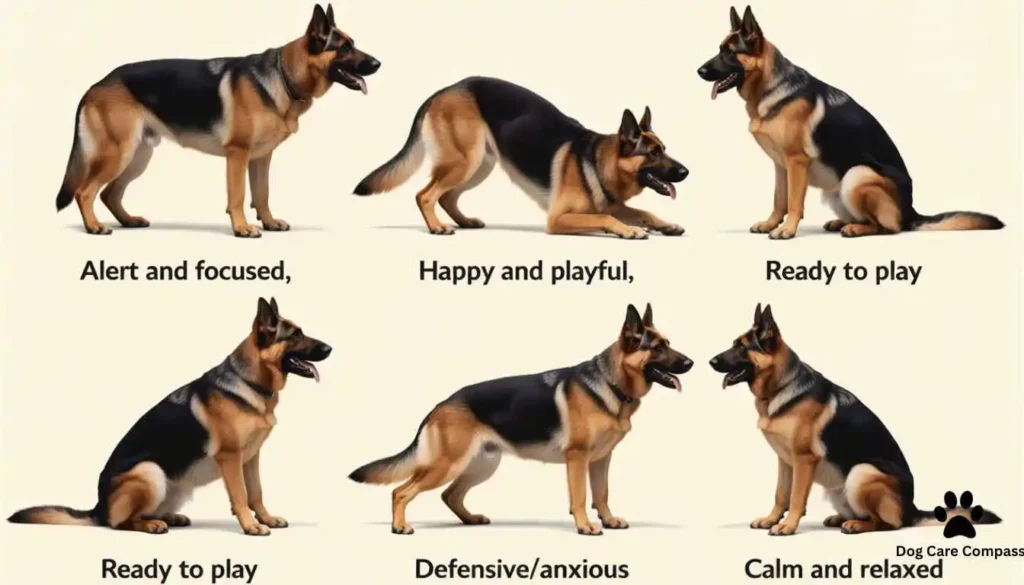
It is critical to distinguish between fear and aggression in German Shepherds around strangers, because the underlying emotion is the same but the behavioral expression is different — and both need to be addressed carefully.
| Behavior | Fear Response | Aggression Response |
|---|---|---|
| Body posture | Lowered, cowering | Stiff, forward leaning |
| Tail position | Tucked under body | Raised or horizontal |
| Ears | Pinned back | Forward and erect |
| Eyes | Wide, showing whites | Hard stare, direct |
| Response to stranger | Retreat, hide | Lunge, bark, snap |
| Trigger distance | Reacts far away | Reacts when closer |
Fear-based aggression is extremely common in German Shepherds and is often misread as dominance aggression. A dog that barks and lunges at strangers is not necessarily confident — in most cases, the aggression is driven by fear and the instinct to make the perceived threat go away.
Understanding which type your dog displays will determine the most effective training approach.
Warning Signs Your German Shepherd Is Scared of Strangers
Dogs communicate fear through body language long before they vocalize or act out. Learning to read these early signals allows you to intervene before your dog reaches their threshold.
Early signs (low level fear):
- Yawning repeatedly when strangers are present
- Licking lips or nose excessively
- Looking away or avoiding eye contact with strangers
- Slow, deliberate movement when strangers approach
- Moving behind owner’s legs
Mid-level signs:
- Tail tucked under body
- Ears pinned flat against head
- Trembling or shaking
- Refusing to take treats in presence of strangers (significant sign)
- Whining or panting excessively
High-level signs (threshold reached):
- Barking continuously at strangers
- Lunging on leash toward or away from strangers
- Snapping or growling when approached
- Attempting to flee or escape
- Freezing completely
Catching fear at the early or mid-level signs gives you the best chance of redirecting your dog’s response before it escalates.
Step-by-Step Training Plan — Helping Your GSD Overcome Stranger Fear

Step 1 — Stop Forcing Interactions
The single most counterproductive thing owners do is force their fearful German Shepherd to interact with strangers. Dragging your dog toward someone, having strangers reach over to pet a fearful dog, or holding your dog in place while someone approaches — all of these actions confirm your dog’s fear response and make the problem worse over time.
The rule: Your dog must always have the option to move away. Fear cannot be trained out of a dog by eliminating their escape option — it will only intensify.
Step 2 — Build a Strong Foundation of Obedience
A dog that has a solid obedience foundation — sit, stay, look at me, heel — has mental tools to fall back on when anxious. Obedience training gives fearful dogs a job to focus on, which interrupts the anxiety spiral.
Spend 10-15 minutes daily on basic obedience in a calm, distraction-free environment before introducing any stranger scenarios. Positive reinforcement only — fear-based or punishment-based training methods will dramatically worsen anxiety in an already fearful dog.
For a comprehensive training framework that works specifically for German Shepherds’ intelligence and drive, our complete guide on German Shepherd Complete Guide covers training methodology in detail.
Step 3 — Identify Your Dog’s Threshold Distance
Every fearful dog has a threshold — the distance at which they first notice and react to a stranger. Working below threshold (far enough away that your dog notices the stranger but does not react) is the foundation of desensitization.
How to find it:
- Walk your dog in an area where you can control the distance between your dog and strangers
- Note the exact distance at which your dog first shows any early sign of fear
- This is your starting point — you will work just below this distance
Step 4 — Desensitization and Counter-Conditioning
Desensitization means gradually exposing your dog to strangers at increasing levels of intensity — always staying below their threshold. Counter-conditioning means changing your dog’s emotional response to strangers from negative (fear) to positive (good things happen when strangers appear).
Combined, these two techniques form the gold standard of fear treatment in dogs.
The process:
- Stand at a distance where your dog notices a stranger but shows no more than mild interest
- The moment your dog looks at the stranger — deliver a high-value treat immediately
- Continue treating every time your dog looks at the stranger calmly
- When your dog looks at the stranger and then looks back at you for a treat — this is called “checking in” and is a major breakthrough moment
- Very gradually, over multiple sessions, decrease the distance to the stranger
- If your dog shows any fear sign — increase the distance immediately and go back to the previous level
Key principle: Never rush. A session where your dog stays calm at the same distance as last time is a success. Pushing too fast undoes weeks of progress.
Step 5 — Controlled Stranger Introductions
Once your dog is showing improvement with unknown strangers at a distance, introduce controlled meetings with trusted people who can follow instructions.
Instructions for the stranger:
- Do not look directly at the dog
- Do not reach toward the dog
- Stand sideways — a less threatening body position
- Let the dog approach on their own terms
- If the dog approaches — drop a treat on the floor rather than hand feeding initially
- Do not pet until the dog is visibly relaxed and seeking contact themselves
Instructions for you:
- Keep the leash loose — tension travels down the leash and increases anxiety
- Stay calm — dogs read human stress instantly
- Let your dog make every decision about how close to get
- End the interaction before your dog shows any stress signs
Step 6 — Create Positive Associations in Daily Life
Beyond formal training sessions, build positive associations with strangers into everyday life:
- Ask strangers to toss treats toward your dog (not to them directly) on walks
- Visit places with controlled stranger exposure — outdoor cafes, quiet parks
- Have visitors bring your dog’s favorite toy or treat
- Feed your dog their meals in the presence of calm, unfamiliar people at a safe distance
Step 7 — Manage the Environment While Training
Training takes time — weeks to months depending on severity. During the training period, managing your dog’s environment prevents rehearsal of fearful behavior, which strengthens the fear response.
Practical management strategies:
- Use a baby gate to create safe distance from visitors in your home
- Walk your dog at quieter times of day to reduce stranger encounters
- Give your dog a safe retreat space (crate or room) when guests visit
- Inform guests not to approach your dog uninvited
- Use a calming wrap or anxiety vest during high-exposure situations
Diet and Nutrition — How Food Affects Anxiety
This is an often-overlooked factor in behavioral issues. A dog’s gut health has a direct connection to brain chemistry and anxiety levels through the gut-brain axis. Poor nutrition can worsen anxiety and make behavioral training significantly less effective.
For German Shepherds dealing with anxiety, a high-quality diet rich in omega-3 fatty acids, B vitamins, and tryptophan supports the production of serotonin — the neurotransmitter associated with calm and wellbeing.
Specifically for German Shepherds:
- Include omega-3 rich foods — fish, flaxseed, fish oil
- Avoid heavily processed dog foods with artificial additives
- Consider a probiotic supplement to support gut health
For German Shepherd-specific nutrition guidance, our complete guide on Homemade Dog Food for German Shepherd Puppy Weight Gain includes detailed nutritional information that applies to adult GSDs as well.
When Fear of Strangers Is Severe — Getting Professional Help
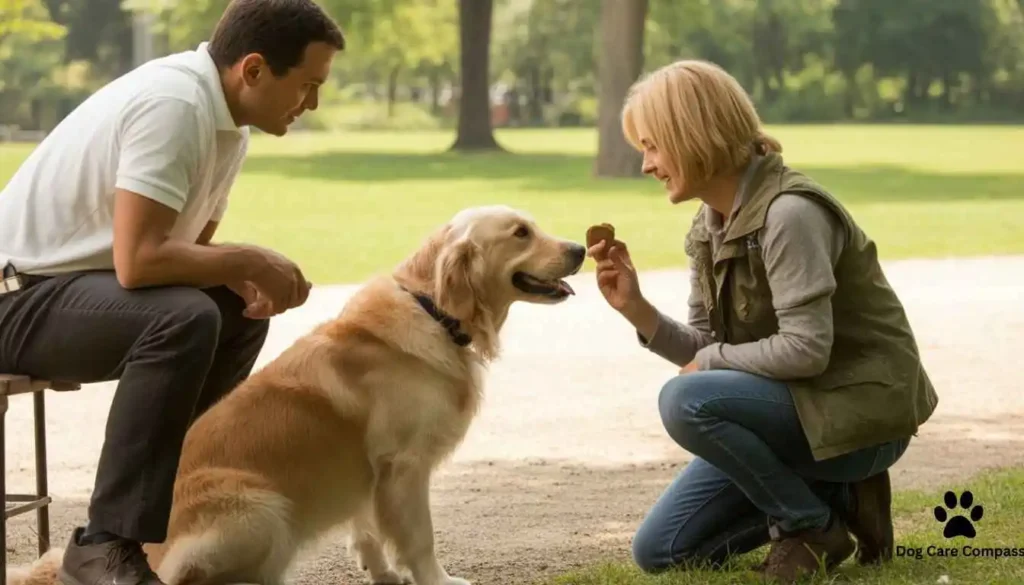
Some German Shepherds have deeply ingrained fear that requires professional intervention beyond what owner-led training can achieve. Signs that professional help is needed:
- Aggression toward strangers that includes biting or attempted biting
- Fear that has not improved after 8-12 weeks of consistent training
- Fear generalized to all unfamiliar people without exception
- Fear accompanied by self-destructive behaviors or extreme panic
Who to contact:
- Certified Applied Animal Behaviorist (CAAB) — highest level of behavioral expertise
- Veterinary Behaviorist (DACVB) — can also prescribe anti-anxiety medication if needed
- Certified Professional Dog Trainer (CPDT-KA) — good for less severe cases
A note on medication: Anti-anxiety medication prescribed by a veterinary behaviorist is not a failure — for some dogs, it is a necessary tool that lowers baseline anxiety enough for training to actually work. Medication is most effective when combined with behavior modification, not used alone.
Common Mistakes to Avoid
| Mistake | Why It Makes Things Worse |
|---|---|
| Forcing interactions with strangers | Confirms the fear, removes sense of safety |
| Punishing fear responses | Adds fear of punishment on top of existing fear |
| Over-soothing and baby-talking | Reinforces fearful behavior as attention-seeking |
| Rushing desensitization | Triggers threshold reactions that set training back |
| Inconsistent rules for guests | Confusion undermines training progress |
| Using choke chains or prong collars | Pain-based tools worsen fear and anxiety |
| Giving up too early | Fear modification takes weeks to months of consistency |
German Shepherd Stranger Fear vs. Normal Aloofness
It is worth clarifying that not all German Shepherd wariness around strangers is a problem. A GSD that is calm but observant around strangers — watching carefully, not immediately seeking petting, but not showing any distress signs — is displaying normal breed temperament.
The distinction:
| Normal GSD Aloofness | Fear of Strangers |
|---|---|
| Observes strangers calmly | Shows visible distress signs |
| Accepts strangers once introduced | Cannot relax even after introduction |
| Ignores strangers without reacting | Barks, lunges, hides, or freezes |
| Recovers quickly from surprise | Takes long time to calm down |
| Eats normally around strangers | Refuses food when strangers present |
If your dog falls in the left column — they are perfectly normal. If they consistently show behaviors in the right column — targeted training will make a significant difference.
Frequently Asked Questions
Can a German Shepherd that is scared of strangers ever be fully cured?
Most German Shepherds with stranger fear improve significantly with consistent training. Full elimination of fear responses is possible for mild to moderate cases. Severe fear may always require management, but quality of life can improve dramatically with the right approach.
At what age does stranger fear typically develop in German Shepherds?
Fear of strangers often becomes apparent between 8 and 14 months — the adolescent period when German Shepherds become more territorial and their natural wariness increases. Dogs that were well socialized as puppies typically handle this period better.
My German Shepherd is only scared of men — why?
Fear of specific types of people — men, children, people in hats or uniforms — is common and usually traces back to the socialization window. If a puppy had limited exposure to men specifically, they may develop fear responses toward them. The same counter-conditioning approach applies — gradual positive exposure to men at a safe distance.
Should I let my German Shepherd sleep with me if they are anxious?
This is a personal choice and does not directly cause or worsen anxiety. However, ensuring your dog has their own secure space — a crate or bed they associate with safety — is important for giving them a retreat option when they feel overwhelmed.
My GSD barks at strangers on walks — how do I stop this?
Use the threshold technique described above. Find the distance at which your dog notices strangers without reacting, practice treat-and-praise at that distance, and very gradually work closer over multiple sessions. Changing direction before reaching threshold also helps interrupt the reactivity cycle.
Is stranger fear genetic in German Shepherds?
Temperament has a genetic component — some GSDs are naturally more anxious than others. However, genetics sets a range, not a fixed point. The right socialization, training, and environment can bring even a genetically anxious dog well within a manageable, happy range.
Can neutering or spaying help with fear-based aggression?
The evidence is mixed. Neutering may reduce some forms of aggression but does not consistently improve fear-based behavior. In some cases it can worsen anxiety. This is a decision to make with your vet based on your dog’s individual situation.
Final Thoughts
A German Shepherd scared of strangers is not a lost cause — far from it. With patience, consistency, and the right approach, most GSDs can make remarkable progress. The key is understanding that fear cannot be punished away or forced away — it must be replaced with a genuine positive association built through hundreds of small, successful, calm interactions.
Start at your dog’s threshold. Go slowly. Celebrate every small win. And never forget that your calm, confident energy is one of the most powerful tools you have — your German Shepherd is always watching you for signals about how to feel.
With time and the right approach, that nervous dog hiding behind your legs can become a calm, confident companion who takes strangers in stride.
For more German Shepherd guides and dog behavior resources, explore the full library at dogcarecompass.com.
Pingback: Dog Licking Paws at Night: Causes, Remedies, and When to See a Vet - Dog Care Compass
Pingback: When Do German Shepherds Calm Down? The Honest Answer Every GSD Owner Needs - Dog Care Compass
Pingback: Belgian Malinois Puppy Biting: Why It Happens and How to Stop It Fast - Dog Care Compass
Pingback: Dog Jealous of New Puppy? 7 Signs and How to Fix It Fast - Dog Care Compass
Pingback: Dog Scared of Thunder? 9 Home Remedies That Actually Work - Dog Care Compass