How to Train an Older Dog New Tricks — The Complete Guide
The saying “you can’t teach an old dog new tricks” is one of the most confidently repeated pieces of dog advice that is simply, demonstrably wrong.
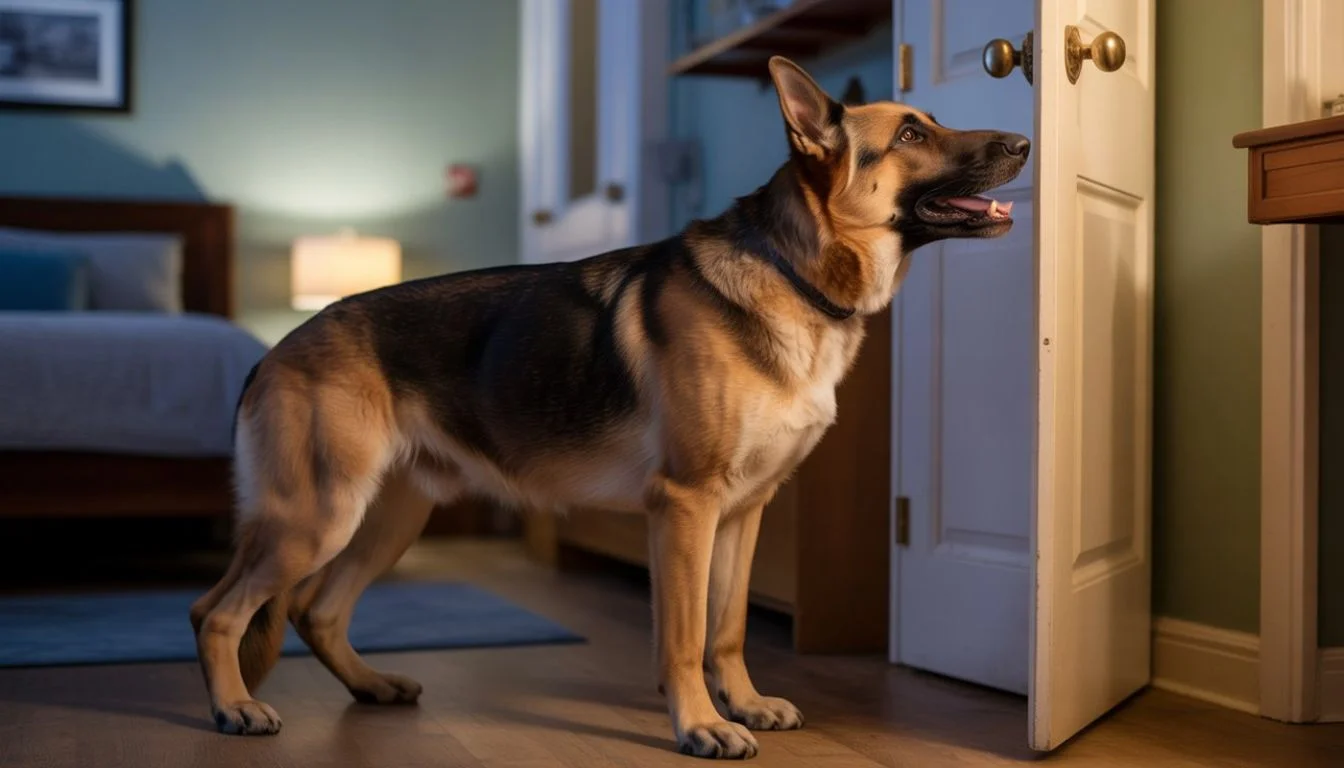
I started training my German Shepherd on formal obedience at five years old — after years of casual, inconsistent handling that left him knowing sit and not much else. Within six weeks he had a reliable recall, a down-stay he could hold for three minutes, and was working on heel. He was not slower than a puppy. In several ways he was faster.
Older dogs have advantages that puppies do not. They have longer attention spans. They are less distracted by every moving object in their environment. They have impulse control that develops with age. A five-year-old dog that has never been formally trained is not a dog that cannot learn — it is a dog that has never been given the opportunity.
Why Older Dogs Can Absolutely Learn New Things
The brain does not stop forming new connections at a certain age in dogs. Neuroplasticity — the capacity to learn and form new habits — continues throughout a dog’s life.
What changes with age is not the ability to learn but the motivation and physical capacity. A ten-year-old dog with arthritis cannot learn to jump through a hoop — not because of cognitive decline, but because of physical limitation. A ten-year-old dog without physical issues can learn almost anything a younger dog can learn, given appropriate methods.
The training approach needs adjustment for older dogs — not because they are less capable, but because what motivates them, what they find stressful, and how their body handles long sessions is different from a puppy.
What Changes With Age That Affects Training
Motivation Is Different
Puppies are often food-motivated to the point of distraction. Everything is exciting. Treats are enormously powerful.
Older dogs can be more selective. A dog that has spent years in a home with a comfortable routine sometimes finds training sessions mildly interesting rather than explosively exciting. The treats that work need to be genuinely high value — not the same kibble they eat every day.
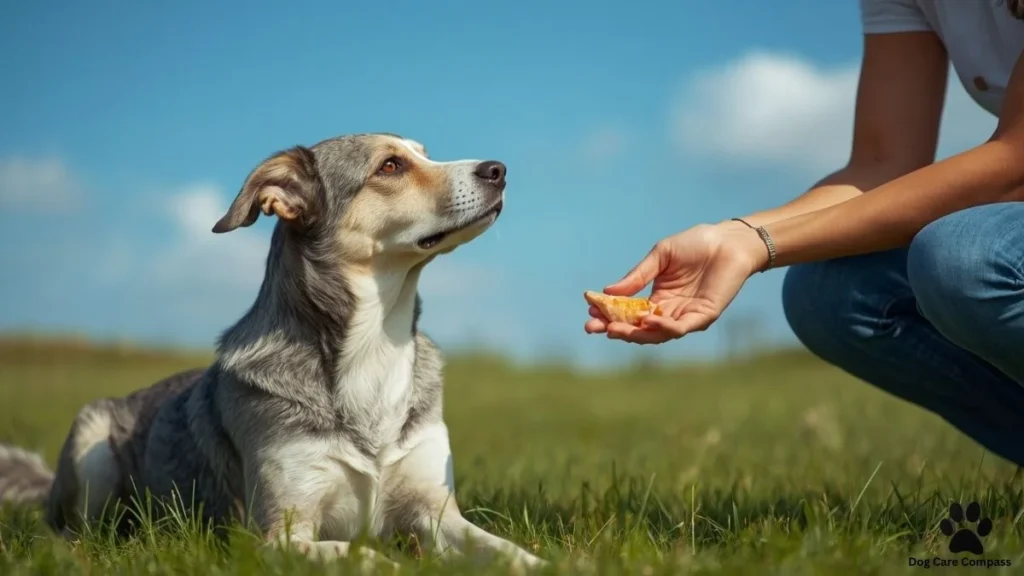
What works for older dogs: real meat, cheese, cooked chicken, sardines. The higher the value of the reward, the more engaged the dog.
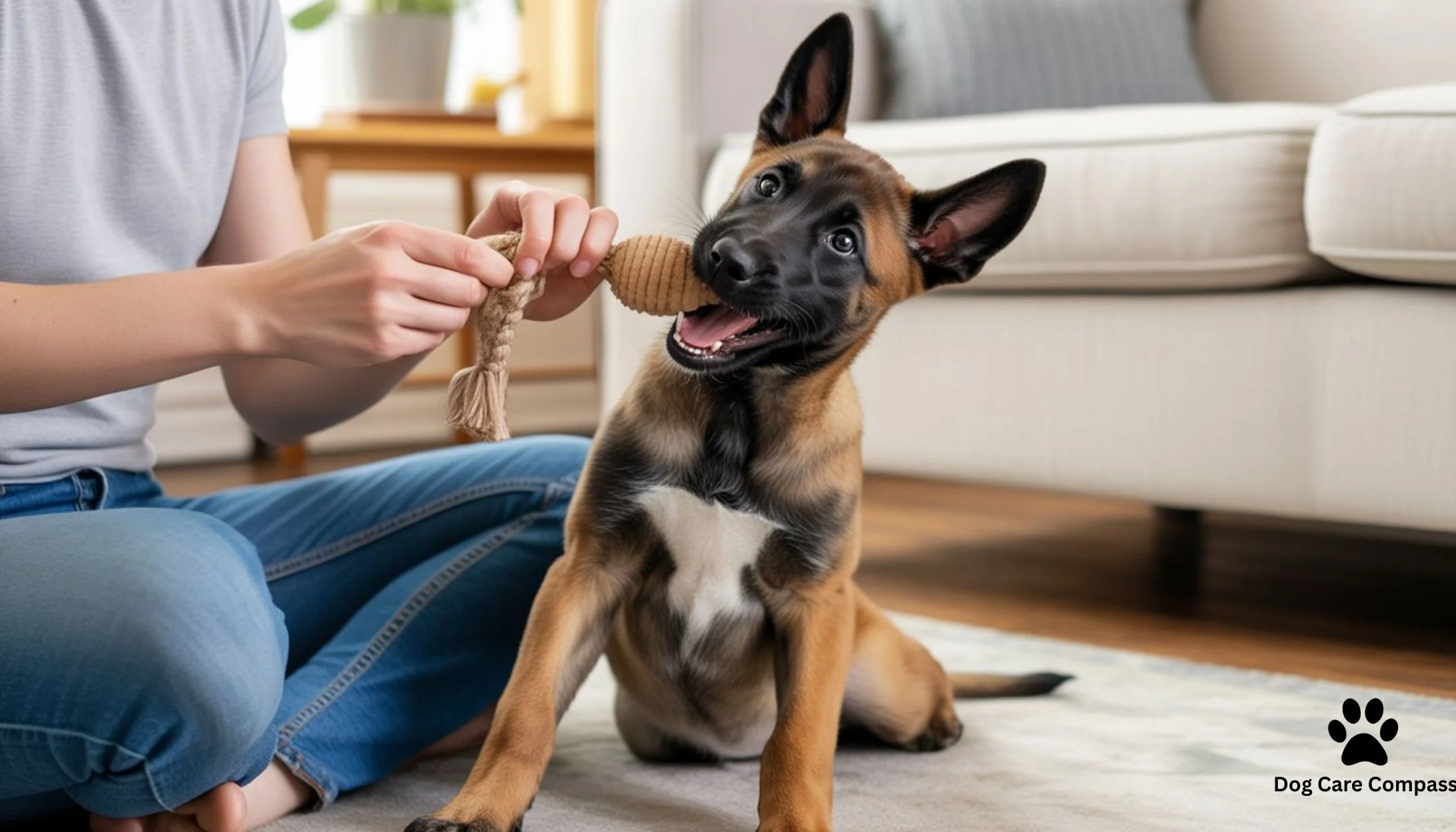
Some older dogs are more play-motivated than food-motivated by the time they reach middle age. A brief game of tug or a thrown ball can outperform any food reward for certain dogs. Experimenting to find what your specific dog genuinely wants is the first step.
Physical Capacity Matters
Training sessions for older dogs should be shorter than for puppies in terms of duration of physical activity — but can be longer in terms of mental focus.
A puppy might do ten minutes of training and be physically wiped out. An older dog can mentally focus for fifteen to twenty minutes but should not be asked to do extended physical exercises like repeated retrieves or jumping.
Keep sessions to ten to fifteen minutes. End before the dog starts showing disengagement — looking away, yawning, losing focus. Ending on a successful repetition is more important than completing a planned number of repetitions.
Joint Health Considerations
Some older dogs have joint stiffness that makes certain positions uncomfortable. Asking an arthritic dog to hold a down-stay on a hard floor for three minutes teaches the dog that training is painful — the opposite of what you want.
Train on soft surfaces. If your dog shows reluctance to go into a down position, have a vet check for hip or joint issues before assuming the dog is being stubborn.
Step-by-Step: Teaching New Tricks to an Older Dog
Step 1 — Find the Right Motivator
Before teaching anything, spend three to five minutes discovering what your dog genuinely wants.
Offer three options: a piece of chicken, a piece of their regular kibble, and a brief play interaction. The one they respond to most enthusiastically is your training currency. Use nothing else for the first month of training.
Most older dogs I have worked with respond best to small pieces of real meat — chicken or beef — because commercial treats have been in their life for years and the novelty is gone.
Step 2 — Start With a Simple Foundation Skill
Even if the dog knows sit, start there. The goal is not the behavior — it is establishing the training communication. The dog needs to learn that a specific marker sound means “that exact thing you just did produced the reward.”
Use a clicker or the word “yes” as your marker. Ask for sit, the dog sits, mark immediately, reward immediately. Ten repetitions. Done for the day.
The next session — same thing. By the third session the dog understands that the marker predicts the reward and that specific behaviors produce the marker.
This foundation makes every subsequent trick faster to teach because the communication system is established.
Step 3 — Introduce New Behaviors Through Luring
Luring uses food to guide the dog’s body into position without physical manipulation.
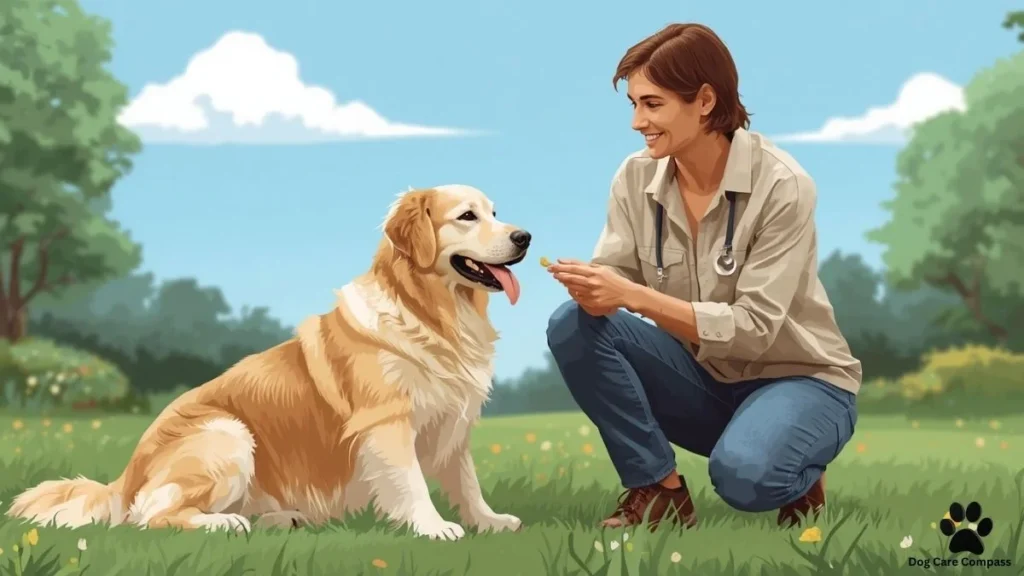
For “down” from sit — hold the food in front of the dog’s nose and slowly lower it toward the ground between their front legs. The dog’s nose follows the food and their body follows their nose into a down position.
The moment their elbows touch the ground — mark and reward.
After five to eight successful repetitions — try without the lure. Give the hand signal only. If the dog goes down — mark and reward with food from your other hand.
If the dog does not respond without the lure — go back to luring for another session before fading it.
Step 4 — Build Duration Before Moving On
The most common training mistake with older dogs — and with dogs of any age — is moving to a new skill before the current skill is reliable.
A dog that does “down” six times out of ten is not ready to learn “stay.” A dog that does “down” ten times out of ten with consistent speed is ready to add duration.
Add duration in small increments. Down — wait one second — mark and reward. Down — wait two seconds — mark and reward. Build to thirty seconds over several sessions before adding distance or distraction.
Step 5 — Proof in Different Environments
A skill learned in the kitchen is not automatically known in the garden. Dogs are context-specific learners — they associate behaviors with the environment where they practiced them.
Practice each skill in three to four different locations before assuming it is learned. Kitchen, garden, street, park. The dog that looked confused in the park was not being stubborn — they had only experienced “down” in one context and the park context was genuinely new information.
Specific Tricks for Older Dogs — What Works Best
Recall
The most valuable skill any dog can have — and one that older dogs often learn faster than puppies because their attention is more reliable.
Start on a long line — a 10-15 meter leash. Call the dog’s name once, then the recall cue. When they arrive — enormous reward. The biggest food treat or the most exciting play interaction you can offer.
Never call the dog to you for something they do not want — baths, nail trims, end of park visit. Go get them instead. The recall must predict only good things for the rest of the dog’s life.
Settle or Place
“Go to your mat” — teaching the dog to go to a specific location and settle there on cue — is one of the most useful skills for household management and one that older dogs learn relatively quickly.
Use a distinctive mat. Lure the dog onto it, mark and reward for any foot contact initially. Build to four feet on the mat, then to lying down on the mat, then to staying on the mat while you move around.
This skill gives you a management tool for guests arriving, mealtimes, and any situation where you need the dog to be calm in a specific location.
Leave It
Teaching an older dog to disengage from something they want is possible at any age and is genuinely useful for recall reinforcement, coprophagia management, and general impulse control.
Hold a treat in a closed fist. The dog sniffs, licks, paws. The moment they pull back even slightly — mark and reward from the other hand. Never from the fist they were investigating.
Build to placing food on the floor under your foot, then uncovering it and rewarding the dog for looking at you rather than the food.
Common Mistakes That Slow Training With Older Dogs
Repeating cues multiple times without waiting for a response. Saying “sit-sit-sit” teaches the dog that the first cue is not real — they wait for the third one. One cue, then wait. If no response, help the dog, then try again.
Training when the dog is too comfortable. An older dog that has just eaten a large meal and is lying in a warm spot has no motivation to engage. Train before meals, not after.
Getting frustrated when the dog seems to forget what they knew. Older dogs sometimes show a phenomenon called spontaneous recovery of old, incorrect responses — where a behavior that seemed learned regresses. This is normal and temporary. Return to simpler sessions and rebuild.
German Shepherd and Belgian Malinois Training at Older Ages
Both breeds retain working drive and handler focus well into old age. A GSD or Malinois that has never been formally trained is not a lost cause — they are a dog with enormous capacity that has never been activated.
German Shepherds particularly show a kind of settled focus in middle age that makes training genuinely enjoyable. The frantic puppy energy that makes consistent training difficult is gone. What remains is a dog that pays attention and wants to work. Many GSD owners report that their best training sessions happened with dogs aged four to seven — past the adolescent storm, before the senior slowdown.
The full behavioral and training profile for this breed is in our GSD complete guide.
Belgian Malinois maintain their drive and trainability throughout their working life — often past ten years old in working dog programs. An older Malinois is not a training liability. They are an experienced, focused partner who already understands how to communicate with humans. The training principles that work at any age are covered in our Malinois training guide.
Frequently Asked Questions
What age is too old to start training a dog?
There is no age at which training stops being possible for a healthy dog. Senior dogs may learn more slowly and require shorter sessions, but neuroplasticity continues throughout life. A twelve-year-old dog without significant cognitive decline can learn new behaviors.
How long should training sessions be for an older dog?
Ten to fifteen minutes per session, one to two sessions per day. Shorter and more frequent is better than one long session. End each session before the dog disengages.
My older dog seems bored with training — what do I do?
Increase the value of rewards. Use real meat rather than commercial treats. Add more play interaction. Vary what you teach each session so the routine does not become predictable. Sometimes boredom in training reflects that the exercises are too easy — increase difficulty slightly.
Can I use a clicker with an older dog?
Yes — the clicker is a marker, not a sound the dog needs to have heard before. An older dog learns the clicker = reward association within two to three sessions just as a puppy does.
My older dog has learned bad habits over years — can those be changed?
Yes, but it takes longer than teaching new skills. Bad habits are deeply reinforced behaviors. They are changed through consistent non-reinforcement of the unwanted behavior and consistent reinforcement of the alternative behavior. Patience and consistency are required in greater quantities than for new skill learning.
Final Summary
Older dogs learn new tricks. The saying is wrong. What changes with age is motivation, physical capacity, and the contexts in which learning occurred — not the fundamental ability to learn. Short sessions, high-value rewards, clear communication, and patience with the proofing process produce reliable new skills in dogs of any age. Start today — your older dog has more capacity than you think.

researching veterinary sources, scientific studies, and expert
guides to bring dog owners accurate, practical information. Every
article is written with care and reviewed against credible
veterinary references including ASPCA, AKC, and peer-reviewed
literature.
- Why Does My Dog Sleep So Much All of a Sudden? 8 Real Reasons - August 10, 2026
- How to Train a Dog to Stop Pulling Without Treats: This Method Works - August 5, 2026
- How to Train an Older Dog New Tricks (Even If They’ve Never Been Trained) - August 1, 2026